An EC fan is not one particular fan shape. The initials describe the drive: electronically commutated. Instead of brushes and a mechanical commutator switching current inside the motor, power electronics switch the stator phases in sequence so that a permanent-magnet rotor keeps turning.
That short definition is useful, but it is not enough to select a fan. A buyer still has to identify the aerodynamic form, duty point, input supply, control interface, mounting, and exact model revision. The video shows the electrical path; this companion turns it into a practical specification check.
EC names the commutation method, not the impeller
In a brushed DC motor, brushes and a commutator make and break electrical contact as the rotor turns. A brushless motor moves that switching job into an electronic drive. Rotor position may be measured by sensors or estimated by the control method, depending on the design. The controller then energizes the appropriate stator phases.
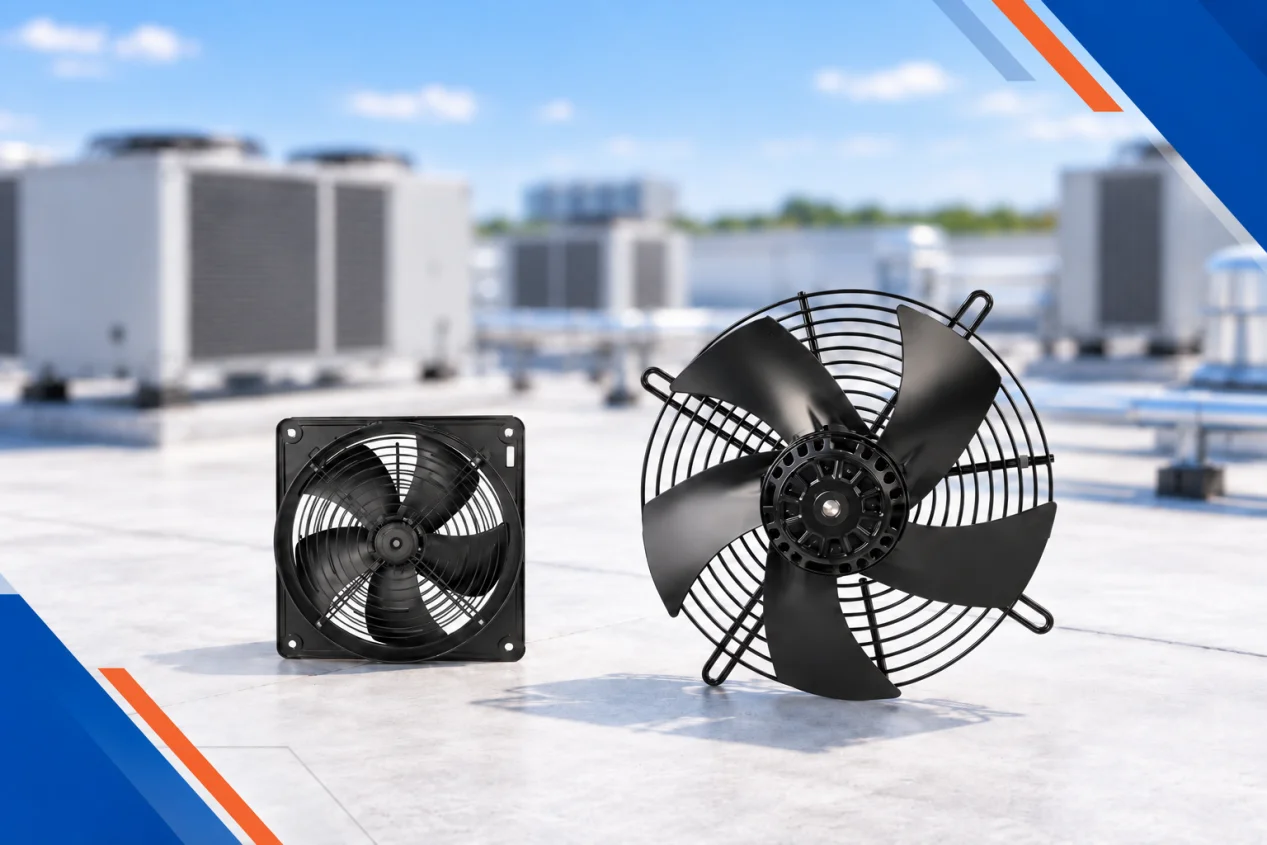
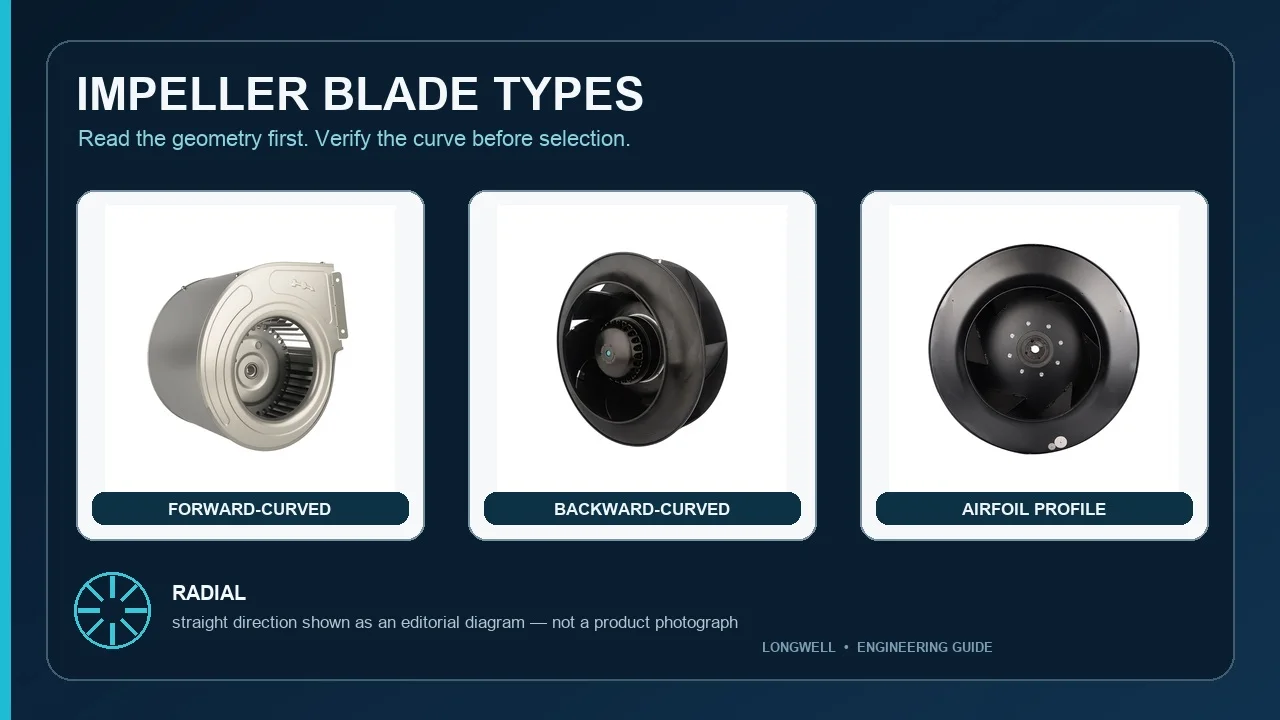
The same broad motor architecture can sit behind very different air-moving parts. An axial fan moves air generally along its shaft. A centrifugal wheel takes air at the inlet and sends it outward toward the rim. Both can be EC fans, yet their pressure-flow behavior, envelope, guards, and installation conditions are not interchangeable.
Follow the power path in an AC-input EC fan
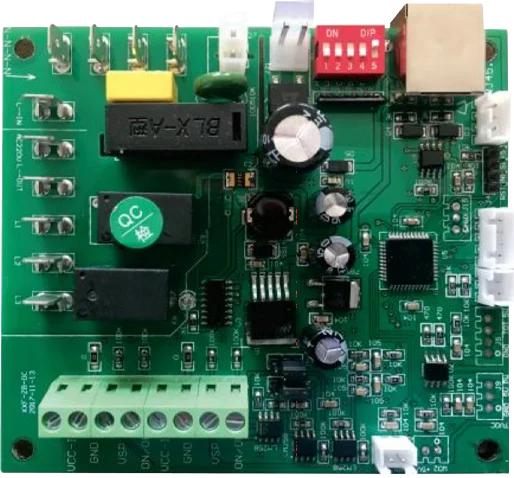
For a common AC-input design, incoming power first meets model-specific protection and filtering. A rectifier creates a DC supply, a DC-link section stores and smooths energy, and an inverter switches that bus into controlled motor-phase currents. This is why an EC fan is an electronic load, not simply a conventional AC motor with a different label.
The pictured LONGWELL controller board is included as component context only. It does not establish a universal terminal layout, protocol, protection function, or wiring method. Never infer connections from board appearance. Use the approved wiring diagram for the exact fan suffix, and allow trained personnel to follow isolation and discharge procedures.
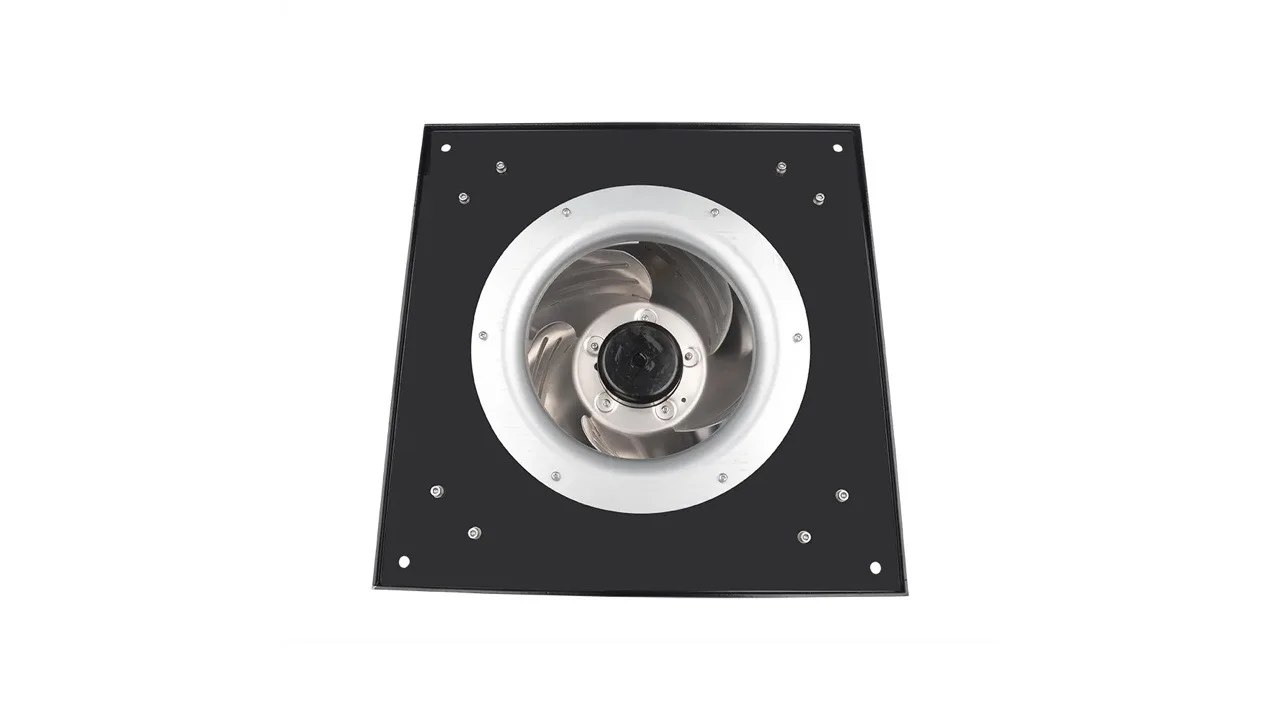
A real EC centrifugal fan shows one possible form
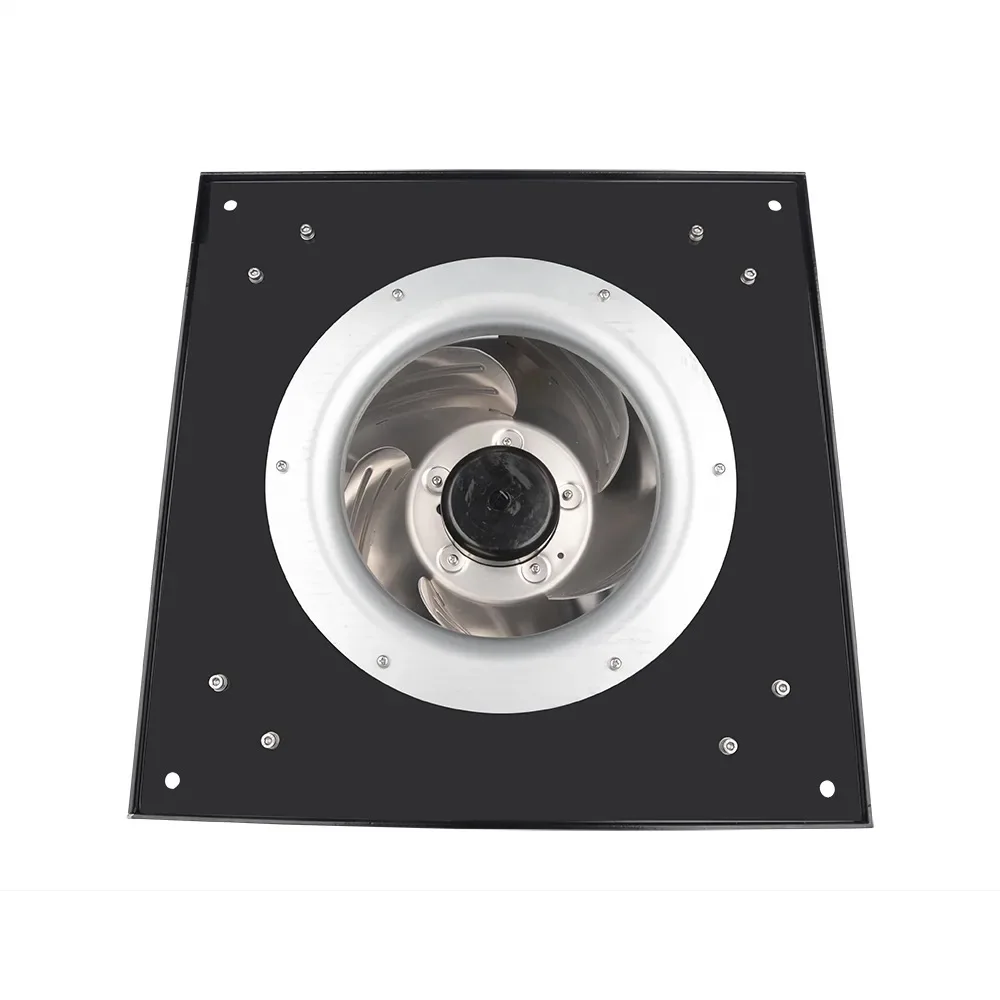
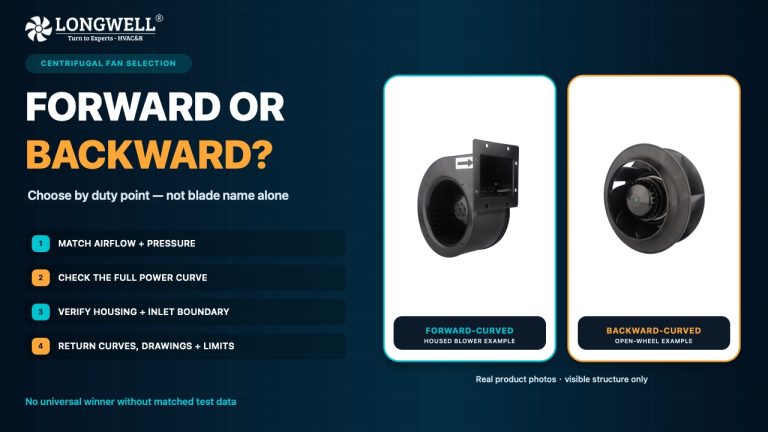
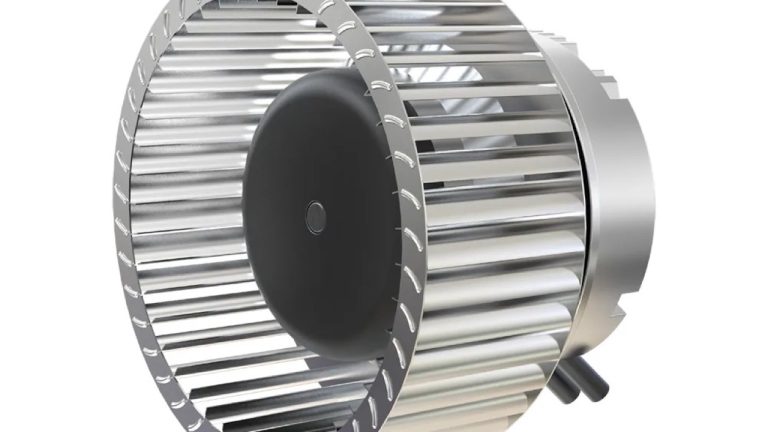
This product photograph shows a backward-curved centrifugal assembly with an inlet ring, impeller, motor-side hub, and mounting plate. Those visible features help a buyer name the physical family. They do not prove airflow, pressure, absorbed power, sound, efficiency, certification, or compatibility with an existing cabinet.
For family-level discovery, review LONGWELL’s backward-curved centrifugal fan range. Then narrow the inquiry using the required airflow and pressure at a stated condition, the inlet and outlet arrangement, mounting clearances, supply, and control method. The exact curve and drawing must belong to the selected revision.
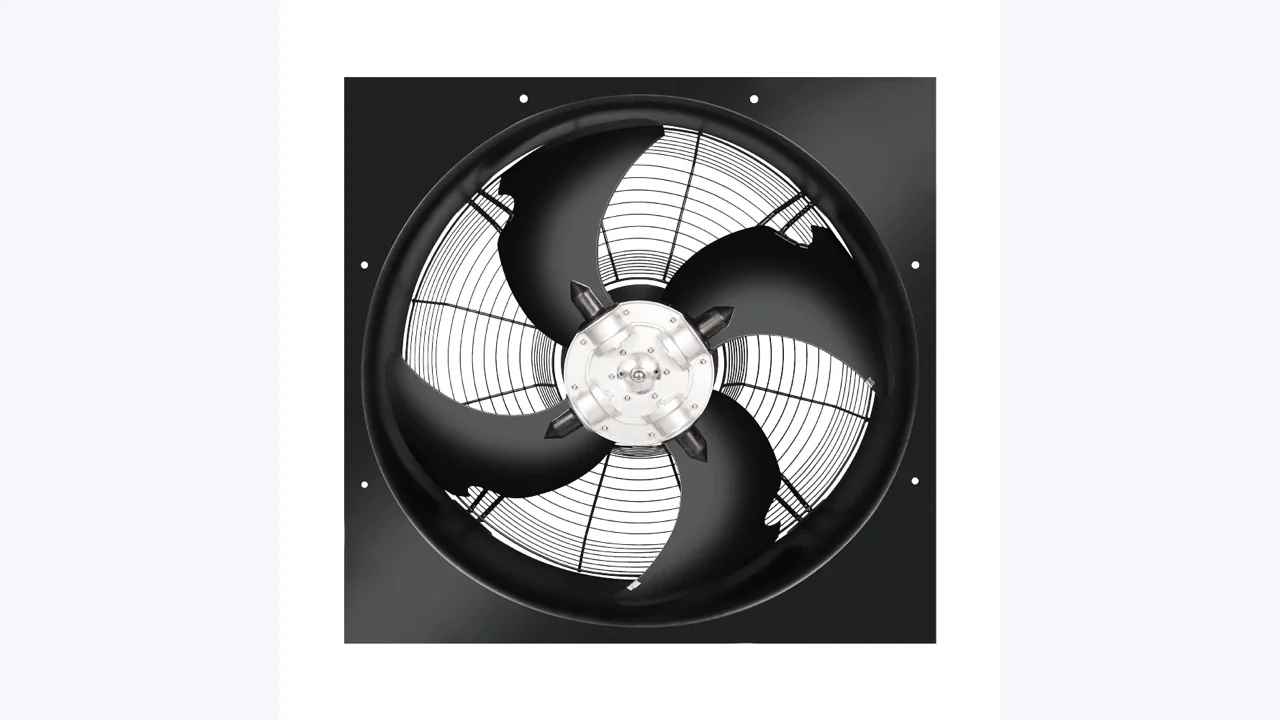
An EC axial fan solves a different airflow problem
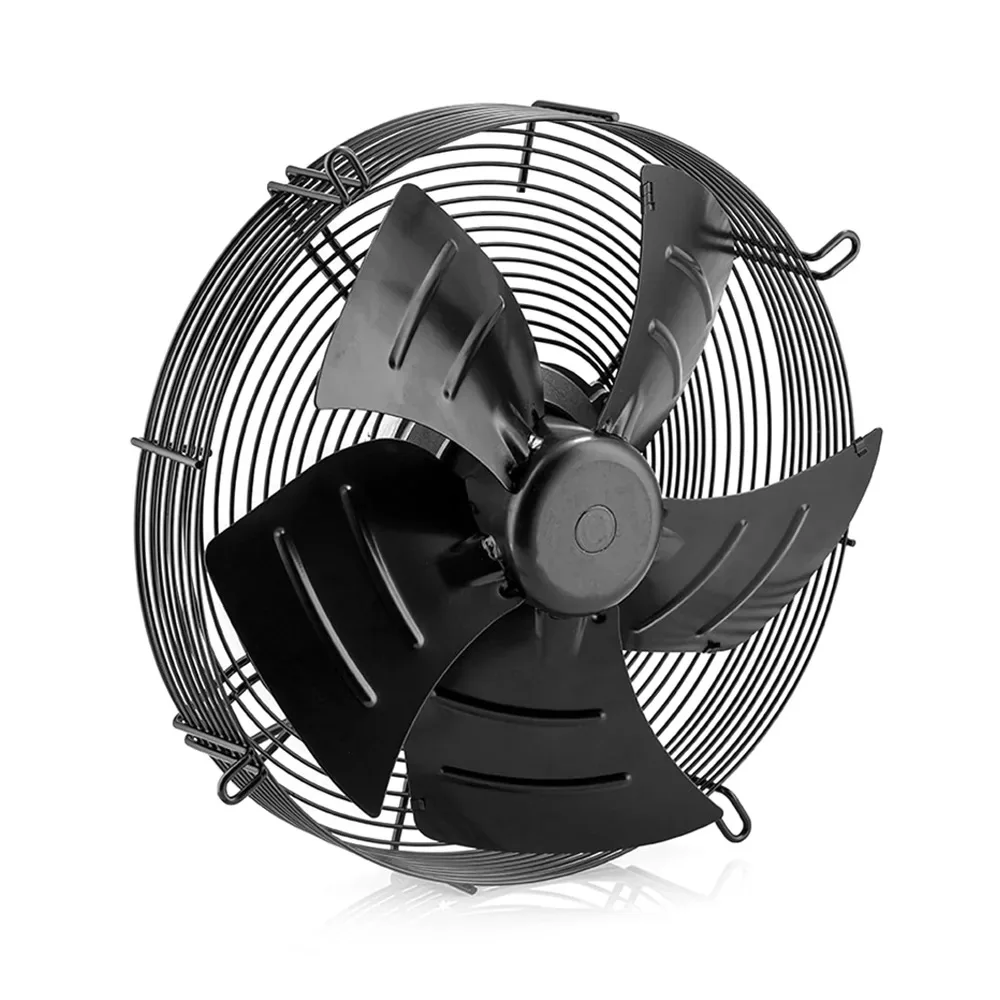
The axial example makes the distinction visible: the blade, guard, and motor share the same general axis. That geometry may suit a direct-through airflow path, but the word “axial” still does not answer the duty point. A guard, heat exchanger, grille, enclosure, or uneven inlet can shift the installed result away from an open-air catalog value.
Use the EC axial fan range to map available families, not to assume a photographed unit fits your equipment. Selection needs the required airflow, resistance, airstream and ambient temperatures, installation orientation, permitted sound basis, service access, and the correct electrical documentation.
Control capability is never safe to guess
Some EC fans accept an analog command; others may use PWM, an enable input, speed feedback, or a digital interface. Availability, voltage range, frequency, reference connection, isolation, default behavior, and register map are model-specific. Two cables with similar colors can still represent different functions.
Before connecting a PLC or building controller, compare the nameplate, full model suffix, current wiring sheet, and interface specification. Confirm what happens when the command is absent, what signal represents feedback, and whether the controller and fan references may be shared. A guarded bench test can catch integration errors before installation; it does not replace the final system test.
The EC label does not guarantee system savings
Electronic commutation removes brush contact and supports controlled speed operation. The actual electrical result still depends on the complete fan, its operating point, system resistance, duty profile, and control strategy. A fan running far from the required point can waste energy even when its motor technology is sound.
Compare candidates at the same airflow, pressure definition, density, and installation condition. Check absorbed input power and acoustic data from the approved curve or test record. If your goal is a deeper technology overview, read the EC fan technology guide, but keep its family-level explanation separate from model approval.
Send an EC fan RFQ that can be answered
- Duty: required airflow and static or total pressure, including the measurement condition.
- Air path: filters, coils, grilles, ducts, inlet restrictions, outlet arrangement, and expected fouling.
- Environment: ambient and airstream temperature, humidity, altitude, contamination, and corrosion concerns.
- Mechanical interface: available envelope, mounting points, orientation, clearances, connector access, and service space.
- Electrical interface: voltage, phase, frequency, control command, feedback, communication needs, external protection, and connector.
- Acceptance evidence: exact model and revision, curve, drawing, wiring diagram, sound basis, test method, and required approvals.
State the decision at the top of the inquiry: new design selection, replacement review, or custom integration. Attach readable evidence and ask the supplier to list assumptions. That turns “I need an EC fan” into an engineering question with a verifiable answer.
Choose the right external rotor motor
Longwell manufactures 11 external rotor motors in-house. Send airflow, static pressure and voltage — an engineer replies with a matching model, performance curve and price within one working day.