
Fans for adiabatic and evaporative cooling equipment
Describe how water enters the cooling process and where the fan operates relative to it. Dry, wetted-pad and spray-assisted modes can have different resistance and exposure. Review airflow, moisture conditions, controls and maintenance with the equipment designer before choosing the fan and its installation arrangement.
Identify the wet stage and the fan location
Adiabatic equipment can use wetted media or other evaporative arrangements to condition incoming air. Establish the actual layout rather than assuming every system sprays water in front of a coil. The fan selection should follow its air path, exposure and operating schedule in each mode.
Define airflow in dry and wet operation
Provide the required airflow through the equipment for each planned operating mode. Include coil, pad, screen and grille resistance where those components are present. Ask for pressure-loss data that matches the relevant dry or wet condition, then review candidate fans at the resulting operating points.
- Dry and wet duty schedules
- Coil, pad and screen pressure losses
- Fan position within the air path
Describe actual water and environmental exposure
State whether the fan sees humid air, direct spray, splash or possible carryover. Include water quality, cleaning chemicals and expected condensation where relevant. Review materials and protection for the complete selected model and installation, including the motor, electronics and cable entries, using the equipment’s documented exposure requirements.
- Humidity, spray and carryover conditions
- Cleaning and water-treatment exposure
- Motor, electronics and cable positioning
Coordinate the water stage and maintenance
Agree how fans and water-side equipment start, change mode and stop. Identify access for inspecting media, drains and the fan assembly, and define maintenance conditions for selection. Verify the completed equipment against its cooling requirement; the fan’s airflow or motor type alone does not establish the resulting cooling performance.
- Water and fan control sequence
- Media, drainage and service access
- Cooling assessment under stated ambient conditions
Match the fan family to the equipment.
Compare the proposed model at the required airflow and pressure, then check the installation and control interface.
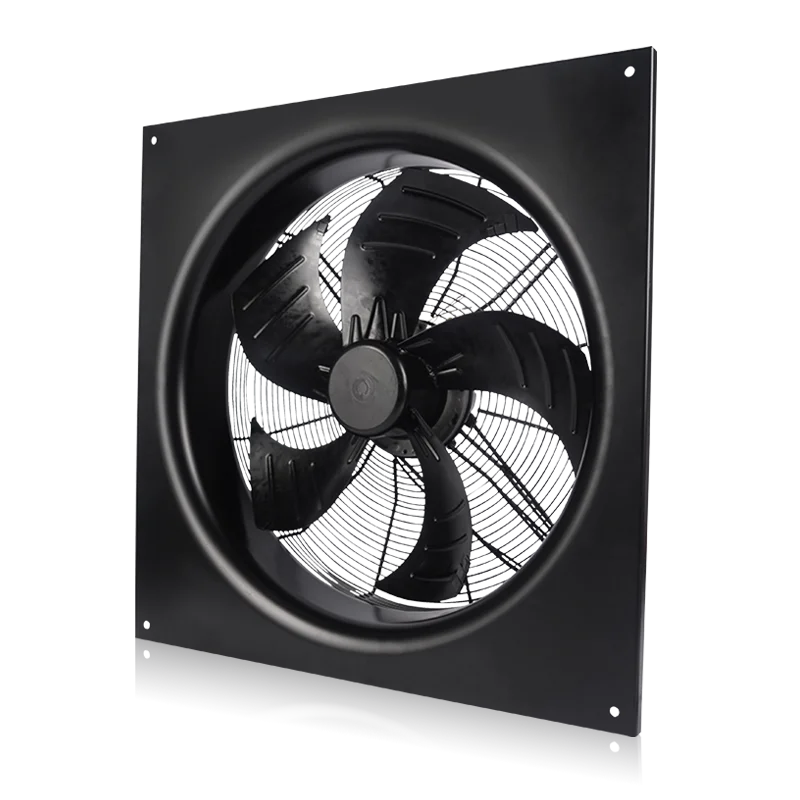
EC axial fan configurations
Review axial formats for open coil or media air paths. Match duty and mounting, and confirm the precise moisture exposure permitted for the offered configuration.
Explore this fan family →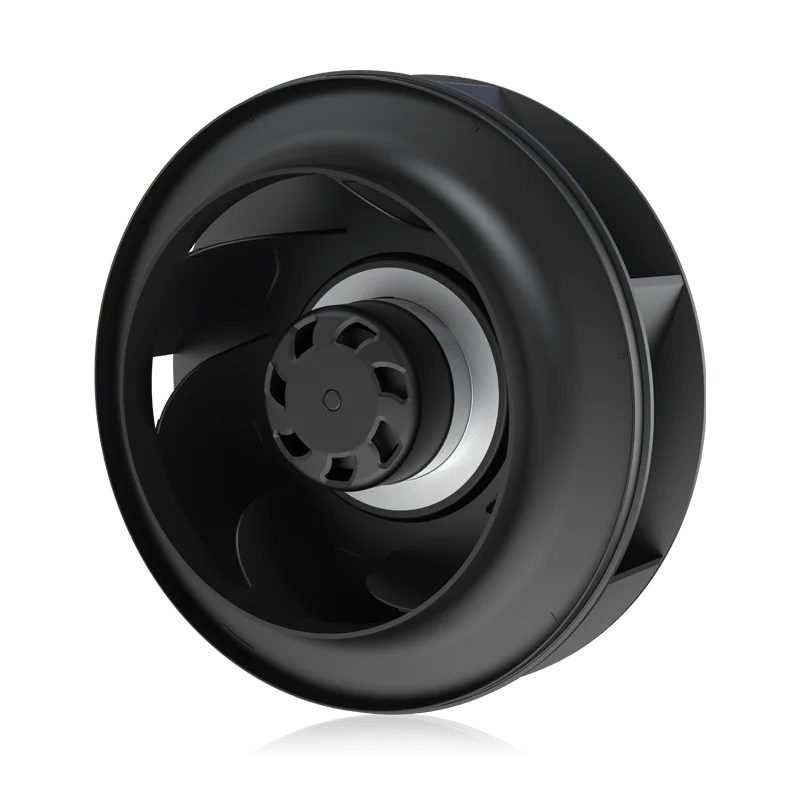
Backward-curved centrifugal fans
Review centrifugal formats for enclosed evaporative air paths with compatible geometry. Include media resistance and the documented humidity or carryover conditions in the model review.
Explore this fan family →Product images show family configurations. Request the drawing, curve and electrical information for the exact model being considered.
What should your fan enquiry include?
Share these application details so the fan proposal can be reviewed against your equipment.
Bring the equipment context to the fan review.
A drawing, the operating condition and a clear control requirement make the proposed configuration easier to compare. For a replacement, include the existing nameplate and wiring details.
Discuss your application →Reference material for the next step.
Compare the axial series and installation dimensions before requesting operating-point, electrical and environmental data for the selected configuration.
Series catalog · PDFEC backward-curved centrifugal fans ↗Use the series information to narrow the mechanical format; confirm inlet conditions, controls and the proposed model performance separately.
Engineering checklistFan replacement: fit and controls ↗Check operating duty, mounting, supply, wiring and control behaviour before treating an existing fan and a proposed replacement as interchangeable.
Catalogs support initial selection. Confirm the current specification and approved configuration with the project team.
Does an EC fan automatically suit a wet cooling installation?
The EC designation describes a motor-control approach, not a complete environmental specification. Describe the air and water exposure, then review the selected fan’s materials, electronics protection and installation limits. Confirm those details for the exact proposed configuration before equipment integration.
Can one pressure-loss value represent dry and wetted media?
Request the media supplier’s data for the operating states being considered. Wetting, contamination and the air velocity through the media can affect the required duty. Use the applicable values with the complete air path and state the maintenance condition in the selection brief.
Continue with the equipment you are designing.
Share your equipment and operating conditions.
Send the drawing, target duty and project timing. Add the existing fan details when you need a replacement.