
Cross-flow fan selection for air-curtain assemblies
Build the fan brief around the doorway and discharge nozzle. Opening width and height, mounting position, surrounding drafts and door traffic shape the required air jet. Review fan length, motor placement, controls and sound together with the complete air-curtain assembly rather than selecting by diameter alone.
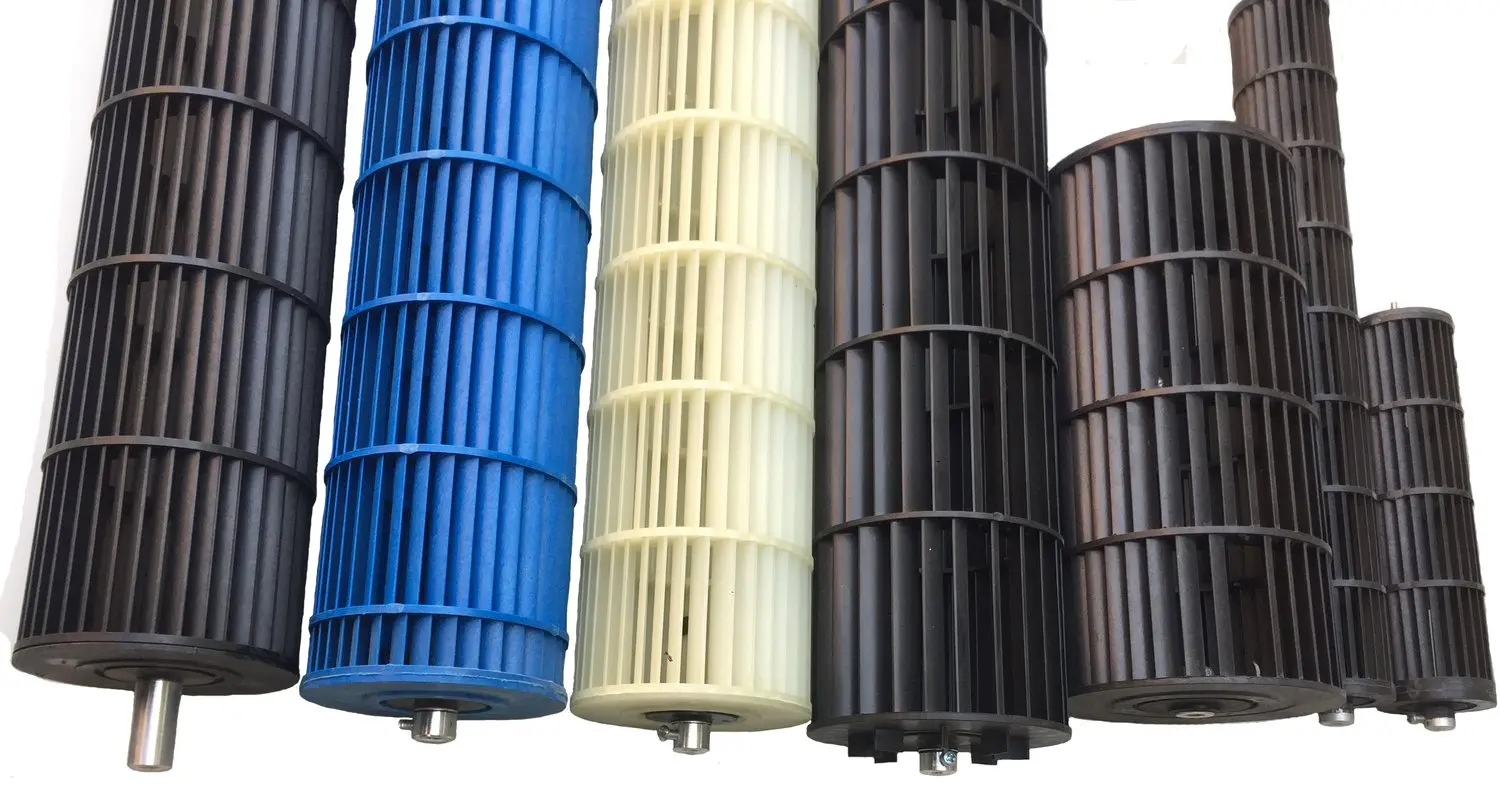
Connect the fan to the nozzle and opening
An air curtain uses a directed air jet across an opening. The fan supplies the air, while the housing, inlet and nozzle shape its distribution. This page helps equipment builders review the component format and the measurements needed to assess the finished assembly at the doorway.
Describe the opening and air-jet objective
Provide the opening dimensions, mounting height and discharge direction. Include adjacent doors, local drafts and the traffic pattern. Agree where jet velocity and distribution will be measured across the opening, then use that target with the air-curtain designer to determine the required fan-and-nozzle operating condition.
- Opening width and mounting height
- Nozzle dimensions and discharge direction
- Jet measurement positions and local drafts
Match the long assembly to its housing
Compare the complete fan length, motor end, supports and clearances with the housing drawing. Confirm rotation and inlet geometry rather than assuming that equal impeller length means equal airflow. Review the proposed assembly at the required speed, including the installation and service route for the finished unit.
- Impeller length and motor position
- Supports, clearance and rotation
- Inlet arrangement and removal route
Coordinate door response and sound
Describe how the air curtain starts when the door opens and how it changes speed during operation. For a heated version, include the heater control and fault response. Agree the sound target at occupied locations and test it with the housing and nozzle fitted, using the intended operating sequence.
- Door trigger and start-stop sequence
- Speed command and heater interface
- Sound location and complete-unit setting
Match the fan family to the equipment.
Compare the proposed model at the required airflow and pressure, then check the installation and control interface.
Cross-flow impellers and assemblies
Review cross-flow impellers and assemblies for long discharge arrangements. Match length, motor position and supports to the air-curtain housing and its required operating point.
Explore this fan family →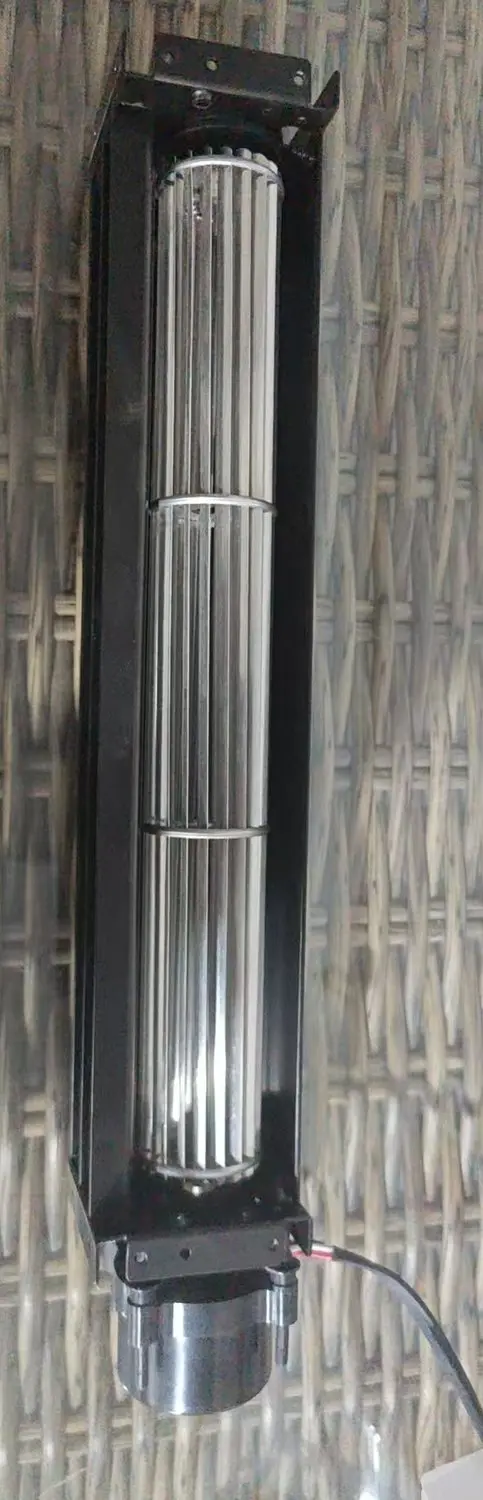
Slim cross-flow configurations
Review slim cross-flow formats where the unit’s installation depth requires them. Confirm the full assembly drawing, usable speed range and environmental conditions for the doorway equipment.
Explore this fan family →Product images show family configurations. Request the drawing, curve and electrical information for the exact model being considered.
What should your fan enquiry include?
Share these application details so the fan proposal can be reviewed against your equipment.
Bring the equipment context to the fan review.
A drawing, the operating condition and a clear control requirement make the proposed configuration easier to compare. For a replacement, include the existing nameplate and wiring details.
Discuss your application →Reference material for the next step.
Review component lengths and assembly formats, then agree the model drawing, motor position and speed-control requirements for the equipment.
Engineering checklistFan replacement: fit and controls ↗Check operating duty, mounting, supply, wiring and control behaviour before treating an existing fan and a proposed replacement as interchangeable.
Catalogs support initial selection. Confirm the current specification and approved configuration with the project team.
Does a fan airflow rating prove barrier effectiveness?
The nozzle, mounting, opening and surrounding pressure or drafts affect the installed air jet. Use the fan curve to support the assembly design, then measure the agreed distribution at the doorway. Fan airflow alone does not establish air separation or an energy saving.
Can the same cross-flow assembly serve a heated air curtain?
Confirm the temperatures at the fan and motor during operation and after heater shutdown. Review the heater interlock, clearance and control sequence for that assembly. A similar external shape does not establish thermal suitability or identical behaviour in a heated unit.
Continue with the equipment you are designing.
Share your equipment and operating conditions.
Send the drawing, target duty and project timing. Add the existing fan details when you need a replacement.