
Fans and Blowers for Heating Equipment Applications
Choose a heating-equipment fan by the air path it serves: outdoor-coil airflow, combustion-air supply or room-air delivery. LONGWELL product references help compare these different duties and prepare a practical enquiry covering installation space, control interfaces, temperature exposure and equipment validation.
Explore the applications in this industry.
Start with the job the air must do
A heating product can contain several fans with different responsibilities. Use this overview to separate the heat-source circuit from occupied-room airflow, then carry the relevant operating points and environmental conditions into the appropriate application guide. Product selection follows the actual air path and assembly.
Outdoor-coil airflow
For a heat pump, specify airflow against the coil, grille and enclosure resistance at the required operating modes. Include ambient conditions, defrost behaviour and installation clearances. Compare installed sound measurements at the same duty point, and describe how the controller changes fan speed as the heat pump operating condition changes.
- Coil and enclosure pressure loss
- Operating modes and defrost exposure
- Speed command and installed sound
Combustion-air blower integration
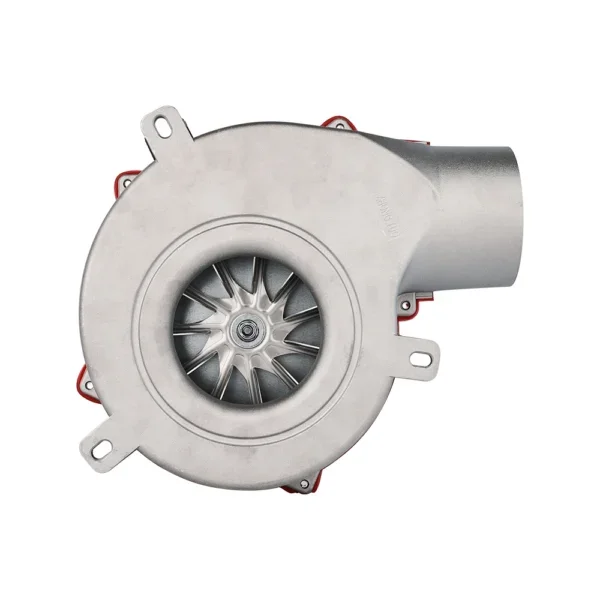
For a fuel-fired appliance, identify the blower position and handled medium before comparing catalogue families. Provide air duty across the firing range and the appliance control sequence. Gas-blower references are candidates for a model review; temperature, sealing, condensate exposure and equipment-level validation belong in the same enquiry.
- Air-path schematic and medium
- Flow and pressure across the firing range
- Sealing and controller requirements
Room-side warm-air delivery
For convectors and electrical heaters, assess the outlet shape, heater resistance and available mounting depth. A cross-flow arrangement may suit a long narrow outlet, while another fan geometry may suit a compact duct. Confirm motor and bearing temperatures as well as delivered airflow and room-side sound.
- Outlet length and installation depth
- Heater and grille resistance
- Motor temperature and sound target
Match the fan family to the equipment.
Compare the proposed model at the required airflow and pressure, then check the installation and control interface.
EC axial fans
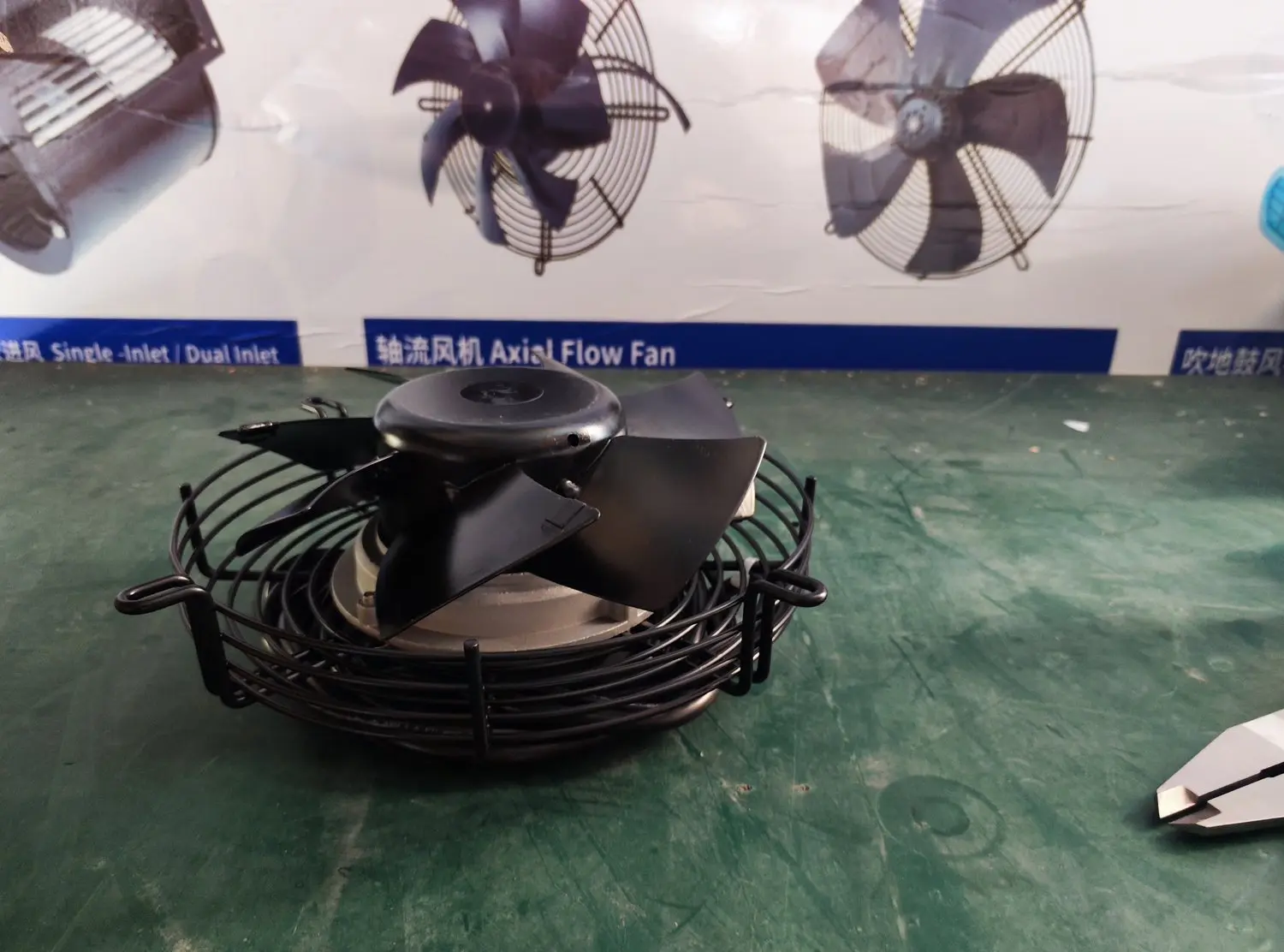
Review EC axial formats for outdoor heat-exchanger airflow. Confirm the model against coil resistance, environmental exposure, mounting clearances and the heat-pump controller.
Explore this fan family →Compact gas-blower configurations
Use the blower configuration reference for a defined combustion-air enquiry. The complete appliance air path and selected model determine the required integration checks.
Explore this fan family →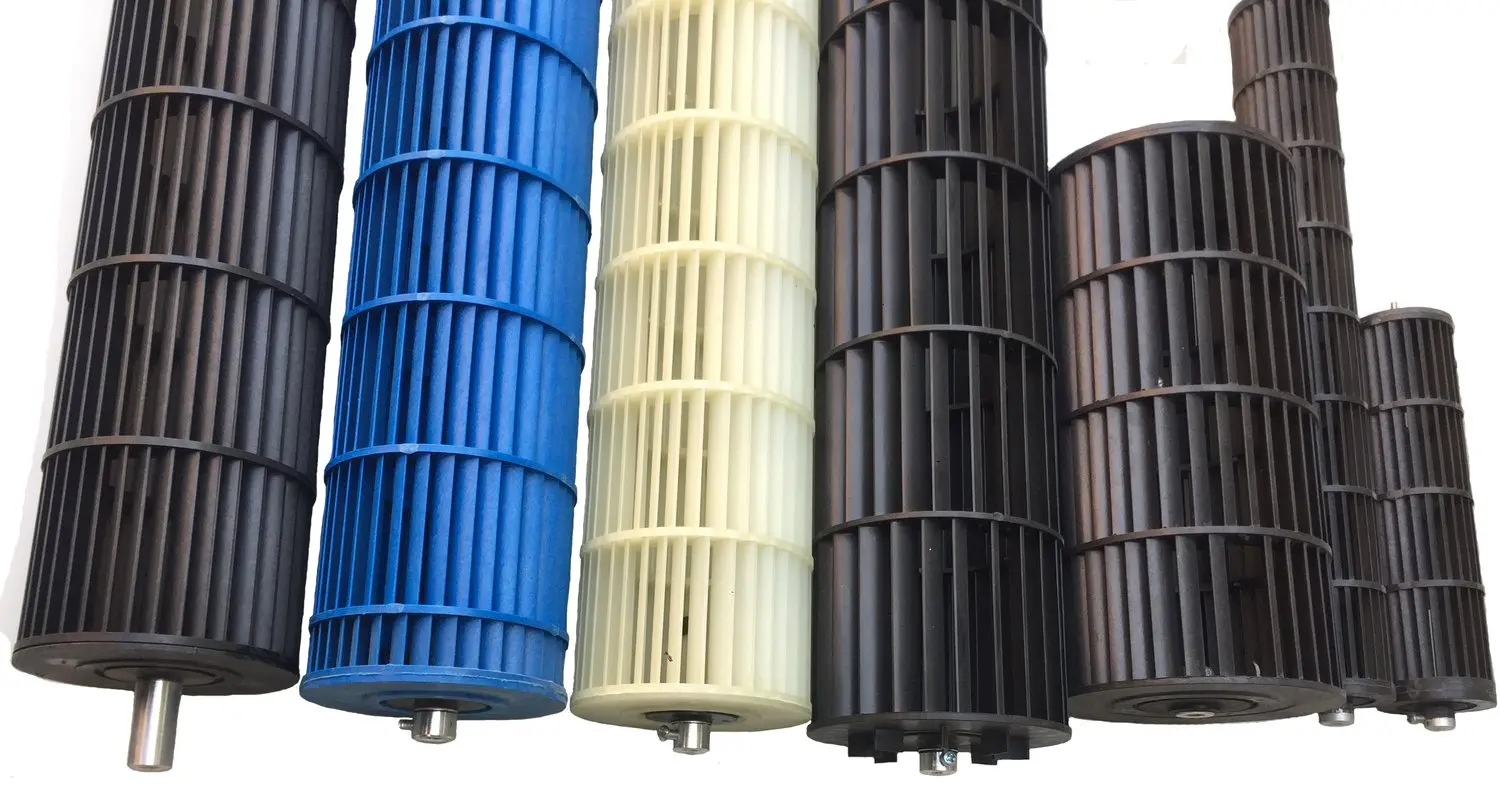
Cross-flow fan families
Compare cross-flow formats for long heater outlets and room-air distribution. Select the motor arrangement and rotor length against the actual heater and grille resistance.
Explore this fan family →Product images show family configurations. Request the drawing, curve and electrical information for the exact model being considered.
What should your fan enquiry include?
Share these application details so the fan proposal can be reviewed against your equipment.
Bring the equipment context to the fan review.
A drawing, the operating condition and a clear control requirement make the proposed configuration easier to compare. For a replacement, include the existing nameplate and wiring details.
Discuss your application →Reference material for the next step.
Review axial fan formats and series information before requesting operating-point, acoustic and installation data for the selected configuration.
Product-family catalogue · PDFGas-blower catalogue ↗Compare available gas-blower configurations, then request the complete model drawing and performance curve for the defined appliance air path.
Cross-flow series · PDFCross-flow fan catalogue ↗Compare rotor lengths and motor arrangements, then request model-specific airflow, temperature and mounting information for the proposed outlet layout.
Catalogs support initial selection. Confirm the current specification and approved configuration with the project team.
Can one fan family cover all heating air paths?
The choice depends on the physical task. A heat-pump coil, boiler air circuit and long convector outlet impose different pressure, temperature and installation requirements. Define each circuit separately before comparing product families, even when the fans are installed in the same heating package.
What information makes an initial heating enquiry useful?
Provide the equipment layout, required pressure and airflow, operating modes and temperature conditions. Add drawings of the fan interfaces and the controller signals. These details allow the enquiry to move from a broad catalogue family to a specific configuration and an agreed equipment test plan.
Continue with the equipment you are designing.
Share your equipment and operating conditions.
Send the drawing, target duty and project timing. Add the existing fan details when you need a replacement.