
Fans for non-hazardous auxiliary oil-and-gas equipment cooling
This page covers ordinary auxiliary cooling duties around oil-and-gas equipment, such as control enclosures and clean-air heat exchangers in non-hazardous locations. Identify the installation boundary with the project owner, then provide heat load, airflow resistance and environmental conditions before evaluating a fan configuration for that specific auxiliary task.
Define an ordinary auxiliary cooling duty
Separate clean-air equipment cooling from handling process gases or operating in a classified area. The product references below support an ordinary enclosure or heat-exchanger enquiry. Start with the project’s location and medium assessment, then define the air path, mechanical interface and required documentation for the auxiliary equipment.
Identify the cooling boundary and medium
Describe the equipment served and whether the fan moves ordinary ambient air through a control cabinet or heat exchanger. Confirm with the responsible project specialist that the proposed location and duty are non-hazardous. If the requirement involves a classified area or hazardous process medium, route it for a separate documented product assessment.
- Equipment role and air being moved
- Project-confirmed installation boundary
- Location and medium documentation
Specify enclosure or heat-exchanger duty
Provide the heat load and the air-side requirement established by the equipment designer. Include filters, grilles, coils and internal obstructions in the pressure budget. State the highest expected inlet temperature and show nearby discharge sources so the fan review uses the actual auxiliary cooling arrangement rather than a general site label.
- Heat load and airflow at resistance
- Enclosure, coil and filter arrangement
- Maximum inlet temperature and nearby sources
Review service conditions and controls
Describe dust, salt, cleaning and other environmental exposure at the proposed auxiliary equipment. Confirm mounting, vibration, electrical supply and the required command or feedback. Include access for replacement and the equipment response to a fan fault, then request the model-specific documents relevant to these ordinary cooling conditions.
- Environmental exposure and cleaning methods
- Mounting, vibration and service route
- Supply, controls and fault response
Match the fan family to the equipment.
Compare the proposed model at the required airflow and pressure, then check the installation and control interface.
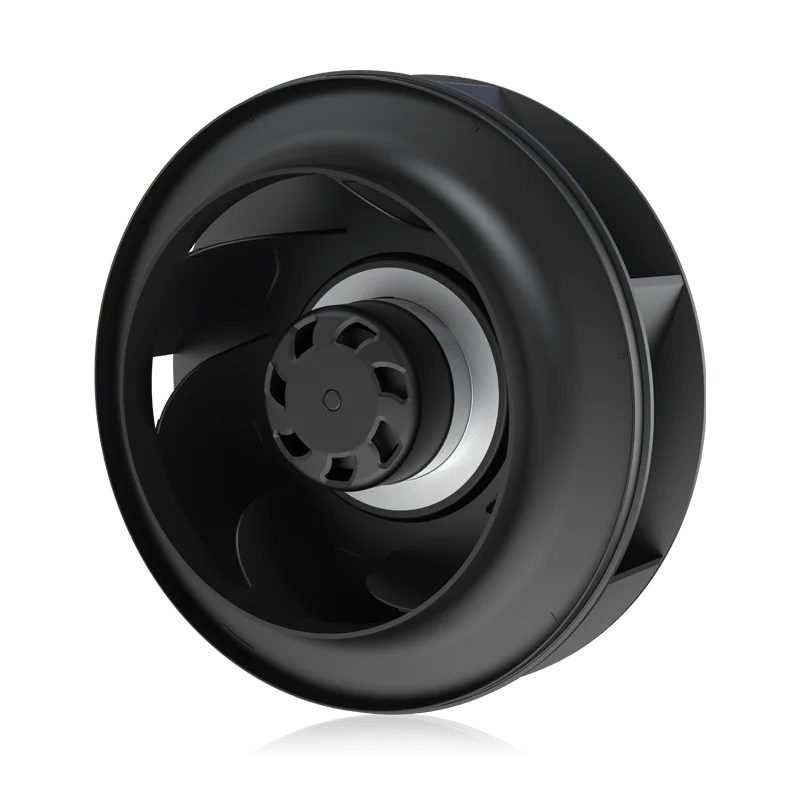
Backward-curved centrifugal fans
Review centrifugal configurations for clean-air auxiliary enclosures with defined resistance and space. These family references do not represent hazardous-area or process-gas fan approval.
Explore this fan family →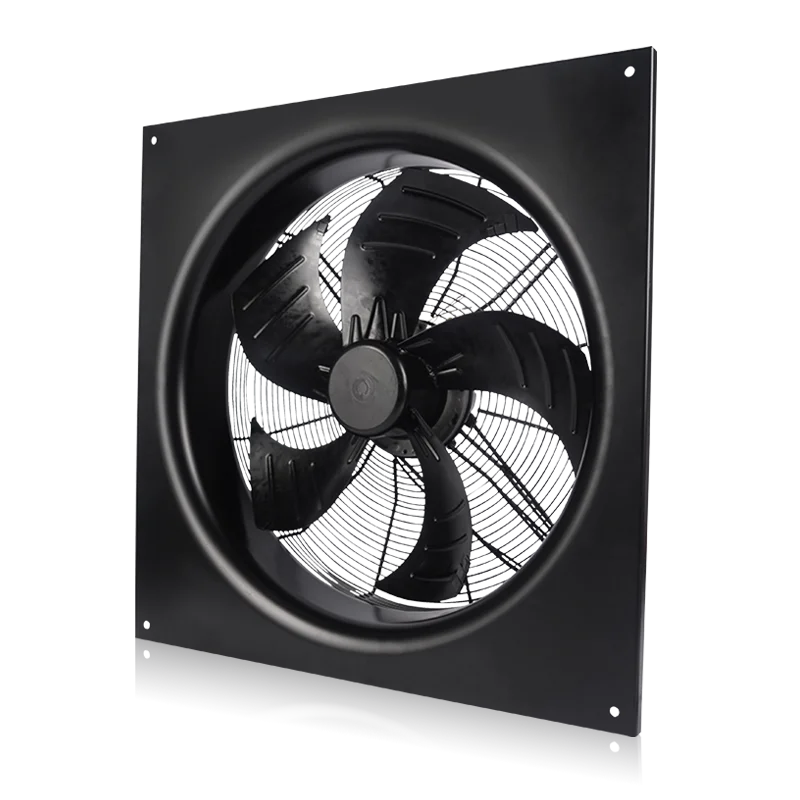
EC axial fan configurations
Review axial formats for ordinary auxiliary heat exchangers or ventilation openings in non-hazardous locations. Confirm the full model’s operating conditions with the equipment specification.
Explore this fan family →Product images show family configurations. Request the drawing, curve and electrical information for the exact model being considered.
What should your fan enquiry include?
Share these application details so the fan proposal can be reviewed against your equipment.
Bring the equipment context to the fan review.
A drawing, the operating condition and a clear control requirement make the proposed configuration easier to compare. For a replacement, include the existing nameplate and wiring details.
Discuss your application →Reference material for the next step.
Use the series information to narrow the mechanical format; confirm inlet conditions, controls and the proposed model performance separately.
Series catalog · PDFEC axial fans ↗Compare the axial series and installation dimensions before requesting operating-point, electrical and environmental data for the selected configuration.
Engineering checklistFan replacement: fit and controls ↗Check operating duty, mounting, supply, wiring and control behaviour before treating an existing fan and a proposed replacement as interchangeable.
Catalogs support initial selection. Confirm the current specification and approved configuration with the project team.
Are the fan categories on this page explosion-protected products?
No hazardous-area approval is established by these category links. They are references for ordinary auxiliary cooling in a non-hazardous location. A classified-area or process-gas requirement needs its own exact product, assembly and documentation assessment before any model can be proposed for that duty.
What information should accompany an auxiliary cabinet enquiry?
Identify the installation location, air being moved, heat load and allowable equipment temperature. Include the cabinet drawing, filters, pressure requirement, supply and controller needs. State environmental exposure and the project’s required documentation so the proposed configuration is reviewed within the correct cooling boundary.
Continue with the equipment you are designing.
Share your equipment and operating conditions.
Send the drawing, target duty and project timing. Add the existing fan details when you need a replacement.