
Fans for process-cooling equipment and air-side heat rejection
Identify the air-side component within the process-cooling system before specifying a fan. A machine chiller, dry cooler or enclosed heat-rejection section has its own coil, airflow and environmental conditions. Provide the process operating schedule and required equipment response so the proposed fan can be reviewed against that defined duty.
Translate the process requirement into a fan duty
Process refrigeration can remove heat from machines, materials or production equipment through a water or refrigerant circuit. The fan serves the air-side heat-rejection component. Keep the process temperature requirement and the cooler’s airflow specification connected, while assessing temperature stability with the complete cooling system.
Why a Water-Cooled Laser Still Needs a Condenser Fan
In an air-cooled compressor chiller, water collects the laser’s heat, refrigerant transfers it to a condenser, and airflow carries it into the surroundings. The three routes exchange heat without mixing their fluids.
Follow the air through the process
Water collects the load
A pump circulates cooled water through the laser cooling passage. The warmer return water reaches the evaporator.
The evaporator transfers heat
Heat crosses the evaporator metal wall into colder refrigerant, which boils. The process water stays separate.
Refrigerant carries heat to the condenser
Compression raises refrigerant pressure and temperature. At the condenser it releases heat and condenses, then passes the expansion device before returning to the evaporator.
Air carries heat away
The condenser fan moves ambient air between the fins. Heat passes from refrigerant through metal into the air, which leaves warmer.
Airflow function
- Move air through the assembled condenser and enclosure resistance.
- Keep the inlet and warm-air discharge paths separated.
- Follow the chiller control requirement within the selected fan’s operating range.
What can change the result
- A restricted inlet reduces air reaching the condenser.
- Hot discharge drawn back into the inlet raises the air-side starting temperature.
- A rotating fan may still operate below the airflow required by the installed coil.
Start with the complete air path
Share your layout and the information you already have. Unknown values can be identified before a configuration is selected.
Match the fan to this air path
LONGWELL EC axial motor-and-impeller families are candidates for the condenser air side. Share the coil data and chiller layout so the operating point, installation and controls can be assessed together. A compact centrifugal arrangement would require a separate airflow and packaging review.
Where it sits
In the chiller condenser air path, with a suitable shroud and mounting arrangement. The fan moves ambient air across the fins after heat has passed from the laser water into the refrigerant circuit.
Why consider this configuration
An axial assembly can be evaluated where the condenser has a direct air path. Selection must account for the coil, grille and enclosure resistance, along with discharge clearance and the required control range.
Check the result in your equipment
Find the fan for your condenser
Send the heat-rejection requirement, condenser airflow and pressure data, ambient temperature range and chiller layout. Ask LONGWELL to review a fan configuration and the drawing, curve and control details you need.
A layout, installation photos or your existing model is enough to start the discussion.
Engineering references
Describe the process and cooler operating range
Provide the process heat load, operating cycle and allowed temperature range. Ask the cooler designer for the airflow and pressure needed at the relevant load and ambient conditions. Include start-up or changing production states so the candidate fan can be checked across the actual equipment schedule rather than one nominal point.
- Process heat load and operating cycle
- Cooler airflow and pressure schedule
- Ambient and allowable process-temperature range
Allow for fouling and installation exposure
Show the coil and fan arrangement, including filters, guards and nearby obstructions. Describe dust, coolant mist, cleaning chemicals or other exposure and the intended maintenance condition. Review access for coil cleaning and fan replacement, then confirm the selected model’s documentation against the specified air stream and environment.
- Coil, filter and guard resistance
- Contamination and cleaning conditions
- Inspection and replacement access
Coordinate the fan with process fault handling
Identify the required response when airflow falls or a fan stops, including any alarm, reduced-load mode or process shutdown set by the equipment owner. Confirm supply, control signals and feedback for the proposed model. Include the fan sequence in the complete cooler’s commissioning plan and record the conditions used for acceptance.
- Alarm and process-response requirements
- Power, command and feedback interface
- Commissioning states and acceptance records
Match the fan family to the equipment.
Compare the proposed model at the required airflow and pressure, then check the installation and control interface.
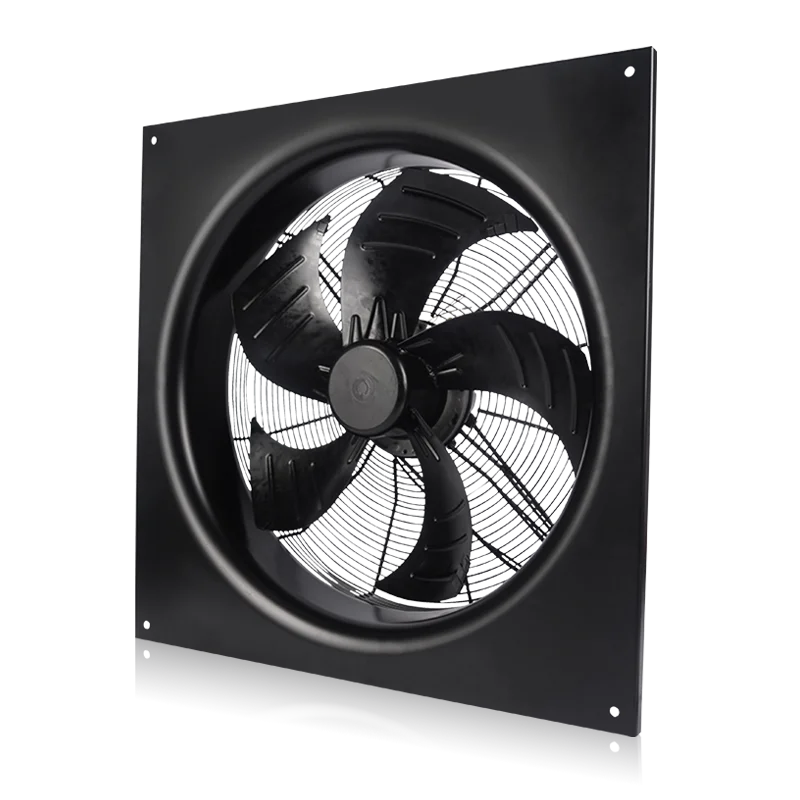
EC axial fan configurations
Review axial formats for process coolers with a suitable coil and direct air path. Confirm design resistance, inlet conditions and the required operating schedule.
Explore this fan family →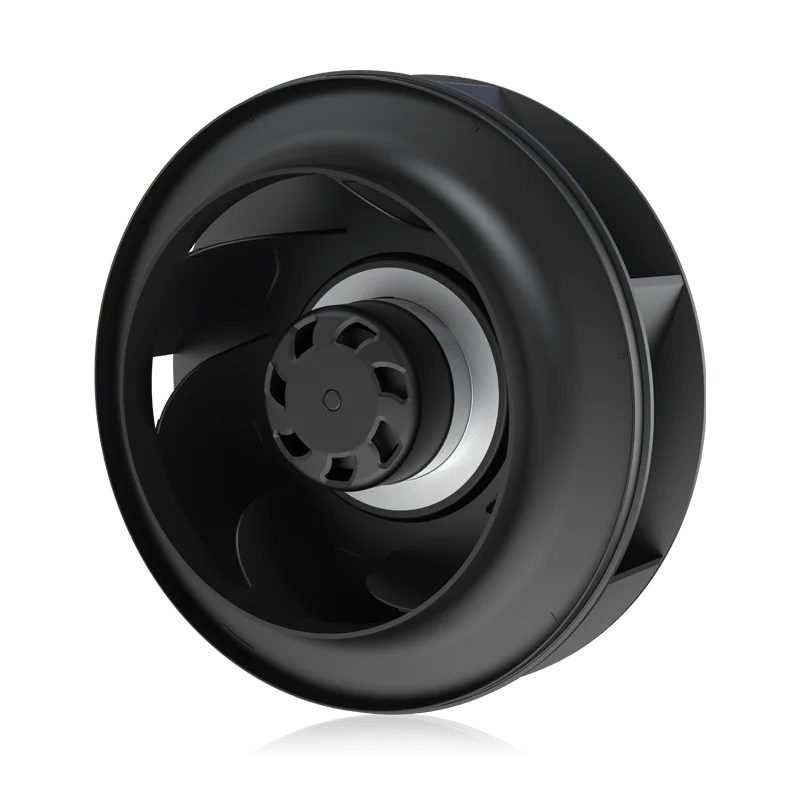
Backward-curved centrifugal fans
Review centrifugal configurations for enclosed or connected cooler air paths. Define the installation geometry and contamination limits for the actual proposed equipment before selection.
Explore this fan family →Product images show family configurations. Request the drawing, curve and electrical information for the exact model being considered.
What should your fan enquiry include?
Share these application details so the fan proposal can be reviewed against your equipment.
Bring the equipment context to the fan review.
A drawing, the operating condition and a clear control requirement make the proposed configuration easier to compare. For a replacement, include the existing nameplate and wiring details.
Discuss your application →Reference material for the next step.
Compare the axial series and installation dimensions before requesting operating-point, electrical and environmental data for the selected configuration.
Series catalog · PDFEC backward-curved centrifugal fans ↗Use the series information to narrow the mechanical format; confirm inlet conditions, controls and the proposed model performance separately.
Engineering checklistFan replacement: fit and controls ↗Check operating duty, mounting, supply, wiring and control behaviour before treating an existing fan and a proposed replacement as interchangeable.
Catalogs support initial selection. Confirm the current specification and approved configuration with the project team.
Does a fan selection establish process temperature stability?
Temperature stability depends on the cooling circuit, heat exchanger, controls and process load together. Use the cooler designer’s air-side duty for fan selection, then assess the complete equipment during representative production states. The fan curve alone does not prove the process-temperature result.
What changes when the cooler operates near contaminated equipment?
Describe the actual air exposure and any filtration before selecting a model. Include fouling in the pressure-loss and maintenance review, and confirm materials and operating limits. A general industrial category does not establish suitability for every chemical, dust or coolant-mist condition.
Continue with the equipment you are designing.
Share your equipment and operating conditions.
Send the drawing, target duty and project timing. Add the existing fan details when you need a replacement.