
Cooling fans for
industrial machinery.
Match the fan to the heat load, enclosure resistance and control interface. Start with the equipment you need to cool.
Three cooling tasks.
Different selection questions.
Cabinet cooling, motor ventilation and machine airflow place different demands on a fan. Define the task before comparing models.
Control cabinets & inverter enclosures
Remove heat from power electronics while managing filters, internal obstructions and recirculation.
Explore automation cooling →- Specify electrical heat losses, ambient conditions and the permissible component temperature.
- Include inlet, filter and outlet resistance at the required airflow.
- Confirm available space, supply, speed command and any alarm or feedback signal.
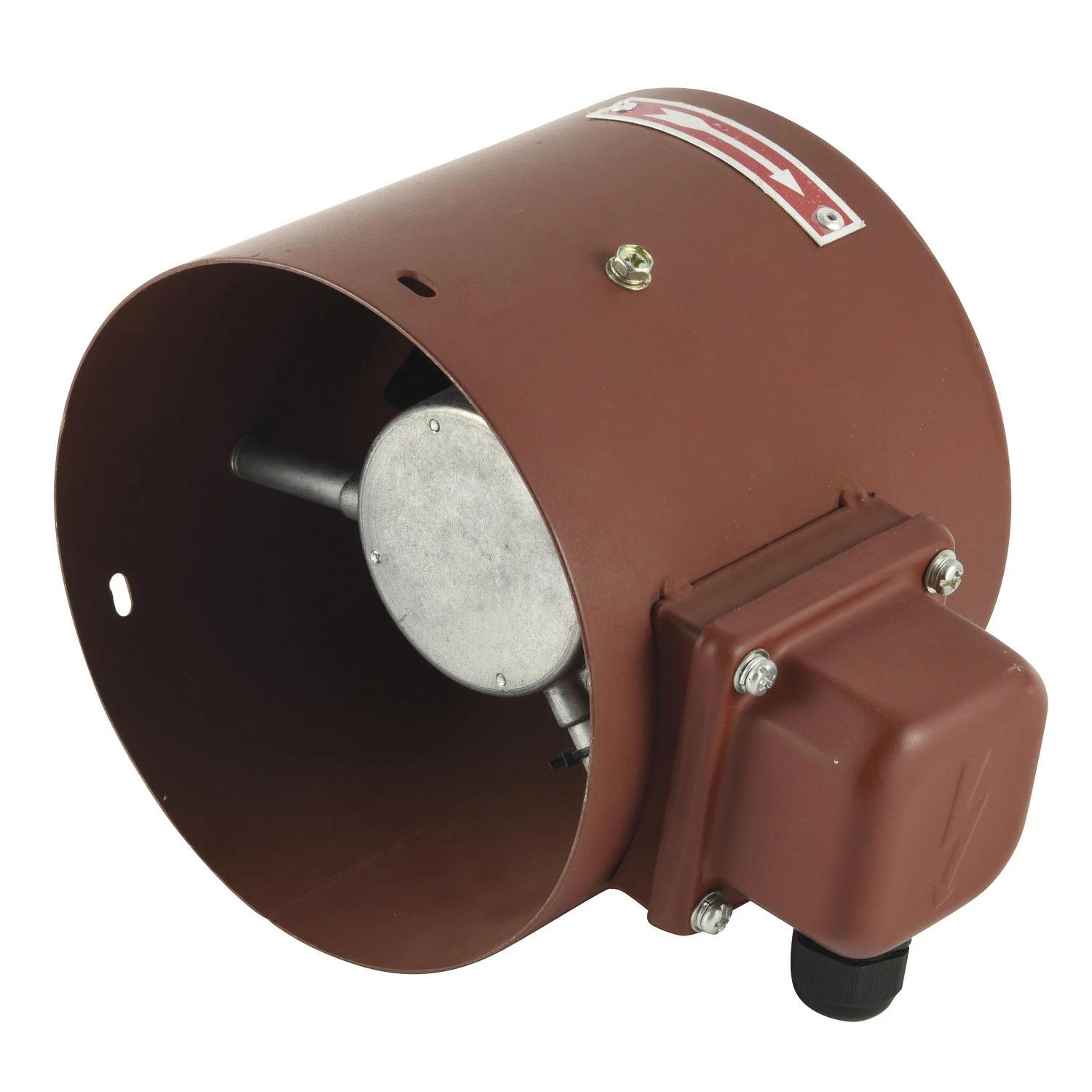
Forced ventilation for motors
Assess the motor’s cooling requirement across its operating speed and load range.
View motor-cooling fans →- Provide the motor frame and fan-cover drawing, including mounting and clearance.
- Check cooling at low motor speed as well as the rated operating condition.
- Agree the independent fan supply and the machine’s start, stop and protection logic.
Machine enclosures & process equipment
Move air through the actual inlet, equipment chamber and outlet or duct arrangement.
Review centrifugal blowers →- Describe the air being moved, including temperature, dust, moisture or coolant mist.
- Provide the required airflow at system resistance, rather than a free-air figure alone.
- Check vibration, sound, maintenance access and the installation orientation.
A fan cannot correct
an obstructed enclosure.
Trace where fresh air enters, which components it passes, and where warmed air leaves. Short-circuiting or recirculating flow can leave local hot spots even when the fan is moving air.
Illustrative path. Locate the fan and confirm airflow direction in the actual enclosure layout.
Review electronics-cooling requirements →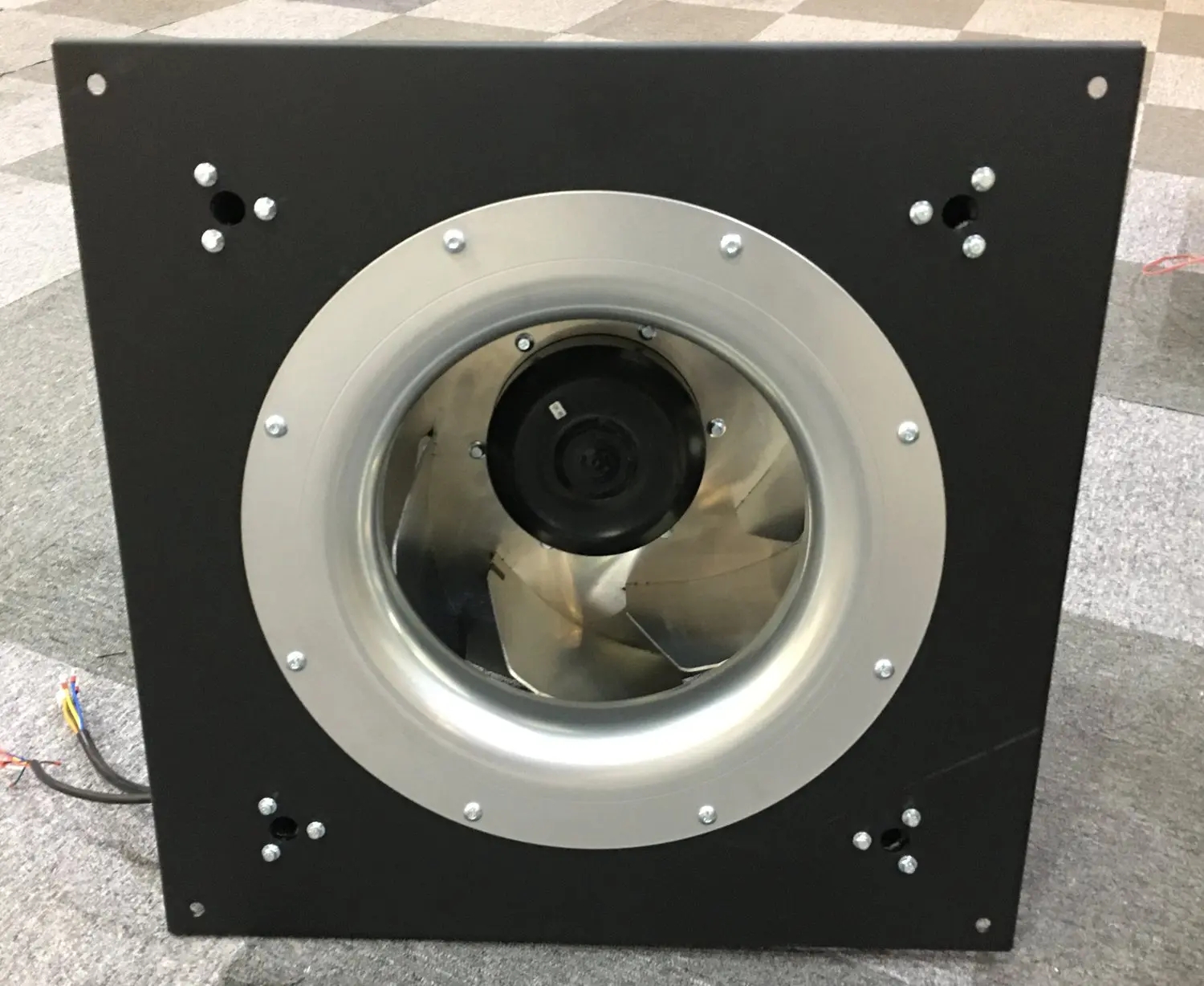
Compare the fan at your operating point.
Use these families as a starting point. The selected model, housing and inlet arrangement determine the usable pressure–airflow performance.
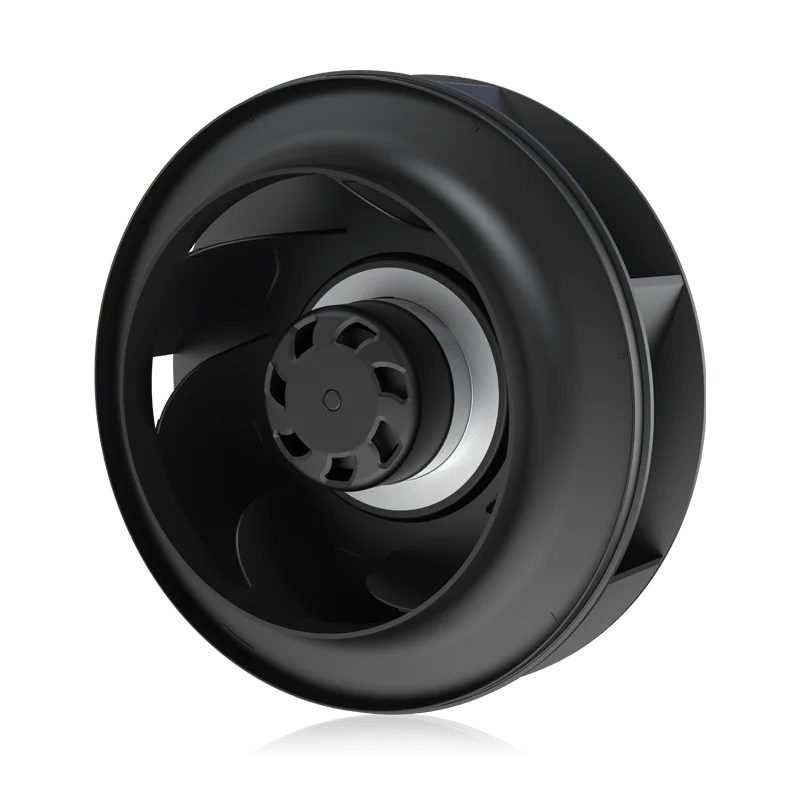
Backward-curved centrifugal fans
Review compact assemblies for filtered enclosures and equipment with airflow resistance. Include inlet geometry and the installed duty point.
Explore centrifugal fans →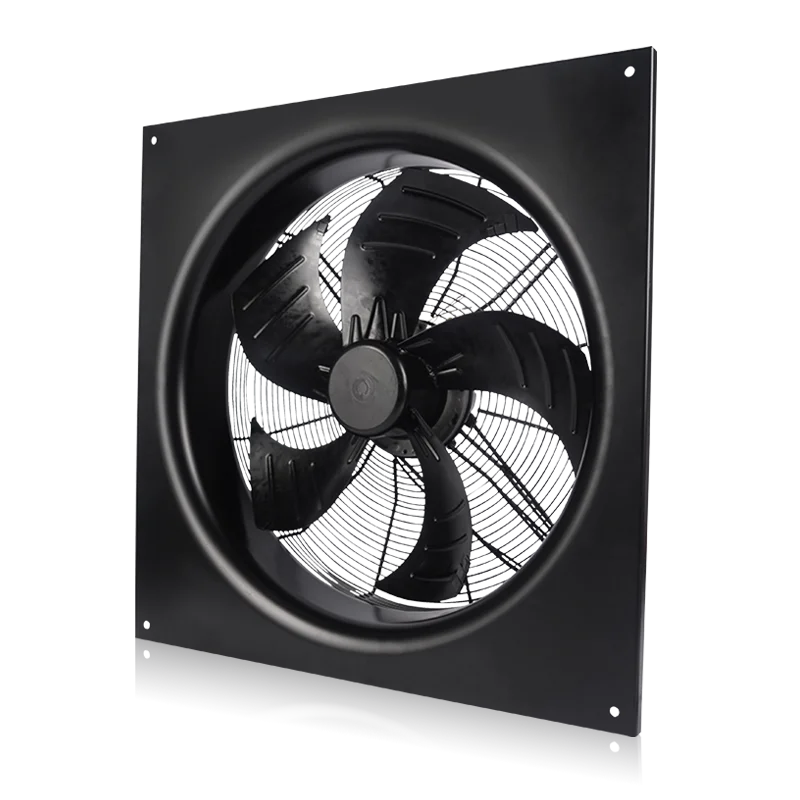
Axial fans
Review direct airflow paths, guards and mounting clearances. Confirm the pressure requirement and the electrical and environmental configuration.
Explore EC axial fans →Motor-cooling assemblies
Start with the motor frame and fan-cover interface. Verify mechanical fit and cooling throughout the machine’s operating cycle.
Explore motor ventilation →Ask for evidence
at the proposed configuration.
A catalog narrows the options. The drawing, performance curve and equipment test confirm whether the proposal works in your machine.
- Operating pointAirflow, pressure and input power at the same stated condition.
- Fit & controlsMounting, inlet clearance, voltage, wiring and the required command or feedback.
- Equipment testTemperature, sound and airflow under the intended operating cycle and filter condition.
Download the series catalogs.
Confirm the proposed model.
Review fan families and dimensions before requesting the current model specification.
Series catalog / PDF · 3.8 MBEC backward-curved centrifugal fans ↗Review the series range and installation information for filtered equipment and enclosures.
Engineering checklistReplacing an existing fan? →Check duty point, physical fit, supply, wiring and controls before treating a model as interchangeable.
Series catalog / PDF · 1 MBConverter motor-cooling fans ↗Review LW-G configurations and dimensions, then confirm the motor-frame and fan-cover interface.
Series catalogs are references. Request the approved drawing, curve and wiring information for the selected model and configuration. Browse all catalogs →
Can I choose a replacement by diameter and voltage alone?
No. Check the duty point, installation dimensions, inlet arrangement, rotation and control interface. Similar size or voltage does not establish matching performance or wiring.
What should I provide when I do not know the required airflow?
Share the heat sources and electrical losses, enclosure dimensions, permissible temperatures, ambient conditions and airflow path. Include filters, grilles, obstructions and the equipment operating cycle so the requirement can be assessed.
What changes in dusty or coolant-mist environments?
Describe the exposure and filtration arrangement. Review materials, motor and electronics protection, cleaning access and any required test evidence for the proposed configuration; suitability cannot be inferred from a product-family photograph.
Send the machine requirement.
We’ll review the fan options.
For a new design, share the enclosure and duty. For a replacement, add the existing nameplate, drawing and controller details.
- Equipment type and the cooling task
- Airflow / pressure, or heat-load information
- Available space and mounting drawing
- Supply, speed control and feedback requirements
- Temperature, dust / moisture and sound conditions
- Sample quantity, annual demand and project timing