
Fan selection for cooling-tower air movement
Start with the tower designer’s required airflow and pressure, then review the fan’s mechanical interface and wet operating environment. Fill, eliminators, inlet openings and discharge geometry form the air path. Include part-load control, sound limits, vibration checks and maintenance access in the proposed fan configuration.
Match the fan to the complete tower arrangement
Cooling towers combine air movement with a water-side process. The proposed fan must be assessed in the actual tower geometry, including the fan ring, fill and eliminators. Use the tower’s thermal design requirements to define the air-side duty rather than assigning cooling capacity from a fan catalog.
Use the tower air-path resistance
Provide the airflow and pressure specified for the tower’s design condition. Include the fill, eliminators, inlet and discharge arrangement, plus any additional restriction at the installation. Review how the duty changes at part load and confirm that the candidate performance data corresponds to the proposed fan configuration and speed.
- Design airflow and total air-path loss
- Fill, eliminator and inlet conditions
- Required part-load operating points
Resolve mounting and wet exposure
Supply the fan-ring dimensions, support arrangement, clearance and access drawing. Describe water exposure, condensation and water-treatment chemicals relevant to the fan position. Review the complete assembly’s materials and documented conditions with the equipment designer, including motor location and cable routing, before agreeing its use in the tower.
- Fan ring, supports and clearances
- Wet conditions and treatment chemicals
- Inspection and replacement route
Define sound, vibration and controls
State the installation sound limits, including any night operating schedule and assessment location. Agree the speed-command range and controller response, and include vibration checks in the equipment acceptance plan. Review the installed structure and fan together so component data is interpreted within the tower’s actual operating arrangement.
- Night and daytime operating schedule
- Sound location and vibration assessment
- Speed command and fault-response sequence
Match the fan family to the equipment.
Compare the proposed model at the required airflow and pressure, then check the installation and control interface.
EC axial fan configurations
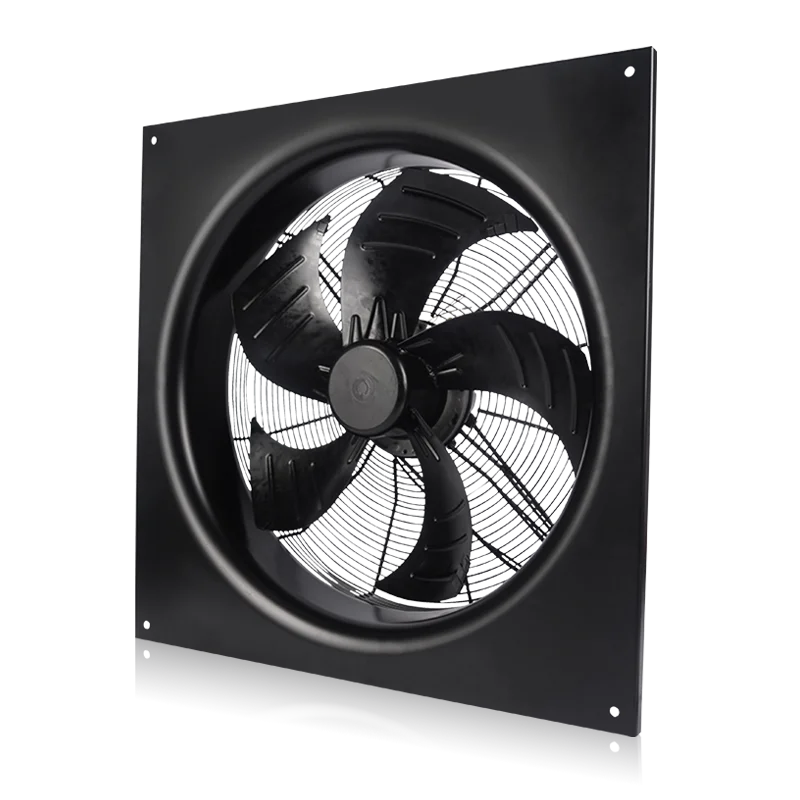
Review axial configurations for a tower air path that matches their duty and mounting format. Confirm wet exposure, fan-ring geometry and the exact model documentation.
Explore this fan family →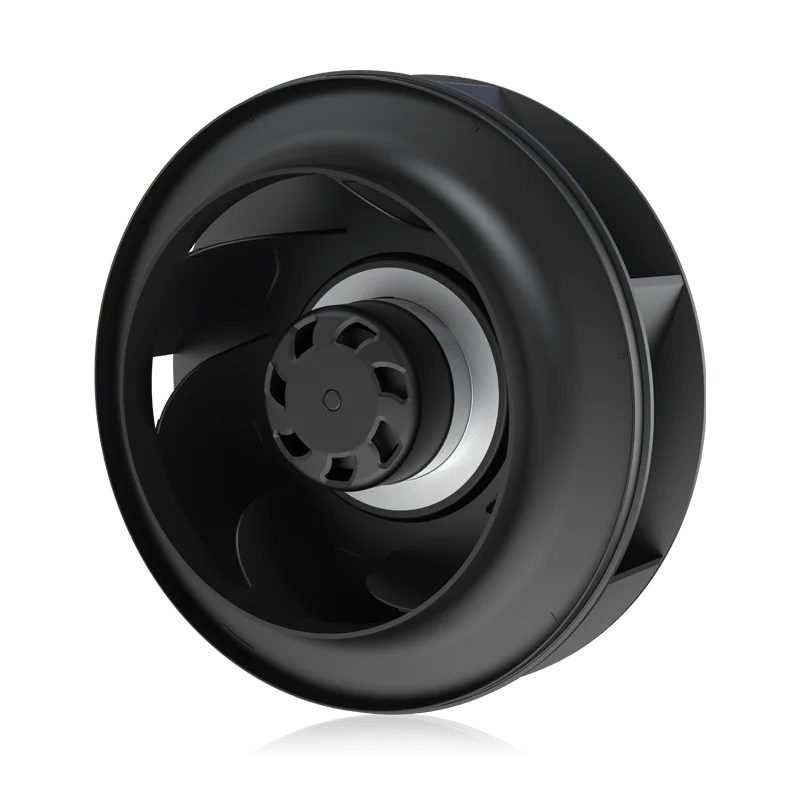
Backward-curved centrifugal fans
Review centrifugal configurations only for tower designs using a compatible forced-draft arrangement. Establish housing, pressure, motor location and moisture limits with the tower designer.
Explore this fan family →Product images show family configurations. Request the drawing, curve and electrical information for the exact model being considered.
What should your fan enquiry include?
Share these application details so the fan proposal can be reviewed against your equipment.
Bring the equipment context to the fan review.
A drawing, the operating condition and a clear control requirement make the proposed configuration easier to compare. For a replacement, include the existing nameplate and wiring details.
Discuss your application →Reference material for the next step.
Compare the axial series and installation dimensions before requesting operating-point, electrical and environmental data for the selected configuration.
Series catalog · PDFEC backward-curved centrifugal fans ↗Use the series information to narrow the mechanical format; confirm inlet conditions, controls and the proposed model performance separately.
Engineering checklistFan replacement: fit and controls ↗Check operating duty, mounting, supply, wiring and control behaviour before treating an existing fan and a proposed replacement as interchangeable.
Catalogs support initial selection. Confirm the current specification and approved configuration with the project team.
Does a fan catalog specify the tower cooling capacity?
Tower performance also depends on the water conditions, fill, ambient conditions and the complete air path. Use the tower designer’s requirement to select the fan operating point, then assess cooling performance with the assembled tower at the agreed design conditions.
Are all axial fans suitable for tower moisture exposure?
Suitability depends on the complete model, its materials, motor and electronics, plus the installation location. Describe direct wetting, condensation and treatment chemicals and request the applicable documentation. A product-family photograph does not establish the permitted conditions for a particular tower.
Continue with the equipment you are designing.
Share your equipment and operating conditions.
Send the drawing, target duty and project timing. Add the existing fan details when you need a replacement.