
Fans for Air Movement in Vertical Farms
Vertical farms combine growing racks, lighting and air-treatment equipment within a constrained space. Define the fan’s task within that system: distribute air around plants, move air through treatment equipment or cool electronics. Each task needs its own operating point, installation and control requirements.
Treat rack distribution and air treatment as separate duties
This page helps growing-system and equipment builders prepare fan requirements from the rack layout and environmental design. The crop designer sets the plant-environment targets; the fan review addresses airflow, resistance, mounting and controls. Lighting, nutrient delivery and crop-performance outcomes remain separate parts of the project.
Map airflow within the growing racks
Provide rack spacing, shelf height, plant canopy and the positions of supply or return openings. Identify obstructions as the crop matures, and define the intended direction and distribution of air. Agree measurement locations with the growing-system designer rather than assuming uniform conditions from the total fan airflow.
- Rack geometry and mature crop clearance
- Supply/return positions and airflow direction
- Canopy distribution objectives and measurement points
Select fans for the air-treatment path
Cooling, dehumidification and filtration equipment introduce resistance that differs from an open rack circulation path. Provide the heat and moisture loads to the air-treatment designer, then use the resulting fan duties. Review coils, filters and distribution ducts at the conditions expected during operation and maintenance intervals.
- Coil, filter and duct resistance
- Air-treatment operating modes and load range
- Loaded-filter and condensation conditions
Review controls and electrical cooling separately
Coordinate circulation with the growing system’s operating schedule and sensor locations. Where lighting drivers or control cabinets need cooling, prepare a separate electronics heat-load and enclosure brief. Confirm speed commands, feedback and fault behavior for each proposed fan so the control strategy matches the actual component version.
- Lighting schedule and fan operating modes
- Controller signals and fan-fault indication
- Separate electronics heat load and cabinet layout
Match the fan family to the equipment.
Compare the proposed model at the required airflow and pressure, then check the installation and control interface.
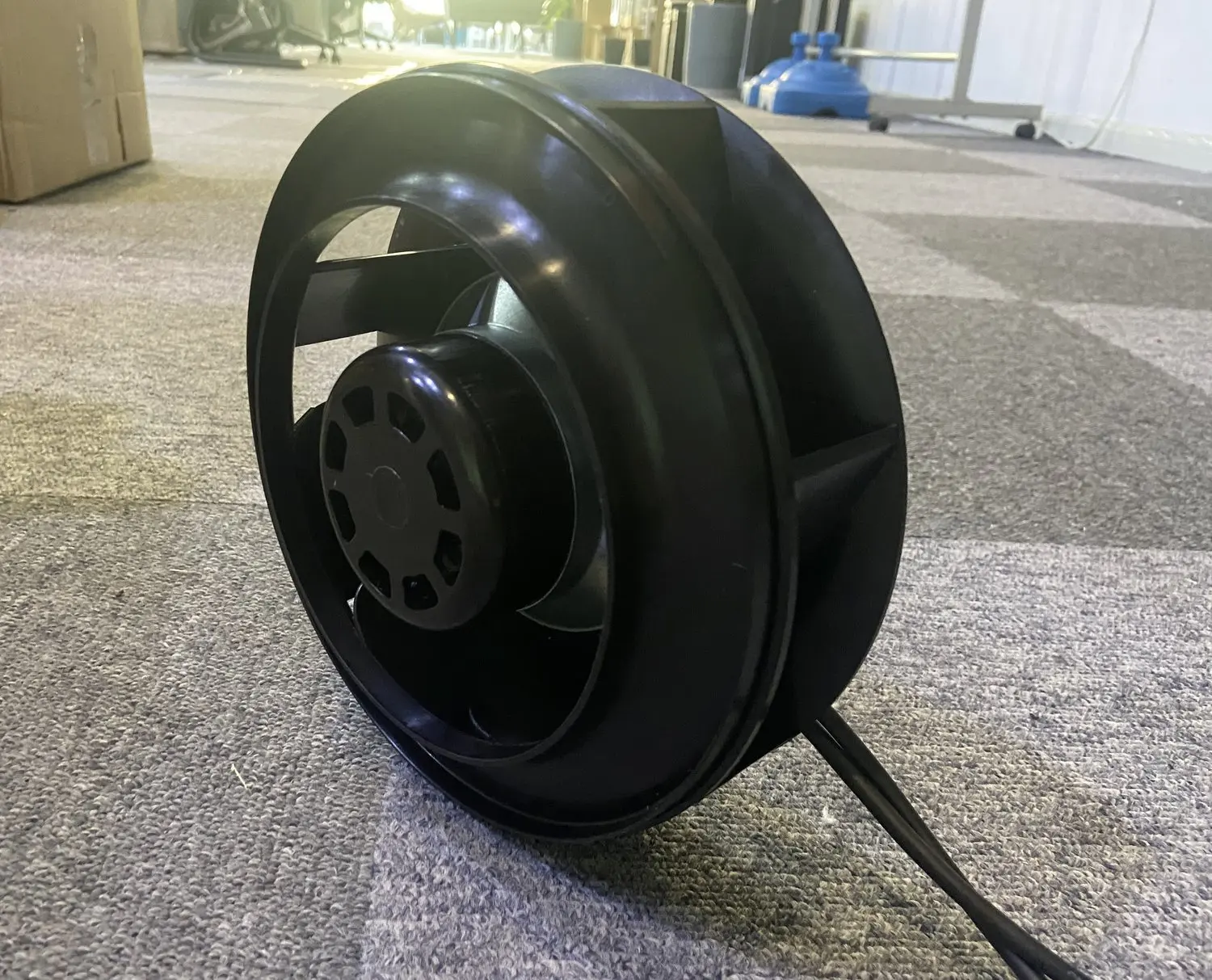
Backward-curved centrifugal fans
Review centrifugal components for air-treatment modules or restricted distribution paths. Select against the coil, filter and duct resistance of the proposed equipment configuration.
Explore this fan family →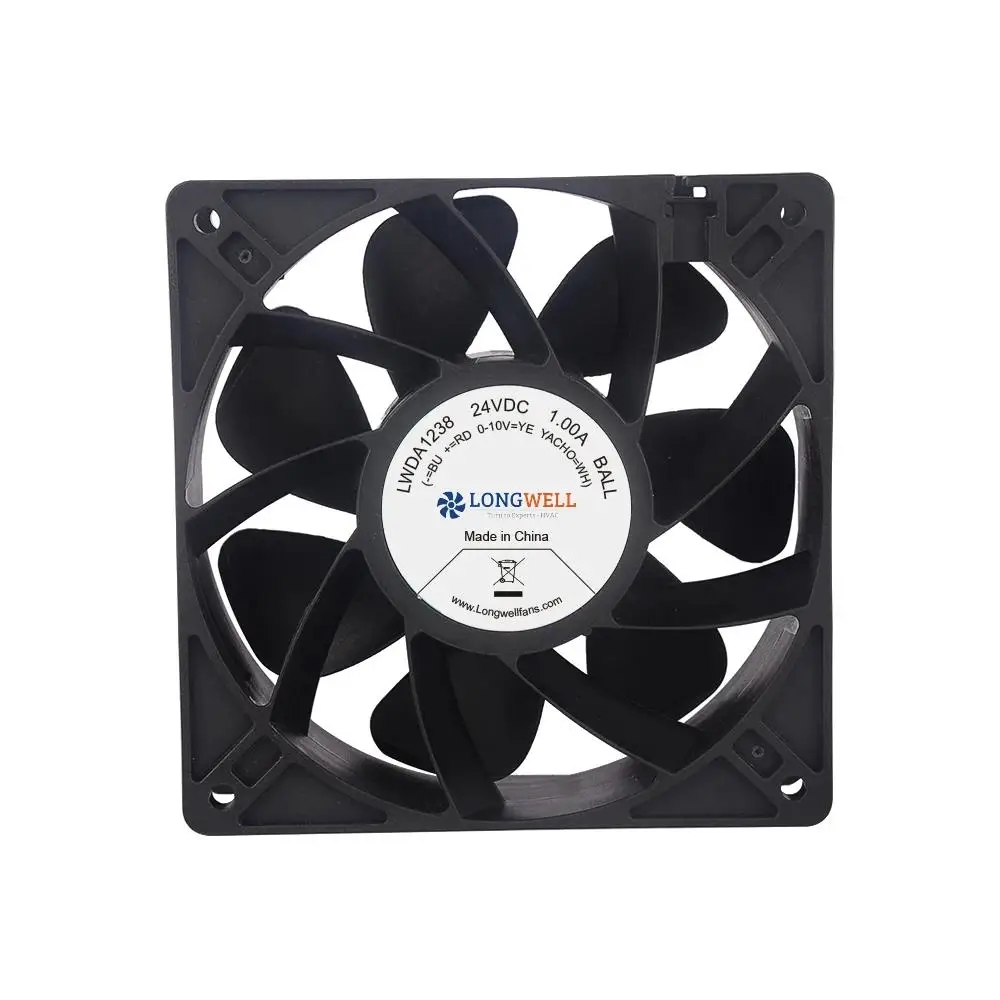
Compact DC axial fans
Review compact DC axial fans for electronics cooling or a defined rack component. Confirm the operating point, moisture exposure and mounting rather than assuming complete-rack coverage.
Explore this fan family →Product images show family configurations. Request the drawing, curve and electrical information for the exact model being considered.
What should your fan enquiry include?
Share these application details so the fan proposal can be reviewed against your equipment.
Bring the equipment context to the fan review.
A drawing, the operating condition and a clear control requirement make the proposed configuration easier to compare. For a replacement, include the existing nameplate and wiring details.
Discuss your application →Reference material for the next step.
Compare centrifugal configurations for the air-treatment duty and request the selected curve, inlet arrangement and mounting drawing.
Series catalog · PDFCompact DC cooling fan catalog ↗Explore compact fan formats for defined rack or electronics positions, with exact electrical and environmental requirements confirmed before selection.
Catalogs support initial selection. Confirm the current specification and approved configuration with the project team.
Can a fan specification guarantee uniform plant conditions?
Uniform conditions depend on the rack layout, plant growth, air treatment and distribution arrangement. A fan specification supports component selection but cannot establish the growing environment on its own. Check representative canopy locations using the growing-system designer’s targets and test conditions.
Should lighting-driver cooling use the same airflow brief?
Prepare its thermal requirement separately. Driver and control electronics have their own heat losses, enclosure restrictions and temperature limits. Their cooling path may interact with the growing space, but it should not be inferred from the crop circulation airflow or an air-treatment unit’s nominal capacity.
Continue with the equipment you are designing.
Share your equipment and operating conditions.
Send the drawing, target duty and project timing. Add the existing fan details when you need a replacement.