
Fans for Dishwasher Drying and Auxiliary Cooling
Prepare a dishwasher fan enquiry around the drying-air route and the conditions at the fan location. Include pressure loss, condensation, the wash-and-dry cycle and the available mounting depth. LONGWELL centrifugal and axial references support separate reviews for drying airflow and dry electrical-compartment cooling where those functions are required.
Locate the fan relative to moisture
Describe whether the proposed fan circulates drying air, extracts air or cools a separate electrical compartment. Record the conditions in that exact position and provide the appliance cycle. This helps establish the required materials, motor exposure and control behaviour for a model-specific comparison.
How Airflow and Desiccant Drying Work in a Dishwasher
A dishwasher with a moisture-absorbing mineral module needs airflow between the wet load and that module. During drying, a fan carries humid air into the mineral chamber and returns warmer, drier air to the dishes. A separate regeneration phase prepares the mineral for another cycle.
LONGWELL fan selection. LONGWELL centrifugal fan families can be assessed for the drying-air module. Start with the complete flow path and mineral-bed resistance. Then evaluate moisture protection, temperature exposure, motor control and mounting within the dishwasher’s operating sequence.
Family identity does not establish compatibility with a particular mineral system or hot, humid dishwasher environment.
Operating requirements for this example
In the drying-air duct circulating humid tub air through the mineral chamber.
- Required circulation through the loaded dishwasher.
- Mineral-bed, duct and opening pressure losses.
- Air temperature and moisture exposure at the fan.
- Drying and regeneration sequence requirements.
- Supply voltage, control interface and power budget.
- Mounting space, sound target and protection needs.
Use the existing product section to distinguish the fan positions and configurations. The animation illustrates one air path; it does not qualify a model for every machine on this page.
Send LONGWELL your air route, mineral-bed resistance and operating conditions. The email link opens a draft for you to complete and send.
Map the drying-air passage
Show how drying air enters, passes through the appliance and returns or discharges. Include restrictions from ducts, filters or any heat-exchange section in the required duty point. State the intended airflow through the drying cycle so the fan proposal can be reviewed against the complete passage and programme.
- Circulation or extraction layout
- Pressure loss through the drying path
- Airflow requirements during the cycle
Describe moisture and installation limits
Identify direct water, condensation and cleaning-agent exposure at the proposed fan location. Record air-stream and motor temperatures, plus the mounting orientation and any drainage arrangement. Confirm the complete model’s permitted conditions rather than selecting solely from overall dimensions or the general name of the product family.
- Water and condensation exposure
- Motor location, orientation and drainage
- Air-stream and motor temperatures
Integrate controls and service access
Specify supply, connector, speed command and the behaviour expected when the drying programme starts or stops. Define sound limits for the relevant user settings and access for fan replacement. Where a separate electronics compartment needs forced cooling, provide its own duty and ambient conditions as a distinct selection task.
- Programme timing and command signal
- Sound target and service access
- Separate electrical-compartment cooling duty
Match the fan family to the equipment.
Compare the proposed model at the required airflow and pressure, then check the installation and control interface.
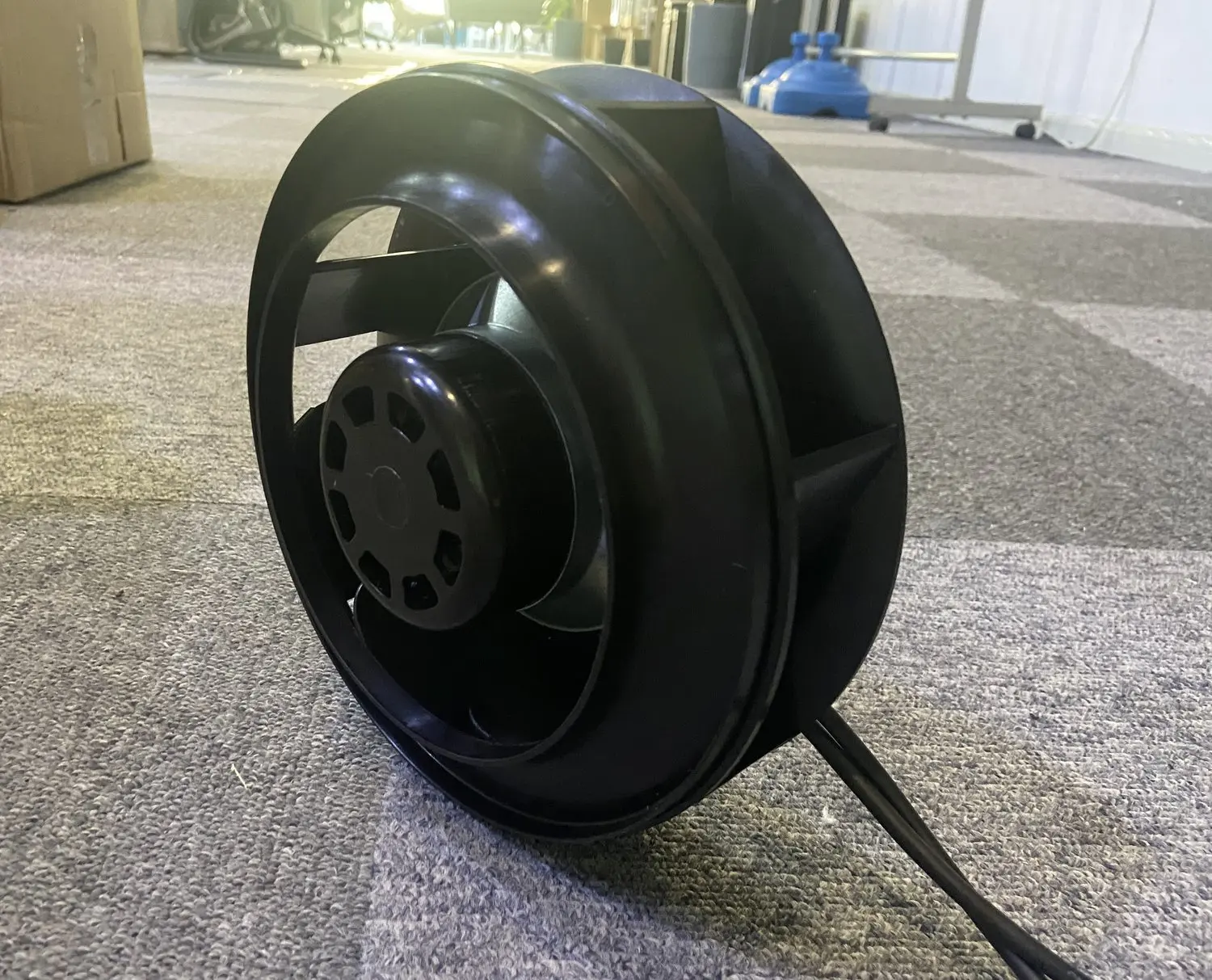
EC backward-curved centrifugal fans
Review compact centrifugal configurations for a defined drying-air passage. Model selection needs the actual pressure, temperature, moisture exposure and mounting conditions in the appliance.
Explore this fan family →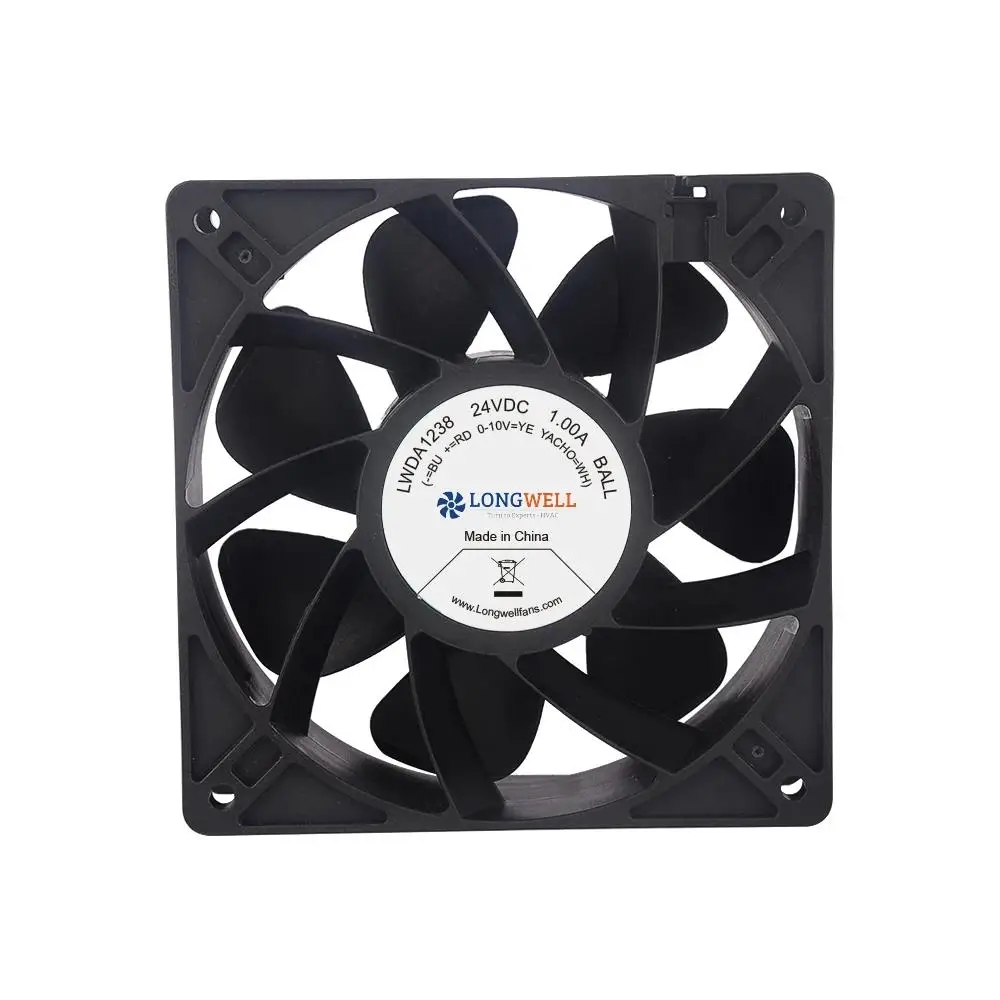
Compact DC axial fans
Consider compact DC axial formats for a separately defined dry electrical-compartment cooling path. Specify its heat load, resistance, connector interface and permitted ambient conditions.
Explore this fan family →Product images show family configurations. Request the drawing, curve and electrical information for the exact model being considered.
What should your fan enquiry include?
Share these application details so the fan proposal can be reviewed against your equipment.
Bring the equipment context to the fan review.
A drawing, the operating condition and a clear control requirement make the proposed configuration easier to compare. For a replacement, include the existing nameplate and wiring details.
Discuss your application →Reference material for the next step.
Use the family references for initial comparison, then confirm the selected assembly with its inlet geometry and required operating point.
Series catalog · PDFCompact DC cooling fan catalog ↗Compare compact fan formats, then request the selected electrical specification, connector definition and operating data for the enclosure.
Engineering checklistFan replacement controls checklist ↗Record electrical, control and mechanical interfaces when comparing an existing fan with a proposed replacement in the complete equipment.
Catalogs support initial selection. Confirm the current specification and approved configuration with the project team.
Is a normal cooling fan automatically suitable for drying air?
Its suitability depends on the actual temperature, moisture and chemical exposure at the installation position. Define those conditions and request the complete model’s documented limits. A fan chosen for a dry electronics compartment does not establish suitability for a separate moist drying-air passage.
Why include the appliance programme in the enquiry?
The programme describes when airflow is needed and the conditions before and after the drying stage. Include fan timing, temperature exposure and the intended stopping behaviour. This helps assess the control interface and installation conditions over the complete cycle, rather than only at a single running point.
Continue with the equipment you are designing.
Share your equipment and operating conditions.
Send the drawing, target duty and project timing. Add the existing fan details when you need a replacement.