
Fans for refrigerated display cabinets and freezers
Plan the fan around the cabinet air path and the product-storage requirement. Internal circulation and condenser heat rejection may use separate components with different conditions. Include shelving, loading, door use, defrost and maintenance in the brief so a proposed fan can be reviewed as part of the complete appliance.
Separate product circulation from condenser airflow
A display cabinet’s temperature distribution depends on its air passages, stored load, coil and controls. A condenser fan serves a different heat-rejection path. Identify the component being selected and preserve the cabinet designer’s airflow and environmental requirements when comparing a new fan or replacement assembly.
Map airflow through the loaded display
Provide the cabinet section, shelf arrangement, supply openings and return passages. Identify the loading pattern and door or open-front arrangement used for assessment. Obtain the required airflow and pressure from the appliance designer, then review how the proposed fan fits the circulation path without obstructing access or service.
- Shelf layout and representative loading
- Supply and return-air passages
- Required circulation duty and mounting space
Describe cold operation and defrost
State the operating temperature range, fan location and conditions during defrost and restart. Include condensation and cleaning exposure, with the equipment’s fan-control sequence. Identify the refrigerant and project documentation requirements so the proposed complete fan configuration can be assessed within the appliance’s specified integration boundary.
- Cold and defrost operating states
- Fan restart and speed sequence
- Refrigerant and required equipment documents
Compare operation in the complete cabinet
Record input power at the intended operating points and use the actual equipment schedule for a replacement comparison. Define sound measurement locations in the retail environment. Check temperature distribution and fan operation with the cabinet, including representative loading and door use, before accepting the proposed component into the appliance.
- Power comparison at equivalent duty
- Retail sound assessment conditions
- Loaded-cabinet operation and service access
WATCH THE APPLICATION PRINCIPLE · ENGLISH
How an open refrigerated case recirculates its cold air
Follow the supply outlet, descending air curtain and return grille back to the evaporator. The fan keeps this loop moving, while shelf loading, open passages and surrounding air affect how well it reaches the products.
English narration and on-screen captions · 72 seconds · Equipment and flow paths are schematic.
Product scope in this film: The film uses one illustrative cross-flow-fan cabinet. A LONGWELL EC cross-flow family can be evaluated for that arrangement; it does not establish an exact cabinet fit or a guaranteed product temperature.
Explore the LONGWELL fan family · Share your equipment and air-path requirements
Match the fan family to the equipment.
Compare the proposed model at the required airflow and pressure, then check the installation and control interface.
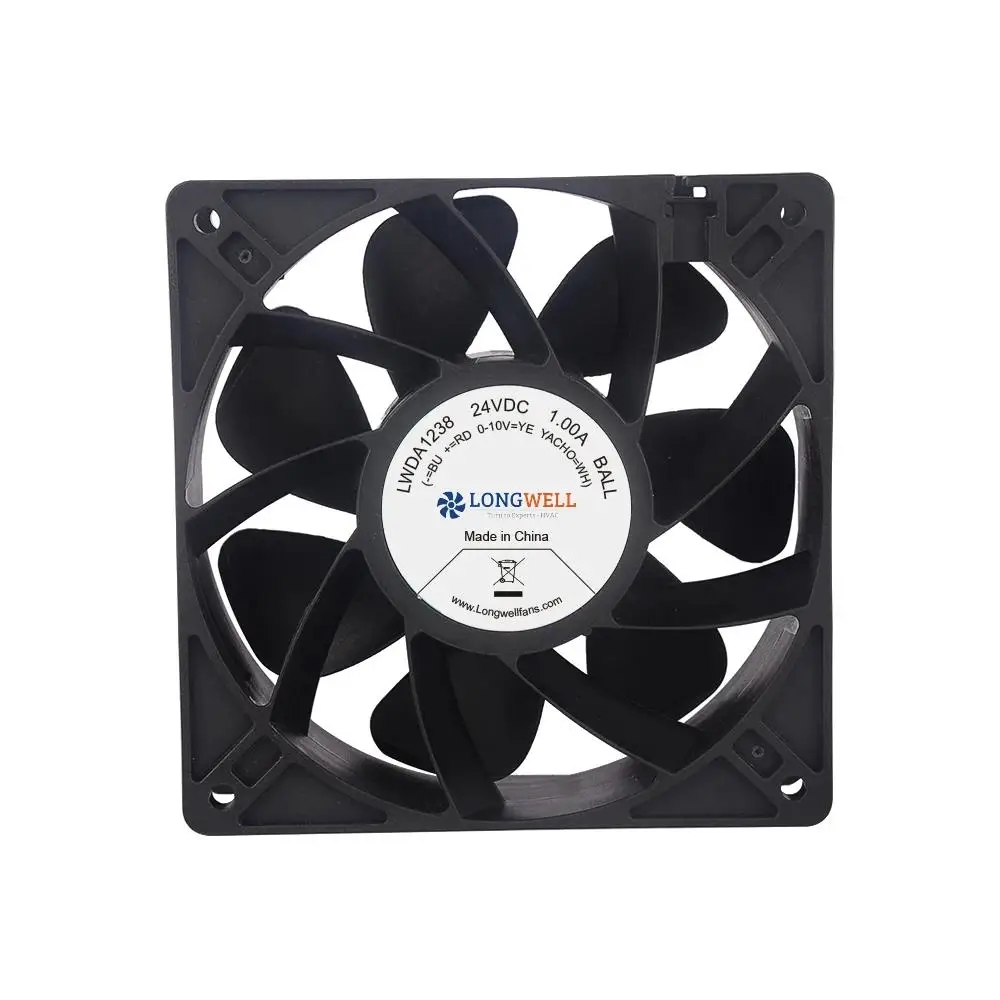
Compact DC axial fans
Review compact DC axial formats for small cabinet air paths with a suitable mounting arrangement. Confirm installed resistance, temperature and defrost conditions for the selected component.
Explore this fan family →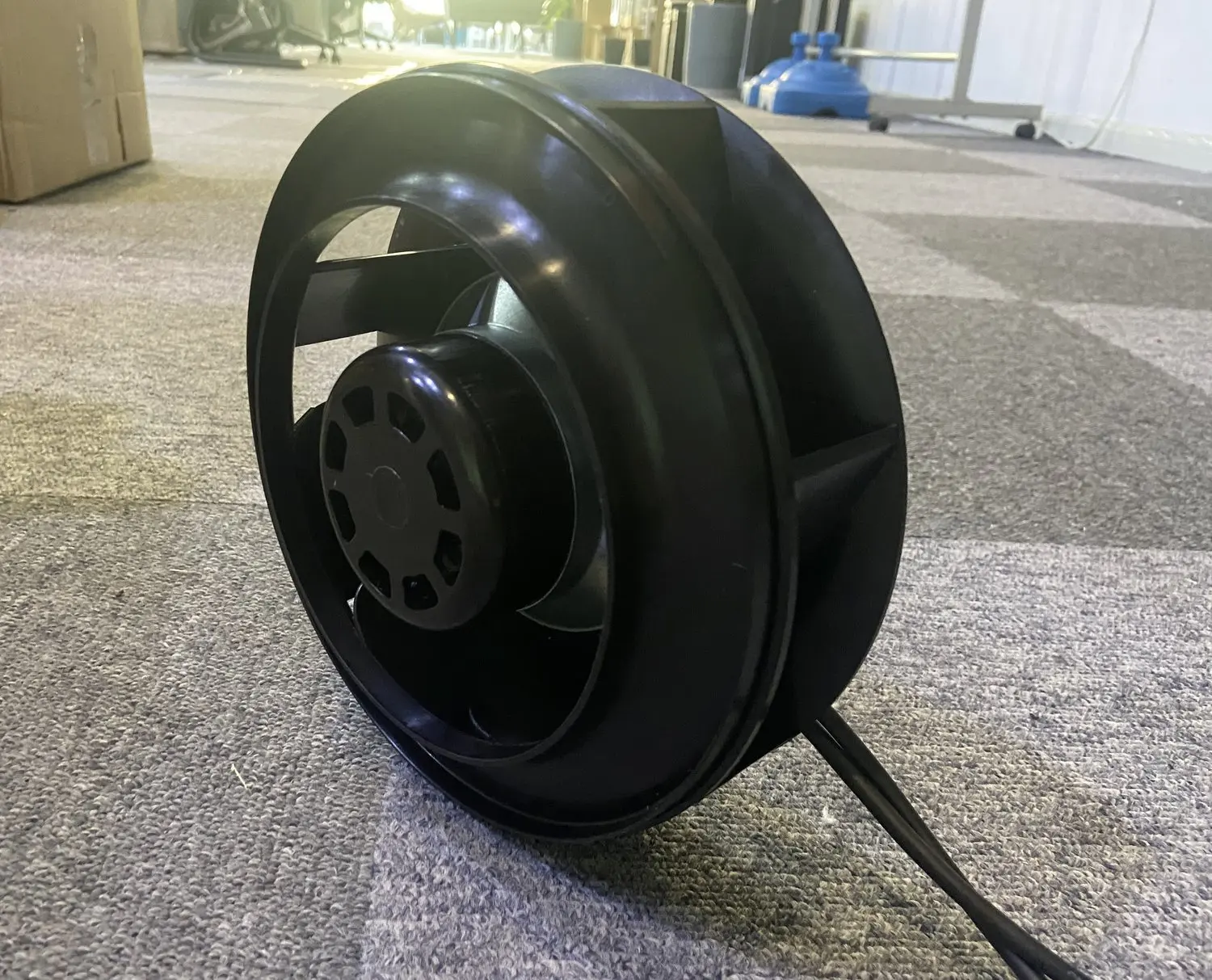
Compact centrifugal configurations
Review compact centrifugal formats for cabinet air paths using a matching inlet and radial discharge. Confirm coil resistance, temperature exposure and access within the appliance.
Explore this fan family →Product images show family configurations. Request the drawing, curve and electrical information for the exact model being considered.
What should your fan enquiry include?
Share these application details so the fan proposal can be reviewed against your equipment.
Bring the equipment context to the fan review.
A drawing, the operating condition and a clear control requirement make the proposed configuration easier to compare. For a replacement, include the existing nameplate and wiring details.
Discuss your application →Reference material for the next step.
Compare compact fan formats, then request the selected electrical specification, connector definition and operating data for the enclosure.
Series catalog · PDFEC backward-curved centrifugal fans ↗Use the series information to narrow the mechanical format; confirm inlet conditions, controls and the proposed model performance separately.
Engineering checklistFan replacement: fit and controls ↗Check operating duty, mounting, supply, wiring and control behaviour before treating an existing fan and a proposed replacement as interchangeable.
Catalogs support initial selection. Confirm the current specification and approved configuration with the project team.
Does a fan selection guarantee cabinet storage temperature?
The coil, air passages, controls, loading and door use all influence storage conditions. Select the fan for the required duty, then check the complete cabinet at representative operating states. Use the appliance’s agreed temperature-distribution and performance assessment rather than a component-only claim.
Can an existing fan be replaced solely to reduce watts?
Maintain the required delivered airflow and pressure while comparing electrical input. Check mounting, rotation, controls and the temperature or defrost conditions as well. Validate the replacement within the cabinet so a lower component input does not conceal a change in the required equipment duty.
Continue with the equipment you are designing.
Share your equipment and operating conditions.
Send the drawing, target duty and project timing. Add the existing fan details when you need a replacement.