
Fan Selection for Rail HVAC and Electronics
Rail equipment places fans in passenger HVAC, converter cabinets and auxiliary electronics enclosures. Each location has different airflow, electrical, mechanical and environmental requirements. Start with the installation and qualification plan, then assess a candidate fan with the equipment integrator; catalog availability does not establish rail approval.
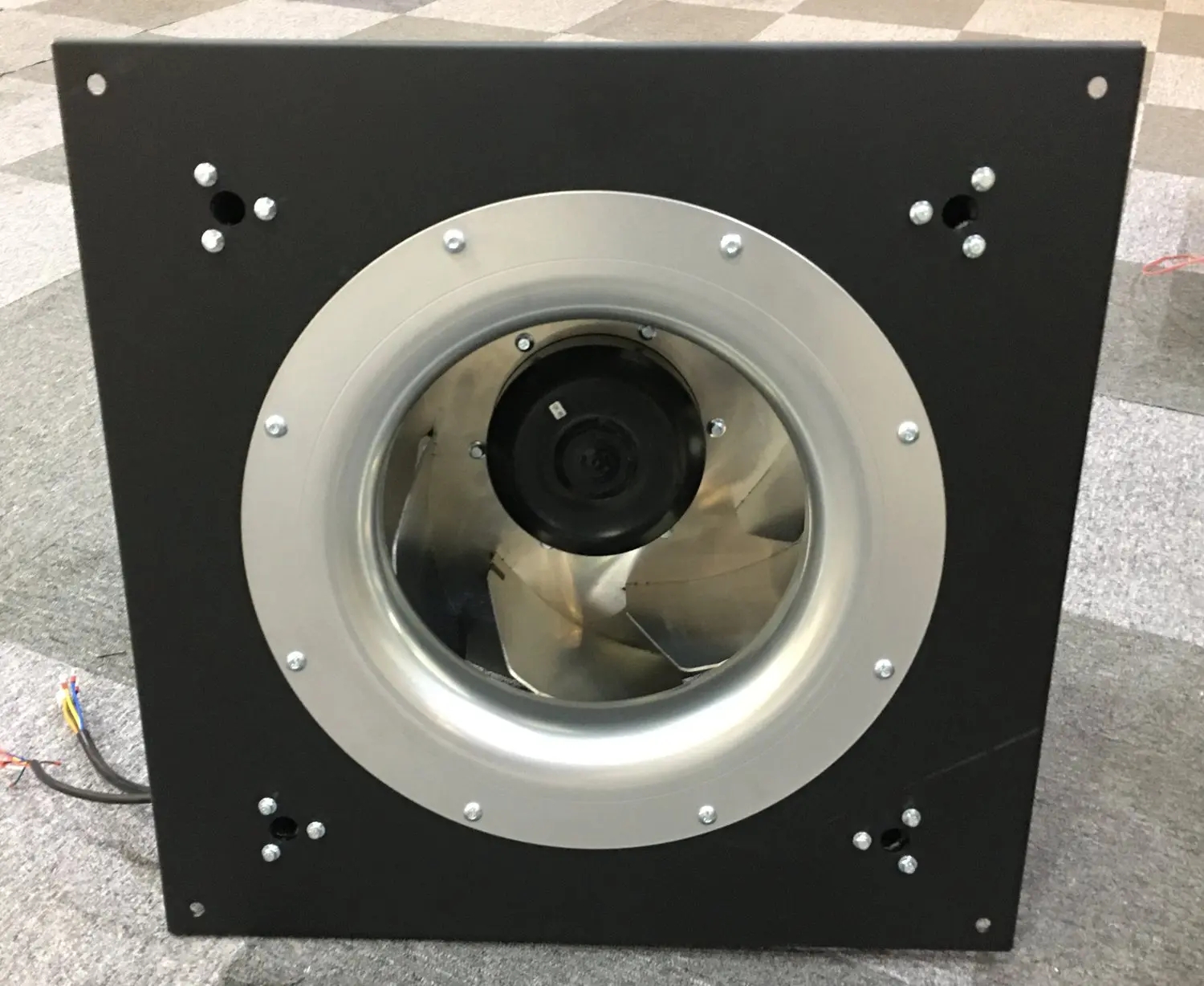
Review the installation location and qualification evidence
This page supports a fan-selection discussion for a defined position within rail equipment. It separates passenger-air movement from electronics cooling and identifies the documentation needed for the proposed assembly. Door actuation, boarding aids and other motion or safety functions are outside this cooling-fan proposal.
How Train HVAC Distributes Air Along a Carriage
The supply fan has to distribute conditioned air along the carriage and maintain a usable return path. A cold outlet at the air handler does not prove that every passenger zone receives its intended airflow.
Follow the air through the process
Condition the mixed stream
Controlled fresh air and return air are filtered and conditioned in the air handler.
Distribute along the saloon
The fan supplies a longitudinal duct; each diffuser takes a share of the air while the rest continues onward.
Balance each outlet
Duct and diffuser resistance determine local delivery. Outlet balancing and geometry must suit the passenger zone.
Complete the return
Grilles and return space carry used air back to the air handler without a supply-to-return shortcut.
Airflow function
- Inside the carriage air handler, moving conditioned air into the longitudinal distribution duct and completing the return circuit.
- A backward-curved centrifugal family is a candidate for ducted airflow through filters, coils and multiple outlets. Each diffuser still needs its own balanced share of the supply.
What can change the result
- A blocked diffuser leaves its local passenger zone underserved.
- Restricted return grilles reduce the available circulation path.
- Poorly balanced outlets or supply-return shortcuts can give uneven delivery.
Start with the complete air path
Share your layout and the information you already have. Unknown values can be identified before a configuration is selected.
Match the fan to this air path
LONGWELL EC backward-curved centrifugal fans are a family to evaluate for ducted air movement. Start with the installed operating point and available envelope, then confirm the fan, controls and complete HVAC assembly against the rail project requirements.
Where it sits
Inside the carriage air handler, moving conditioned air into the longitudinal distribution duct and completing the return circuit.
Why consider this configuration
A backward-curved centrifugal family is a candidate for ducted airflow through filters, coils and multiple outlets. Each diffuser still needs its own balanced share of the supply.
Check the result in your equipment
Discuss your carriage air distribution
Send carriage layout and duct drawing, required flow at each diffuser, filter and coil pressure loss, duct and return-path pressure loss, electrical supply and control interface, project noise, vibration and environmental requirements. Ask LONGWELL to review a suitable configuration, fan curve, drawing and control details. A layout or existing fan model can start the review.
A layout, installation photos or your existing model is enough to start the discussion.
Move air through passenger HVAC equipment
Provide the supply or recirculation duty and resistance through filters, coils and distribution channels. Define sound limits at relevant occupied positions and show the mounting arrangement. Review maintenance access and control states with the HVAC integrator, including the conditions under which the fan operating point changes.
- Coil, filter and channel resistance
- Occupied-position acoustic requirements
- HVAC operating modes and mounting arrangement
Cool converters and auxiliary electronics
Identify component losses and permitted temperatures inside the specific cabinet or enclosure. Include heat sinks, partitions and filtration in the airflow assessment. Confirm the available fan supply, its expected variation and the controller interface separately from the traction or auxiliary drive’s power-output connections.
- Cabinet heat losses and component limits
- Internal resistance and inlet clearance
- Fan supply and control/feedback connections
Prepare the project qualification package
Agree the required mechanical, electrical, fire-behavior and environmental evidence for the installation with the equipment integrator. Provide mounting and connector details for the proposed configuration. Keep the fan version and test conditions traceable so component availability is not confused with acceptance of a rail assembly.
- Required shock, vibration and environmental evidence
- Mounting, retention and material documentation
- Exact configuration and integrator acceptance plan
Match the fan family to the equipment.
Compare the proposed model at the required airflow and pressure, then check the installation and control interface.
Panel-mounted centrifugal options
Review centrifugal arrangements for defined HVAC or converter-cabinet duties. Confirm mechanical interfaces and project-required evidence for the exact assembly before any rail application approval.
Explore this fan family →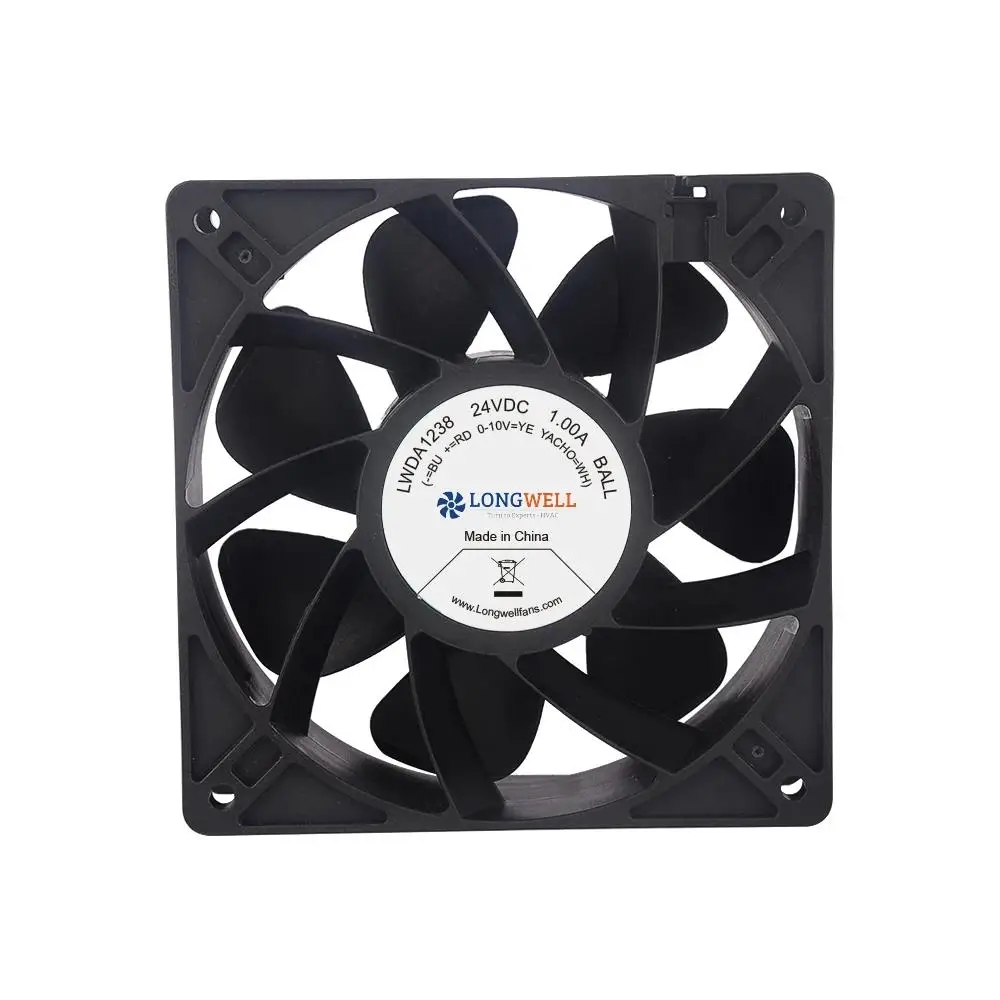
Compact DC axial fans
Review compact DC fans for auxiliary electronics positions where the duty and installation fit. Supply compatibility, retention and project qualification must be confirmed for the selected version.
Explore this fan family →Product images show family configurations. Request the drawing, curve and electrical information for the exact model being considered.
What should your fan enquiry include?
Share these application details so the fan proposal can be reviewed against your equipment.
Bring the equipment context to the fan review.
A drawing, the operating condition and a clear control requirement make the proposed configuration easier to compare. For a replacement, include the existing nameplate and wiring details.
Discuss your application →Reference material for the next step.
Compare centrifugal formats as preliminary candidates, then request the operating and configuration documents needed by the rail-equipment integrator.
Engineering checklistFan replacement and controls checklist ↗Use the mounting, supply and control checklist to document a proposed replacement; the project qualification requirements remain additional.
Catalogs support initial selection. Confirm the current specification and approved configuration with the project team.
Are the pictured fans already approved for rail use?
The images show existing product formats for a selection discussion. They do not establish rail qualification. Confirm the complete model, mounting, materials and electrical configuration against the project’s required evidence and the equipment integrator’s acceptance process before proposing an approved installation.
Can passenger HVAC and converter cooling share one specification?
They should be assessed by installation location. Passenger HVAC must address its air path and occupied-area acoustics, while converter cooling starts with electronics losses and enclosure resistance. Shared requirements can be documented, but one duty point or qualification record should not be assumed to cover both.
Continue with the equipment you are designing.
Share your equipment and operating conditions.
Send the drawing, target duty and project timing. Add the existing fan details when you need a replacement.