
Fan Assemblies for Tunnel-Oven Zones and Auxiliary Cooling
A tunnel-oven enquiry needs the role of each fan defined by zone: process-air circulation, a specified extraction path or cooling for motors and controls. Provide the layout, duty and exposure at each position. LONGWELL product references help separate component discussions from the requirements of the complete baking line.
Build a separate fan brief for each zone
Different zones can have different airflow, product-loading and temperature requirements. Identify the fan position and circuit for every proposed assembly, including auxiliary cabinet cooling. Catalogue references support a component enquiry, while the baking-line manufacturer defines the process requirements and validates the assembled equipment.
How Impingement Oven Fans Drive Hot Jets onto the Food
A conveyor impingement oven uses pressure-fed jets to deliver heat to the food surface. The conveyor sets residence time, while the fan, plenum and finger ducts determine the local air delivery along that path.
LONGWELL fan selection. LONGWELL industrial centrifugal designs can be reviewed as a starting family. The original catalog’s temperature envelope must be compared with the actual oven duty; it does not automatically cover a baking oven. Confirm thermal isolation, materials and complete installed performance before selecting a model.
The pictured LW5-47 catalog family is a high-temperature industrial starting point, not proof of suitability for a baking oven. Catalog temperature capability may be below a specific oven duty; exact temperature, hygiene and installed operating point require a separate design review.
Operating requirements for this example
In the hot-air recirculation path supplying upper/lower finger ducts; electronics cooling is a separate position.
- Actual circulating-air temperature and density
- Required jet distribution and finger arrangement
- Pressure losses of heater, plenum, fingers and return route
- Product geometry, loading pattern and conveyor speed
- Motor isolation, bearing conditions and service access
- Food-zone materials, cleaning method and applicable equipment requirements
Use the existing product section to distinguish the fan positions and configurations. The animation illustrates one air path; it does not qualify a model for every machine on this page.
Share the oven temperature, finger layout and required pressure/flow duty with LONGWELL for an application-specific review. The email link opens a draft for you to complete and send.
Document zone circulation and extraction
Provide the oven-zone layout, return passages and any specified extraction connections. State the required pressure and airflow at each fan position and describe how loading or conveyor operation changes the required conditions. Keep circulation and extraction duties separately identified so proposals can be compared against the correct process role.
- Zone and return-passage arrangement
- Duty point for each fan position
- Loading and extraction boundary conditions
Define the mechanical and thermal assembly
For a circulation assembly, provide the motor, shaft, impeller and mounting arrangement. Record process-air and motor-compartment temperatures, including shutdown exposure. Describe grease, flour dust or other deposits and the cleaning process. Ask for the complete model’s relevant limits before treating a component reference as suitable for a baking-line position.
- Shaft and impeller connection details
- Process and motor temperatures
- Deposits and cleaning conditions
Plan auxiliary cooling and service
Identify controls or drive compartments that need a separate clean-air cooling circuit. Specify their heat loads, filters, mounting clearance and service access independently from the hot process air. Keep configuration identification and replacement instructions traceable to each zone so maintenance staff can distinguish different fan duties on the line.
- Separate cabinet heat loads and filters
- Access for removal and cleaning
- Zone-specific component identification
Match the fan family to the equipment.
Compare the proposed model at the required airflow and pressure, then check the installation and control interface.
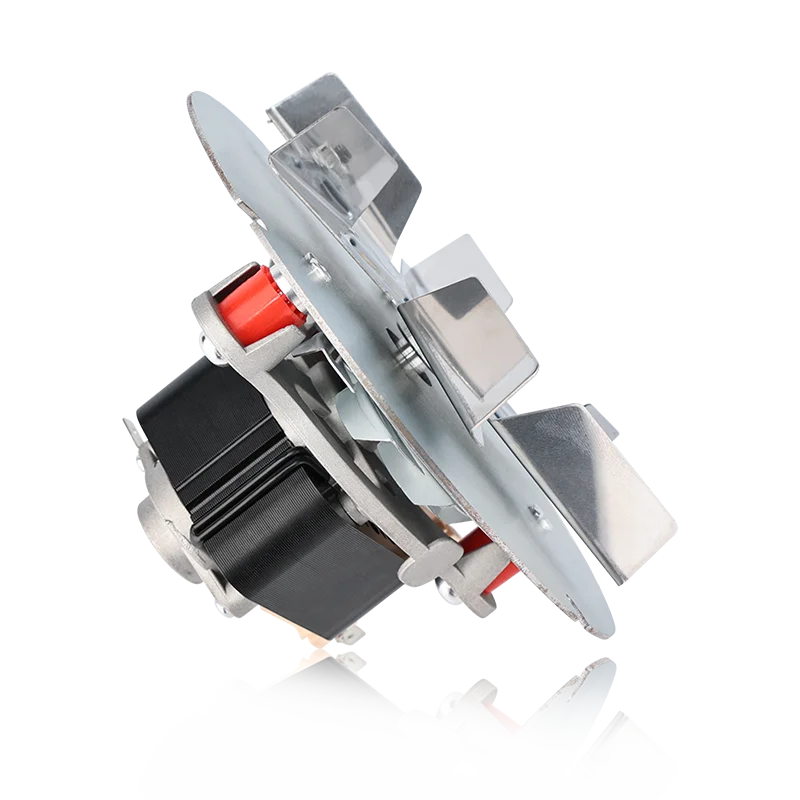
Oven fan-motor assemblies
Review oven fan-motor formats only against a defined zone duty and assembly drawing. Confirm size, shaft arrangement and temperature limits with the baking-line manufacturer.
Explore this fan family →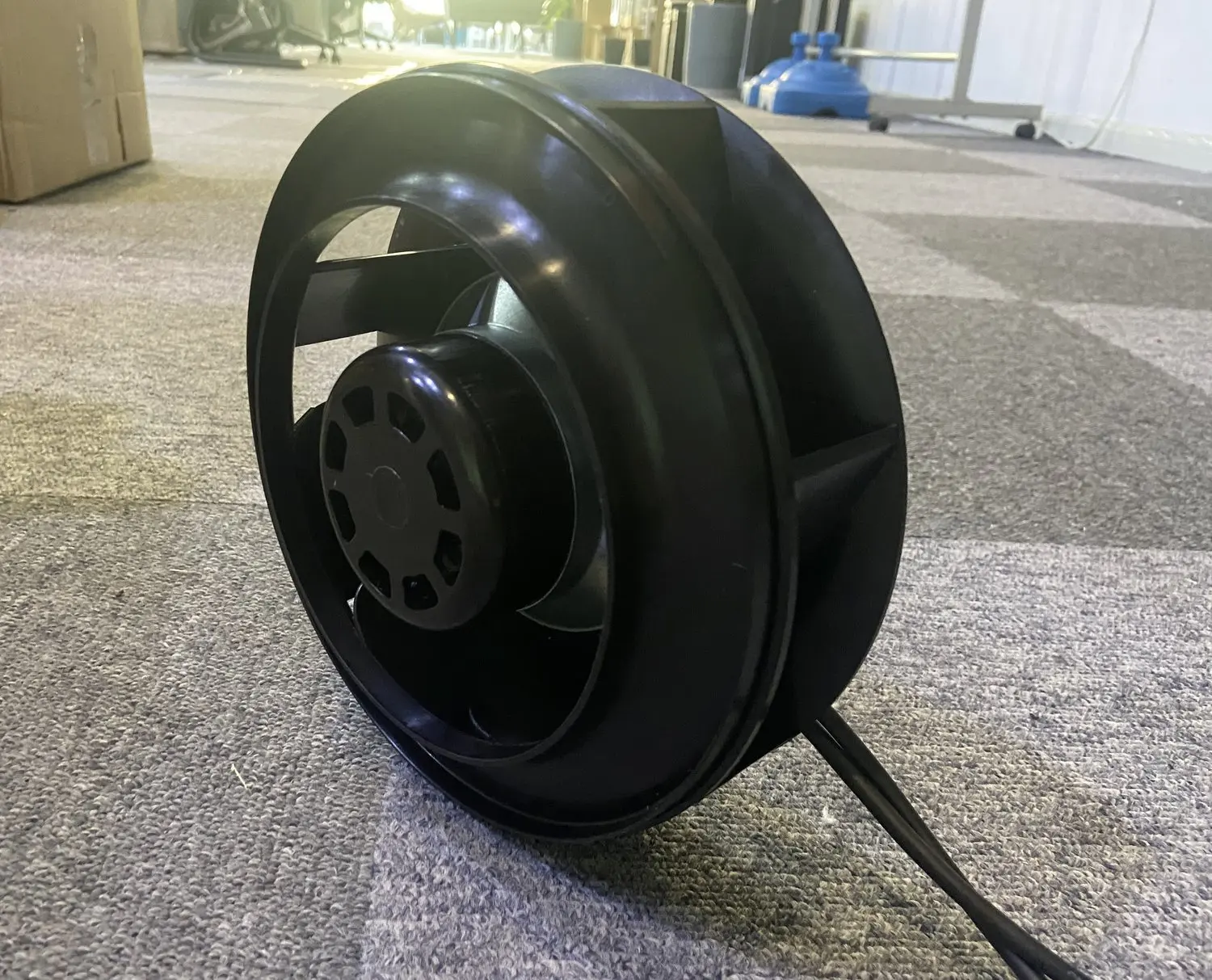
EC backward-curved centrifugal fans
Consider compact centrifugal formats for a separate clean-air electronics or drive compartment where required. These references do not establish suitability for hot process or exhaust air.
Explore this fan family →Product images show family configurations. Request the drawing, curve and electrical information for the exact model being considered.
What should your fan enquiry include?
Share these application details so the fan proposal can be reviewed against your equipment.
Bring the equipment context to the fan review.
A drawing, the operating condition and a clear control requirement make the proposed configuration easier to compare. For a replacement, include the existing nameplate and wiring details.
Discuss your application →Reference material for the next step.
Review the published motor and impeller references, then confirm shaft geometry, motor cooling and temperature limits for the oven assembly.
EC centrifugal series · PDFEC backward-curved fan catalogue ↗Use the family references for initial comparison, then confirm the selected assembly with its inlet geometry and required operating point.
Engineering checklistFan replacement controls checklist ↗Record electrical, control and mechanical interfaces when comparing an existing fan with a proposed replacement in the complete equipment.
Catalogs support initial selection. Confirm the current specification and approved configuration with the project team.
Can the same fan specification be repeated across every oven zone?
Use a common specification only after confirming that the duties and exposure conditions are the same. Provide the zone layout, airflow and temperatures for each position. Process loading, extraction and service arrangements may differ, so the proposed assemblies should remain traceable to their individual installation requirements.
Do the illustrated products cover every tunnel-oven process duty?
They are component references for a defined enquiry. A baking line can require larger or specialised assemblies depending on zone airflow, temperature and contamination. Submit the complete duty and installation drawing for assessment, and keep any clean-air cabinet-cooling proposal separate from the hot process-air requirement.
Continue with the equipment you are designing.
Share your equipment and operating conditions.
Send the drawing, target duty and project timing. Add the existing fan details when you need a replacement.