
Centrifugal Fans for Commercial Dryer Airflow and Lint Filters
Commercial dryer fan selection should use the complete circulation or exhaust path, including heat exchangers, lint filters and connected ductwork. Describe the drying cycle, air temperature and moisture at the fan. LONGWELL centrifugal references support a model review with the actual duty, installation and maintenance requirements.
Include filter loading in the fan duty
Drying airflow changes with the resistance of the complete machine and installation. Provide requirements for the specified filter conditions and drying stages, then assess the fan and housing together. Temperature, moisture, lint exposure and maintenance access need to be described at the actual fan position.
Where Does Water Go in a Heat-Pump Tumble Dryer?
A heat-pump tumble dryer repeatedly circulates process air through the clothes and two heat exchangers. Moisture leaves the fabric as vapor, condenses at the cold exchanger and exits as liquid. The circulation fan connects these steps and must be matched to the resistance and conditions of the complete dryer.
LONGWELL fan selection. Assess LONGWELL centrifugal fan families against the dryer’s complete circulation duty. Provide air temperature, humidity and resistance information together with the installation space. Selection should include the chosen motor and impeller configuration, its materials and its coordination with the heat-pump controls.
The illustrated LONGWELL family is an assessment starting point; hot, humid process-air compatibility requires confirmation for the selected configuration.
Operating requirements for this example
In the closed process-air loop connecting drum, lint filter, cold coil and reheating coil.
- Airflow required through the loaded drum.
- Pressure loss across filters, coils and connecting ducts.
- Process-air temperature and humidity at the fan.
- Expected lint exposure and service condition.
- Electrical supply, control strategy and installation envelope.
- Sound targets and required drying-cycle operating range.
Use the existing product section to distinguish the fan positions and configurations. The animation illustrates one air path; it does not qualify a model for every machine on this page.
Share your airflow route, wet-air conditions and required operating range with LONGWELL. The email link opens a draft for you to complete and send.
Map circulation and exhaust resistance
Show the dryer air circuit and identify whether the fan serves circulation, extraction or another defined position. Include the lint filter, heat-exchange sections, internal passages and connected duct in the duty calculation. Supply the required airflow at clean and specified loaded-filter conditions so the model review includes the intended maintenance envelope.
- Air-circuit function and layout
- Clean and loaded-filter resistance
- Connected duct and discharge arrangement
Define exposure through the drying cycle
Record process-air and motor-compartment temperatures separately, including the conditions after drying stops. Describe moisture and lint reaching the fan, together with the cleaning procedure. If the dryer is fuel-fired, keep any combustion-air blower enquiry separate from the drying-air fan and identify the medium at each position.
- Process and motor temperatures
- Moisture and lint at the fan
- Separate combustion-air role where applicable
Specify the assembly and maintenance plan
Provide the impeller, housing, inlet and outlet envelope and the required electrical interface. Plan access to inspect and remove lint from the permitted service points, following the selected model’s instructions. Describe how the equipment responds to reduced airflow or loss of fan feedback and agree the complete dryer test conditions.
- Housing and inlet/outlet dimensions
- Inspection and cleaning access
- Airflow response and equipment test plan
Match the fan family to the equipment.
Compare the proposed model at the required airflow and pressure, then check the installation and control interface.
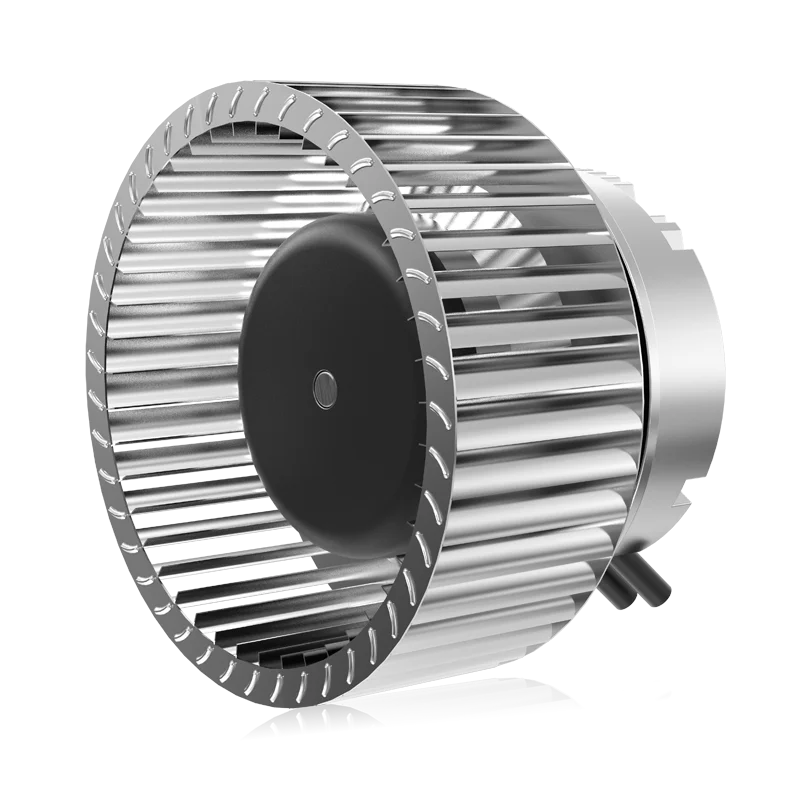
Forward-curved centrifugal impellers
Review forward-curved formats with the complete dryer housing and resistance range. Confirm the chosen model’s temperature, moisture and permitted deposit exposure at its installation position.
Explore this fan family →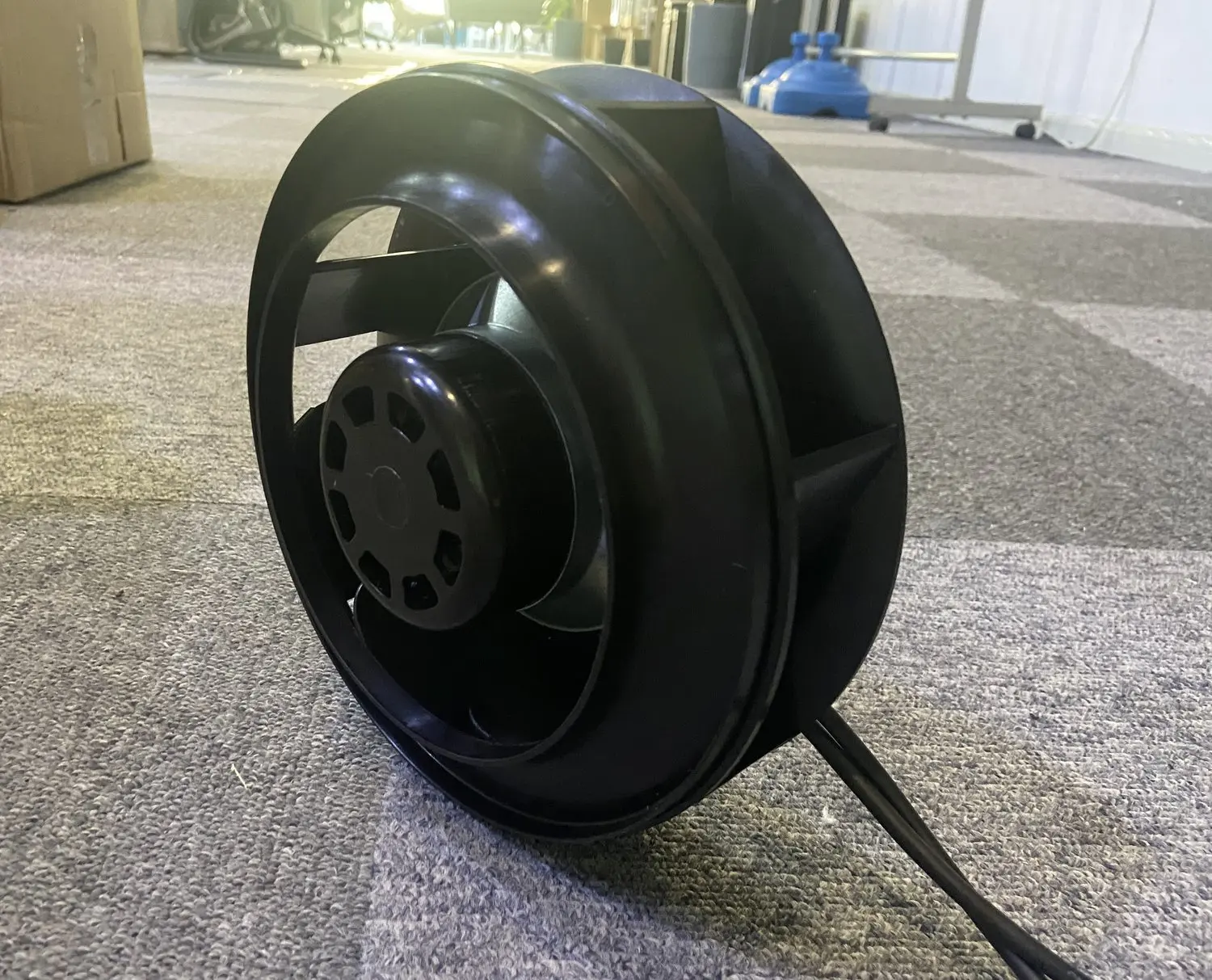
EC backward-curved centrifugal fans
Compare backward-curved centrifugal configurations at the required dryer duty points. Review the assembly’s material, mounting and cleaning limits against the specified air-path conditions.
Explore this fan family →Product images show family configurations. Request the drawing, curve and electrical information for the exact model being considered.
What should your fan enquiry include?
Share these application details so the fan proposal can be reviewed against your equipment.
Bring the equipment context to the fan review.
A drawing, the operating condition and a clear control requirement make the proposed configuration easier to compare. For a replacement, include the existing nameplate and wiring details.
Discuss your application →Reference material for the next step.
Compare the forward-curved family with your available housing space and duty point; obtain the complete assembly curve for selection.
EC centrifugal series · PDFEC backward-curved fan catalogue ↗Use the family references for initial comparison, then confirm the selected assembly with its inlet geometry and required operating point.
Engineering checklistFan replacement controls checklist ↗Record electrical, control and mechanical interfaces when comparing an existing fan with a proposed replacement in the complete equipment.
Catalogs support initial selection. Confirm the current specification and approved configuration with the project team.
Why specify both clean and loaded lint-filter conditions?
They describe different resistance conditions in the dryer air path. Provide the permitted filter-loading condition and required airflow so candidates can be compared across the intended maintenance range. The complete machine should then be evaluated with those conditions rather than only with a newly cleaned filter.
Can a drying-air fan also be specified as the burner blower?
Treat them as separate circuits unless the equipment design explicitly defines a shared arrangement. A fuel-fired dryer’s combustion-air duty has its own medium, pressure and controller requirements. Supply those details separately from the warm, moist drying-air path and seek a complete-model review for each role.
Continue with the equipment you are designing.
Share your equipment and operating conditions.
Send the drawing, target duty and project timing. Add the existing fan details when you need a replacement.