
Fan-Motor Assemblies for Convection Oven Air Circulation
Convection oven fan selection must distinguish the hot cavity from the motor compartment and separate fascia cooling. Provide the circulation duty, assembly drawing and temperatures at each location. LONGWELL oven fan-motor and cross-flow references support a focused review of the relevant air path and installation arrangement.
Review the hot side and motor side separately
The cavity air temperature is only one input to an oven fan assembly. Include the shaft, impeller and mounting geometry and describe how the motor is kept within its permitted conditions. A separate room-air path for the fascia or controls should be specified as its own fan duty.
Define circulation within the cavity
Provide the required circulation flow and the geometry of baffles, trays and return passages. Describe the intended loading arrangement and the temperature-distribution criteria used to evaluate the oven. The fan assembly should be assessed with that cavity layout, because a motor or impeller reference alone does not establish baking uniformity.
- Cavity, baffle and return-path drawing
- Circulation flow and loading arrangement
- Temperature-distribution test criteria
Specify the motor and shaft assembly
Send shaft dimensions, impeller attachment, mounting plate and any sealing details. Record temperatures on the motor side as well as in the cavity, including the relevant operating and shutdown conditions. Describe grease exposure and the cleaning method so the proposed assembly can be reviewed for its mechanical and thermal requirements.
- Shaft, impeller and mounting dimensions
- Cavity and motor-side temperatures
- Sealing, grease and cleaning conditions
Separate fascia and controls cooling
Where the oven uses a dedicated cooling-air passage for its controls or outer panels, define that circuit independently of hot-cavity circulation. A cross-flow arrangement may be evaluated for a long narrow outlet. Include air-path resistance, installation depth and the controller’s run-on requirements in that separate fan enquiry.
- Control-panel cooling-air route
- Outlet length and housing depth
- Resistance and required run-on sequence
Match the fan family to the equipment.
Compare the proposed model at the required airflow and pressure, then check the installation and control interface.
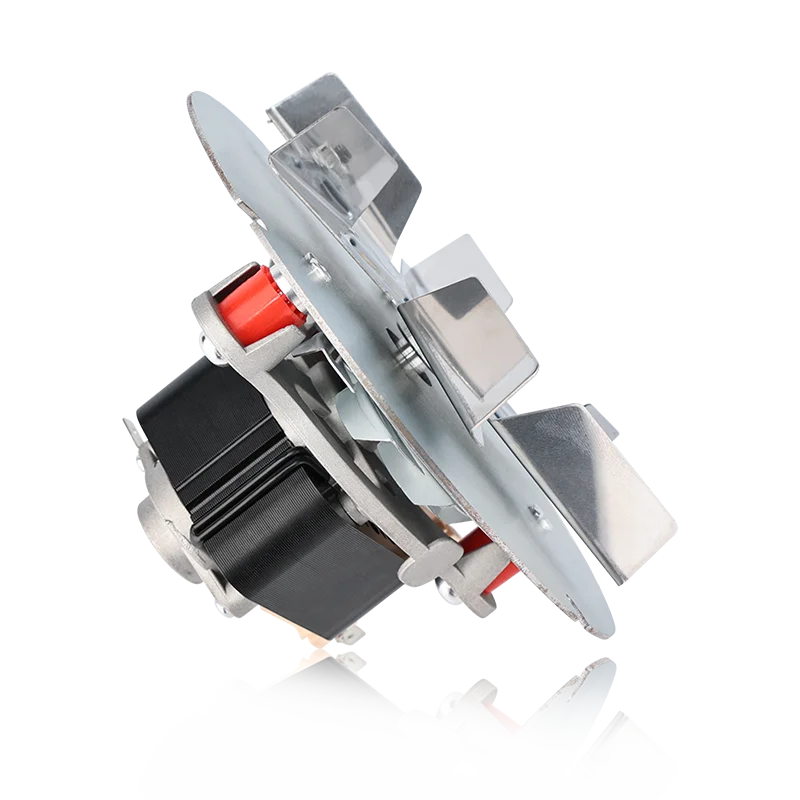
Oven fan-motor assemblies
Review oven motor-and-impeller assemblies against the shaft, mounting and temperature requirements. Request complete-model installation limits and drawings for the proposed cavity-circulation arrangement.
Explore this fan family →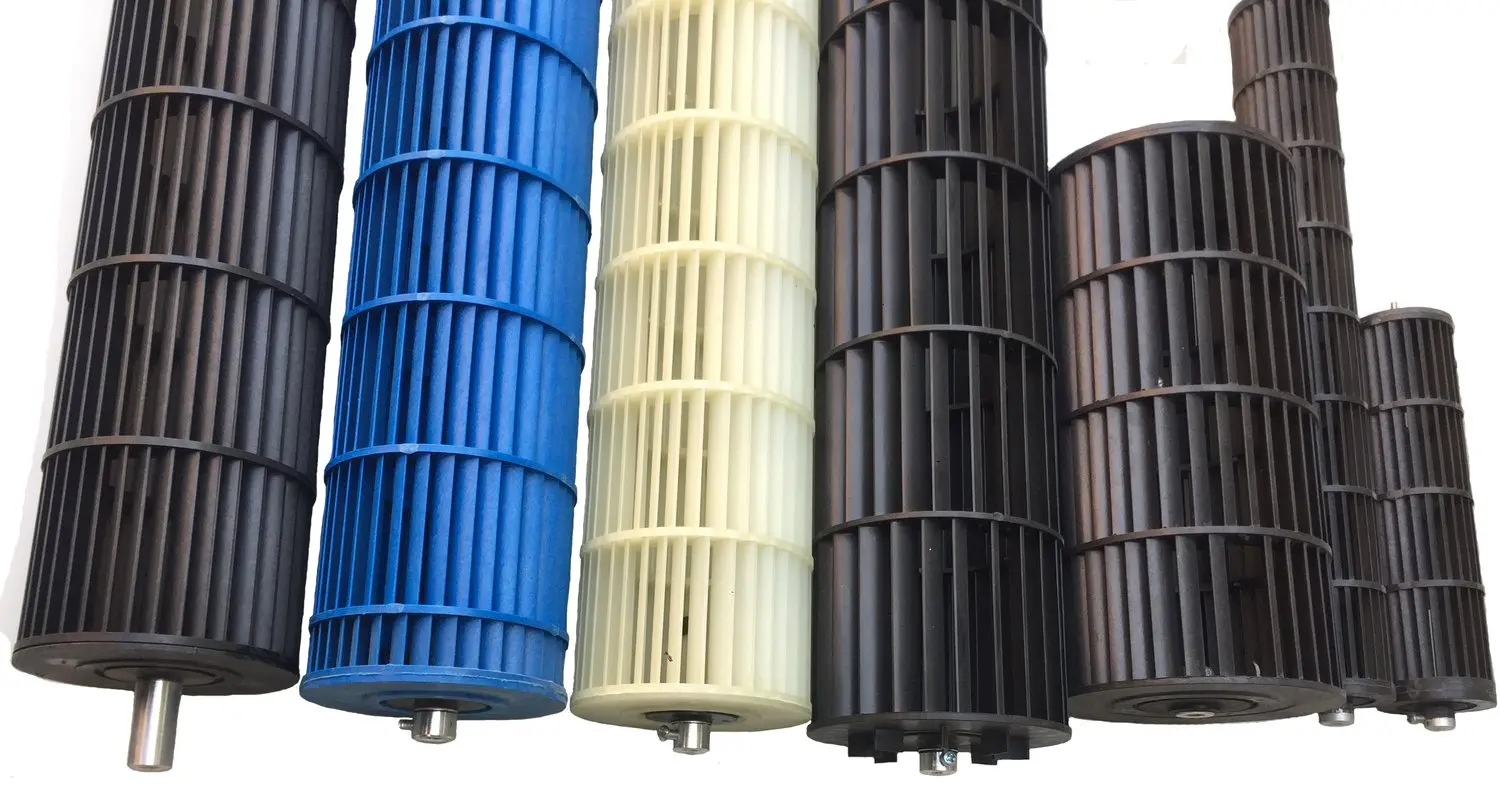
Cross-flow fan families
Compare cross-flow formats for a separate fascia or electronics-cooling passage. Confirm motor temperatures and duty in that circuit; this reference does not specify hot-cavity service.
Explore this fan family →Product images show family configurations. Request the drawing, curve and electrical information for the exact model being considered.
What should your fan enquiry include?
Share these application details so the fan proposal can be reviewed against your equipment.
Bring the equipment context to the fan review.
A drawing, the operating condition and a clear control requirement make the proposed configuration easier to compare. For a replacement, include the existing nameplate and wiring details.
Discuss your application →Reference material for the next step.
Review the published motor and impeller references, then confirm shaft geometry, motor cooling and temperature limits for the oven assembly.
Cross-flow series · PDFCross-flow fan catalogue ↗Compare rotor lengths and motor arrangements, then request model-specific airflow, temperature and mounting information for the proposed outlet layout.
Engineering checklistFan replacement controls checklist ↗Record electrical, control and mechanical interfaces when comparing an existing fan with a proposed replacement in the complete equipment.
Catalogs support initial selection. Confirm the current specification and approved configuration with the project team.
Does a fan-motor listing establish oven temperature uniformity?
Uniformity depends on the complete cavity, baffles, loading and operating programme as well as the circulation assembly. Supply the intended test arrangement and acceptance criteria with the fan enquiry. The proposed motor-and-impeller configuration should then be evaluated in that oven layout rather than judged from the catalogue alone.
Can the control-panel cooling fan be used for cavity circulation?
Those are separate duties with different exposure conditions. A fan reviewed for room-air cooling of controls does not establish suitability for the hot cavity. Specify the medium, temperatures, mechanical arrangement and cleaning exposure for each circuit, and obtain complete-model documentation for the intended position.
Continue with the equipment you are designing.
Share your equipment and operating conditions.
Send the drawing, target duty and project timing. Add the existing fan details when you need a replacement.