
Condenser fan selection for packaged condensing units
Review the condenser fan within the packaged unit that contains the compressor, coil and controls. Enclosure openings, guards, nearby walls and the controller sequence affect the required air-side duty. Provide the complete unit drawing and operating schedule before selecting a fan or replacing the existing assembly.
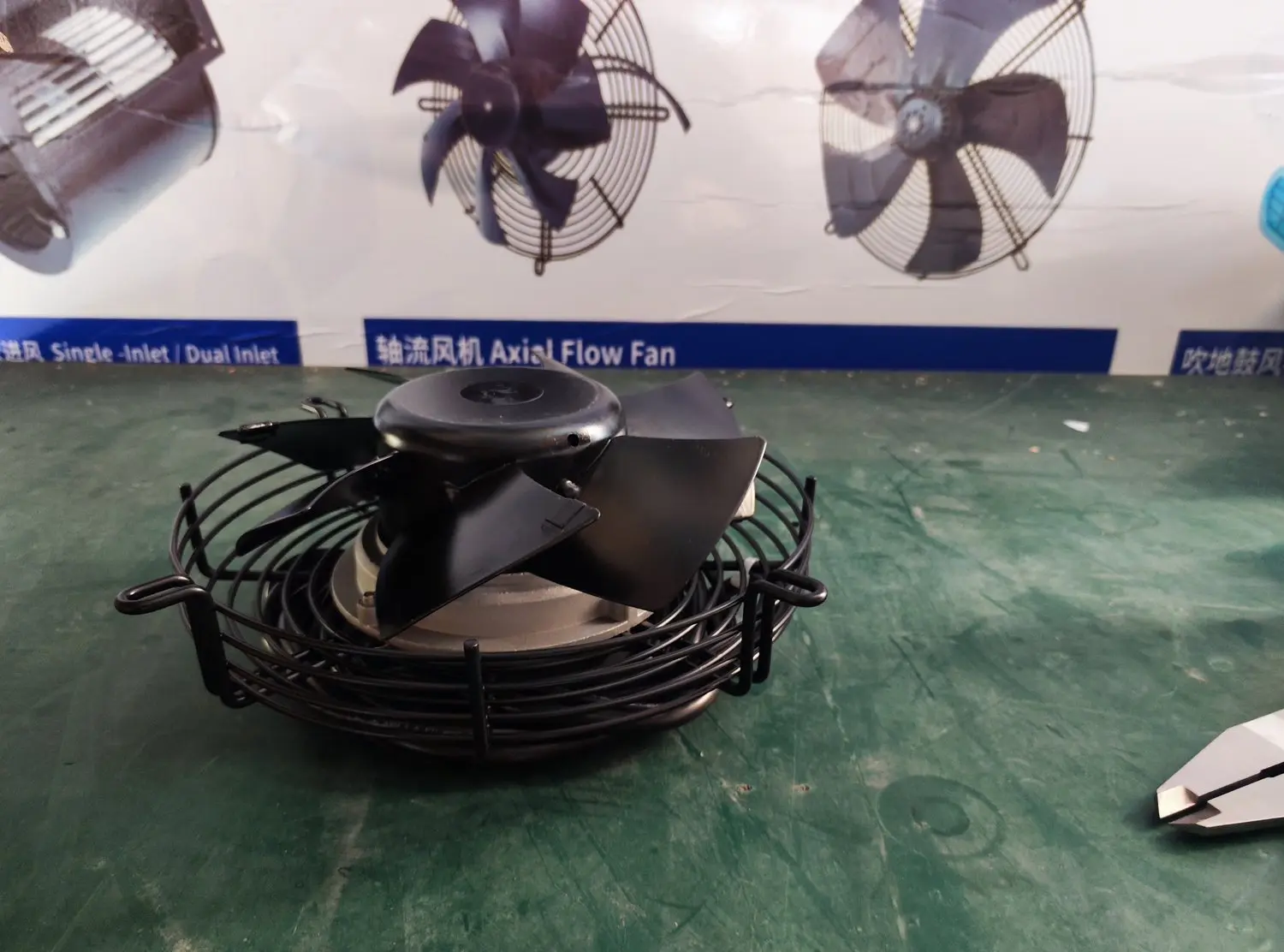
Specify the fan inside the packaged arrangement
A condensing unit combines the compressor and condenser side of a refrigeration system. Its fan moves air through the heat-rejection coil and the unit enclosure. This page focuses on that package, including the installation surroundings, controls and service constraints that differ from a standalone fan or complete chiller.
Build the coil-and-enclosure pressure budget
Provide the design heat-rejection condition and coil airflow requirement. Add the losses through the unit’s guards, grilles and other air-path components. State maximum inlet-air temperature and the planned reduced-load points so the selected fan can be reviewed against both the coil and the packaged unit arrangement.
- Coil airflow and heat-rejection condition
- Guard, grille and enclosure resistance
- Design and part-load inlet conditions
Check the installed package clearances
Show the fan position, mounting panel and access route inside the unit. Include distances to walls, architectural screens and adjacent equipment outside it. Review where warm discharge air travels and whether the layout permits coil cleaning and fan replacement without removing unrelated components from the installation.
- Fan mounting and removal drawing
- External inlet and discharge clearances
- Coil-cleaning and service route
Match the refrigeration control sequence
Describe how the unit regulates condenser pressure or otherwise commands fan speed. Confirm supply, command range, feedback and fault requirements for the complete offered model. Include refrigerant-related project documentation and site sound limits in the equipment review, then test the proposed combination with the unit controller.
- Condenser-pressure and speed schedule
- Voltage, command, feedback and alarms
- Refrigerant documents and sound conditions
Match the fan family to the equipment.
Compare the proposed model at the required airflow and pressure, then check the installation and control interface.
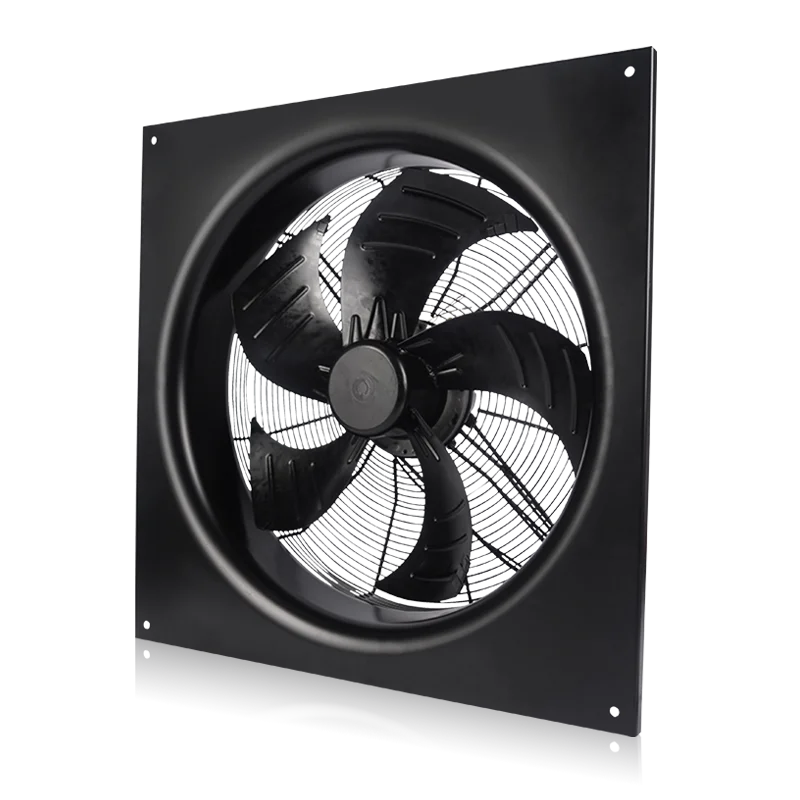
EC axial fan configurations
Review EC axial configurations for the condenser coil and packaged enclosure. Match mounting, operating-point range and the controller interface to the complete unit drawing.
Explore this fan family →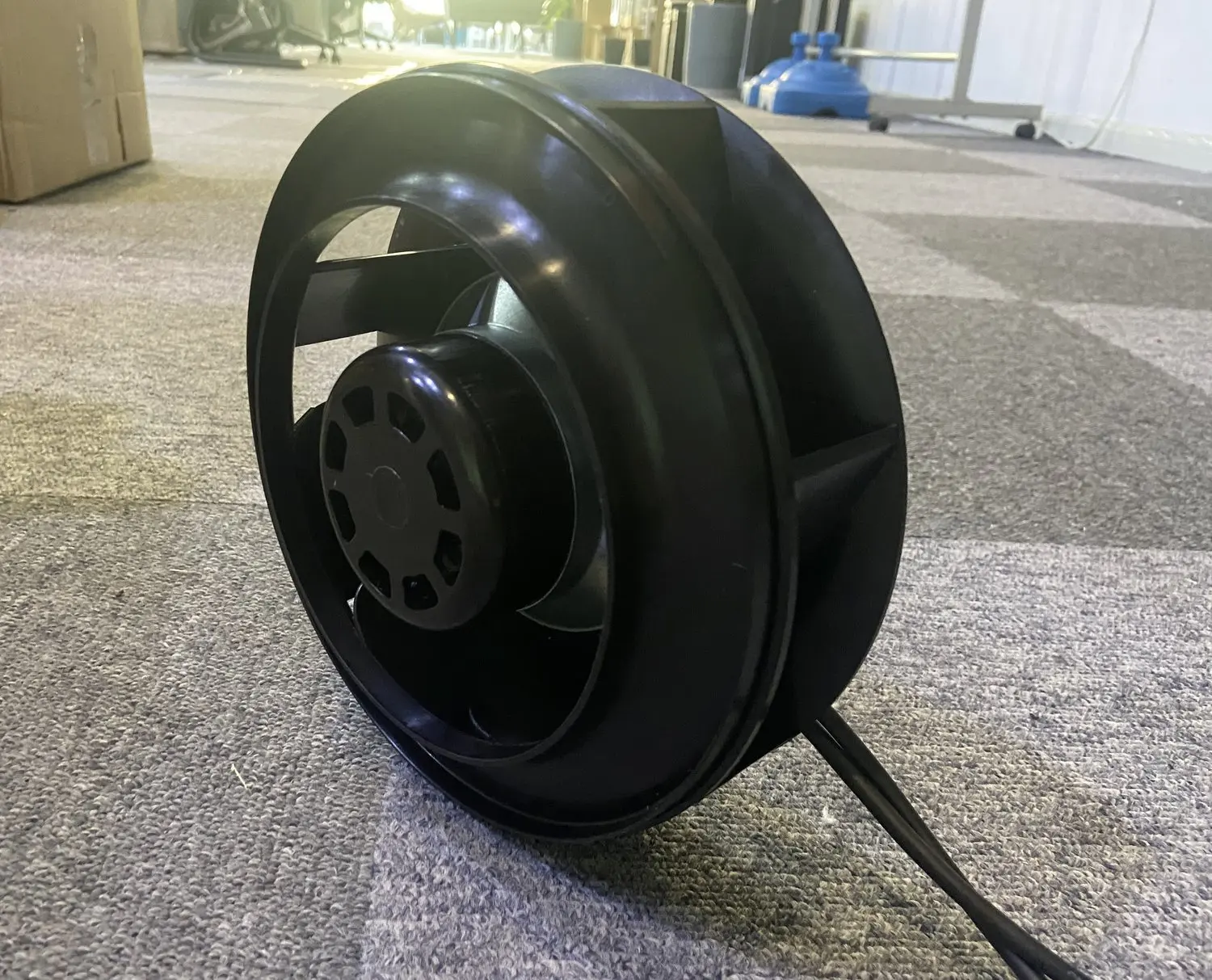
Compact centrifugal configurations
Review compact centrifugal formats for enclosed condensing arrangements that require their air path. Include coil, grille and enclosure resistance and confirm temperature and service limits.
Explore this fan family →Product images show family configurations. Request the drawing, curve and electrical information for the exact model being considered.
What should your fan enquiry include?
Share these application details so the fan proposal can be reviewed against your equipment.
Bring the equipment context to the fan review.
A drawing, the operating condition and a clear control requirement make the proposed configuration easier to compare. For a replacement, include the existing nameplate and wiring details.
Discuss your application →Reference material for the next step.
Compare the axial series and installation dimensions before requesting operating-point, electrical and environmental data for the selected configuration.
Series catalog · PDFEC backward-curved centrifugal fans ↗Use the series information to narrow the mechanical format; confirm inlet conditions, controls and the proposed model performance separately.
Engineering checklistFan replacement: fit and controls ↗Check operating duty, mounting, supply, wiring and control behaviour before treating an existing fan and a proposed replacement as interchangeable.
Catalogs support initial selection. Confirm the current specification and approved configuration with the project team.
Is a condensing unit the same as a complete chiller?
A condensing unit contains the compressor and condenser side of the circuit; a complete chiller includes additional equipment and operating requirements. Identify the exact package involved so the fan review uses the right coil, enclosure, controller and maintenance boundaries.
Can a fan that fits the panel replace the original?
Mechanical fit is only one check. Compare airflow at the coil and enclosure resistance, rotation, supply, command and feedback, together with inlet temperature and sound conditions. Review the candidate with the unit controller and the installed package before accepting it as a replacement.
Continue with the equipment you are designing.
Share your equipment and operating conditions.
Send the drawing, target duty and project timing. Add the existing fan details when you need a replacement.