
Fans for Building Ventilation and Agricultural Airflow
Ventilation projects range from room-level units to ducted buildings and agricultural installations. Identify what the air must do before choosing a fan: supply outdoor air, extract indoor air or circulate air within a space. Each task has different resistance, controls and installation requirements.
Explore the applications in this industry.
Choose the air path before the fan format
Use this application hub to connect the building or growing-system requirement with a suitable fan family. Define the intended airflow path, the components that restrict it and the operating schedule. Then compare candidate fans at the required operating points, including the conditions expected between maintenance visits.
Supply and extract through a duct network
Central systems need separate supply and extract duties. Include ducts, filters, heat exchangers and terminals in the resistance calculation, and review how the system is balanced. The fan choice should also account for occupied-room sound limits, service space and the planned controller interface.
- Supply and extract operating points
- Filter and heat-exchanger resistance
- Room sound limits and service clearance
Ventilate individual rooms and compact units
Room-level units require close attention to wall depth, grilles and the internal air path. Establish whether the equipment uses separate supply and extract fans or an alternating sequence. Reversible operation, humidity control and heat recovery must be evaluated within the complete unit configuration.
- Wall or window installation dimensions
- Air-path arrangement and operating sequence
- Condensation and room-side acoustic requirements
Move air around crops or stored produce
Agricultural projects may need both internal circulation and outdoor-air exchange. Discuss the crop or animal environment with the facility designer, including seasonal requirements and obstructions. Select fans for the actual screens, inlets or storage arrangement, and plan cleaning and access before fixing the layout.
- Circulation versus outdoor-air exchange
- Screens, crop layout and storage obstructions
- Moisture, dust and cleaning conditions
Match the fan family to the equipment.
Compare the proposed model at the required airflow and pressure, then check the installation and control interface.
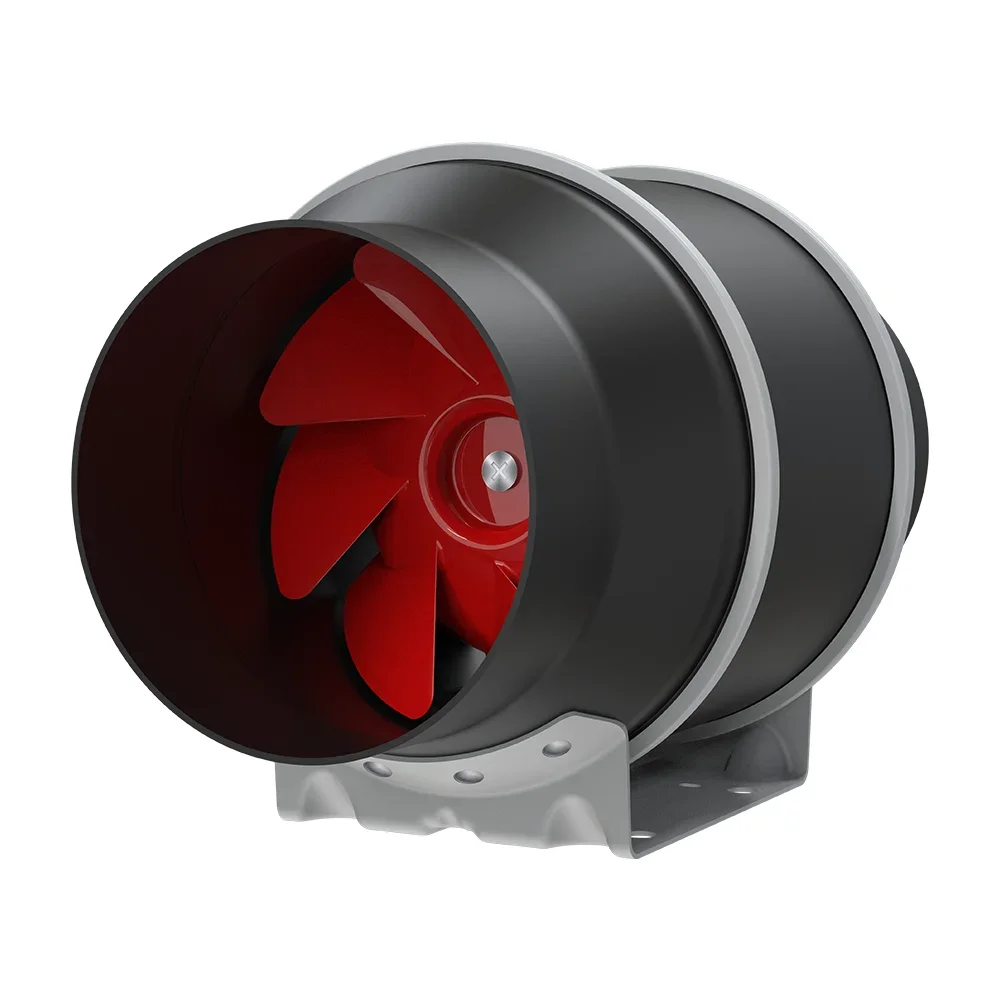
Inline duct fan formats
Review inline fan formats for defined duct runs. Confirm the duct connections, support, access and operating point together with the chosen electrical and control configuration.
Explore this fan family →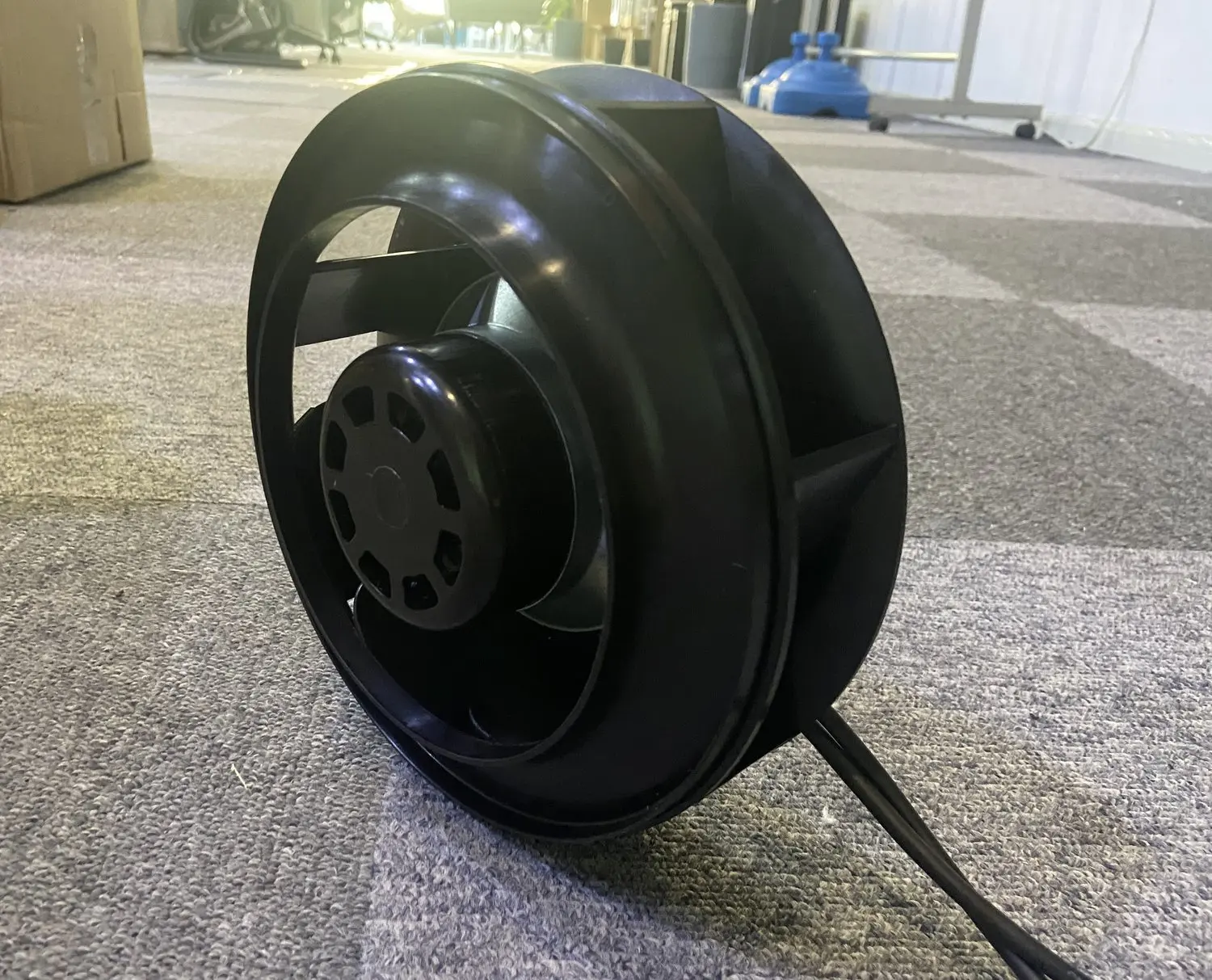
Backward-curved centrifugal fans
Review backward-curved fans where filters, heat exchangers or enclosed air paths determine resistance. Match the inlet arrangement and mounting to the complete ventilation unit.
Explore this fan family →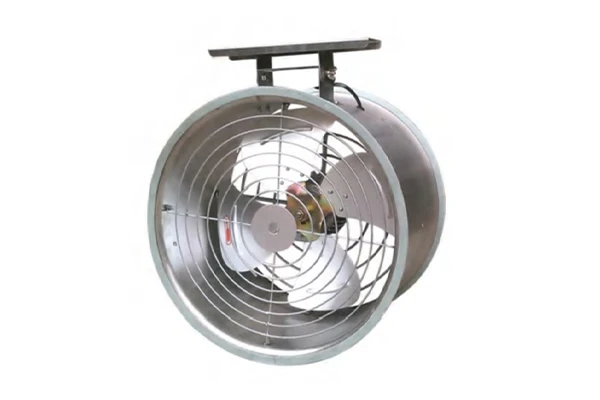
Circulation fan assemblies
Review circulation formats for internal agricultural air movement. Layout, direction and operating schedule should follow the growing or storage design and the selected model data.
Explore this fan family →Product images show family configurations. Request the drawing, curve and electrical information for the exact model being considered.
What should your fan enquiry include?
Share these application details so the fan proposal can be reviewed against your equipment.
Bring the equipment context to the fan review.
A drawing, the operating condition and a clear control requirement make the proposed configuration easier to compare. For a replacement, include the existing nameplate and wiring details.
Discuss your application →Reference material for the next step.
Compare duct fan formats and request the selected model drawing, operating curve and installation requirements for the proposed air path.
Series catalog · PDFAgricultural ventilation fan catalog ↗Explore agricultural circulation and exhaust formats as a starting point for a layout and environmental-condition review.
Catalogs support initial selection. Confirm the current specification and approved configuration with the project team.
Should every ventilation project use the same fan family?
The fan format follows the task and resistance. A compact unit with filters differs from a short duct run or a greenhouse circulation layout. Compare candidate curves and installation requirements for the intended air path, then evaluate the complete assembly.
What should accompany a request for a fan recommendation?
Provide the application, airflow and pressure requirement, installation drawing and electrical supply. Add sound limits, operating modes and environmental exposure. If the duty point is not yet defined, share the system components and ask which measurements or calculations are needed first.
Continue with the equipment you are designing.
Share your equipment and operating conditions.
Send the drawing, target duty and project timing. Add the existing fan details when you need a replacement.