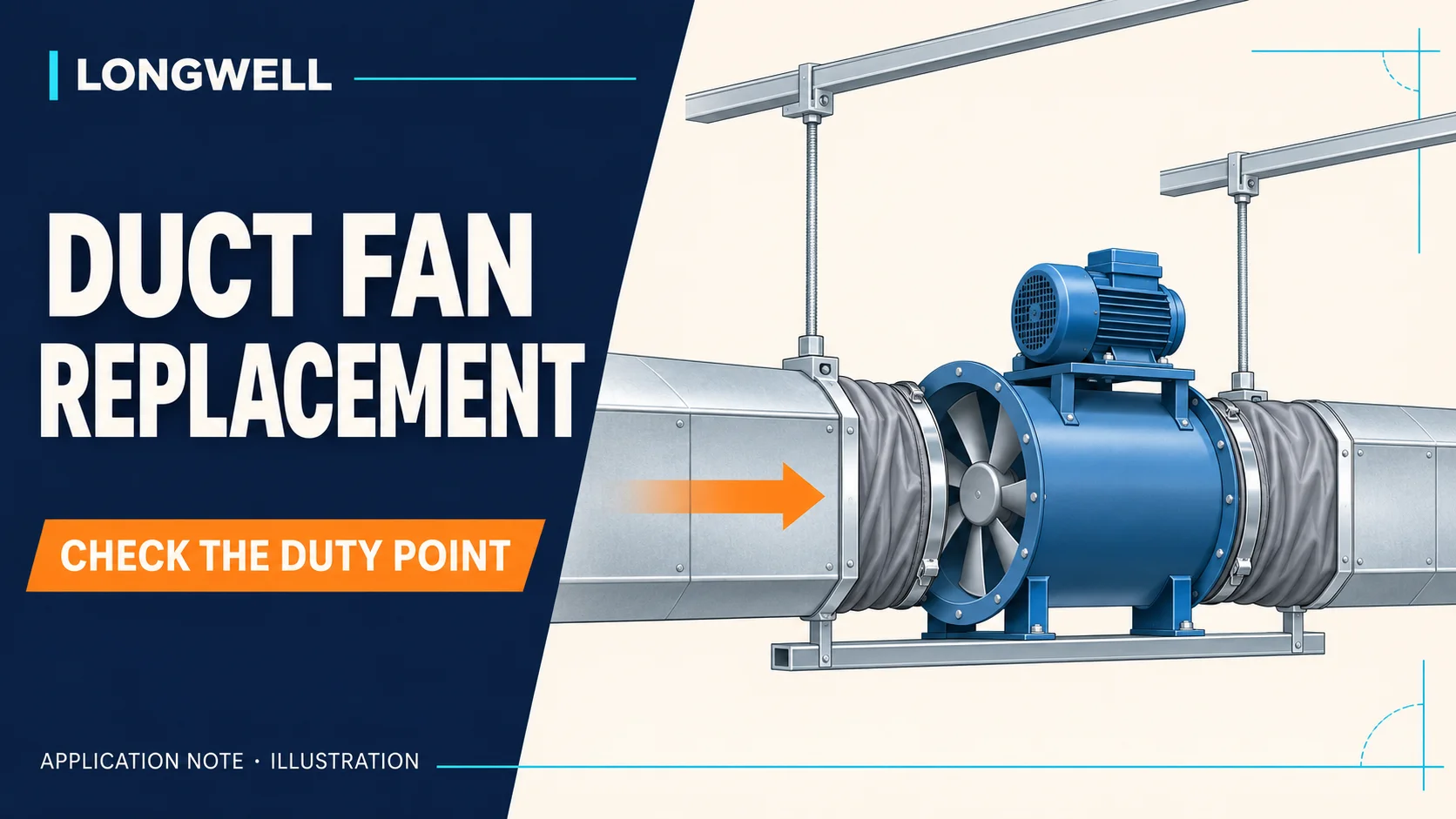
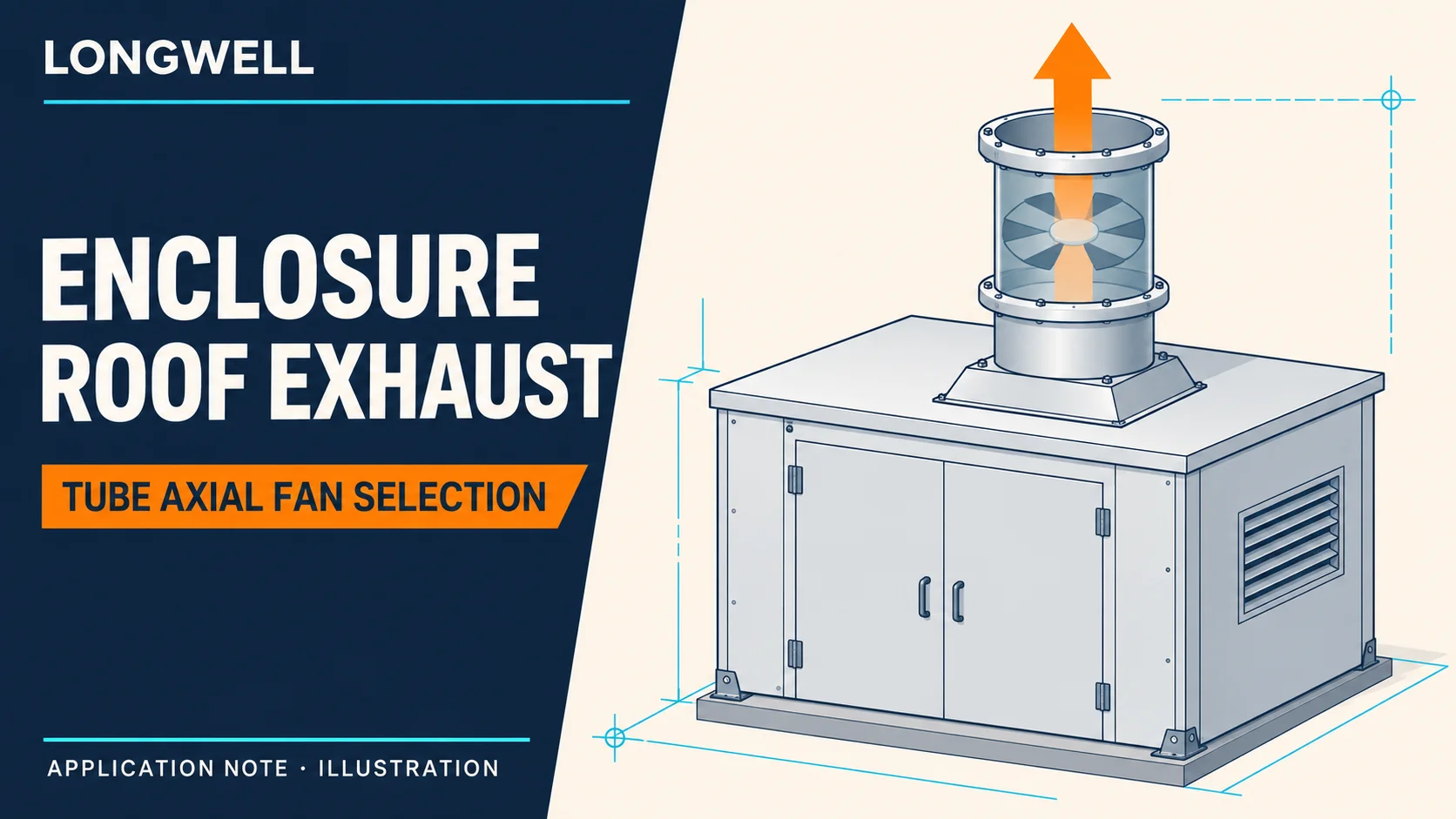
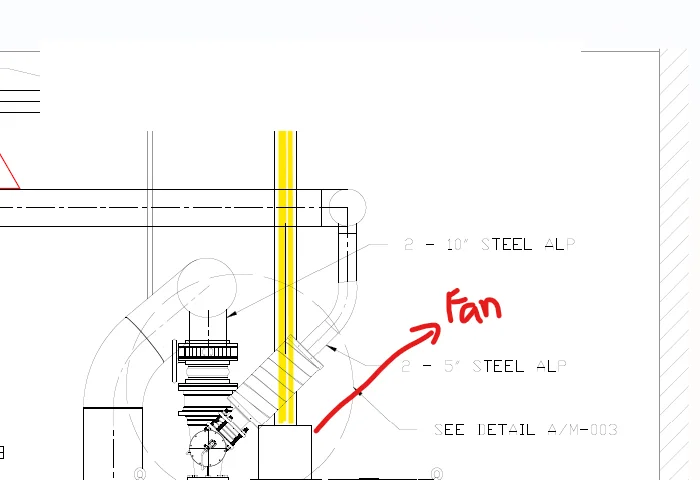
A North American turbo blower OEM approached LONGWELL with a roof-exhaust requirement. Hot air had to leave the equipment enclosure, pass through a fan and continue into the site’s exhaust duct. The fan needed a connection on each end, keeping the air path in line.
The customer provided an approximate duty of 1,900 CFM at 2 in. w.c., a maximum operating temperature of about 45°C, a 14-inch-class connection reference and a requirement for UL or an accepted equivalent. Each condition needed a separate check before confirming a fan.
Start with the enclosure-to-duct air path
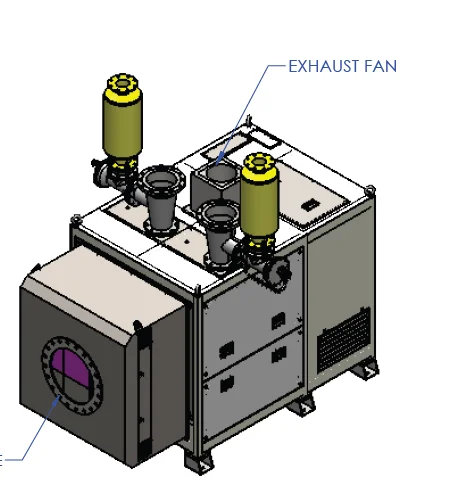
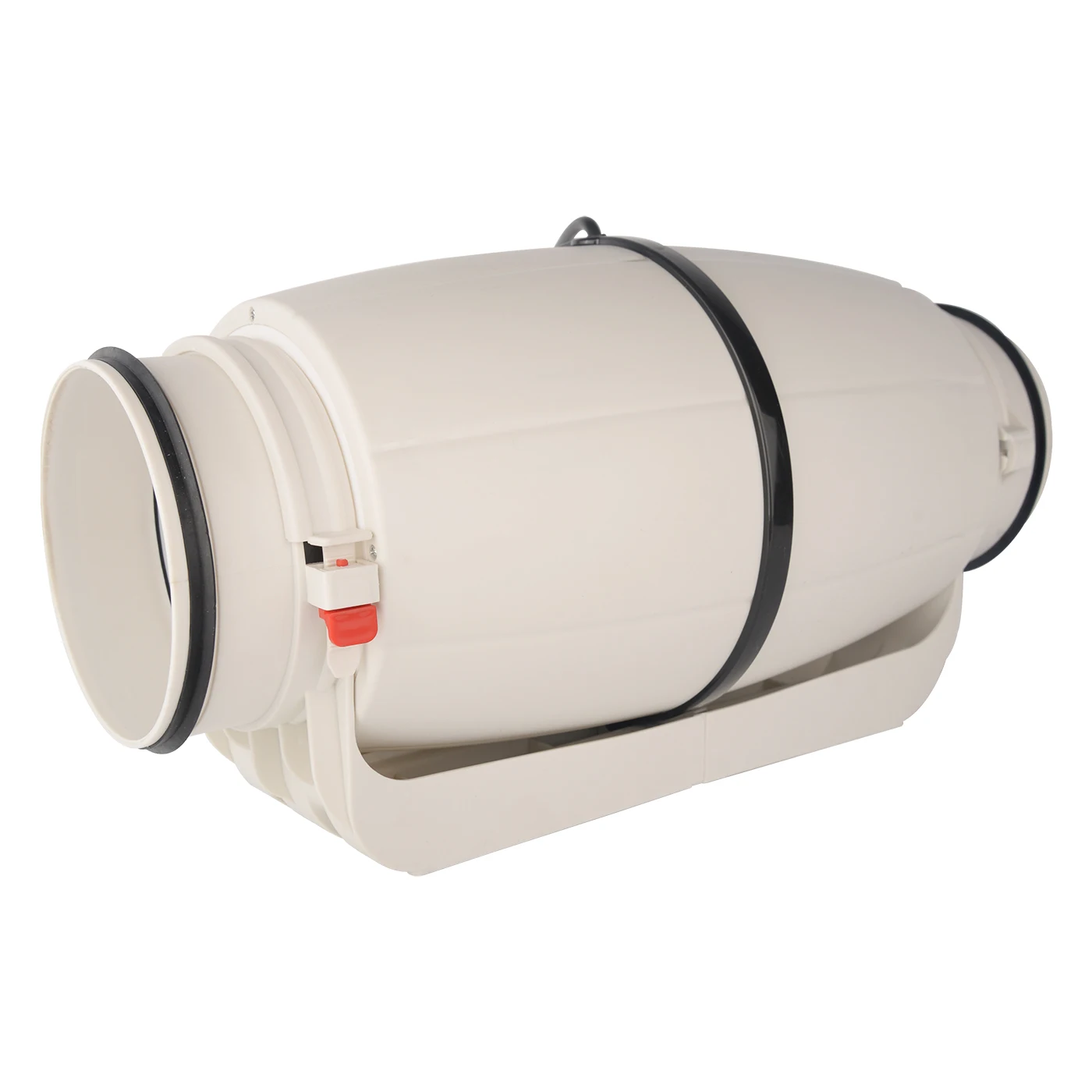
The arrangement called for air to travel from the enclosure through the fan and into the duct along one axis. A tube axial configuration with flanges at both ends was a practical direction to evaluate. A radial-discharge centrifugal arrangement would require a different outlet path and space assessment.
The drawing located the fan, but it did not establish every installation dimension. The outlet geometry, nearby elbows, flexible connections and maintenance access still belonged in the engineering review.
Put 1,900 CFM and 2 in. w.c. on the same curve
The requested figures convert to approximately 3,230m³/h and 498Pa. Conversion does not remove the need to confirm the pressure definition. The required flow and pressure must be assessed together on a curve using the same pressure basis. AMCA’s guide to fan curves explains the paired duty-point approach.
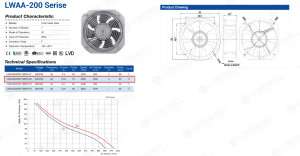
LONGWELL LWMFAF400-01 was a platform to investigate. Its public listing gives a maximum airflow of 5,100m³/h and maximum static pressure of 1,390Pa. Those are separate curve limits. They cannot be combined, and they do not establish performance at 3,230m³/h and 498Pa. The curve for the proposed configuration is needed before that duty can be confirmed.
A 14-inch connection is not a 400mm impeller
Fourteen inches is approximately 356mm. A 400mm platform designation commonly refers to impeller size. Connection diameter, casing dimensions and impeller diameter are different measurements. Any transition between the enclosure, fan and duct must be assessed on their drawings.
| Mechanical check | Information required |
|---|---|
| End connections | Flange outside diameter, hole centres, hole count and clear opening |
| Available length | Distance between the roof outlet and duct connection |
| Support and access | Mounting loads, motor position and removal route |
| Duct arrangement | Transitions, elbows and flexible connectors |
A drawing approval should resolve these interfaces before fabrication. Sharing only a nominal duct size leaves too much room for a mechanical mismatch.
Check temperature, electrical supply and approvals by configuration
The specified 45°C condition needs clarification: is it the air handled by the fan, the surrounding ambient, or both? Motor and assembly limits need comparison with the applicable condition. The site voltage, frequency and phase also need confirmation; a North American destination does not define them. The motor selection, connection diagram and quotation should all identify the same supply configuration, so that a mechanically suitable platform is not mistaken for an electrically approved selection.
UL or an accepted equivalent was the customer’s requirement, rather than a demonstrated approval for the proposed fan. The project must identify the applicable standard, accepted certification route and coverage of the exact motor and assembly configuration. Company certificates cannot answer that product-specific question.
Confirm one complete selection package
The enquiry supported investigation of a double-flanged, in-line exhaust arrangement. It did not yet establish a final part number. Supply the enclosure drawing, duct layout, interface details and electrical conditions together so that the mechanical and performance reviews use the same configuration.
A confirmed selection should include the curve with the required operating point, an approval drawing, wiring information and the project’s required approvals documentation. The LWMFAF400-01 platform listing is an initial screening reference; those project checks determine whether it is suitable.
Choose the right axial fan
Longwell manufactures 1,048 axial fans in-house. Send airflow, static pressure and voltage — an engineer replies with a matching model, performance curve and price within one working day.