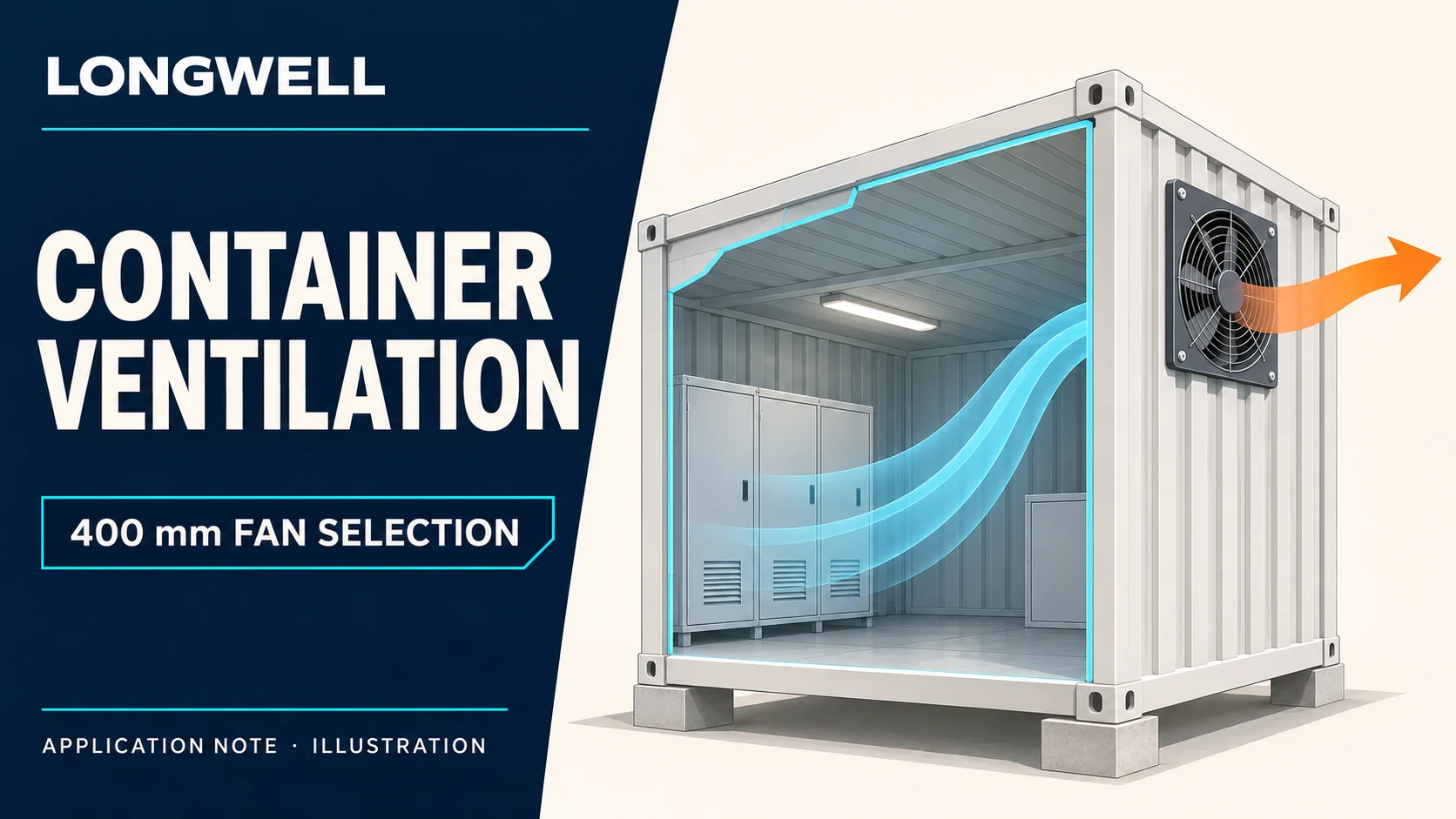
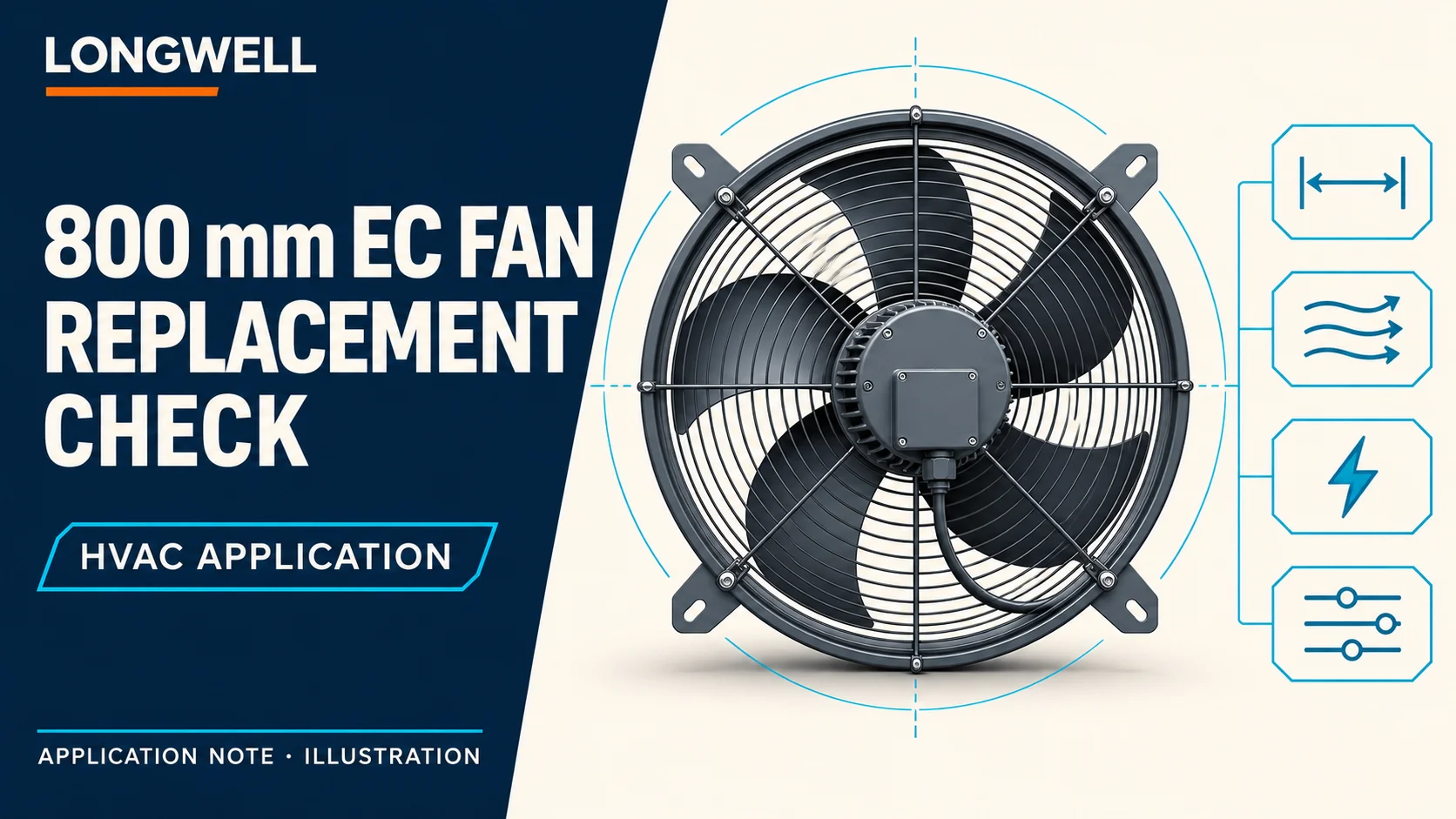
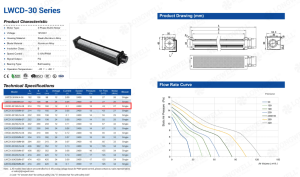
An industrial equipment user in East China needed to replace the exhaust fan on an outdoor equipment container. The existing mounting plate, wall opening and electrical supply were to remain. The requested starting point was a square-frame, 400mm external-rotor axial fan.
The enquiry illustrates a common replacement problem: a fan can resemble the original and still have a different performance envelope. The assessment therefore treated mounting fit, electrical suitability and airflow capability as separate checks.
Read the wall installation before choosing a model
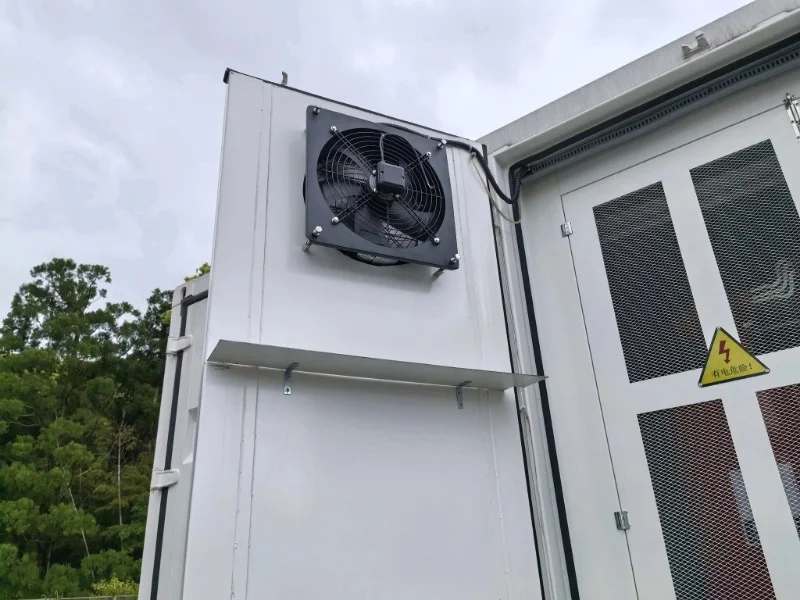
The photograph identified the square-frame construction and external-rotor arrangement. It could not establish every dimension. Hole centres, cut-out size, plate thickness and available depth still needed measuring against a proposed model’s drawing.
Airflow direction was another constraint: this installation exhausted air from the equipment compartment. The guard position, blade clearance and cable exit needed checking with the mounting arrangement. Keeping the same mounting side is not, by itself, proof that the replacement will move air in the required direction.
Specify the full electrical condition: 220V, 60Hz
The site supply was 220V at 60Hz. Both details belonged in the selection requirement, along with phase and the connection arrangement. A 50Hz performance sheet would not provide the required evidence for this enquiry. Keep the electrical details attached to the exact part number throughout the quotation and drawing review, rather than relying on a general series description.
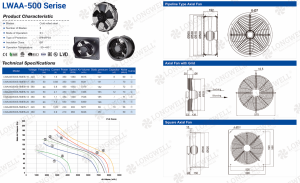
The initial candidate was LONGWELL LWAA4E400S-5MEB-10, with LWAA4E400S-5MEB-02 identified for comparison within the same series. Naming these models made the drawing and performance review specific. It did not establish that either model met the full original duty.
Resolve the airflow gap before confirming a replacement
The reference information for the original fan included approximately 6,480m³/h and 240Pa, with about 2,350rpm and 530W. The relationship between those airflow and pressure figures still needed confirmation; they should not automatically be treated as an independently verified operating point.
The official LWAA4E400S-5MEB-10 product page lists a maximum airflow of 5,150m³/h. If the installation actually needs 6,480m³/h at 240Pa, this candidate cannot be approved against that requirement. A higher-capacity option would need a fresh curve check and a separate mounting review.
This distinction matters because maximum airflow normally refers to a near-zero-static-pressure condition. Installed airflow through a guard, louvre or other restriction must be assessed on the curve. If the equipment needs less airflow than the original reference figure, that real requirement should be established before considering a smaller performance envelope.
Check outdoor exposure alongside the mounting drawing
An outdoor container adds rain, dust and solar exposure to the selection discussion. The actual operating temperature and protection requirements need checking for the selected model. Cable entries, terminal-box orientation, drainage and any existing rain protection also deserve a site review.
A fan’s protection rating does not establish the weather protection of the complete enclosure. Replacing the fan should include checking whether the existing wall arrangement directs water away from electrical connections and preserves the intended ventilation path.
| Selection check | Evidence to collect |
|---|---|
| Mechanical fit | Cut-out, hole centres, available depth and dimensional drawing |
| Supply | 220V/60Hz, phase and wiring diagram |
| Cooling duty | Required airflow at corresponding static pressure and a 60Hz curve |
| Outdoor conditions | Operating temperature, rain and dust exposure, connection protection |
Build a useful container fan replacement enquiry
Start with clear photographs of the original nameplate and complete fan. Add a wider view of the container’s intake and exhaust positions. Mark the mounting dimensions, and include the original curve or equipment cooling requirement if available.
Those details help answer three practical questions: how much air the equipment needs, which fan construction fits the opening, and what the supply and environment allow. The outcome may be a model on the same platform, a higher-capacity selection or a revised installation arrangement. That decision follows the evidence.
Choose the right axial fan
Longwell manufactures 1,048 axial fans in-house. Send airflow, static pressure and voltage — an engineer replies with a matching model, performance curve and price within one working day.