What does an inlet cone actually change? It shapes the route from the approaching air into a centrifugal fan wheel. A sharp entrance, an obstructed inlet or a cone that does not match the wheel can change that route. The practical decision is to specify and inspect the inlet as part of the complete fan assembly, then use a comparable fan curve and installation review to judge the effect. A single gap percentage or promised efficiency gain cannot settle the choice.
Start with the air entering the wheel
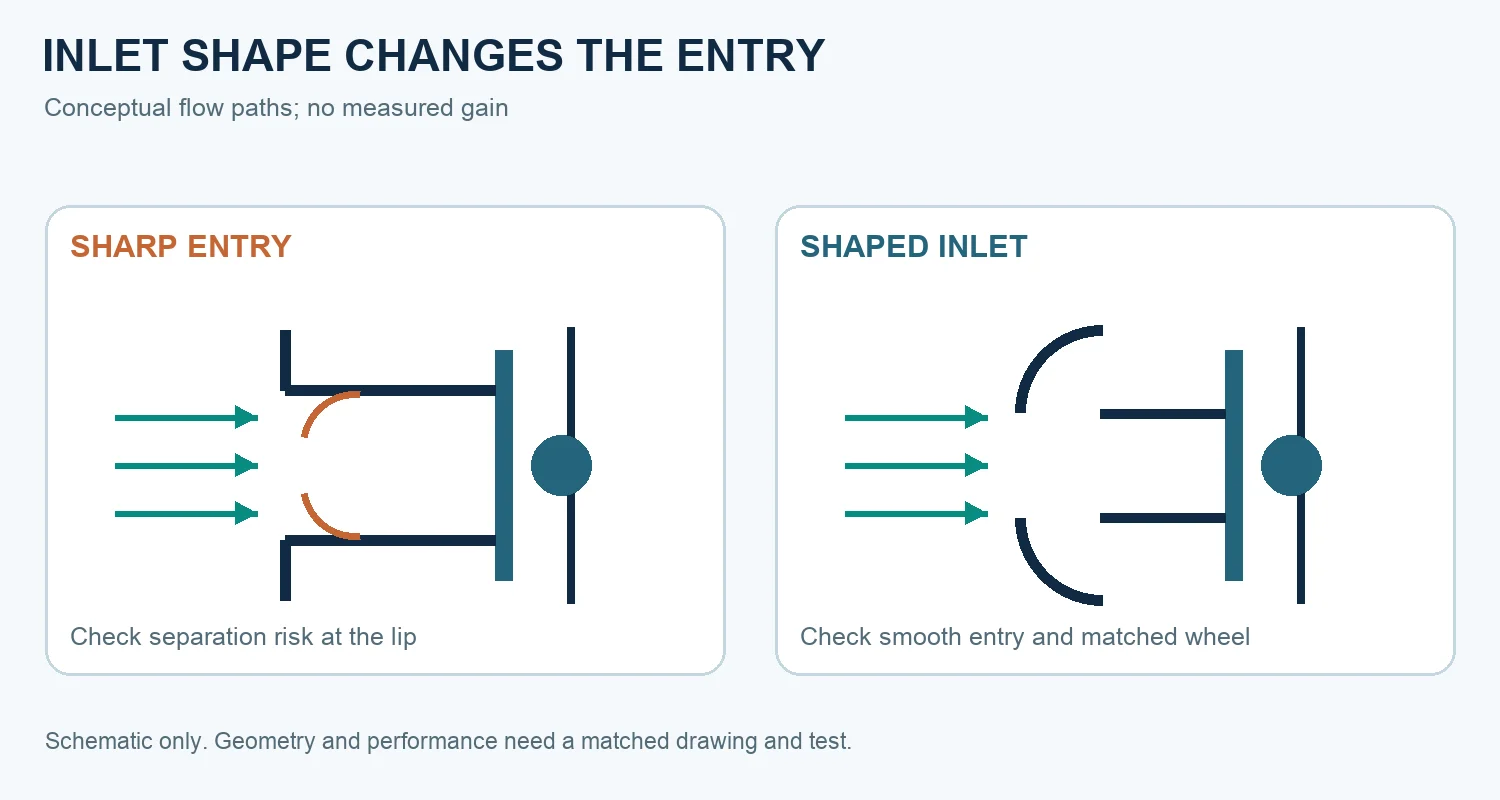
A centrifugal wheel takes air in around its eye and turns it toward the blade passages. The entrance shape matters because the stream must turn and accelerate before the wheel can add energy. A rounded inlet is commonly used to guide that change of direction. A sharp lip can encourage local separation, especially when the arriving flow is already uneven. This is a mechanism to investigate, not proof that every rounded cone improves every installation by a fixed amount.
Figure 1 isolates the entrance geometry. It deliberately omits blade dimensions and numbers: the drawing helps a reviewer ask where the air turns and where a mismatch could occur. It is a concept sketch, not a LONGWELL production section or a measured flow field. The actual contour, wheel overlap and installation must come from the offered assembly’s current drawing.
Clearance belongs to an exact wheel and cone
Many centrifugal inlet arrangements have a specified relationship between the stationary cone and rotating wheel. The overlap and radial clearance may affect leakage, contact risk and the quality of the incoming flow. But their appropriate values depend on the wheel, inlet geometry, speed, materials, bearing arrangement, manufacturing tolerance and operating temperature. There is no defensible universal “optimum” percentage to copy from an unrelated fan.
For a replacement or revised inlet, ask for the exact model and suffix, the current wheel-and-cone drawing, mounting orientation, rotation direction, overlap and dimensional tolerances. Check concentricity at several points with the equipment safely isolated, following the maker’s service procedure. Do not use an old article’s millimetre or percentage rule as a shop-floor setting. If the original assembly is damaged or uncertain, request the approved drawing and service advice before adjustment.
A LONGWELL family example shows the part
The published LONGWELL RLM plug-fan catalog names a sheet-steel inlet cone as a component that leads air into the impeller. Its family illustration shows the cone, backward-curved wheel, motor and supporting structure together. The photo below is useful for finding those parts. It does not identify a particular offered model, revision, project duty, inlet clearance or tested improvement.
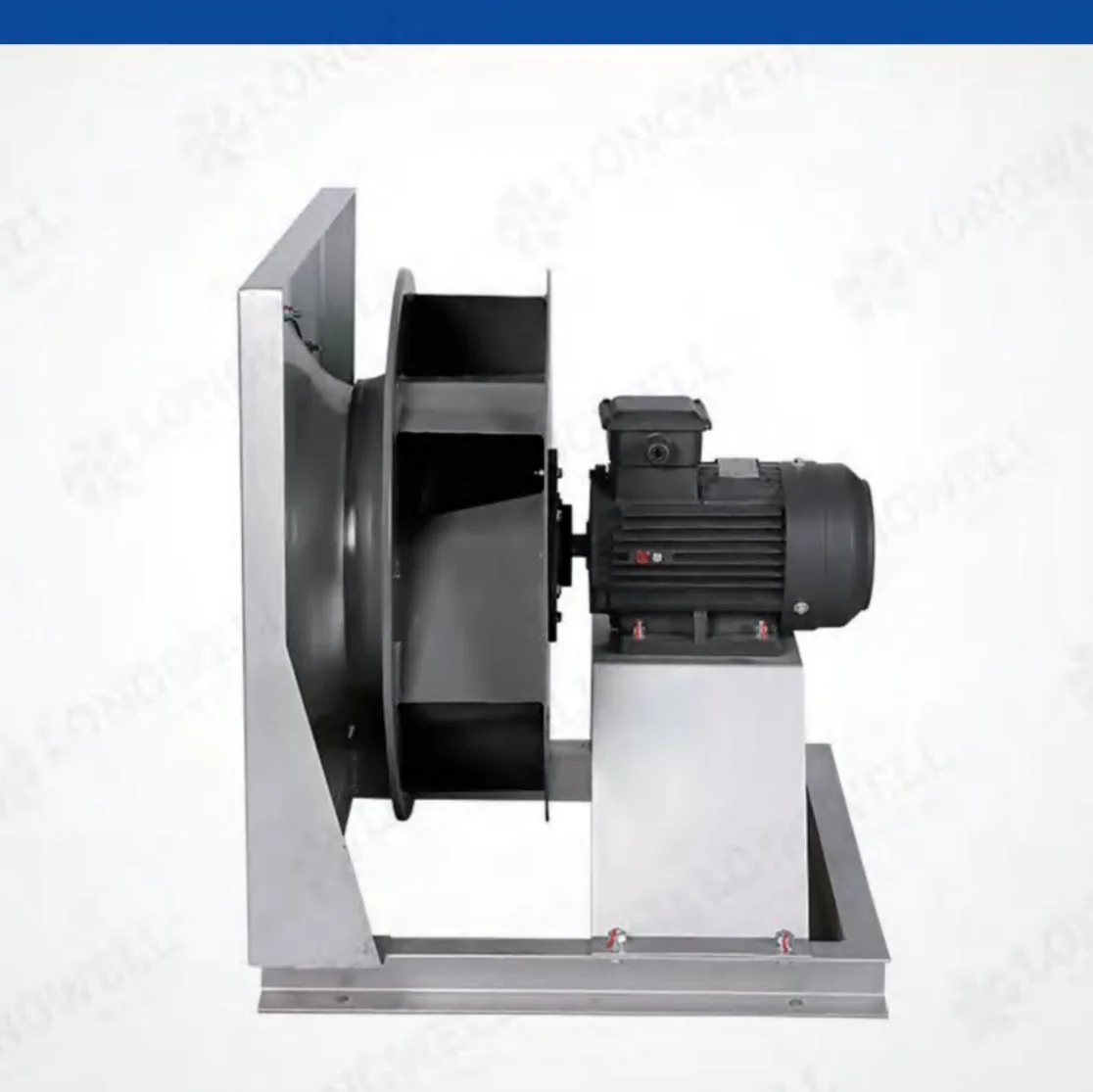
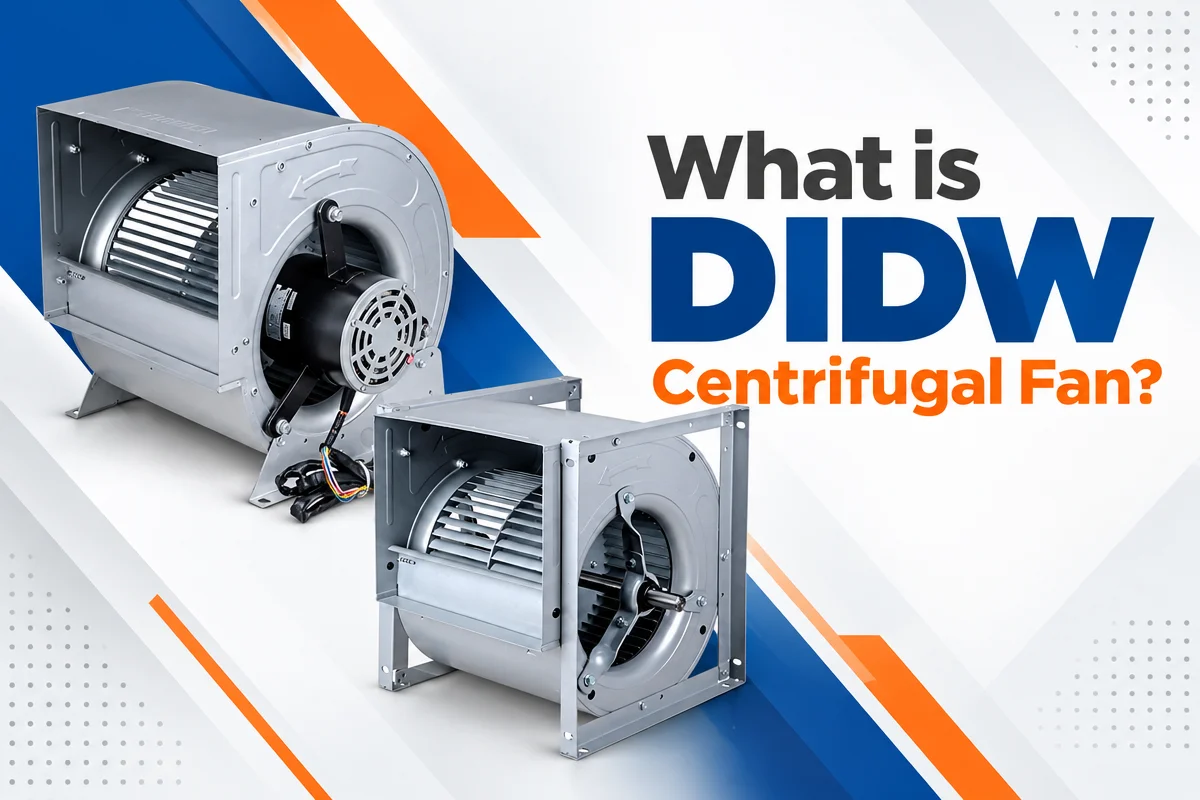
LONGWELL also maintains a broader centrifugal fan family. Use it to identify candidate construction; then obtain the exact model drawing and curve. A housed centrifugal fan and a plug fan put the inlet and surrounding equipment in different arrangements, as the plug-fan versus housed-fan guide explains. A family image or guide cannot establish that one cone will fit another wheel.
Inspect the installation upstream
Even a sound inlet cone cannot make a strongly distorted approach flow uniform by itself. An elbow, damper, guard, filter frame or cabinet wall close to the entrance may put more flow on one side of the wheel. The rated curve is tied to a defined test arrangement, while the real installation may impose additional system effect. Record the immediate upstream geometry and compare it with the test or installation conditions supplied for the chosen fan.
Also distinguish a centrifugal inlet cone from an axial fan’s venturi or tip ring. Both are inlet-related parts, but the wheel geometry and leakage paths differ. Do not transfer a centrifugal overlap rule to an axial tip-clearance check. For the wider fan mechanism, the centrifugal fan explanation can help identify the wheel, inlet and surrounding casing before a model-specific review.
Compare the revised assembly at a matched duty
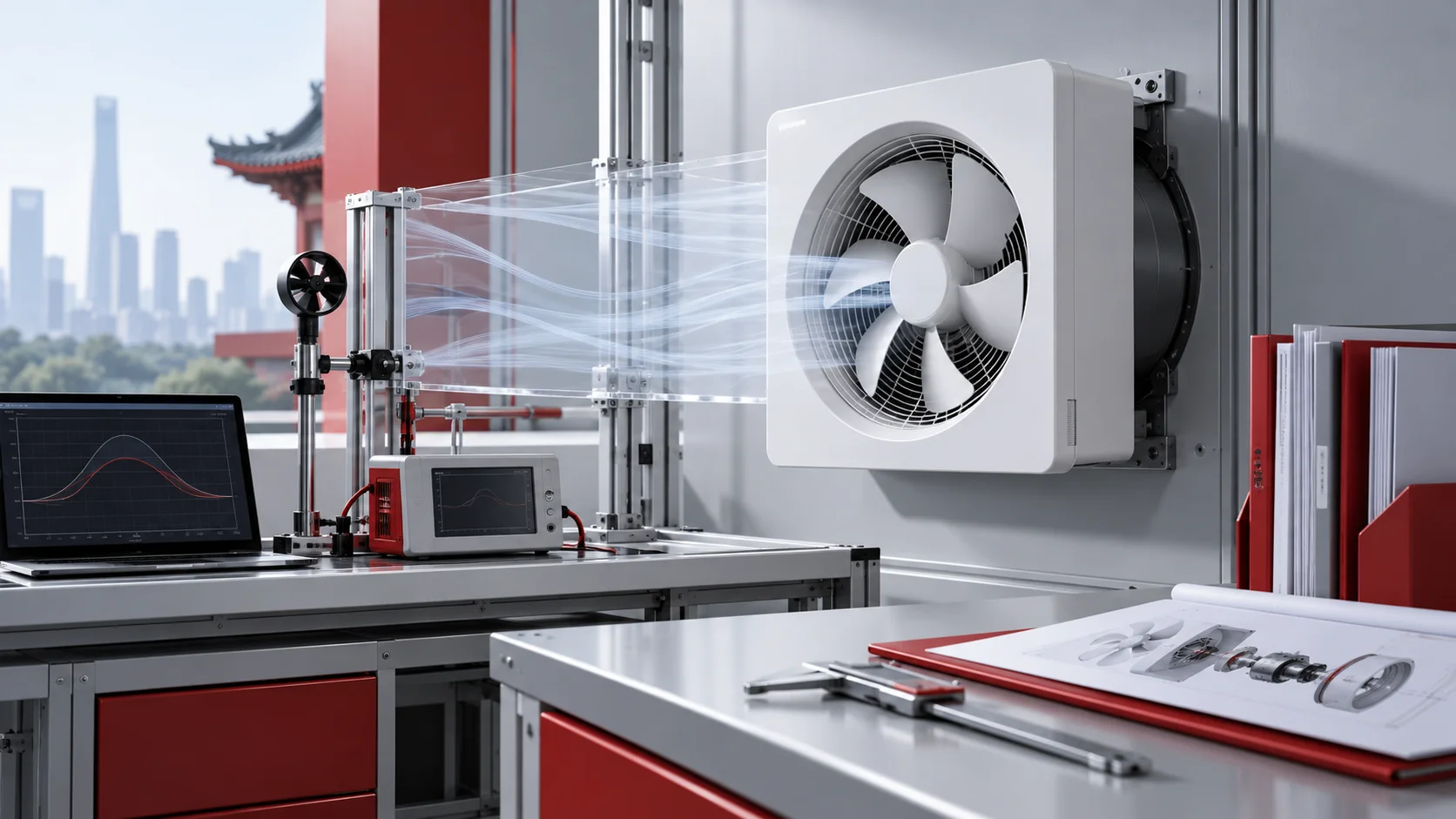
If a supplier proposes a new cone shape, an enlarged gap or a replacement wheel, compare the complete assemblies at the same airflow, pressure definition, air density, speed and installation category. Read the full pressure–flow curve and the power and sound evidence with their test conditions. A result at one point cannot predict the whole operating range, especially where filters load or speed changes. Where no matched test exists, treat the proposed change as unverified rather than assigning a percentage benefit or loss.
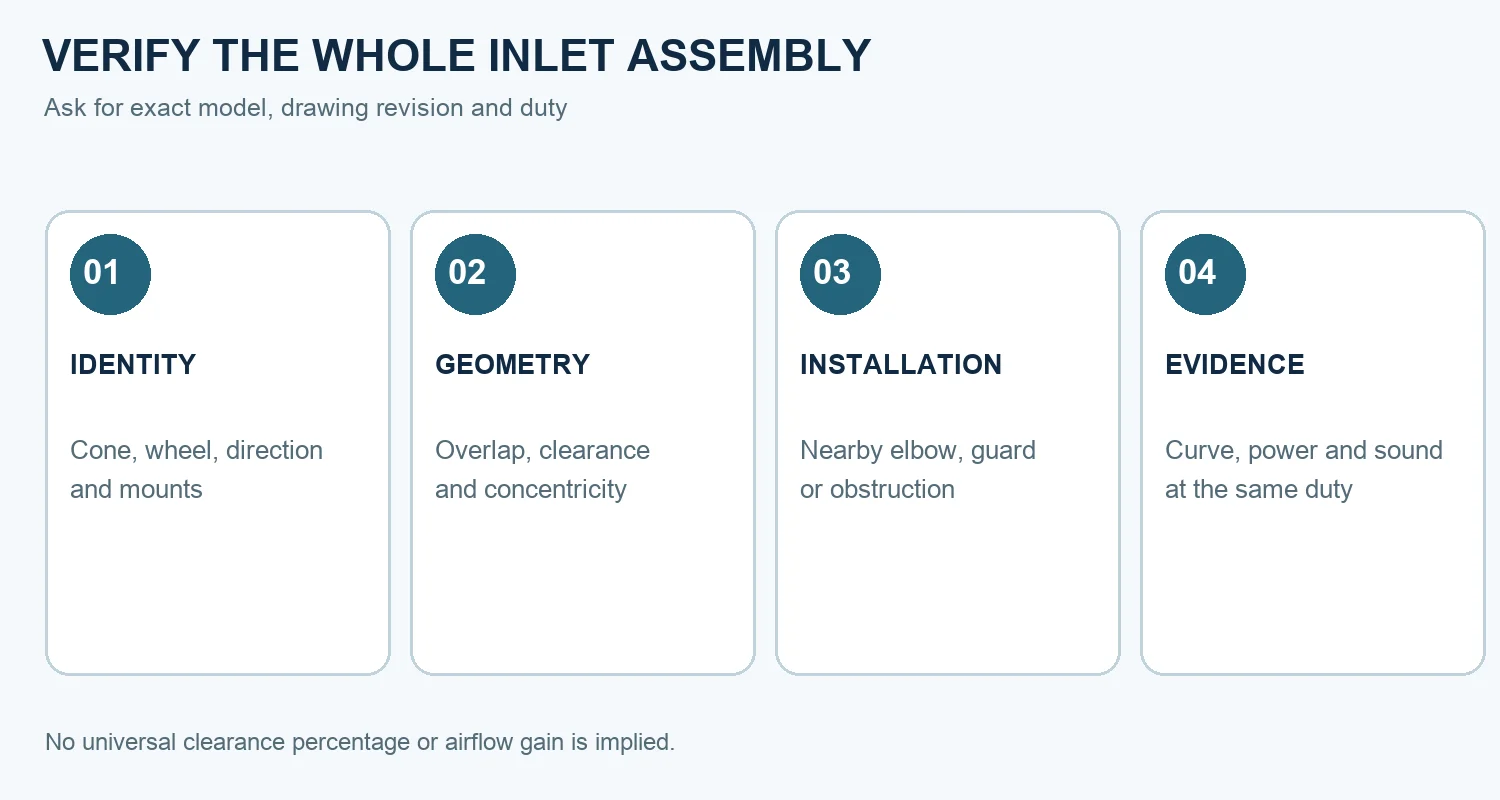
The second explanatory diagram turns that into a request sequence: identify the parts, confirm geometry, describe the installed approach and ask for comparable measurements. It is not a product approval chart. It prevents a visually similar cone, a nominal wheel diameter or a borrowed generic clearance from being mistaken for an exact fit.
What to send for a useful review
Provide the fan model and suffix, current drawing revision if known, photos of the cone and wheel from safe access points, the intended airflow and pressure, speed range, air density or operating temperature, and an inlet-side installation sketch. State whether the question is new selection, replacement, noise investigation or a proposed geometry change. The answer can then be tied to a specific assembly and duty point instead of a generic rule.
Need a model-specific inlet review? Send the assembly details and duty point to sales@longwellfans.com.
Choose the right centrifugal fan
Longwell manufactures 1,136 centrifugal fans in-house. Send airflow, static pressure and voltage — an engineer replies with a matching model, performance curve and price within one working day.