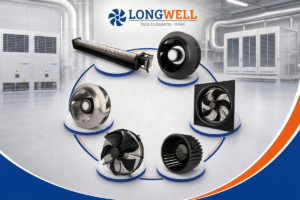
If you want to design an HVAC system, size the AHU, or replace the aged air-handling system, centrifugal fans are the best choice. The choice of centrifugal fan design can have a significant impact on the overall system performance. Two commonly used options are plug fans and housed fans. Their differences go beyond the external design. These two kinds of fans follow different airflow paths and require different integration approaches. This blog compares plug fans and housed fans in terms of design structure, energy efficiency, space requirements, noise performance, and application suitability.
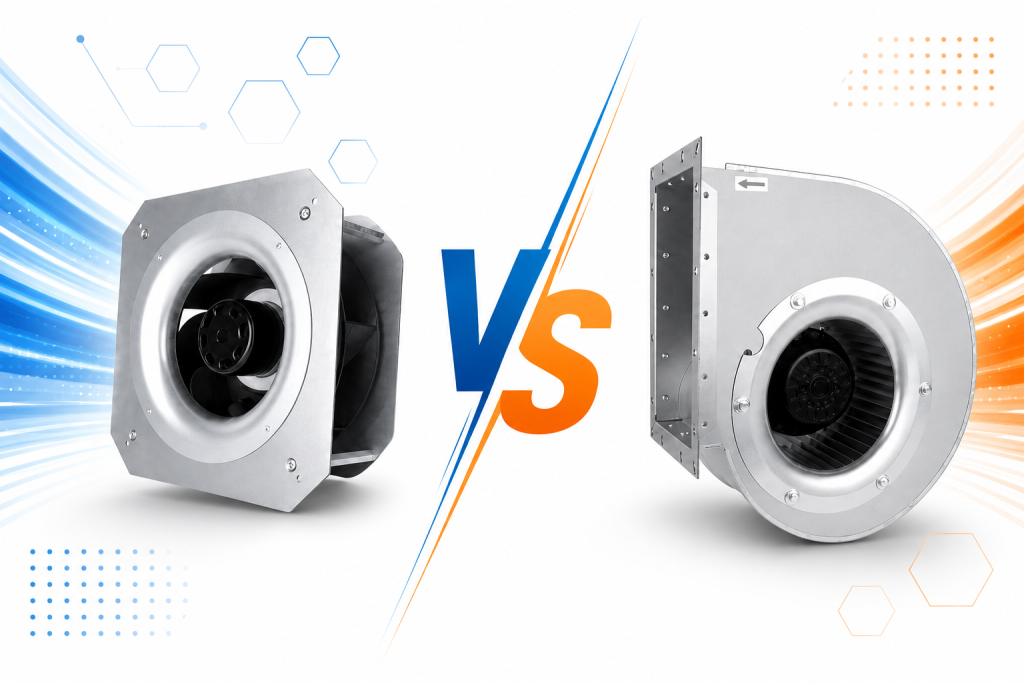
What is a Plug Fan?
Plug Fan Design
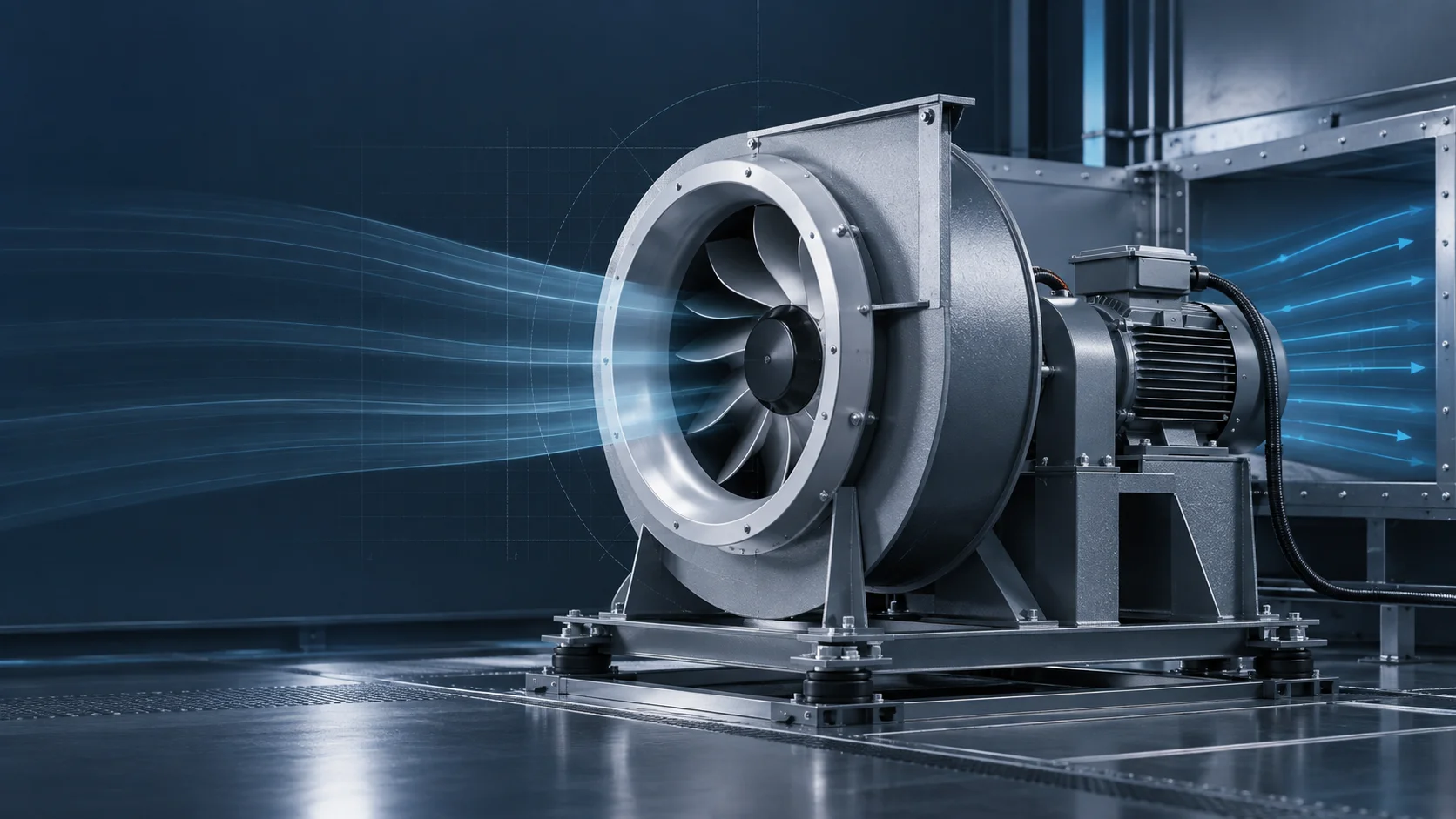
A plug fan is a type of centrifugal fan designed to operate without a scroll or volute housing. Most plug fans use a backward-curved centrifugal impeller. Air enters axially through the inlet and is accelerated by the rotating impeller before being discharged radially into the plenum. Without a volute around the wheel, the fan does not require a fixed discharge orientation, giving equipment designers more freedom when arranging the fan section. For this reason, plug fans are commonly integrated directly into AHUs and ventilation cabinets.
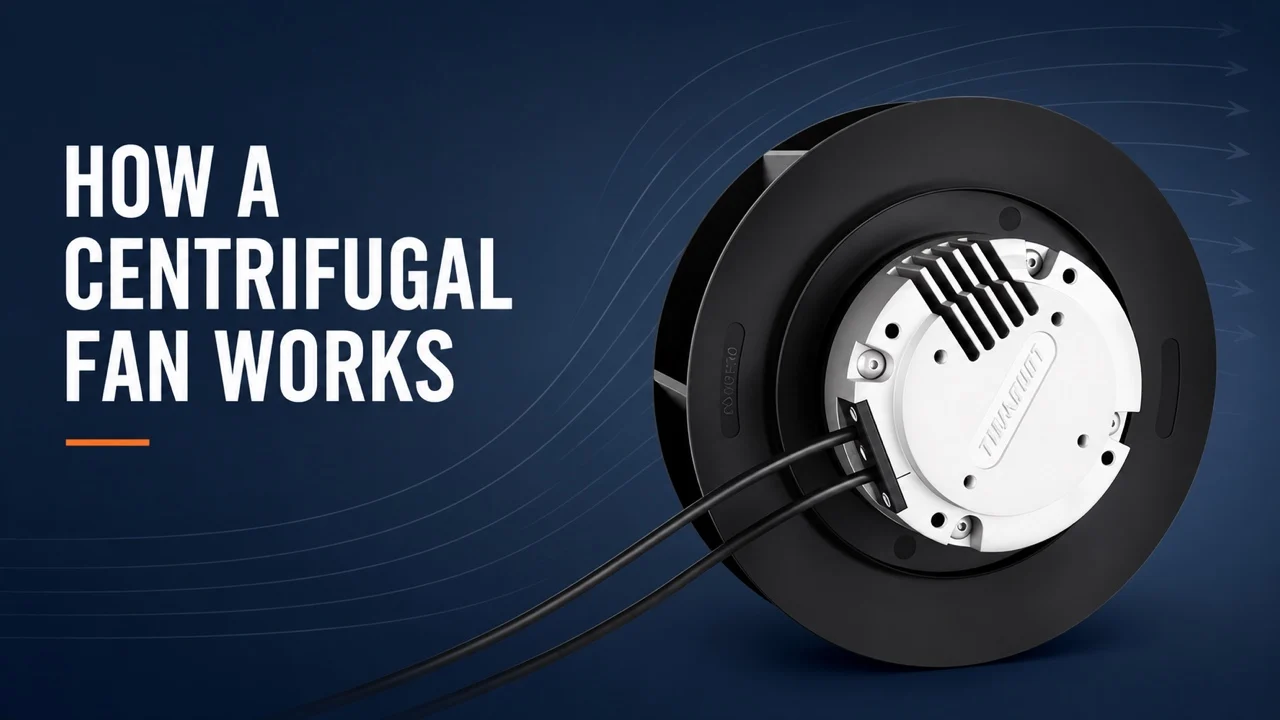
Modern plug fans commonly use a direct-drive configuration, with the impeller connected directly to the motor rather than through belts and pulleys. EC motors are also widely used where variable-speed operation is required.
Advantages
The absence of a scroll housing gives the plug fan make plug fan be more compact. The open structure leaves the impeller and surrounding area more accessible for inspection and cleaning. Most plug fans are equipped with direct-drive EC motors, which lead to adjustable airflow output. Fan speed can be reduced instead of running continuously at full speed, improving part-load energy performance.
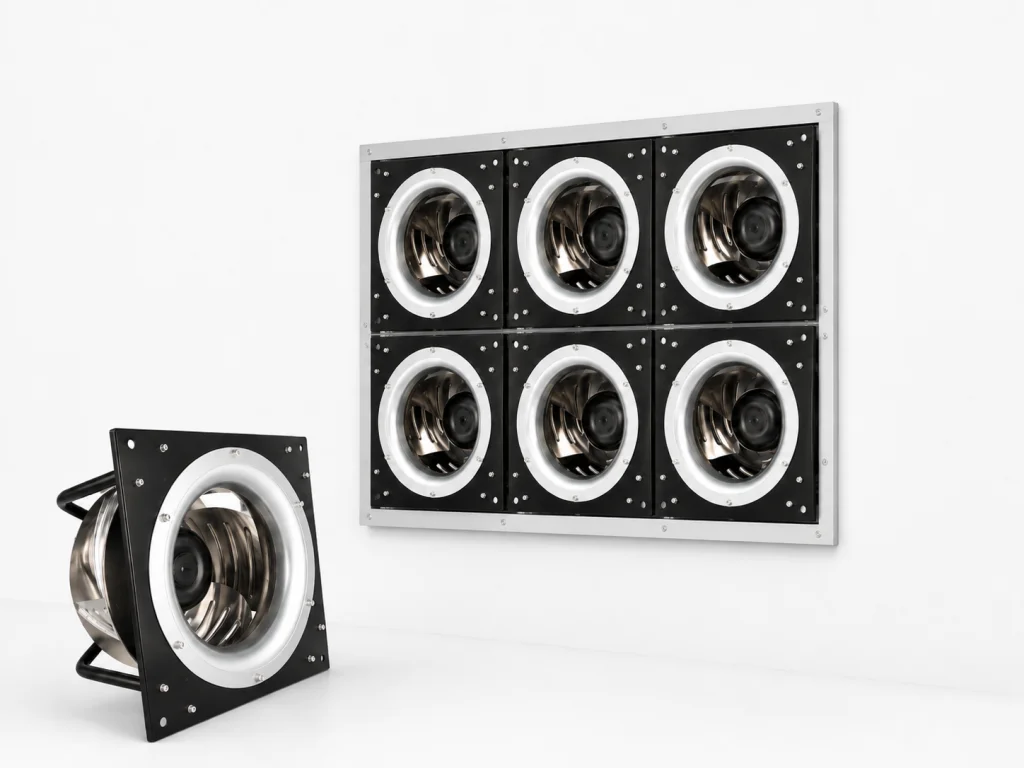
Plug fans can also be installed in parallel as a fan array or fan wall, allowing several smaller fans to share the required airflow while providing greater flexibility in capacity control and system redundancy.
What is a Housed fan?
Housed Fan
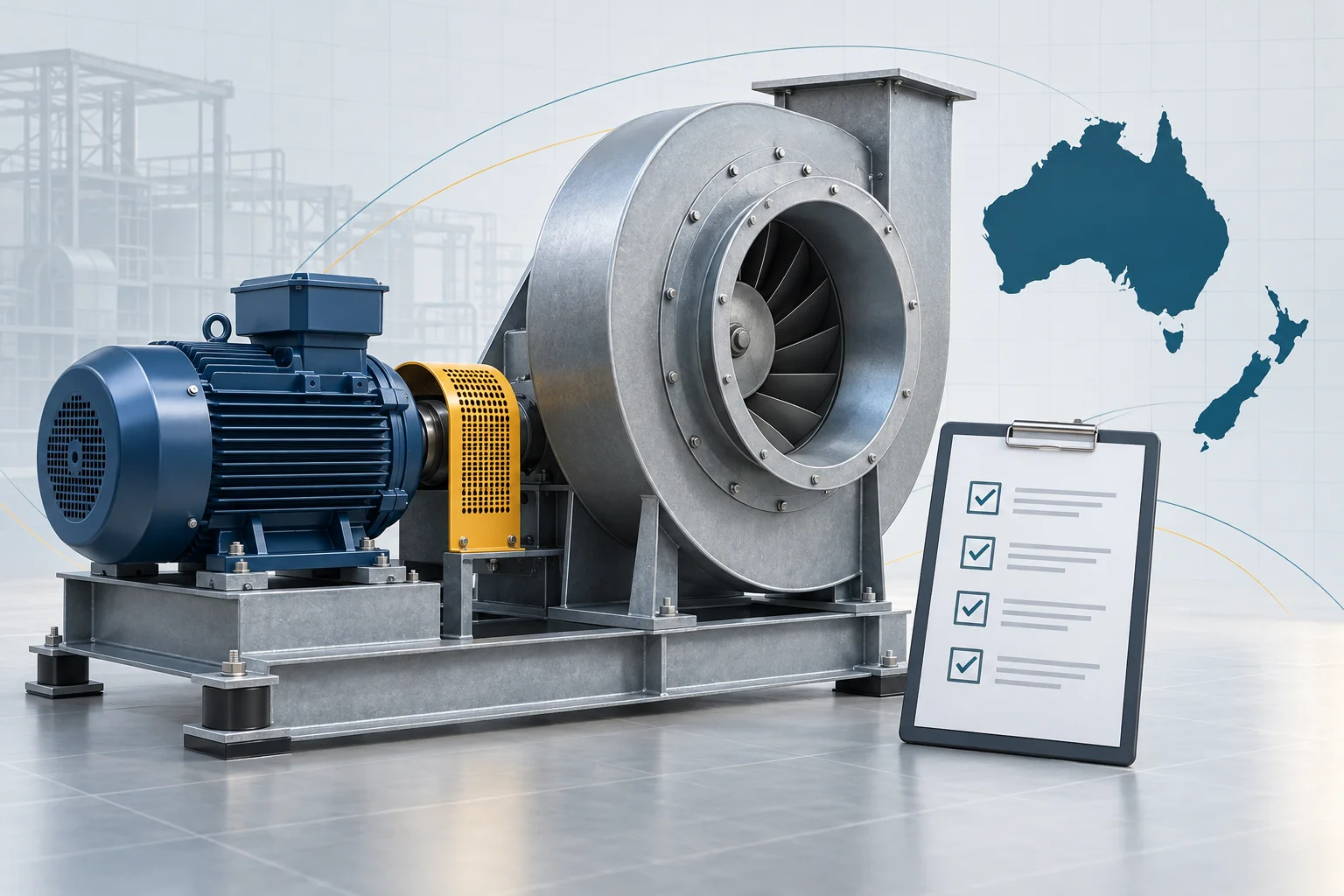
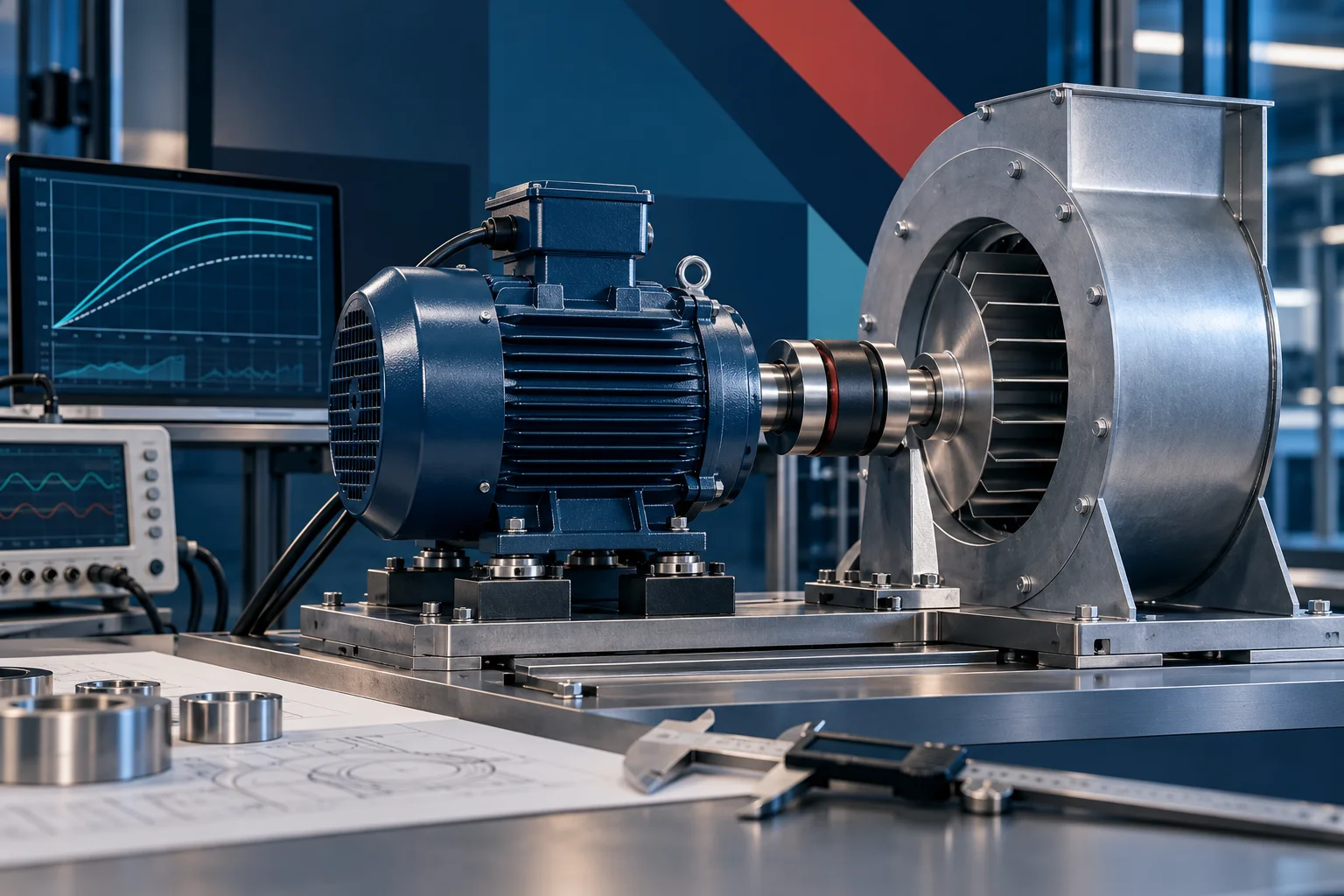
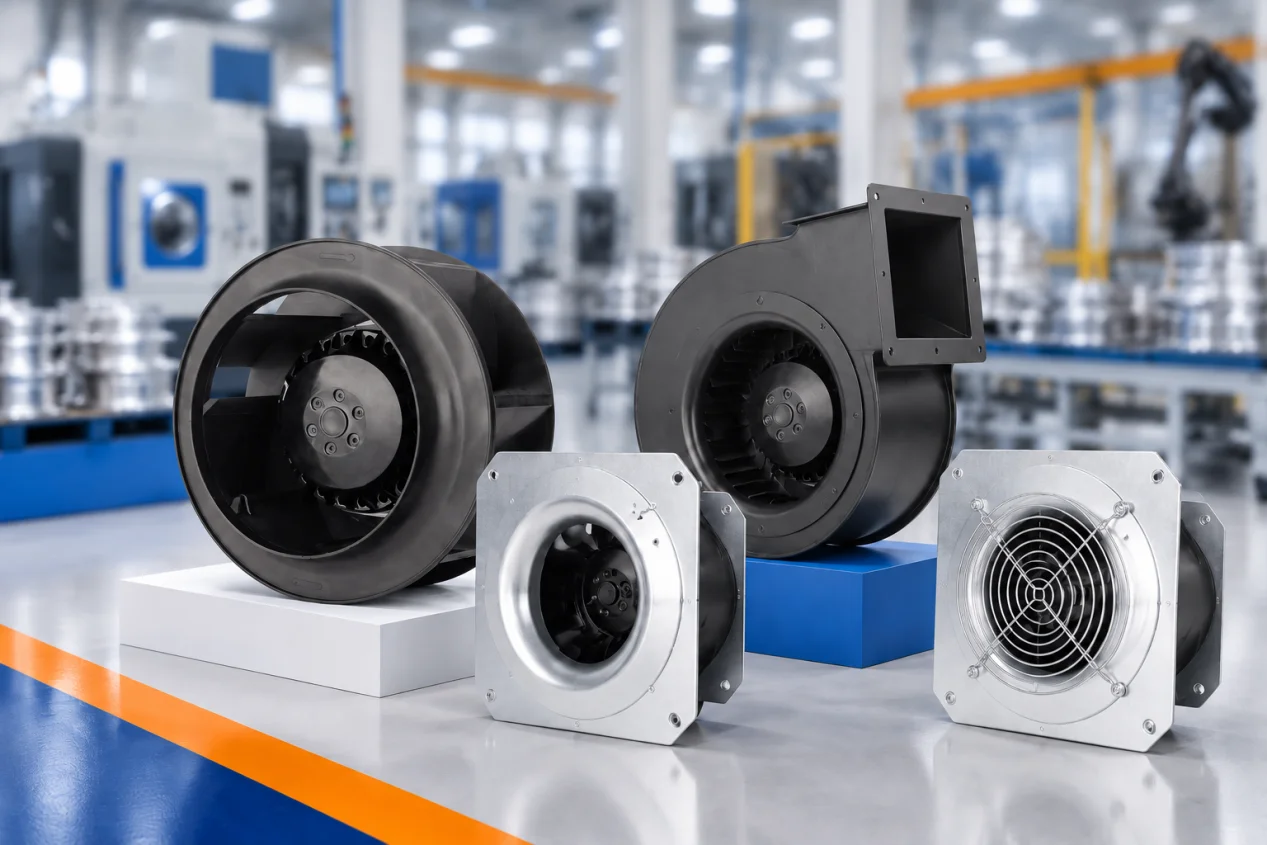
A housed fan typically refers to a centrifugal fan with a scroll or volute housing around the impeller. It uses the volute housing to guide the airflow output direction. This housing design helps convert part of the airflow velocity into useful static pressure, making housed fans suitable for systems that require controlled airflow paths and duct connections.
Housed fans are self-contained fan assemblies. Depending on the application requirements, housed fans can use different impeller designs, including forward-curved, backward-curved, backward-inclined, or radial blades. The impeller is usually designed together with the motor and the housing to achieve the required airflow and static pressure performance.
Housed Fan Advantages
A volute housing provides a fixed airflow path. The outlet direction is determined by the housing design, making it easier to connect the fan with existing duct systems or equipment layouts.
The scroll housing helps recover airflow energy by gradually increasing the flow area around the impeller. This process reduces airflow losses and improves pressure development, especially when the fan is operating near its designed duty point. Because housed fans are a long-established centrifugal fan design, they are widely available in standard specs and can be directly integrated into many existing HVAC systems. For retrofit projects or equipment replacement where a scroll housing is already included, a housed fan often provides a simpler installation solution without major system redesign.
Plug Fan vs Housed Fan: Key Performance Comparison
| Parameter | Plug Fan | Housed Fan |
| Volute Structure | No | Yes |
| Airflow Path | Discharges into plenum | Guided by housing outlet |
| Installation | Flexible AHU integration | Fixed fan arrangement |
| Space Requirement | Compact | Larger |
Energy Efficiency
The efficiency of a fan depends on more than a housing design. The fan’s energy performance is affected by impeller design, motor type, drive configuration, and system resistance.
A housed fan uses a matched impeller and scroll housing to guide airflow and recover part of the velocity pressure into static pressure. Plug fans remove the traditional volute housing and discharge air directly into the surrounding plenum. This design eliminates some airflow losses associated with the scroll structure and provides greater flexibility for system integration.
The comparison between plug fans and housed fans should focus on overall system efficiency. There is no single type of fan that is necessarily more efficient.
Space Saving
Installation space is one of the most noticeable differences between plug fans and housed fans. A housed fan requires an integrated scroll housing around the impeller. This design increases the overall fan footprint and limits equipment layout.
A plug fan eliminates the volute housing and uses the surrounding enclosure as the airflow chamber. This allows a more compact installation, especially in equipment where internal space is limited. However, space saving should always be evaluated together with the complete system design. A plug fan requires appropriate plenum space and airflow clearance to avoid additional pressure loss or turbulence.
Noise Performance Comparison
Neither a plug fan nor a housed fan is inherently quieter in every operating condition. For centrifugal fans, noise can generally be divided into aerodynamic noise caused by turbulent airflow and pressure fluctuations, and mechanical noise.
In a housed fan, the scroll collects the air leaving the impeller and directs it toward a defined outlet. This makes the discharge noise more predictable and can make precautions measures. The volute housing is a factor that influences the fan’s noise performance. For this reason, volute structure optimization, casing reinforcement, and structural damping are also important considerations.
A plug fan removes this scroll housing and discharges air directly into the AHU plenum. This eliminates casing-related resonance and the airflow interaction between the impeller and volute, but it does not automatically result in a lower overall sound level. Because the fan operates in an open plenum, its acoustic performance is more sensitive to the distance from nearby walls and components. Poor plenum geometry can still create turbulence and increase system noise.
Plug Fan vs Housed Fan: Applications
Fan Grid
Plug fans are well suited to fan grid or fan wall systems, where multiple smaller fans operate in parallel. In this arrangement, airflow capacity can be increased by adding plug fan modules while the system maintains the required pressure. Each fan can be controlled independently, allowing the array to respond more closely to changing airflow demand. A fan grid can be designed with N+1 redundancy. If one fan stops, the remaining units increase speed to help maintain the required airflow. Due to the independently served module, regular maintenance can also be carried out without shutting down the entire ventilation system.
Air Handling Unit
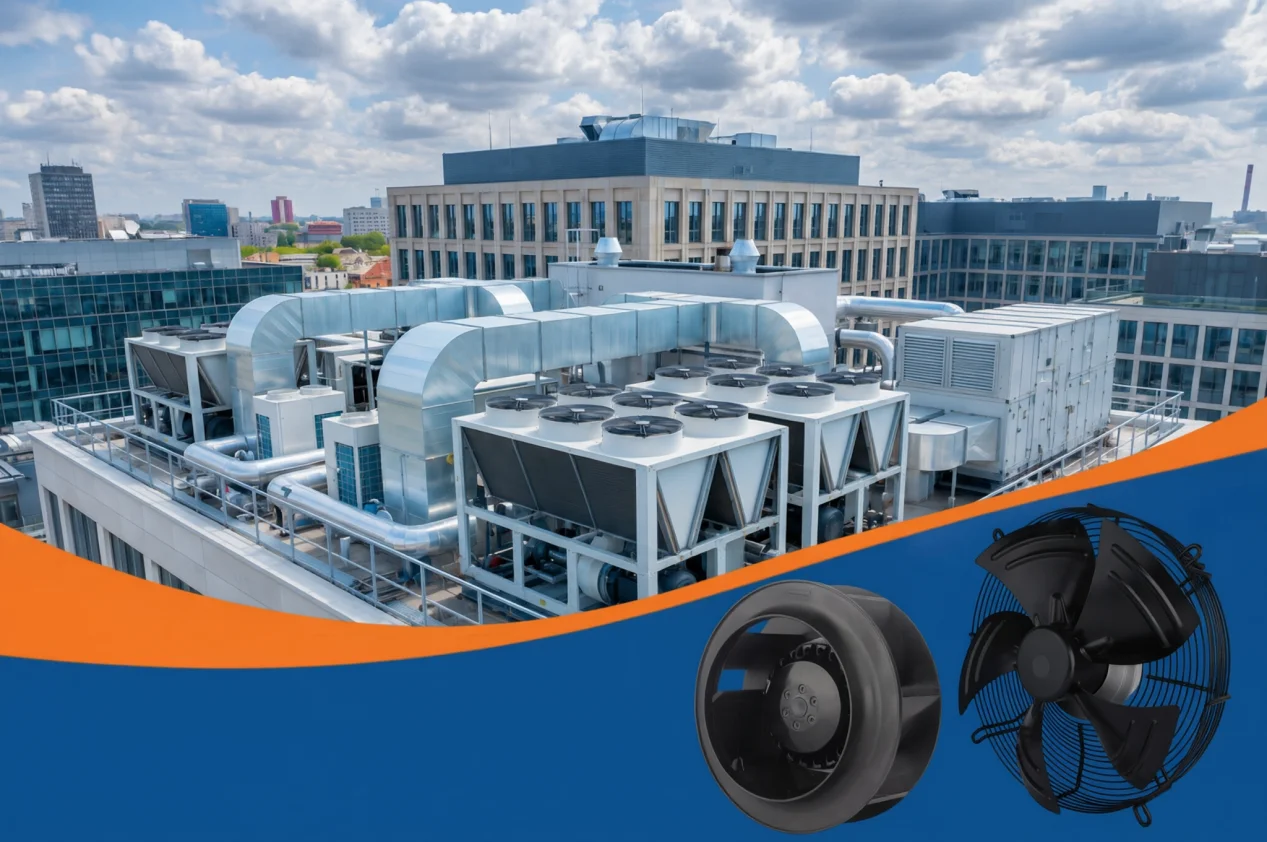
Both plug fans and housed fans are widely used in AHU systems. A housed fan is particularly suitable when the AHU has a clearly defined discharge direction and connects to a single downstream duct. Plug fans are commonly arranged as fan grids or fan arrays in large AHU systems.
Commercial AHUs must move air through filters, heating or cooling coils, heat recovery sections, and downstream ductwork while meeting the required airflow and static pressure. LONGWELL positions backward-curved EC centrifugal fans for AHU and RTU applications covering approximately 5,000-32,000 m³/h and 400-1,500 Pa.
Lifecycle Cost Comparison: Plug Fan vs Housed Fan
Initial Investment
A housed fan often has the advantage of a lower initial equipment cost when the application uses a single fan, a fixed discharge connection, and a relatively simple control strategy. The volute, impeller, motor, and drive can be supplied as one complete assembly. By comparison, a direct-drive EC plug fan generally includes the motor, drive electronics, and speed-control functions in the fan package, so the initial investment can be higher.
Long-Term Operating Cost
Long-term operating cost is usually influenced more by energy use and maintenance. Direct-drive EC plug fans can reduce energy consumption through efficient motors, variable-speed control, and the elimination of belt transmission losses. Belt-driven housed fans require periodic inspection of belts, pulleys, bearings, tension, and alignment. These parts create additional failure points. Direct-drive plug fans remove most of these transmission components, which can simplify routine maintenance.
Why Choose LONGWELL Plug Fan Solutions?
For large AHU and retrofit projects, LONGWELL also provides fan grid solutions using multiple EC plug fans working in parallel. The modular design supports N+1 redundancy, easier maintenance, and improved part-load efficiency compared with traditional single-fan systems.
LONGWELL reports representative retrofit cases including an office-building FanGrid handling approximately 75,000 m³/h with about 35% indicative energy savings, and an airport terminal project at approximately 120,000 m³/h with reported savings of around 30–40%. A data-center cooling upgrade using an EC plug-fan array reported approximately 35% energy savings together with a lower fault rate.
Beyond standard products, LONGWELL supports customized fan development. This engineering-focused approach helps customers select and integrate the right fan solution from initial concept development through final production within 90 days.
FAQs
Which is more efficient, an EC plug fan or a centrifugal fan?
An EC plug fan can provide higher system efficiency in many HVAC applications. However, efficiency depends on the actual operating point. A matched centrifugal fan can also achieve high efficiency.
What is the difference between a plenum fan and a plug fan?
A plenum fan and a plug fan generally refer to the same type of casing-less centrifugal fan. The plenum fan is more commonly used in North America, while the plug fan is widely used in Europe and Asia.
Can plug fans be retrofitted into systems designed for housed fans?
Yes, plug fans can often be used for housed fan retrofits, especially in AHUs. The retrofit design must consider airflow direction, available installation space, electrical integration, pressure requirements, and AHU structural modifications.
What are some ways to reduce fan noise?
Fan noise can be reduced by selecting the correct fan size and operating point, lowering fan speed, optimizing impeller and volute design, improving airflow conditions, and using proper vibration isolation.
Choose the right ec plug fan for ahu replacement
Longwell manufactures 83 ec plug fan for ahu replacements in-house. Send airflow, static pressure and voltage — an engineer replies with a matching model, performance curve and price within one working day.