Choosing a centrifugal fan for the project is not only about finding a product that meets the requirements itself. This is more like a search for a suitable supplier partner. A centrifugal fan may look like a standard component, but successful integration often requires more than the specification. For OEM customers, the supplier can directly influence product performance, development efficiency, and long-term reliability.
Although many purchasing decisions start with comparing basic parameters and price. However, only relying on these factors cannot find a reliable centrifugal fan supplier. This checklist covers 10 key questions to help you identify the suitable supplier before moving forward with a purchase.
Define Requirements Before Supplier Selection
Application Requirements
The first step for selecting the centrifugal fan is understanding where and how the centrifugal fan will operate. The design of centrifugal fan varies from the different applications. Many purchasing decisions begin with product specifications in catalogs, but the centrifugal fans are application-driven components.
Airflow and Pressure Requirements
Airflow and pressure are the core parameters for centrifugal fan selection. However, selecting a fan based only on maximum airflow or catalog specifications may lead to incorrect performance after installation. The actual operating point of a centrifugal fan depends on the relationship between the fan performance curve and the system resistance curve.
Project Requirements
For OEM projects, supplier capability becomes especially important because the fan may need to be customized, tested, and integrated into the final equipment before full production begins. Before contacting suppliers, buyers should define whether the project requires prototype development or volume production, the expected annual quantity, target delivery schedule, and certification requirements.
10 Questions to Ask Centrifugal Fan Supplier
Engineering Capabilities
Q1: Does the supplier have similar experience with your application?
Buyers look beyond the product catalog and understand whether the supplier has experience with comparable operating conditions. A centrifugal fan supplier’s experience with similar applications can provide valuable support during the selection and development process. An experienced supplier can consider how the centrifugal fan perform after integration into the final equipment and become a technical partner during the project. A centrifugal fan used in an AHU, heat pump system, industrial ventilation equipment, or HVAC system may require different design considerations even when the airflow requirements appear similar.
Q2: Can the supplier support fan selection and engineering development?
Engineering support service should be considered as an important part of the overall solution, but not an additional service after purchase. Before the specs confirmation, whether the supplier is able to review application requirements, evaluate operating conditions, or recommend the suitable centrifugal configuration is important. Besides, a centrifugal fan operated according to the operating point in the P-Q curve. By reviewing these, engineers can better understand the adaptability of selected centrifugal fan.
For OEM customers, engineering support often continues beyond the initial selection stage. The supplier may need to participate in prototype evaluation, design adjustments, performance testing, and integration with the final equipment. A supplier with strong development capability can help connect fan performance requirements with practical product design considerations.
Q3: What types of centrifugal fans does the supplier manufacture?
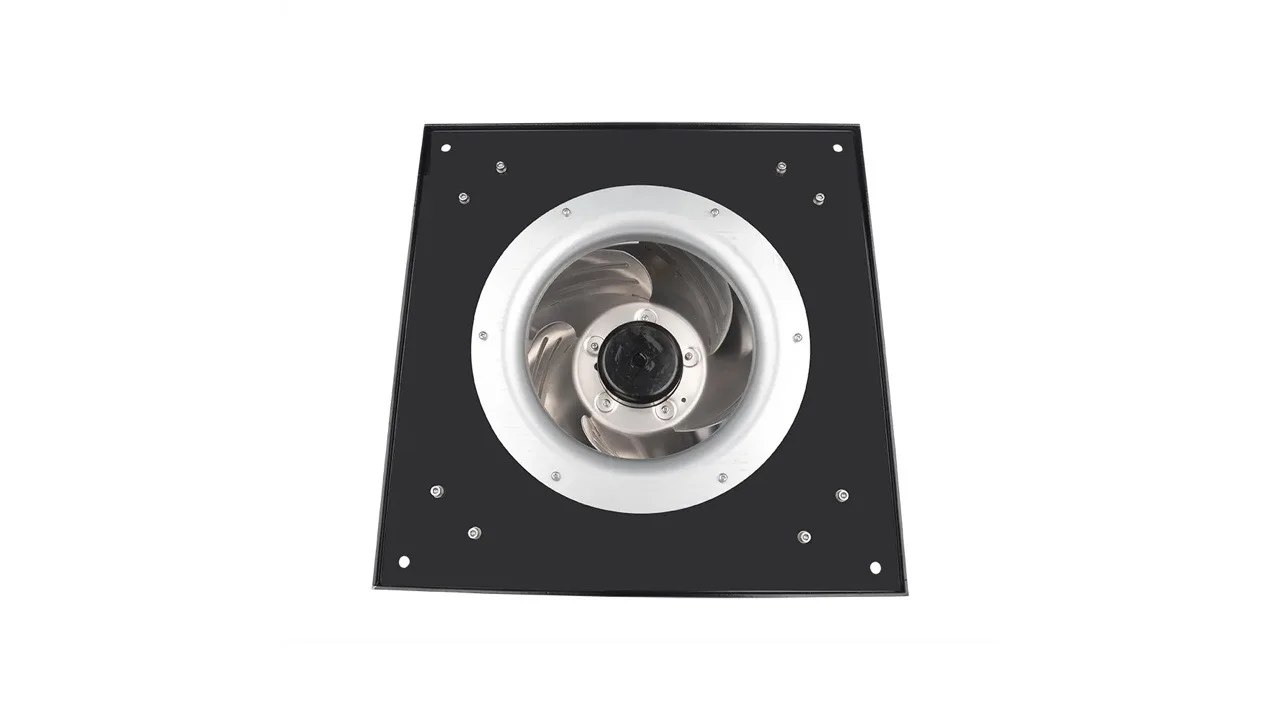
A supplier’s product range can give buyers a useful sense of its engineering experience. Manufacturers that work with several centrifugal fan designs are often better equipped to handle different system layouts and performance targets.
Common options include:
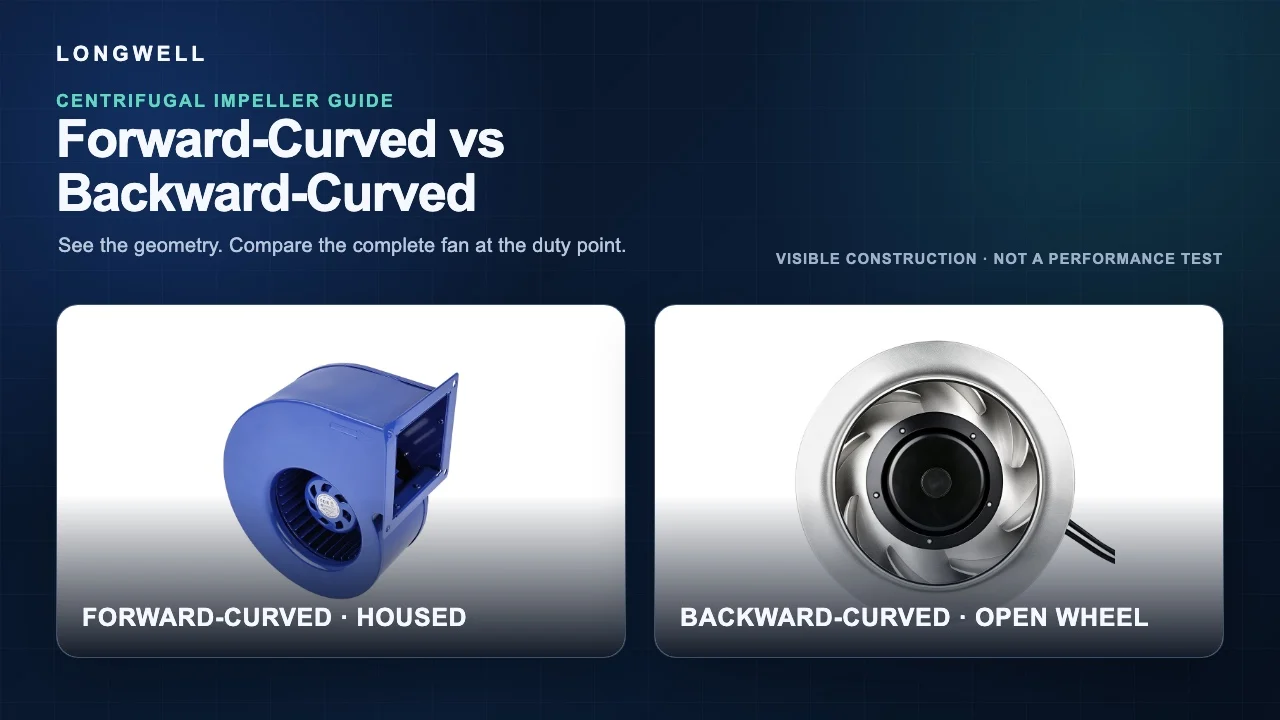
- Forward-curved centrifugal fans are often used in compact equipment.
- Backward-curved centrifugal fans are selected for higher efficiency and stronger pressure applications.
- Plug fans provide more direct integration and flexible installation optios for AHUs and OEM equipment.
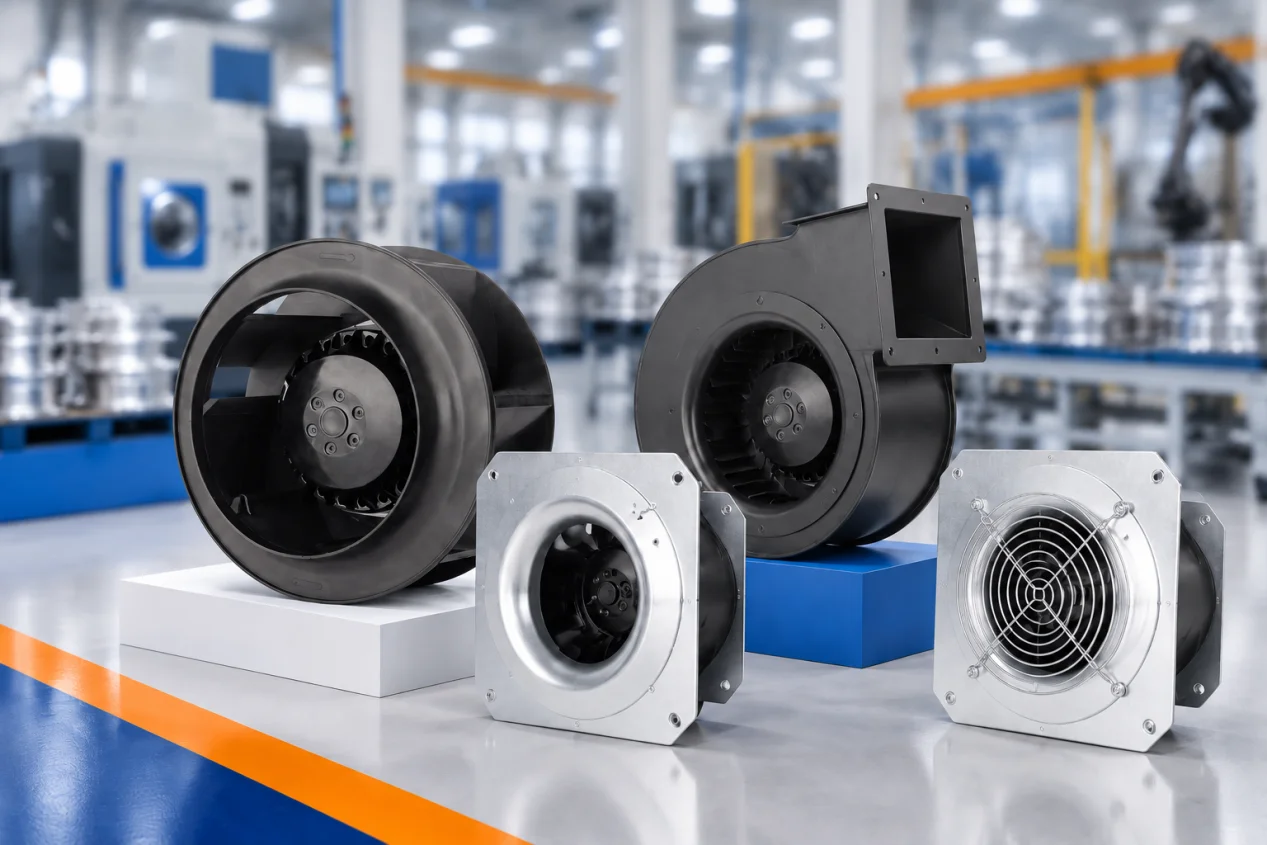
The types of centrifugal fans are not limits to the above ones, there are also airfoil centrifugal fans, single- or double-inlet centrifugal fans. A broader product range also allows suppliers to evaluate different design options based on the complete application rather than recommending a single standard model.
Q4: What motor and control options are available?
An important consideration during supplier evaluation is whether the available motor solutions match the fan performance requirements and the control strategy of the final equipment. Motor and control configuration is an important part of centrifugal fan selection.
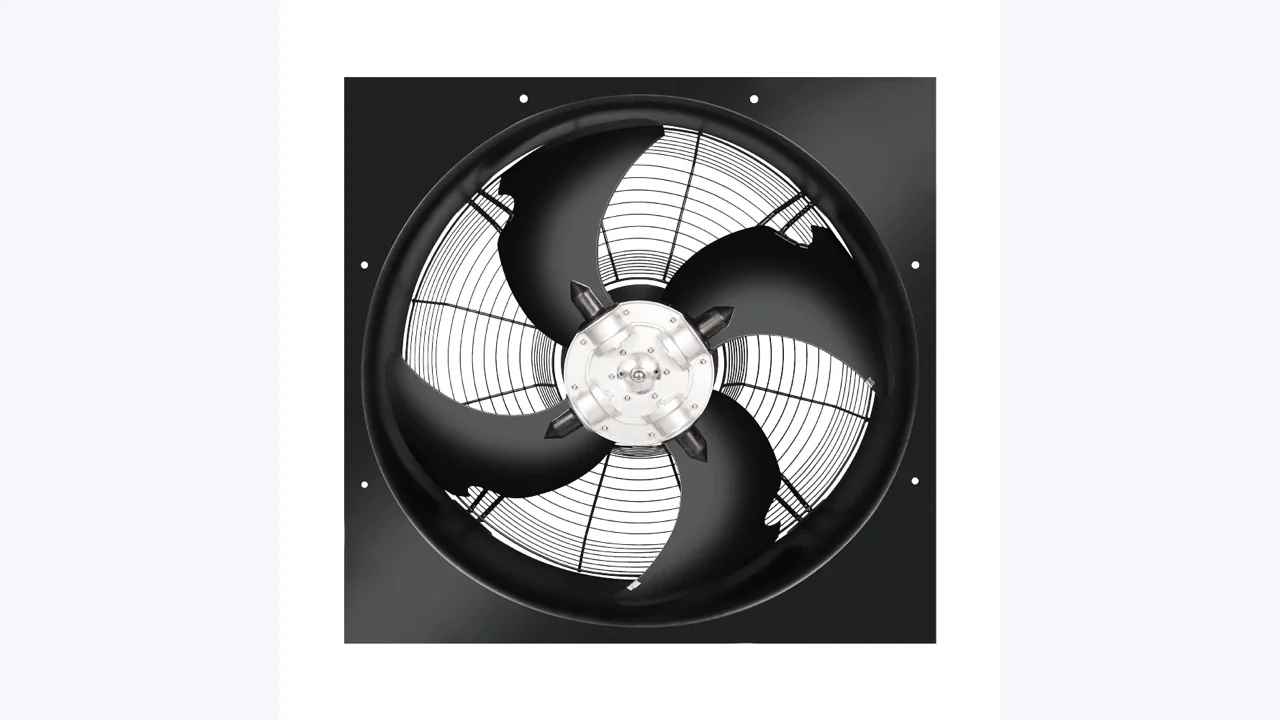
Motor technologies usually includes AC, DC, and EC motors. AC motors are commonly used in stable and simple applications. EC motors are increasingly adopted in variable-speed or higher efficiency requirement systems. For detailed efficiency and cost comparisons among these motors, you can refer to: EC Motor vs DC Motor vs AC Motor: Efficiency & Cost Comparison.
Control capability is also worth checking during supplier evaluation. In many HVAC and industrial applications, fans are no longer operated at a fixed speed. Engineers may also need to adjust airflow according to system demand, connect the centrifugal fan with a controller.
Product Quality Verification
Q5: Can the supplier provide performance data and testing reports?
Performance data is an important reference when evaluating a centrifugal fan supplier. The product specifications alone may not provide enough information.
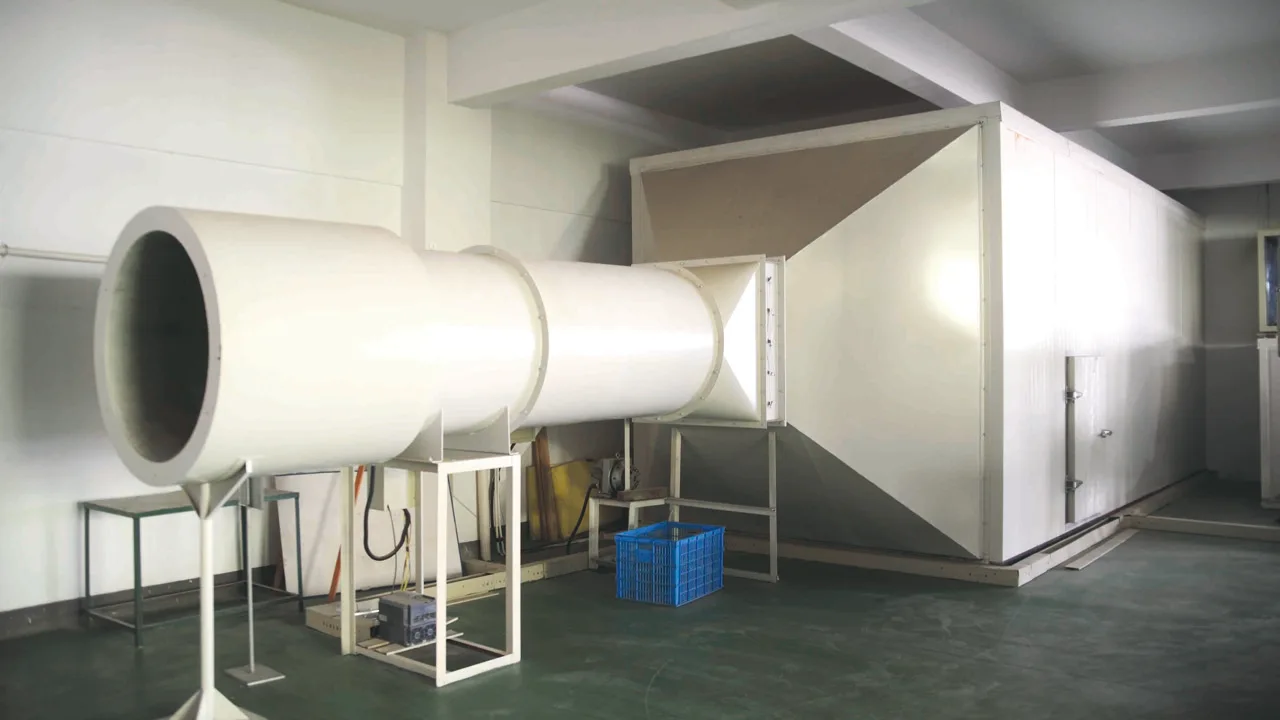
A supplier with in-house testing capabilities can provide more reliable performance verification throughout the development process. For example, a professional wind tunnel laboratory allows suppliers to measure airflow and pressure performance under standardized conditions. For buyers, a supplier own its testing laboratories reduces the testing coordination time, accelerates the design verification and problem closure.
Q6: How does the supplier maintain consistency during mass production?
A reliable centrifugal fan supplier controls quality at every stage, from incoming materials to mass production. Inspection continues throughout manufacturing rather than ending after the initial checks. Finished centrifugal fans are tested to confirm that they meet the agreed performance requirements.
ISO 9001 provides a framework for quality management and traceability. ISO 14001 covers environmental management in manufacturing. These systems give OEM customers a clearer view of how the supplier controls its production process.
OEM Capability
Q7: Does the supplier provide customized centrifugal fan solutions?
For original equipment manufacturers who integrate centrifugal fans into existing equipment designs, this issue is particularly crucial. The standard models listed in the catalogue may meet the air volume requirements, but they do not match in the installation space. Whether the supplier have the ability of customizing the impeller size or installation method determine the selection results.
Q8: Can the centrifugal fan supplier support OEM projects?
For OEM customers, selecting a centrifugal fan supplier is not only about finding a suitable product, but also identifying a partner that can support the entire development process.
Support for OEM projects begins with technical discussions and product selection. During development, the supplier’s engineering team needs to understand the customer’s equipment requirements and resolve the details that affect fan integration. It usually continues through prototype development, performance validation, and preparation for production. Additional requirements such as whether provide private label selection is also one of the selection criteria.
Supplier Reliability
Q9: Does the supplier support global certifications?
For OEM products sold in different regions, a supplier’s knowledge of local standards can make product approval and market entry much easier. Common compliance requirements and management system certifications include: CR marking, UL/cUL certification, RoHS compliance, ISO 9001 quality management system, and ISO 14001 environmental management system.
Certificates are only part of the approval process. OEM customers may also need test reports, declarations of conformity, product specifications, and material documentation. A supplier that prepares these documents early can help prevent delays during development and market approval.
Q10: What after-sales support does the supplier provide?
A supplier’s after-sale service capability reflects its commitment to long-term partnership. The whole service should not end when the centrifugal fans are delivered. During installation, system integration, and long-term operation, technical communication and response capability can influence the overall success of the project.
For OEM projects that span several markets, buyers should also consider how and where the supplier provides support. Regional contacts and local service teams can respond more quickly when technical issues arise. Clear support channels also make communication easier across time zones.
Supplier Evaluation Checklist
|
Evaluation Area |
What to Evaluate |
|
Technical Capability |
Look at the applications the supplier has worked on and the centrifugal fan types it actually produces. Whether its engineers are able to review your airflow, pressure, space, and control requirements. |
|
Customization & OEM Support |
Understand the supplier can adjust which aspects of the centrifugal fan in practice. Ask about their approach during the prototype production, verification, and transition to mass production. |
|
Performance & Quality Control |
Request the P-Q curves of the proposed model and the related test results. Review how the factory ensures the consistency of quality among different production batches. |
|
Compliance & Documentation |
Confirm that the supplier can provide the certificates, test reports, and technical documents required for your target market and application. |
|
Long-Term Support |
Find out who handles technical issues after delivery and whether there are available spare parts. How the suppliers support customers in different regions. |
What Makes a Reliable Centrifugal Fan Supplier?
A reliable centrifugal fan supplier is more than a company that can provide a suitable product model. The two main factors that distinguishes suppliers are technical capabilities and manufacturing capabilities.
A capable supplier stays involved during centrifugal fan selection. Its engineers should explain the performance data and confirm whether the proposed fan fits the actual system requirements. That support will continue after prototype approval. The additional service such as compliance support, communication efficiency, and after-sales service capability are also the other evaluation criteria.
LONGWELL — Your Reliable Centrifugal Fan Partner
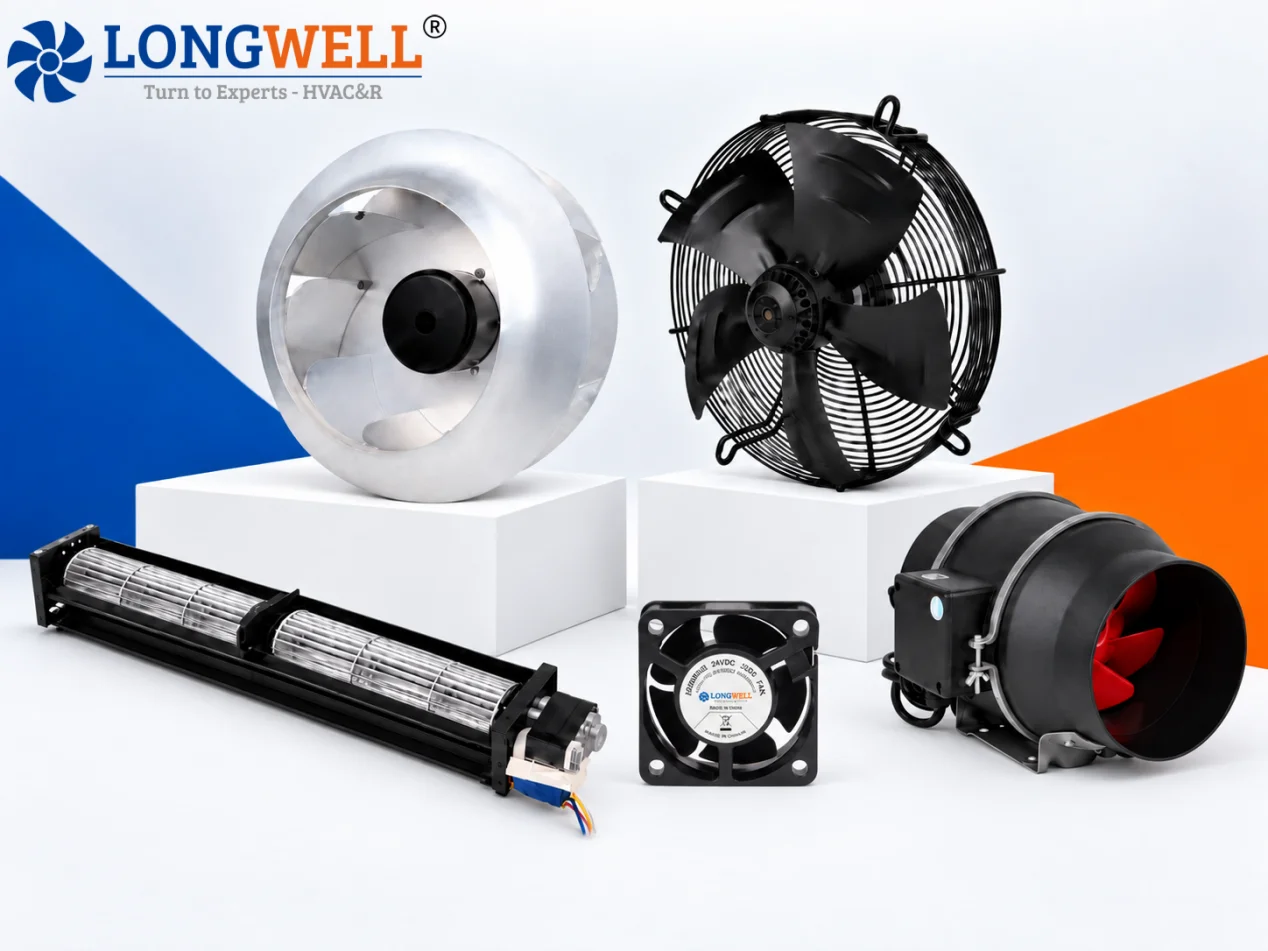
As a professional fan manufacturer, LONGWELL provides centrifugal fan solutions for HVAC, industrial ventilation, and OEM applications, supporting customers from initial product selection and engineering development to production and long-term service.
LONGWELL also develops centrifugal fans for projects that need more than a standard model. Its engineers work with customers on fan selection, motor and control options, and integration into the finished equipment. In-house testing allows the team to check performance and make adjustments during development.
Share your Requirements with LONGWELL — Receive Response within 24 hours
Providing detailed project requirements helps LONGWELL better recommend a suitable centrifugal fan solution. When contacting us, customers can share key information of application conditions, performance requirements, electrical and mechanical requirements, and production schedule. With these details, LONGWELL’s engineering and sales teas will provide the feedback within 24 hours.
FAQ
What are typical lead times for centrifugal fans?
Lead time depends on the product, order quantity, and whether any customization is required. LONGWELL can usually prepare samples of in-stock standard models within 1-3 days. Standard bulk orders generally take 15-30 days.
How can buyers check a supplier’s real factory?
Buyers can evaluate a supplier’s actual manufacturing capability through factory visiting, video inspections, or official website. Ask the supplier for detailed manufacturing capabilities.
What is the minimum order quantity (MOQ) for centrifugal fans?
LONGWELL offers flexible options based on products and customization levels. For standard catalogue products, the minimum order quantity is 1 unit. For customized OEM project products, the typical minimum order quantity is 100 units.
What are the common problems of centrifugal fans?
Most centrifugal fan problems can be traced to undersized/oversized selection, poor installation, unsuitable operating conditions, or inadequate maintenance.
Choose the right centrifugal fan
Longwell manufactures 1,127 centrifugal fans in-house. Send airflow, static pressure and voltage — an engineer replies with a matching model, performance curve and price within one working day.