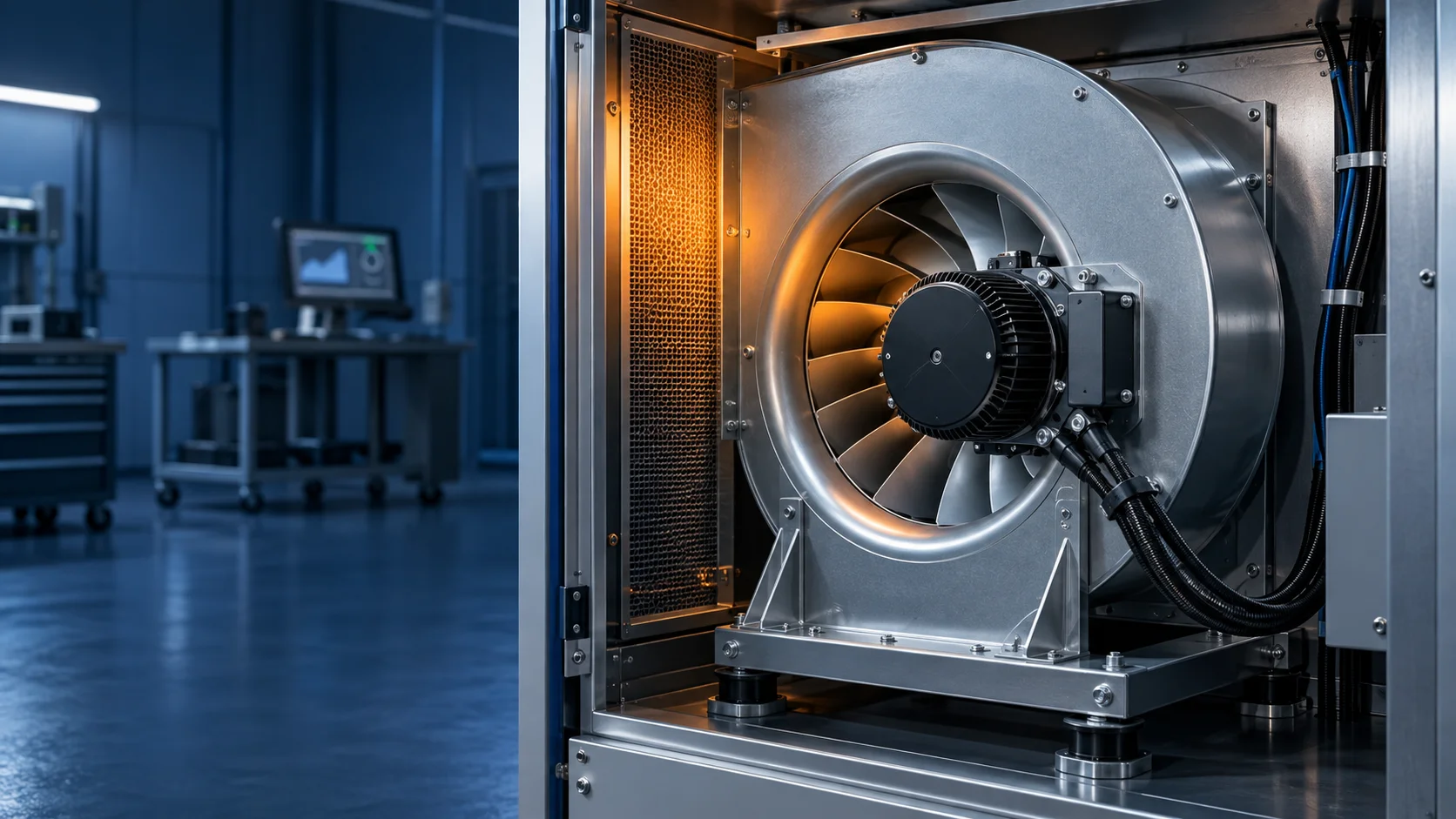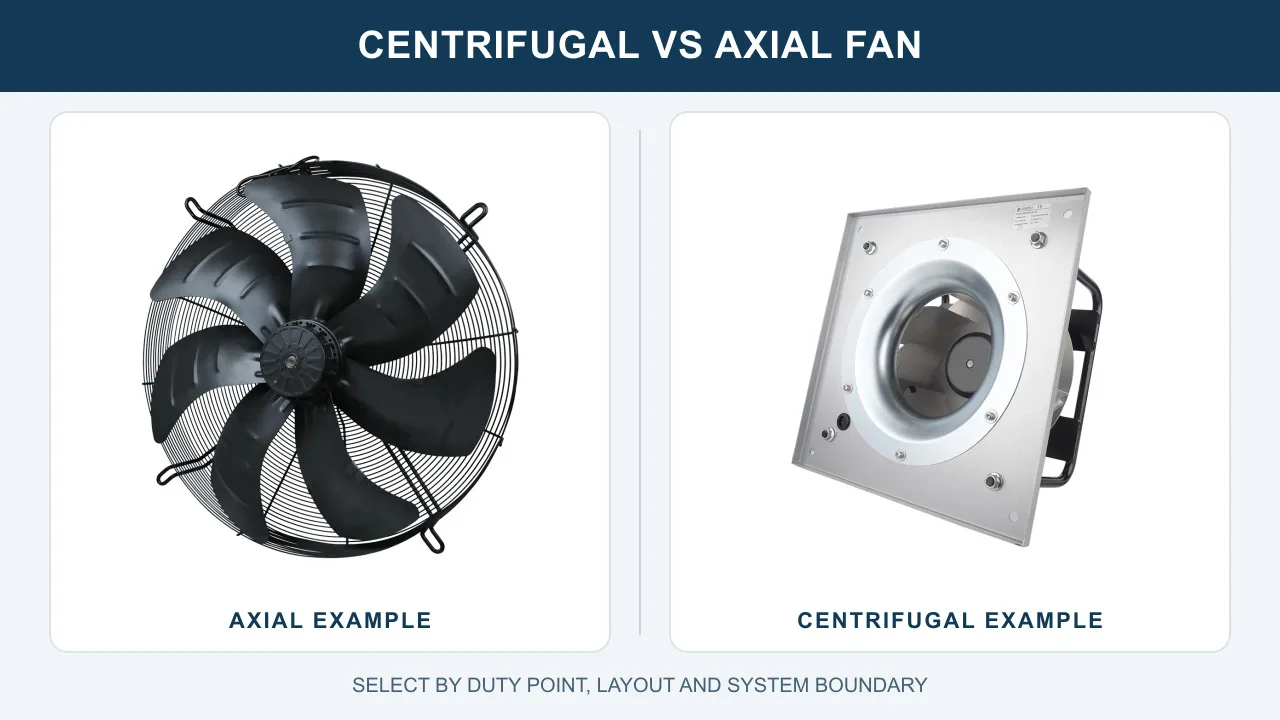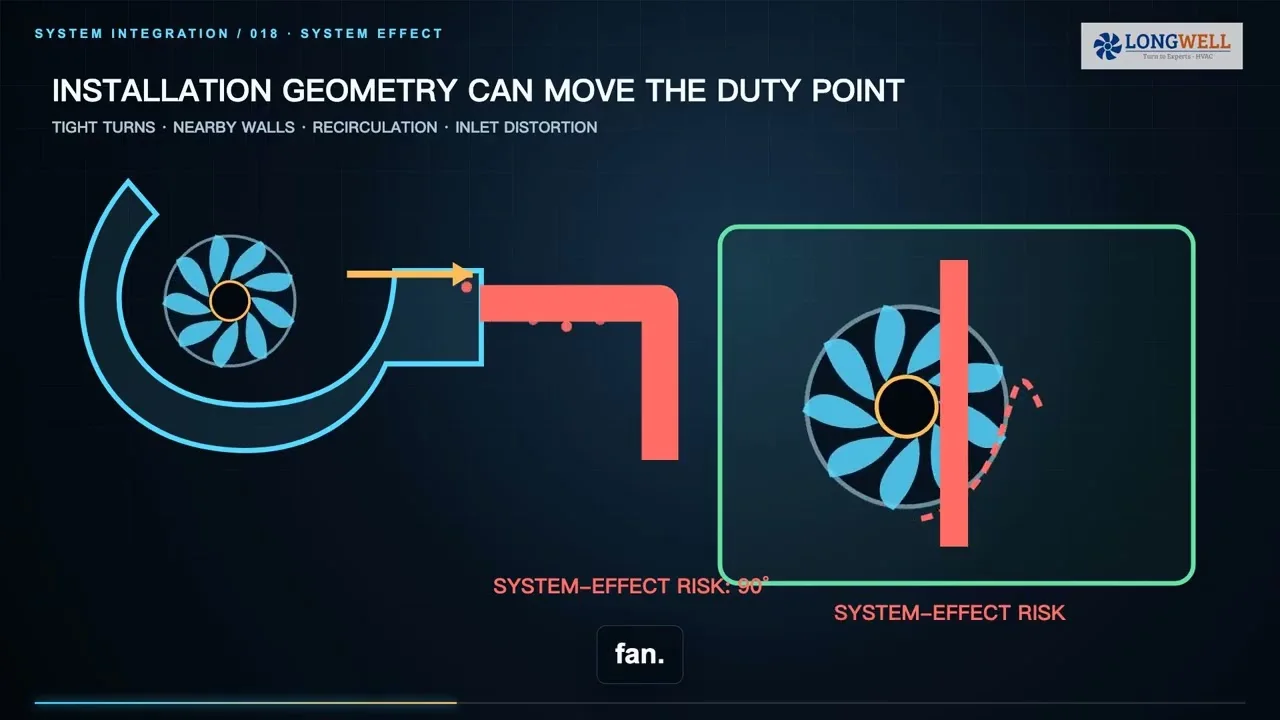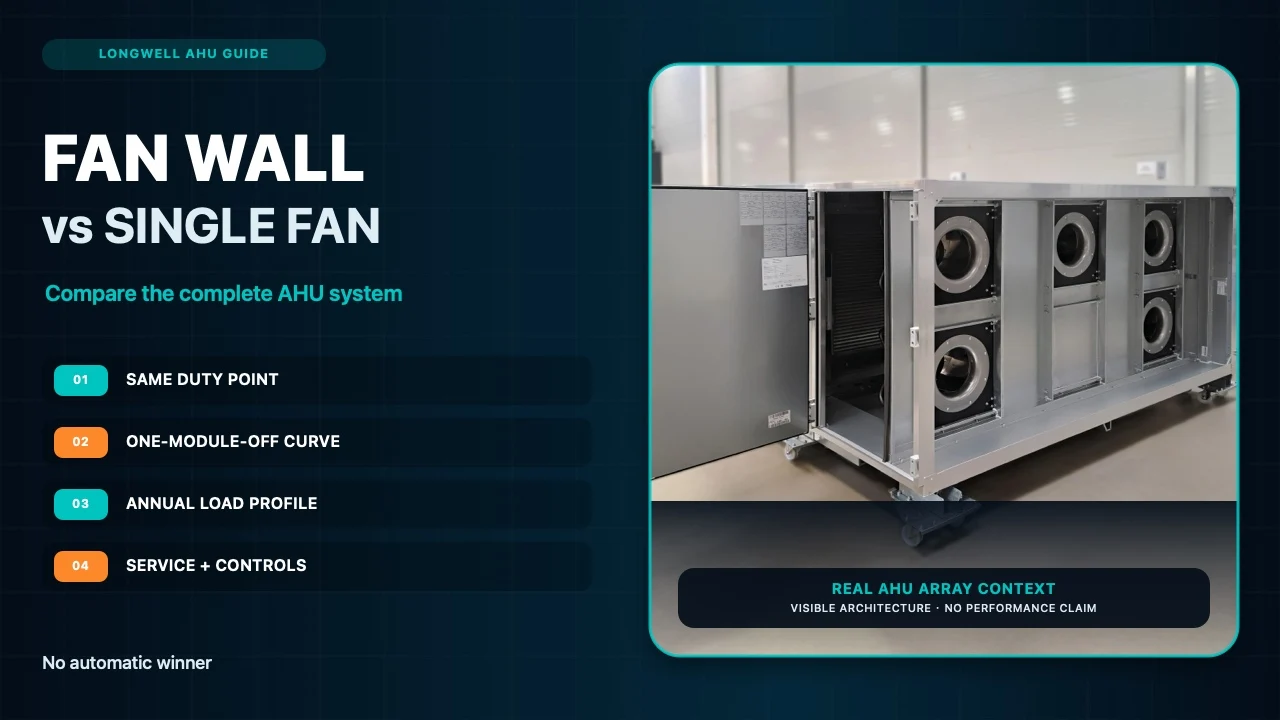
Electric motor-driven systems account for approximately 65% of industrial electricity consumption, making motor efficiency an important factor in long-term equipment operating costs. Fans are part of these motor-driven systems.
For HVAC engineers and OEM buyers, the choice of EC, DC, or AC motor is rarely based on efficiency alone. EC motors are increasingly used in systems where energy consumption, speed control, and operating flexibility are key design considerations. AC and DC motors are widely used motor technologies across industrial and commercial equipment.
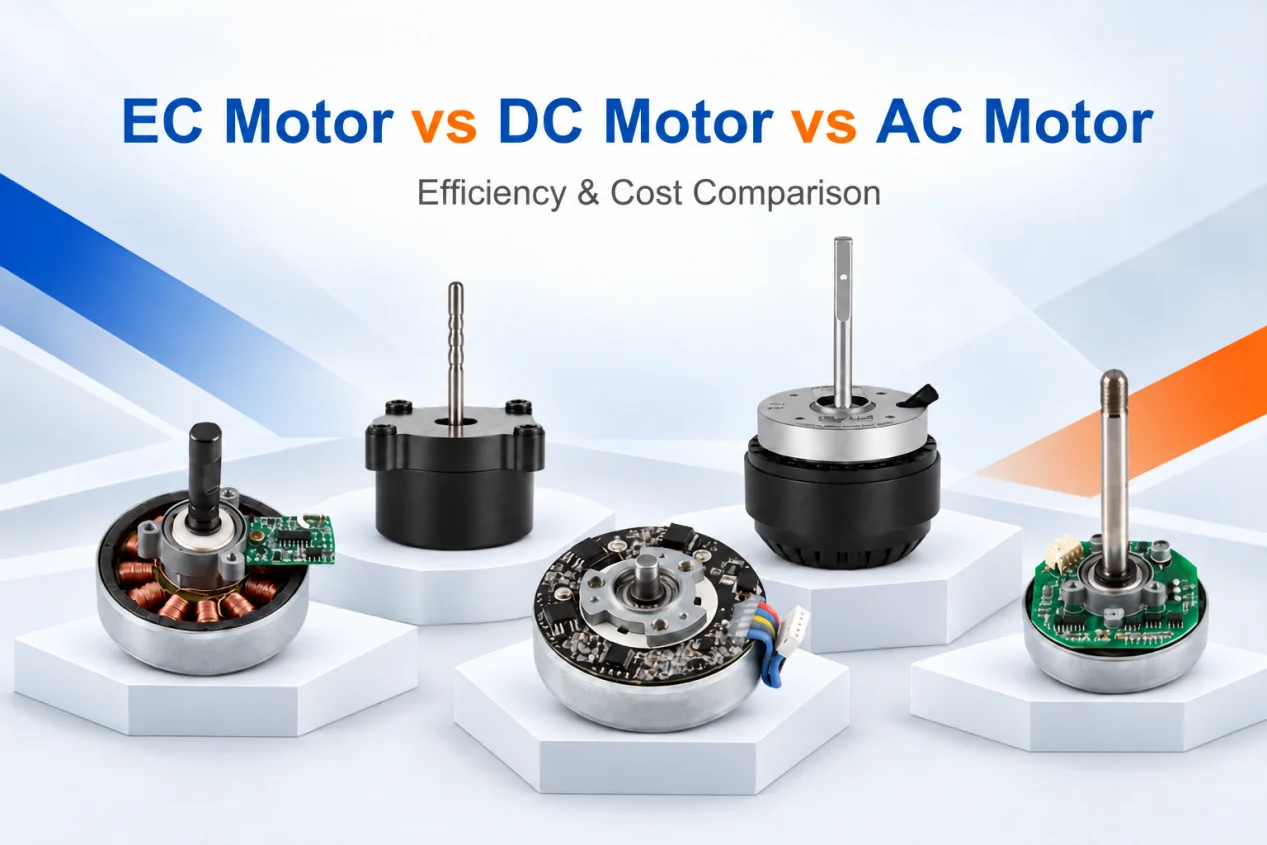
This blog compares EC, DC, and AC motors based on their working principle, efficiency at different operating conditions, and short-term and long-term costs.
Why Motor Choice Matters for Fans?
The motor has a direct influence on how a fan performs in actual operation. It determines the available speed range, how easily airflow can be adjusted, and how much electrical power the system uses. In industrial fans and blowers, engineers also need to look at the power supply, operating hours, load characteristics, and the environment where the motor will run. Dust, moisture, temperature, or corrosive conditions can all affect motor selection and service life.
The rated point is not always where a fan spends most of its time. HVAC fans, for example, often operate below peak demand for long periods. A motor that performs well at full load may not be the best choice once the fan spends more time at partial load or changing speeds. This is why the motor should be matched to the fan curve and actual duty cycle, rather than selected only by rated power. Motor choice also affects the way the whole fan system is designed. The difference in control method can change wiring, installation cost, maintenance, and long-term energy use.
AC Motor
An AC induction motor operates by creating a rotating magnetic field in the stator. As this field moves past the rotor, it induces current and generates the torque needed to turn the shaft and drive the fan impeller. Motor speed is therefore closely related to the supply frequency and number of motor poles, and variable-speed operation generally requires additional control such as a frequency inverter.
DC Motor
A conventional DC motor operates from a direct-current power supply. As the rotor turns, brushes and a mechanical commutator reverse the current in the armature windings at the required moment. Motor speed can be adjusted relatively easily by changing the applied voltage. Because the brushes and commutator are mechanical contact parts, they are subject to wear and usually require more maintenance over time than brushless designs.
EC Motor
An EC motor, also called a brushless DC motor, uses a permanent-magnet rotor and electronically controlled stator windings. Its electronics are typically integrated into the motor assembly. In an AC-input EC fan, the incoming AC supply is first rectified to DC. The electronics switch the stator windings as required to keep the rotor turning. This integrated architecture allows the EC motor to control speed electronically without relying on an external controller.
EC Motor vs DC Motor vs AC Motor: Efficiency Comparison
Efficiency at Full Load
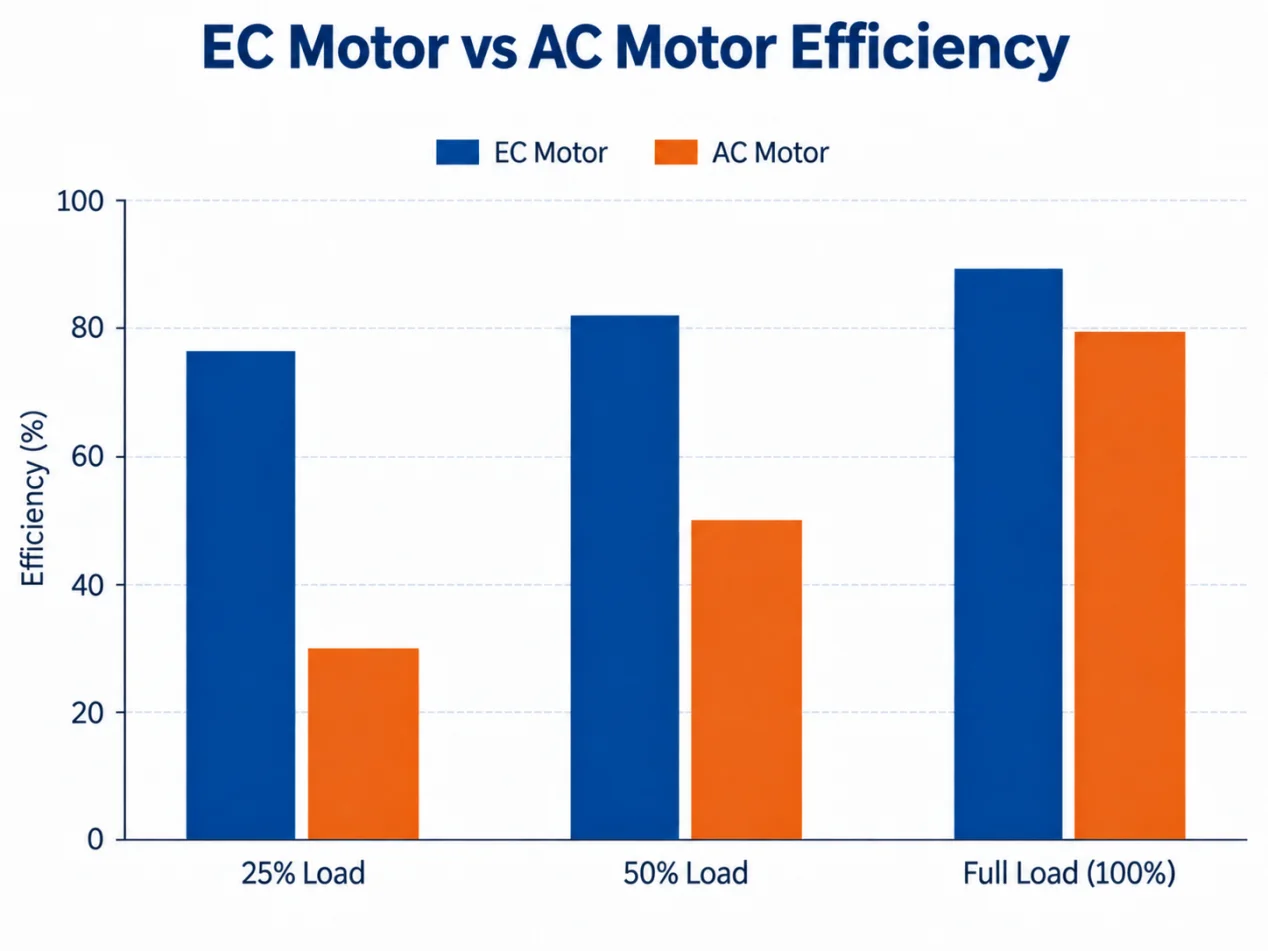
At full load, motor efficiency depends on how much of the electrical input is transferred as useful mechanical output. For conventional AC induction motors, part of the energy is lost in the rotor because current has to be induced to produce torque. A brushed DC motor avoids this induction process, but it introduces losses through the brushes and mechanical commutator. EC motors reduce rotor losses and can improve efficiency at the rated operating point. Modern EC fan motors can reach very high efficiency levels. When operating under full load, an AC motor can operate at roughly 80% efficiency, compared with about 90% for an EC motor.
Efficiency at Partial Load
The efficiency difference becomes more important when a fan spends much of its time below the rated operating point. This is common in HVAC systems, where airflow demand changes during the day, and the fan may operate well below peak demand for long periods.
A piece of LONGWELL motor data shows how much partial load can affect EC and AC motor efficiency. At 50% load, the AC motor in the comparison operates at roughly 50% efficiency, while the EC motor remains close to 80%. When the load falls to 25%, AC motor efficiency drops to about 30%, compared with approximately 76% for the EC motor.
A brushed DC motor also allows relatively easy speed reduction by changing the supplied voltage or using PWM control. However, its part-load efficiency depends strongly on the motor size, operating point, and control method.
EC Motor vs DC Motor vs AC Motor: Speed Control
For an AC induction motor, variable-speed operation normally requires an external VFD. A VFD controls motor speed by varying the supply frequency and voltage. Although this provides much better speed regulation than basic voltage-reduction methods, both the drive and the motor contribute some additional losses during operation.
DC motor speed can be controlled directly by changing the applied voltage. PWM provides a more efficient way to regulate speed because it switches the supply. However, some energy is still lost in the control electronics and the motor’s brushes and commutator.
An EC motor handles this differently. Its rectification, electronic commutation, and speed control are built into the motor. The controller changes the current supplied to the stator according to the required speed and load.
What Kind of Motor Type Costs Less? EC, AC, or DC Motors?
Initial Purchase
AC motors generally have the lowest upfront cost because the technology is mature and widely available. DC motors’ initial investment usually falls in the middle of AC and EC motors. EC motors normally start at a higher price because of the integration of permanent magnets, electronic commutation, and control components. These price differences are not fixed. Fan size, power rating, control functions, and production volume can narrow or widen the gap.
Installation Costs
Installation cost includes motor mounting, space layout design, wiring amount, and setup time. For a variable-speed AC fan, installing the extra VFD adds labor costs, additional shielding and grounding, and even protection measures. The installation of DC motors can be relatively straightforward, but it needs a suitable DC supply. Otherwise, a separate AC-to-DC power supply may need to be added. EC motors usually integrate the speed-control electronics, leaving more usable space. Fewer external components also mean less wiring and less time for installation and commissioning.
Maintenance Costs
Maintenance cost is not only the price of replacement parts. It also includes inspection time, technician labor, service access, spare parts, and the cost of downtime when a fan has to be stopped for repair. A conventional AC induction motor has no brushes or commutator; its bearing becomes the routine maintenance. A brushed DC motor needs more attention. The brushes stay in contact with the rotating commutator and will wear during operation. EC motors avoid this brush-and-commutator maintenance because commutation is electronic. In many fan applications, the main mechanical wear item is therefore the bearing system.
EC vs DC vs AC: Core Differences
|
Comparison |
AC Motor |
DC Motor |
EC Motor |
|
Rotor Type |
Commonly induction rotor |
Wound armature or rotor |
Permanent-magnet rotor |
|
Speed Control |
Usually requires voltage control or a VFD |
Relatively simple by changing applied DC voltage |
Integrated electronic speed control |
|
Efficiency |
Moderate to high |
Moderate to high |
Generally high, especially in variable-speed applications |
|
Maintenance |
Generally low |
Higher because brushes and commutator wear over time |
Low because there are no brushes |
|
Initial Cost |
Usually lower |
Generally moderate |
Usually higher |
|
Operating Cost |
Can be higher in long-running or variable-load applications. |
Depends strongly on duty cycle and power system. |
Often lower where variable-speed operation and long running hours are involved. |
Which Motor is the Best for Your Fan Application?
Fixed-Speed or Stable-load Systems
Best fit: AC motor
Typical applications:
- General ventilation fans
- Industrial exhaust fans
- Warehouse ventilation
- Large blowers
- Simple HVAC systems
Low-Voltage or DC-Powered Equipment
Best fit: DC motor
Typical applications:
- Electronics cooling
- Telecom equipment
- Control cabinets
- Battery-powered equipment
- Small cooling fans
Variable-Speed and Long-Running Systems
Best fit: EC motor
Typical applications:
- Air handling units (AHUs)
- Heat pumps
- Duct fans
- Commercial ventilation systems
- Data centers
- Variable-air-volume systems
Upgrade to LONGWELL EC Fans
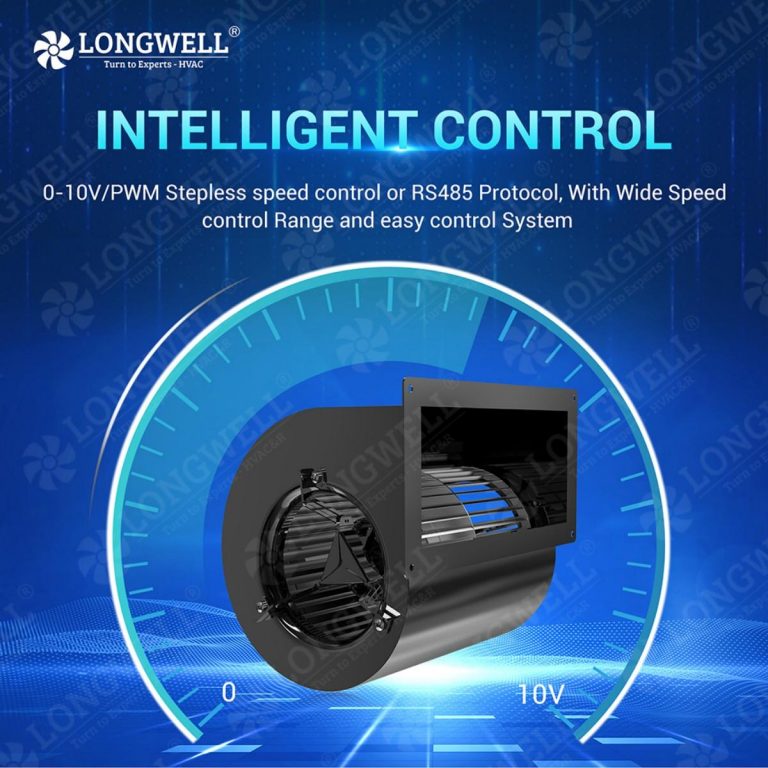
For applications with long operating hours, frequent load changes, or tighter energy targets, upgrading to a LONGWELL EC fan can reduce both power consumption and control complexity. LONGWELL EC motors combine permanent-magnet motor technology with integrated electronic commutation, reaching up to 90% efficiency. Speed control is built into the motor platform. Depending on the model, LONGWELL EC fans support 0–10V, PWM, Modbus RTU, or BACnet, making them easier to connect with HVAC controllers and building management systems.
LONGWELL does not limit every project to EC technology. AC, DC, and EC models are all available. The motor can be selected according to the application, control requirements, budget, and expected duty cycle. For customized OEM projects, LONGWELL also supports a 90-day NPI cycle, together with technical support from Ningbo and regional teams in Europe, North America, and Dubai.
FAQs
Which motor type saves the most energy over time?
For applications that run for a long time and frequently change requirements, EC motors offer a stronger energy-saving potential.
Which motor is more efficient, AC or DC?
There is no certain answer. A DC motor can provide good speed control, but brush and commutator losses reduce efficiency. AC motors can reach high efficiency when operating near the rated operating point.
Can AC motors work with variable speed control?
Yes. VFDs can change the frequency and voltage supplied to the AC motor to adjust its speed. It is usually an external controller.
Which type of motor is most commonly used in HVAC applications?
In the past, AC motors were the most commonly used motor type. However, with the growing emphasis on energy efficiency, EC motors are increasingly used in modern HVAC fans and AHUs.
Choose the right ac motor
Longwell manufactures 22 ac motors in-house. Send airflow, static pressure and voltage — an engineer replies with a matching model, performance curve and price within one working day.