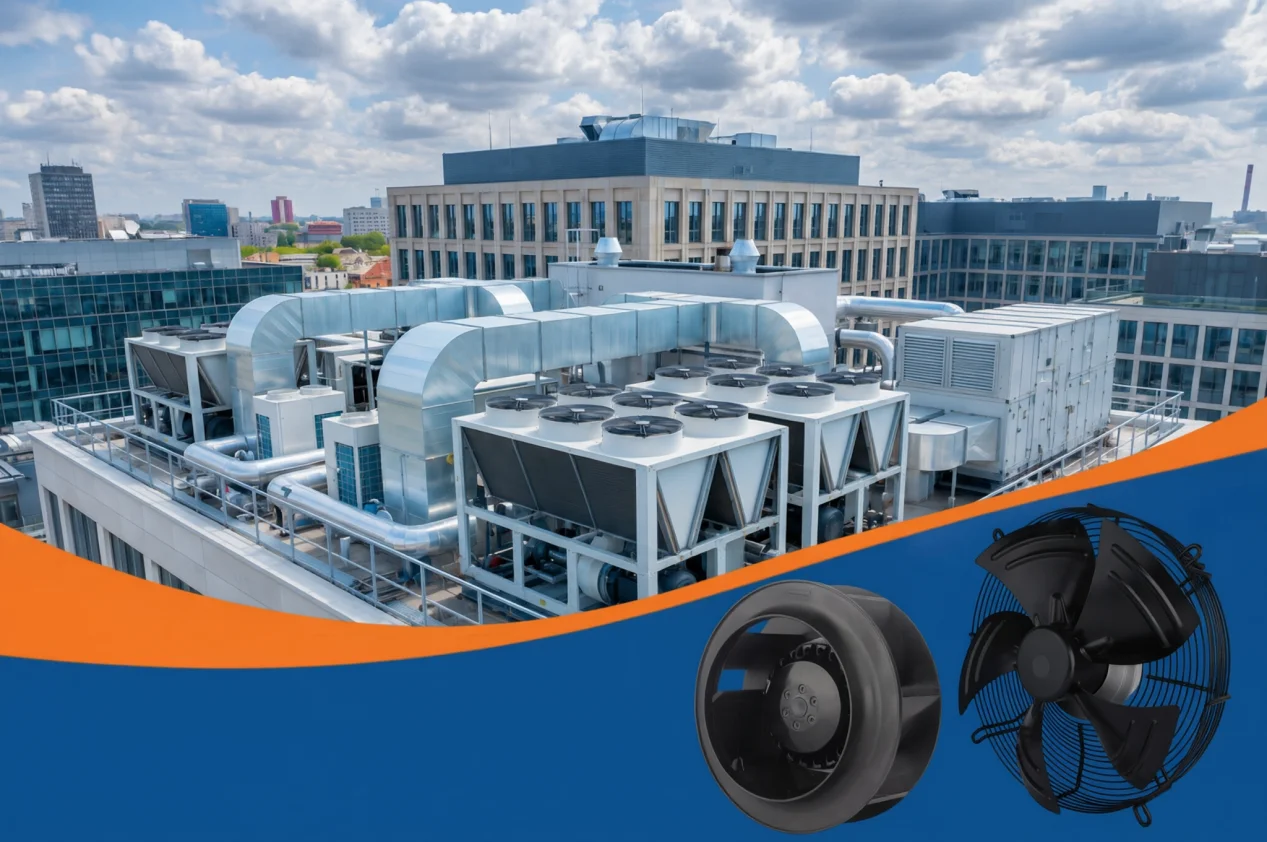
From 24 July 2026, a fan placed on the European market has to meet the minimum efficiency of Commission Regulation (EU) 2024/1834. The European Union is tightening requirements for fans with the approach of ErP 2026. For HVAC manufacturers, AHU suppliers, OEMs, distributors, and system integrators, choosing the right supplier is more than just product function. Their products need to meet the applicable European efficiency requirements, provide the required technical documentation, and remain suitable for the intended operating conditions.
So, how to check ErP fan procurement? Read on LONGWELL guide for more information.
ErP 2026 Regulation: What are the New Requirements?
ErP 2026 aims to increase minimum energy efficiency standard for fans. Its main goal is to reduce energy consumption and improve energy efficiency of equipment in Europe.
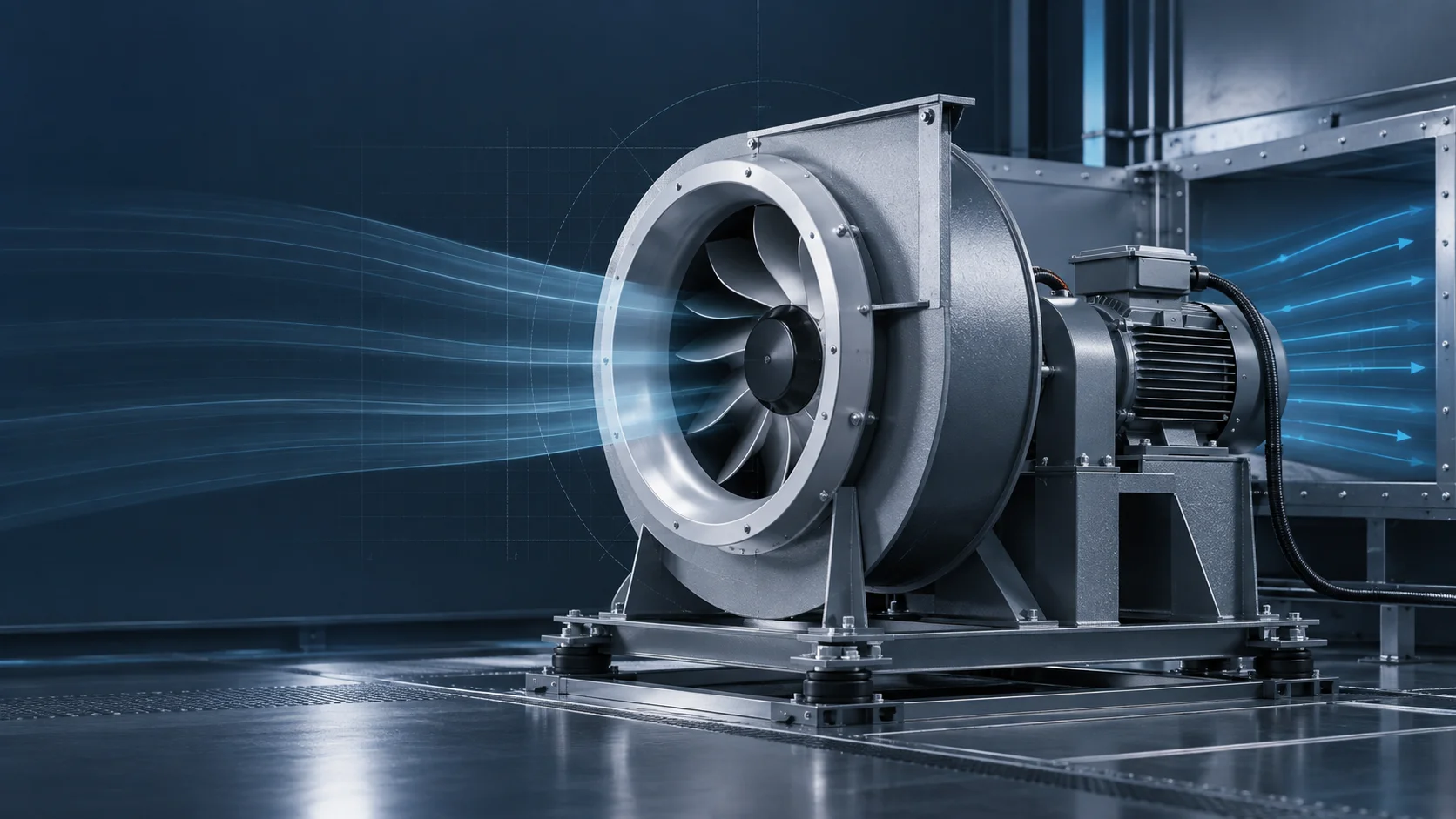
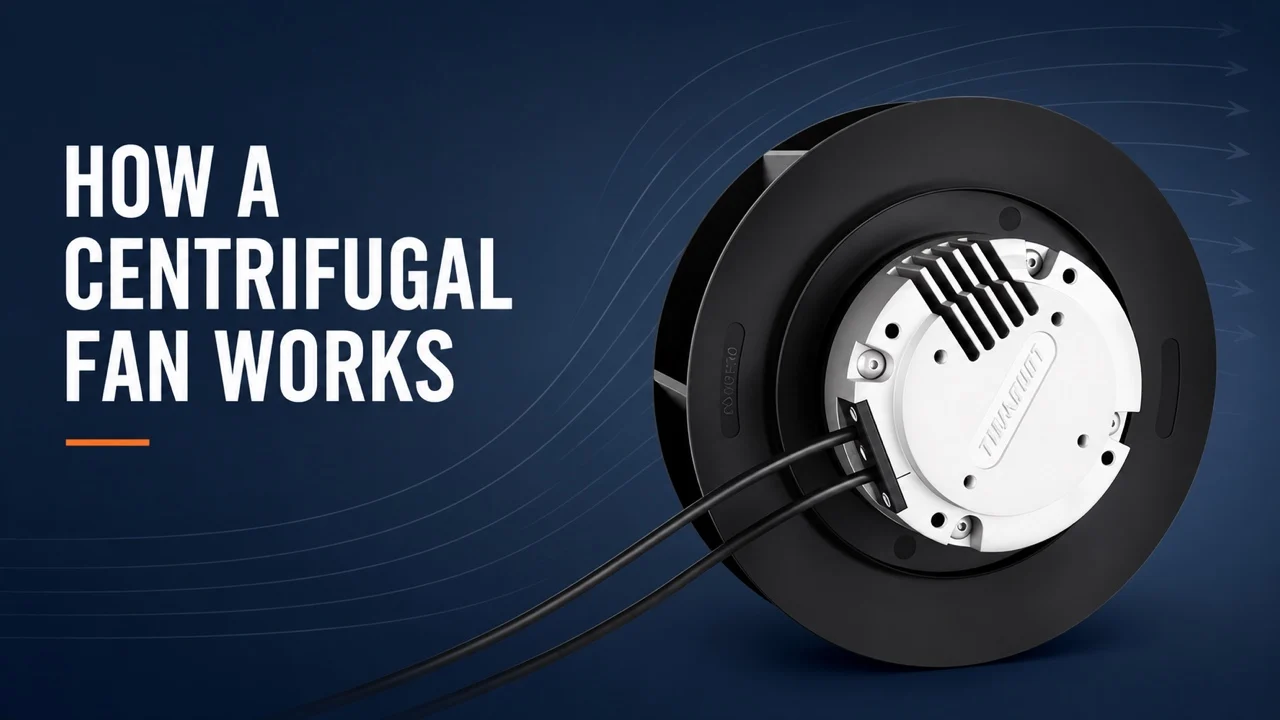
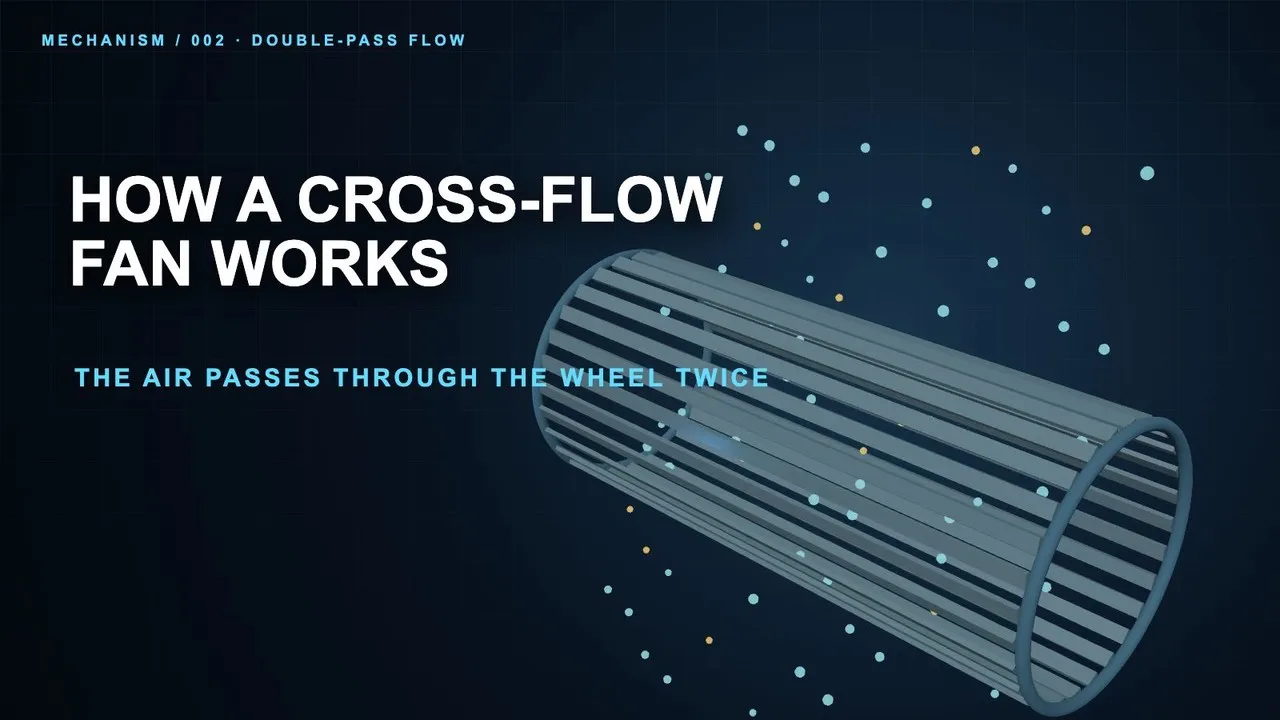
Commission Regulation (EU) 2024/1834 applies from 24 July 2026 to fans driven by electric motors with an input power between 125 W and 500 kW, replacing Regulation (EU) No 327/2011. For example, the regulation sets different minimum efficiency grade for axial fans, centrifugal fans, and mixed-flow fans.
The changes include:
- Higher energy efficiency standards: Fans should meet stricter efficiency standards based on their specific types
- New rules for efficiency of the whole fan: Greater focus on total fan efficiency
- The requirement to provide proper technical documentation: Manufacturers and suppliers must provide detailed technical and product information to support compliance
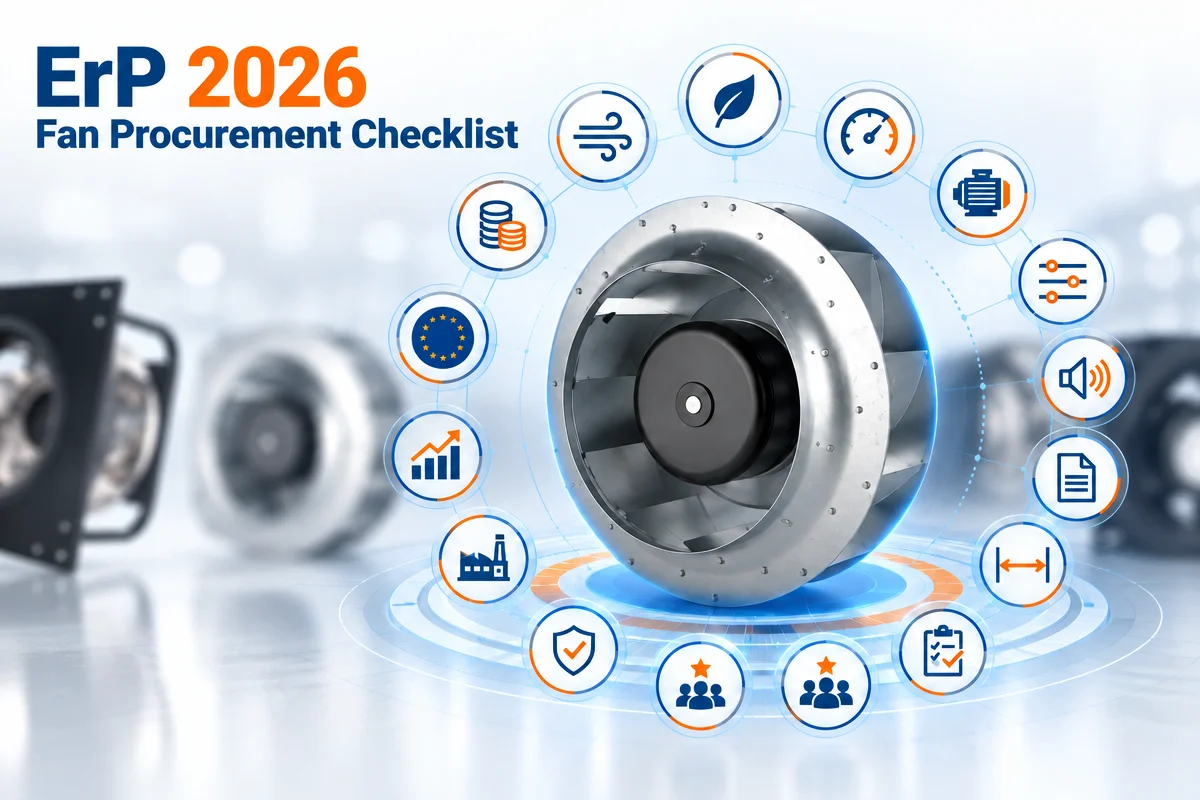
ErP 2026 Fan Procurement Checklist
- Check the Actual Operating Point
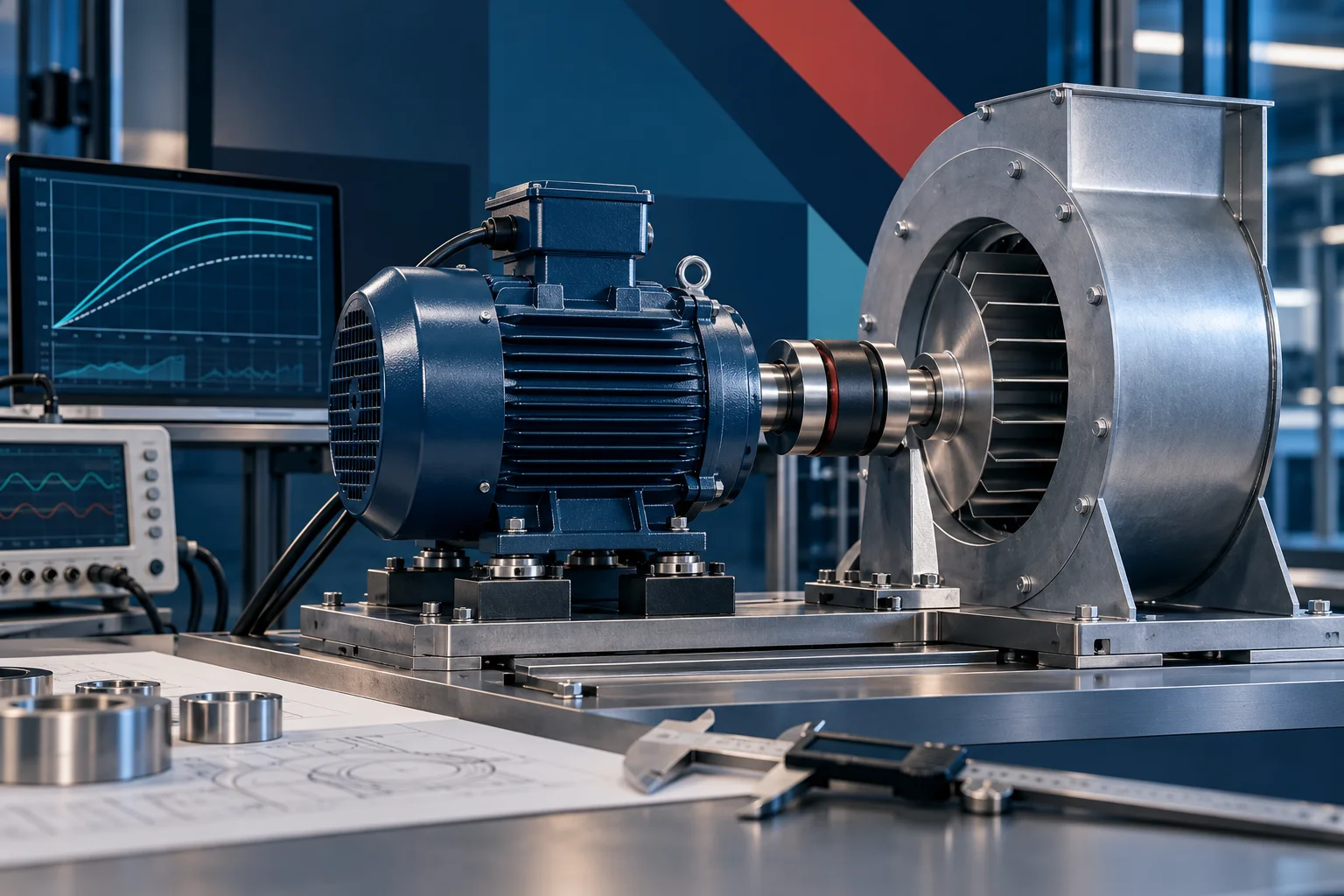
Efficiency is a property of a point, not of a fan. You need to check electric input power Pe, volume flow qv and pressure difference Δp at BEP. A curve drawn at 1.2 kg/m³ standard air is not the same curve at 40 °C or at 2,000 m. Ask what density the curve was corrected to, and what the density actually is at your site.
- Request Complete Fan Performance Curves
A single point is not a selection. You need the pressure-flow curve, the power curve and the efficiency curve on the same axes, at the same density and speed. For a variable-speed fan you need several speed curves, not one curve scaled.
- Check Fan Efficiency at Part Load
Fans spend most of their life away from full speed. From 24 July 2027 the regulation requires performance information at part load for most fan types, and that data is what lets you size the control strategy. A fan that is excellent at 100% and poor at 40% will lose money quietly for twenty years.
- Verify the Motor and Drive Technology
The regulation assesses the assembly: motor, impeller, stator. An IE4 or IE5 motor in a weak aerodynamic package still fails. Whether the variable speed drive sits inside the conformity assessment also changes Cc, and with it the verdict.
- Compare Input Power at the Same Duty Point
Suppliers quote input power at different points, so their numbers are not comparable. Normalise them: same airflow, same static pressure, same density, then read Pe. This is also the number that goes into ln(Pe), so a 10% error in Pe moves the threshold you are judged against.
- Check the Control Interface
Under 2024/1834 a fan that cannot respond to a BMS signal is a fan that burns its own savings. Ask for the available interfaces like 0–10 V, PWM, Modbus RTU, BACnet MS/TP and whether the drive is integrated or external.
- Verify Voltage and Electrical Specifications
Before supplier approval, confirm all electrical requirements. Check for rated voltage, frequency, phase, input power, control voltage, and IP class. For international OEM projects, also verify whether the same fan model is available in the voltage and frequency required for each target market.
- Review Environmental and Operating Conditions
Some fans are designed for demanding or specialized environments, such as applications involving gas temperatures above 100°C or below −40°C, potentially explosive atmospheres, toxic, corrosive, or flammable gases, or nuclear installations. These applications may fall under specific exclusions from the ErP requirements. The specific application and duty must be assessed to determine whether an exclusion applies.
- Verify ErP and Technical Documentation
An efficient fan with no published data sheet is still non-compliant. Annex II point 2 requires the declared values — fan type, total efficiency, Pe, qv, Δp, N-grade and measurement category — visibly on the technical data sheet or in the manual, or via a free-access web link or QR code. The data has to remain available for at least 20 years.
- Check the Noise Data at Your Duty Point
Noise is not itself an efficiency criterion, but it can determine whether a fan performs acceptably during commissioning and system operation. The ErP framework also recognizes certain low-noise fan characteristics when determining the applicable efficiency requirements. For example, under specified conditions, an axial fan with electrical input power (Pe) ≥ 10 kW and a characteristic noise value L ≤ 32 dB(A) at the best efficiency point (BEP) can qualify for a ×0.9 grade modifier. Ask the supplier for sound pressure level, airflow, and applicable measurement.
- Check Mechanical Fit and Installation Geometry
A fan meeting ErP requirement is not enough. Installation geometry is part of fan selection. So, don’t forget to ask your supplier for detailed dimensional drawing, installation dimensions, inlet and outlet geometry, and other required information for installation.
- Check Bearing Life, Lubrication and Duty Hours
Fan lifetime is usually bearing lifetime. Get it as an L10 figure at a stated temperature, because L10 at 40 °C and L10 at 70 °C are different products. Under the repairability requirements the bearing is also a spare part the supplier has to keep available.
- Check the Test Evidence Behind the Numbers
Ask which standard and which rig produced them — AMCA 210 or ISO 5801 for air performance — and whether the curve was measured or digitised from a catalogue.
- Check Spare Parts, Repair Information and Guarantee
This is the part of 2024/1834 that outlives the efficiency question. Spare parts — impellers, motors below 10 kW, bearings, VSDs and stators — must be available for at least 10 years after the last unit of a discontinued line is sold, and deliverable within six weeks unless your contract says otherwise. Repair information has to reach professional repairers, and repairs must be possible with standard tools.
- Check Supply, Lead Time and Change Control
Compliance is not a one-time snapshot. You should confirm whether changed components require performance re-testing or revalidation. Lead time also matters. Ask the supplier for standard sample lead time and production lead time.
Ask These Questions in Your RFQ
- Declared fan efficiency η with measurement category (A–E), efficiency category (static/total) and efficiency grade N at BEP.
- BEP values: Pe (kW), qv (m³/h), Δp (Pa).
- The list of significant elements supplied with the fan, and confirmation to match your declared test configuration.
- Partial-load curves at inherent speed, 40–50% and the midpoint, with flow, pressure, electric power, rpm and efficiency per point.
- The spare-part list, the availability period, the published delivery time and the published guarantee in years.
Answers That Should Stop the Approval
- “We are compliant.” — compliant is a claim; η, N, category and Pe are evidence.
- “Our motor is IE4.” — motor efficiency is not fan efficiency. The regulation assesses the assembly.
- “It is an ATEX fan, so it is exempt.” — the exemption follows your duty, not the product’s pedigree.
- “The data is on our website.” — until 24 July 2046, or it does not meet the 20-year rule for a fan sold next year.
- “That is a 2027 problem.” — for integrated fans, 24 July 2027 is the deadline for products already on the market before 24 July 2026. Design, tooling and verification have to finish before that date, not on it.
LONGWELL: EC Fan Solutions for HVAC and OEM Applications
The checks above need a supplier that answers with numbers instead of adjectives. LONGWELL designs and manufactures EC and AC fans and motors for HVACR, data-centre cooling, railway, industrial and medical applications, and publishes duty-point data per model. The company was founded in 1990 and is headquartered in Yuyao, Ningbo, exporting to more than 30 countries.
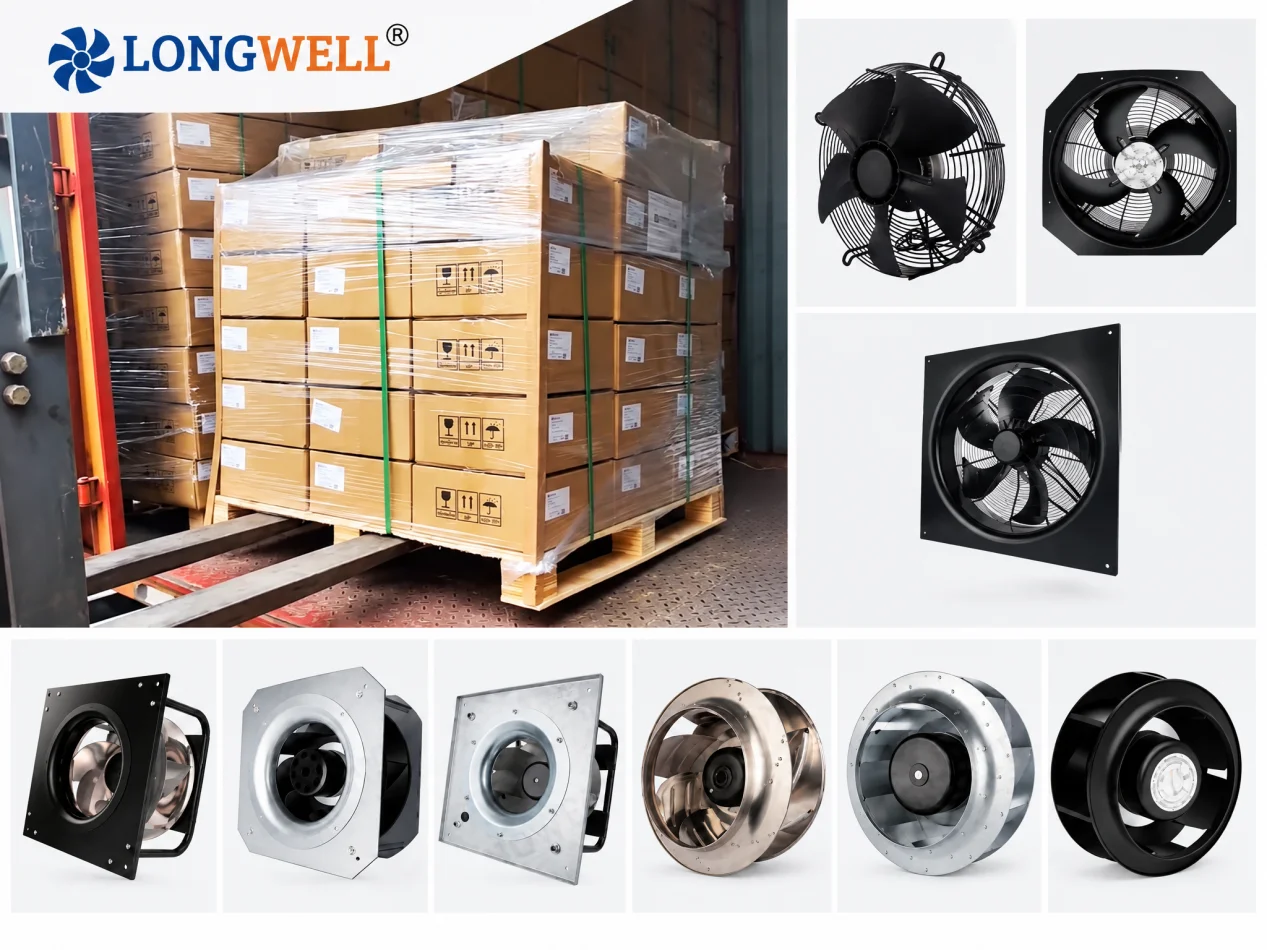
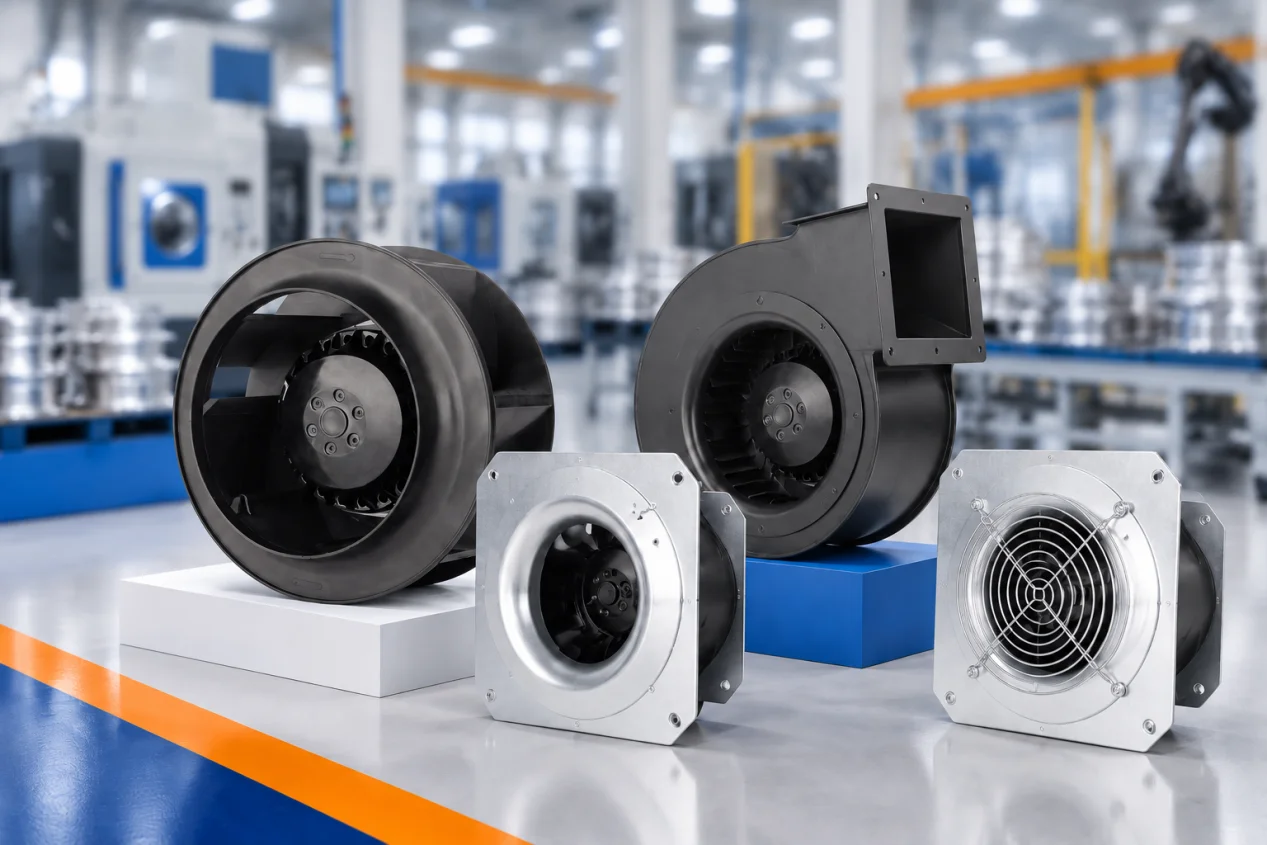
Take LONGWELL’s star product LWBE3G Series as the example. It is LONGWELL’s biomimetic backward-curved EC centrifugal fan.
- Static efficiency 73–82%, verified in-house on an AMCA 210 / ISO 5801 test rig.
- 4–6 dB(A) quieter than conventional designs; high-frequency noise content drops by more than 50% against comparable AC fans.
- L10 bearing life 60,000 h at 40 °C, with IP54 and heavy-duty options.
- Four control interfaces as standard: 0–10 V, PWM, Modbus RTU and BACnet MS/TP, plus twelve onboard protection functions.
- Stall margin extended by 25–30% for stability across a wider operating envelope.
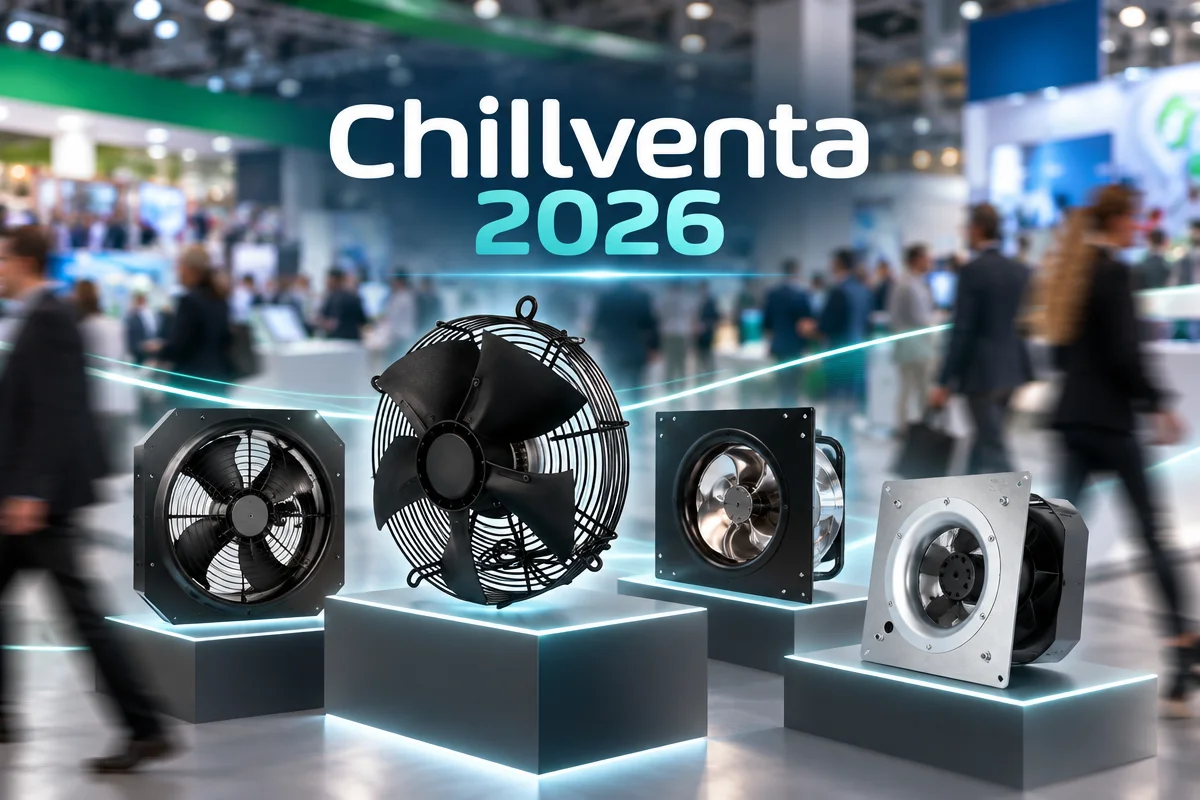
LONGWELL EC products also include LWAE3G Series (axial fans), LWM Series, and LWFC Series.
What LONGWELL supplies for the compliance file
- Efficiency declared per measurement category
- BEP duty-point data and curves issued for a given airflow, static pressure, voltage and control method.
- CE, RoHS and REACH across the range; ETL to UL 507 / CSA C22.2 No. 113 on the single-phase EC and DC centrifugal and cross flow lines; ISO 9001, ISO 14001, ISO 45001.
- Prototypes in 1–3 days from stock, series production in 15–30 days — against the 14–22 weeks commonly quoted for imported high-end EC fans.
FAQs
Does ErP 2026 apply to a fan already built into my AHU?
Yes, if it falls in the 125 W to 500 kW band. The 24 July 2027 grace period applies only when all four conditions hold: placed solely for integration into another product; within the first year; already compliant with 327/2011; and the first unit shipped before 24 July 2026.
Do I have to retrofit fans already installed in the field?
No. The regulation applies to fans placed on the market, not to units already in service. Retrofitting existing installations is not mandatory. But if retrofitting contributes to energy efficiency, it is recommended to retrofit fans.
Can LONGWELL confirm compliance for my product?
LONGWELL supplies the duty-point data, curves and declared values the check needs, and states the efficiency basis per model. Classification, correction-factor values and declared values remain the manufacturer’s responsibility