Do not start by asking for a single “carbon-footprint number.” GB/T 48121-2026 and GB/T 48357-2026 establish product-carbon-footprint quantification methods for refrigeration and air-conditioning equipment and motors. The practical first step for a buyer or supplier is a traceable, model-specific data pack covering the product boundary, materials, supplier evidence, factory energy allocation, transport, refrigerants, use assumptions, service life and end-of-life routes.

Supplier data readiness for GB/T 48121-2026 and GB/T 48357-2026 Information checked 16 November 2026
Short answer
GB/T 48121-2026, *Greenhouse gases—Quantification methods and requirements for carbon footprint of product—Refrigeration and air-conditioning equipment*, was published on 28 August 2026 and takes effect on 1 March 2027. GB/T 48357-2026, the corresponding method for motors, was published on 28 September 2026 and takes effect on 1 April 2027.
Both are recommended Chinese national standards (GB/T). They define quantification methods and data requirements. Their implementation dates do not, by themselves, create a blanket compulsory product-certification requirement, prove that any model is “low carbon,” or replace market-access rules. A tender, contract, green-procurement program or customer specification may still require their use, so the project obligation must be checked separately.
Why prepare before 2027?
On 30 October 2026, five Chinese authorities led by the State Administration for Market Regulation announced the 2026–2028 action plan for a product-carbon-footprint standards system. It calls for more than 100 national product-carbon-footprint standards across energy, raw materials, consumer goods, machinery and transport equipment. For OEMs and component suppliers, the direction is clear: customers are increasingly likely to request comparable, reviewable product data.
The slow part is rarely the final calculation. It is reconstructing evidence. Motors in one series can differ in copper, laminations, housing, bearings, magnets, electronics and packaging. Refrigeration and air-conditioning equipment can differ in refrigerant, charge, fan motor, heat exchanger, controls and duty profile. If the team waits for a tender or audit, it may discover conflicting revisions, inconsistent units or an allocation method that nobody can reproduce.
What do the two standards cover?
|
Standard |
Official status and date |
Boundary relevant to suppliers |
|---|---|---|
|
GB/T 48121-2026 — refrigeration and air-conditioning equipment |
Forthcoming; effective 1 March 2027 |
A product-carbon-footprint quantification method for refrigeration and air-conditioning equipment. Confirm the exact model scope, functional unit, system boundary and data rules against the published standard and the project specification. |
|
GB/T 48357-2026 — motors |
Forthcoming; effective 1 April 2027 |
The official project scope covers small and medium AC and DC motors rated 0.75–1,000 kW with frame sizes 80–630. It addresses the quantification purpose and scope, data quality, life-cycle inventory, impact assessment, interpretation and reporting. |
The motor scope above comes from the official standards-project page. Applicability should still be checked against the published standard, the actual construction and the customer’s declared boundary. Data supplied for a fan, motor, drive or other component do not mean that the complete HVACR product has already been assessed.
The supplier data pack buyers should request
1. Freeze the assessed product configuration
- Manufacturer, exact model, series, revision and production site.
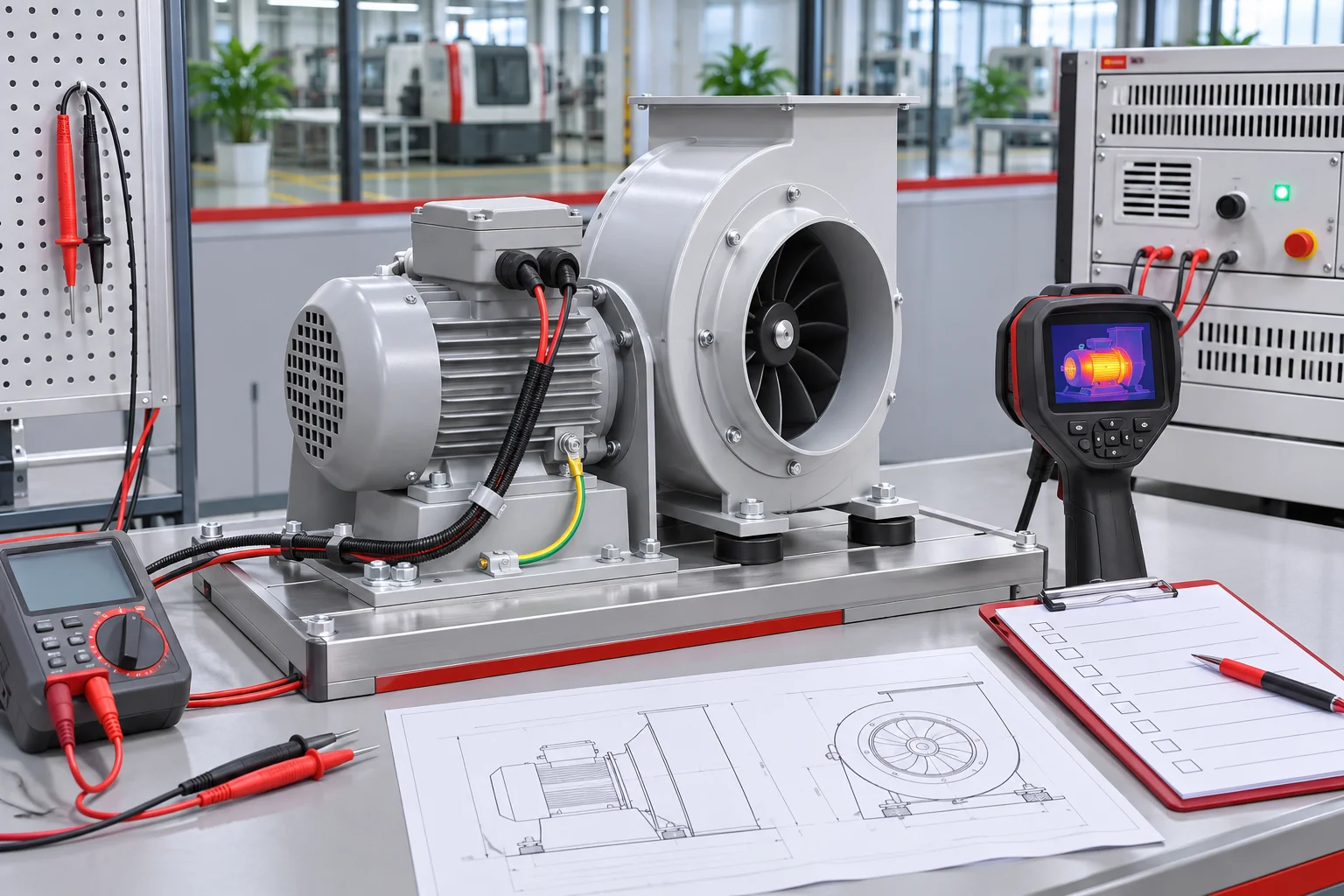
- Motor identifiers such as rated power, frame size, supply, control method and declared efficiency class.
- HVACR identifiers such as rated conditions, heating or cooling capacity, airflow, control mode, refrigerant and nominal charge.
- Functional unit, reference flow and assessment period. “One unit” is not enough without the function and duration it represents.
- Included and excluded components, options, substitutes and packaging.
2. Build a reconcilable bill of materials
At minimum, separate electrical steel, copper, aluminum, carbon steel, stainless steel, plastics, magnets, electronics, bearings, insulation, lubricants, refrigerant and packaging. Each line should retain mass, unit, source, supplier, material revision and validity date.
The total should reconcile to product net mass, packaging mass and explained manufacturing losses. If an industry average or life-cycle database is used, record its name, version, geography, year and proxy logic. Secondary data should never be presented as supplier-measured primary data.
3. Document factory data and allocation
- Electricity, fuel, steam, compressed air, cooling water and other utilities for the relevant plant or line.
- Scrap, rework, recycled content and waste-treatment routes.
- The method used to allocate shared processes to the target model: output, mass, machine hours, labor hours or another defensible driver.
- Geography and year of the electricity factor; boundary and evidence for on-site generation or contractual renewable claims.
- Reporting period, missing-value treatment and outlier explanations.
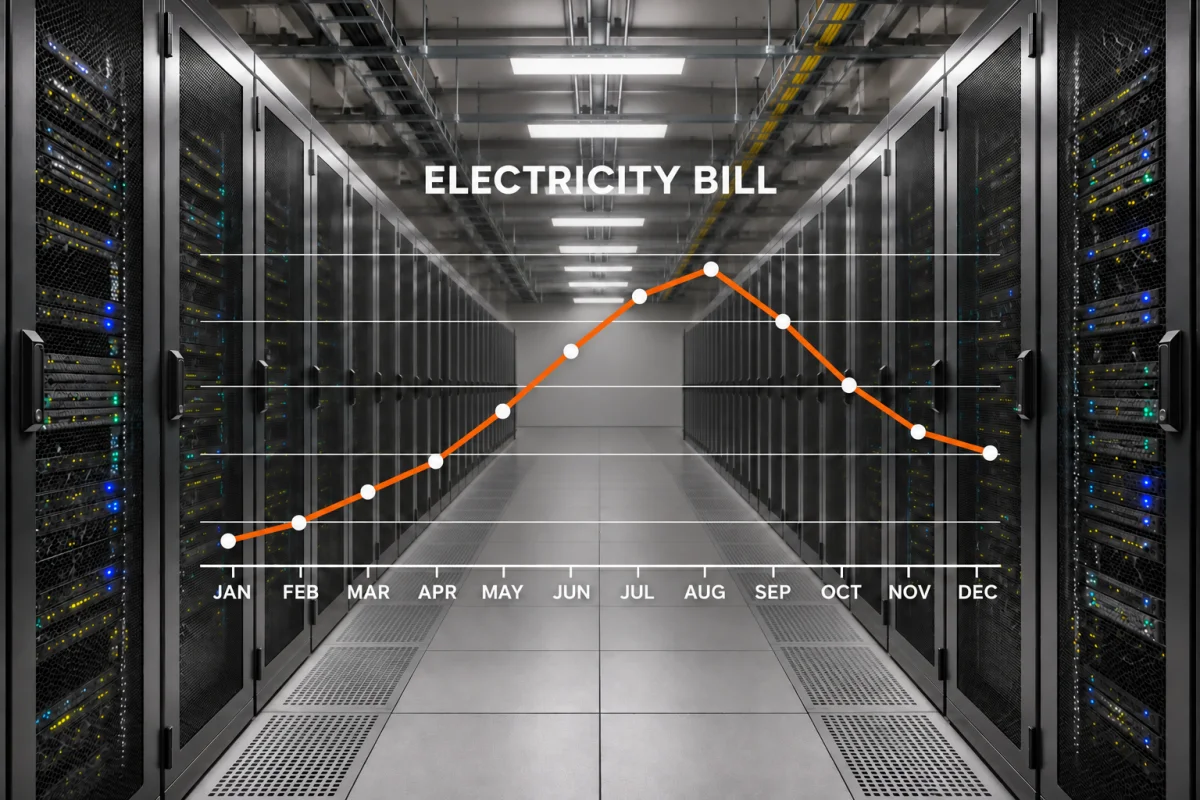
An annual electricity bill cannot, on its own, support the manufacturing result for one model. Ask for an allocation bridge from the plant total to the assessed product.
4. Make logistics reproducible
Record origins, destinations, transport modes, distances and load or mass assumptions for major materials and components, plus a delivery scenario for the finished product. A supplier relocation, port change or emergency airfreight route can alter the result, so logistics data need revision control.
5. Keep a separate refrigerant evidence chain
For refrigeration and air-conditioning equipment, retain the refrigerant identity, source/version of the GWP value, nominal charge, factory charging loss, installation or transport loss assumptions, in-use leakage, servicing top-up, recovery rate and end-of-life treatment.
The footprint question is different from the market-access question of whether a refrigerant is permitted in a specific country and application. Check those two evidence chains separately.
6. Define use-phase assumptions for motors, fans and systems
Use-stage energy depends on the duty point, controls, operating hours, system resistance, maintenance and the local electricity factor. The data pack should therefore include:
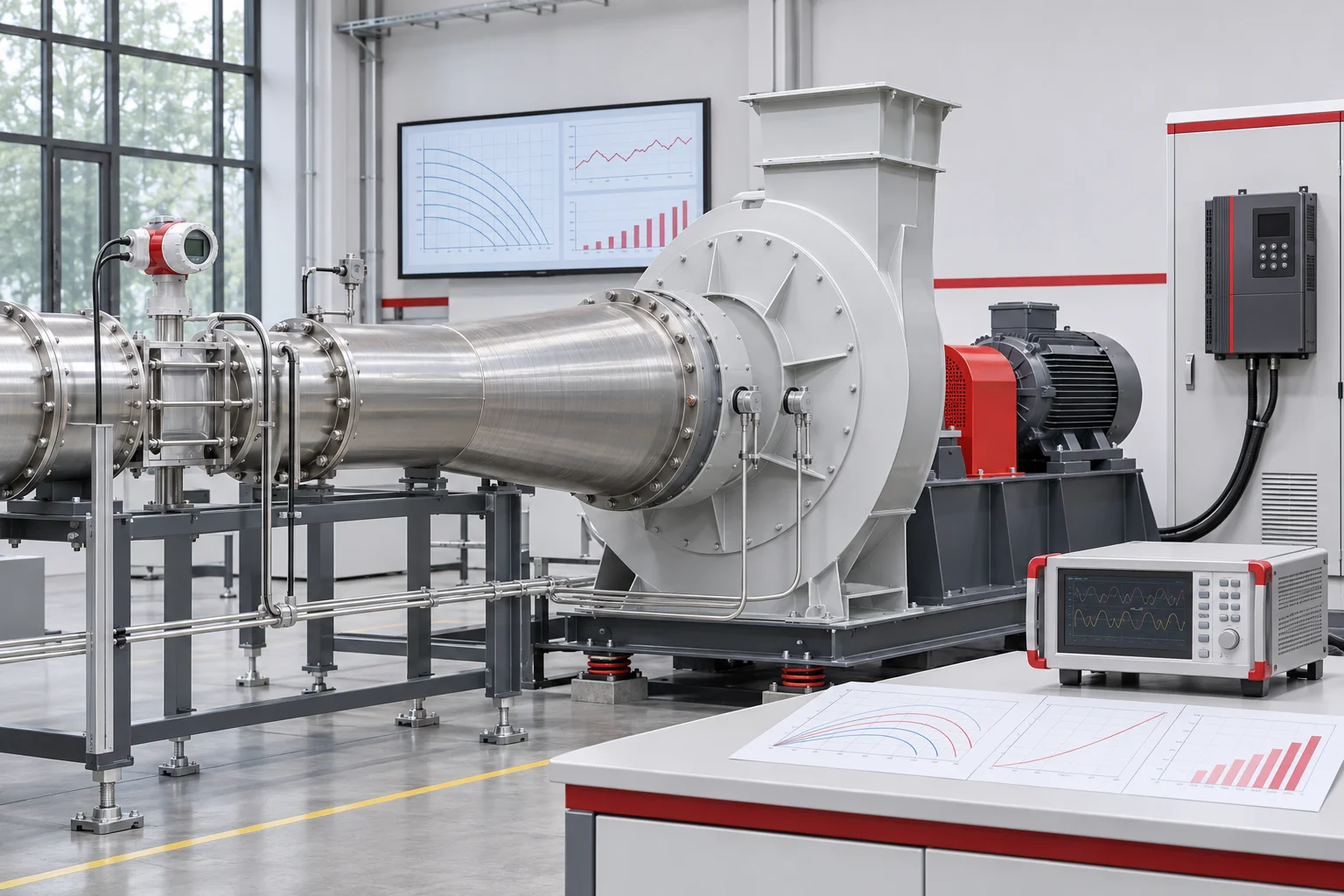
- Input power, output, efficiency and test method at rated and representative part-load points.
- The actual operating logic for fixed speed, VFD, EC, 0–10 V, PWM or network control.
- Annual hours, load profile, standby power and changes in filter or heat-exchanger resistance.
- Reference location, grid factor, service life and maintenance or replacement assumptions.
“EC fans are generally efficient” is not a duty profile. Likewise, a best-efficiency point should not be extrapolated to an entire operating life.
7. Define end-of-life routes
Record disassembly, reuse, remanufacturing, metal recovery, plastics treatment, electronics treatment, refrigerant recovery or destruction and other disposal routes. Any recycling credit or avoided burden needs a stated method and boundary; an unsupported “recyclable percentage” is not enough.
A practical evidence hierarchy
|
Grade |
Data type |
Procurement interpretation |
|---|---|---|
|
A |
Model-, plant- or supplier-specific primary data with records, period and owner |
Preferred; still check boundary, units and representativeness |
|
B |
Representative data from the same family or process, with a documented proxy |
Usable for gaps if differences and sensitivity are recorded |
|
C |
Official statistics, industry averages, LCA databases or literature |
Record database, version, geography, year and matching logic |
|
D |
Unreferenced estimates, marketing claims or non-reproducible totals |
Do not use as core evidence for a final declaration |
Ten questions to put into an RFQ
1. Confirm the exact model, revision, production site and claimed scope under the relevant standard.
2. Provide a major-material BOM with mass, unit, category and revision date; sensitive detail may be aggregated under an NDA.
3. Provide energy, loss, waste and allocation data for the relevant production period.
4. Identify supplier-specific primary data and every secondary database and version used for gaps.
5. For HVACR equipment, provide refrigerant, charge and the evidence behind leakage, servicing and recovery assumptions.
6. Provide input power and performance at rated and representative duty points, including the test method.
7. Provide logistics, packaging, lifetime, maintenance and end-of-life scenarios.
8. Flag missing values, estimates, confidentiality limits, data owners and the next review date.
9. State whether the result received an independent review, by whom and for what scope; do not submit only a badge.
10. Provide a change log so quotation, sample, mass production and footprint report refer to the same configuration.
Frequently asked questions
Must every motor or HVACR product obtain carbon-footprint certification after the effective dates?
That conclusion is too broad. These are recommended standards defining quantification methods and requirements. A separate law, tender, contract, green-procurement rule, platform or customer specification determines whether the method is mandatory for a project and whether third-party review is needed.
Can ISO 9001 or ISO 14001 replace product-footprint data?
No. A management system may support data control and continuous improvement, but a product footprint still needs a functional unit, system boundary, life-cycle inventory, factor sources, allocation method and result interpretation.
Is motor efficiency or an HVACR energy label sufficient?
No. Efficiency can be an important use-stage input, but a product footprint also considers materials, manufacturing, transport, refrigerant, lifetime, maintenance and end of life. Passing an efficiency rule does not automatically prove a lower product footprint.
What if a supplier will not disclose its full BOM?
Options include an NDA, aggregation by material class, confidential review by an independent verifier, or a verified summary supplied to the customer. The data owner, underlying records, allocation method and audit trail still need to exist; “confidential” is not a substitute for evidence.
Can a supplier already claim conformity with GB/T 48121 or GB/T 48357?
The product name, an extract from a test report or a generic LCA template is not enough. Confirm the scope and final text, complete the quantification and report, and state whether an independent review was performed, by whom and for what boundary.
What buyers and suppliers can do this week
Choose one representative model for a data-gap pilot. Assign an owner, freeze the BOM and production revision, collect the latest 12 months of data using the fields above, calculate the share covered by primary evidence, and list every estimate. Then ask an LCA or compliance specialist to confirm the functional unit, boundary, factors and review route. When a customer asks in 2027, the team will have an explainable evidence chain rather than a number assembled under deadline pressure.
If you are preparing a supplier data pack for a fan, motor or HVACR product, send LONGWELL the target market, model, duty point, control method and available test information. We can help organize technical inputs related to fan or motor selection and performance. The project owner and qualified specialists should establish the footprint boundary, calculation, declaration and independent review under the applicable standard.
Official sources
- SAMR and four other authorities: 2026–2028 action plan for a product-carbon-footprint standards system
- National standards full-text system: GB/T 48121-2026
- National Public Service Platform for Standards Information: GB/T 48357-2026
- Official GB/T 48357 project scope
Information checked 16 November 2026. This buyer guide supports evidence preparation and is not legal advice, certification or a life-cycle-assessment conclusion.
Email LONGWELL for a model-specific carbon-footprint data review