Data centers are critical infrastructure for storing, processing, and transmitting the data. With the rapid growth of artificial intelligence (AI), cloud computing and data centers are becoming larger and more complex. Managing the thermal environments of data centers have become more and more important.
FWUs have emerged as an efficient cooling solution for modern data centers. FWUs can deliver high airflow, support flexible capacity control, and provide redundancy to help meet the demanding cooling requirements. In this blog, we’ll explain what FWU is, their character in data centers, and how they differ from traditional data center cooling solutions.
Introduction to Fan Wall Units (FWUs)
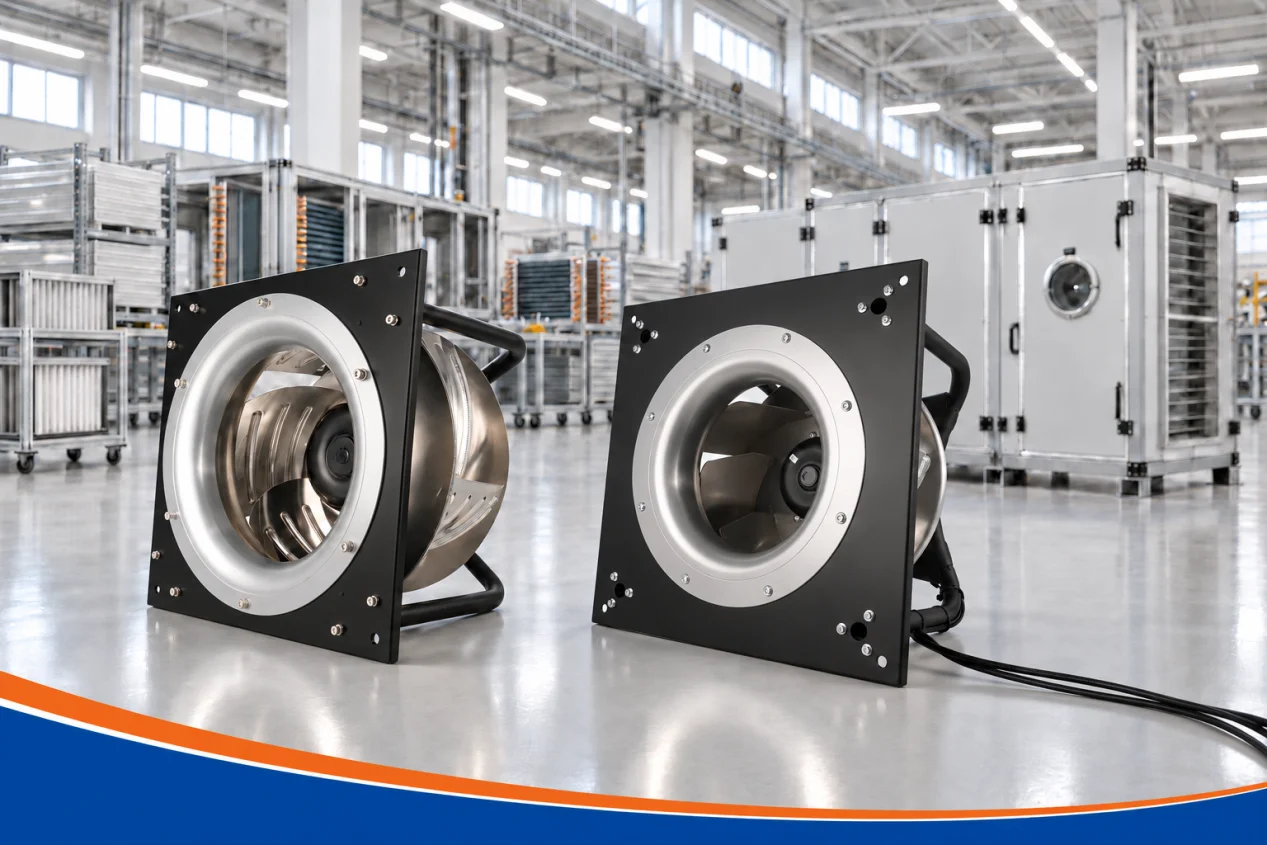
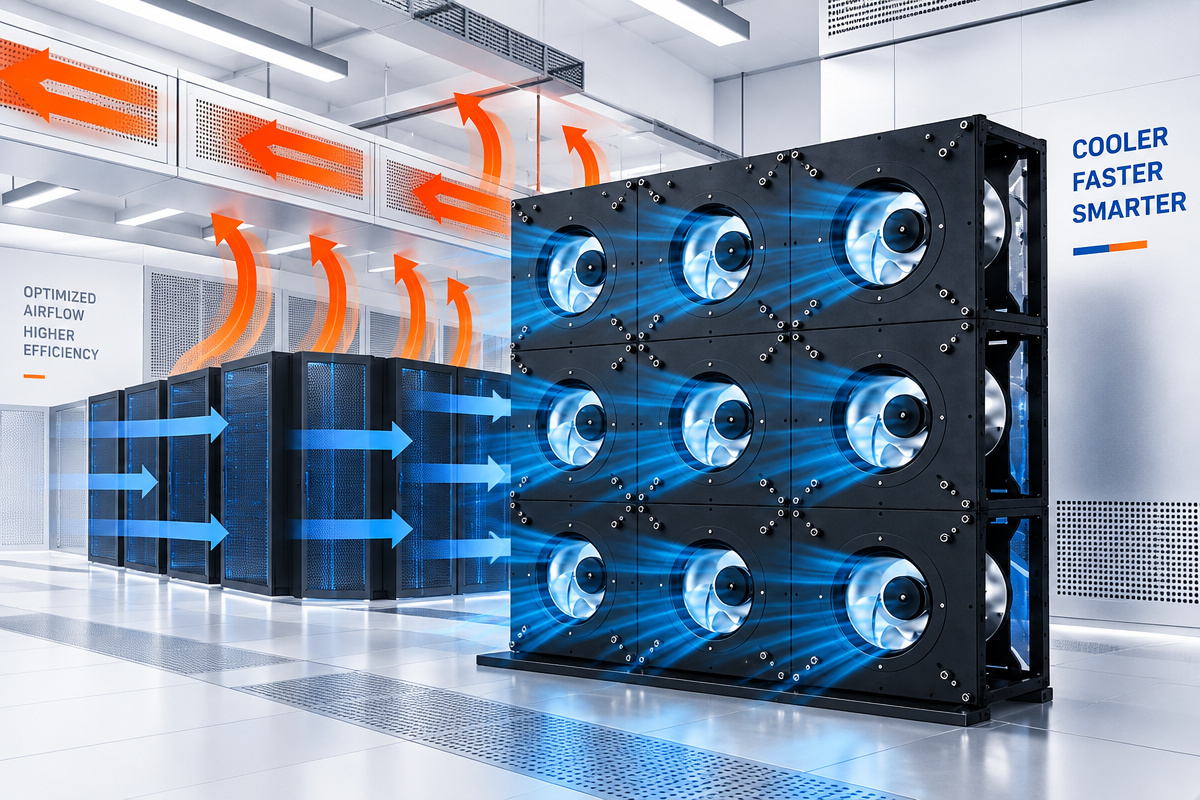
A fan wall unit is a bank of small fans mounted side by side in one air-handling section and run as a single air-moving system. It replaces one large fan with six to twelve smaller ones. Fan Wall Units are a type of advanced air-ventilation and air-moving technology, which is more efficient than just one large fan. FWU addresses the issue of heat efficiency and optimizes the overall thermal management of the data center.
How FWUs Work in a Data Center?
A fan wall unit has a defined system boundary. Each cell includes a fan, motor, inlet and mounting position. The frame fixes their spacing. The plenum joins their air paths. Power and control hardware tells the cells when and how to run. The AHU casing, filters, coils, dampers and ducts create the resistance the array has to overcome.
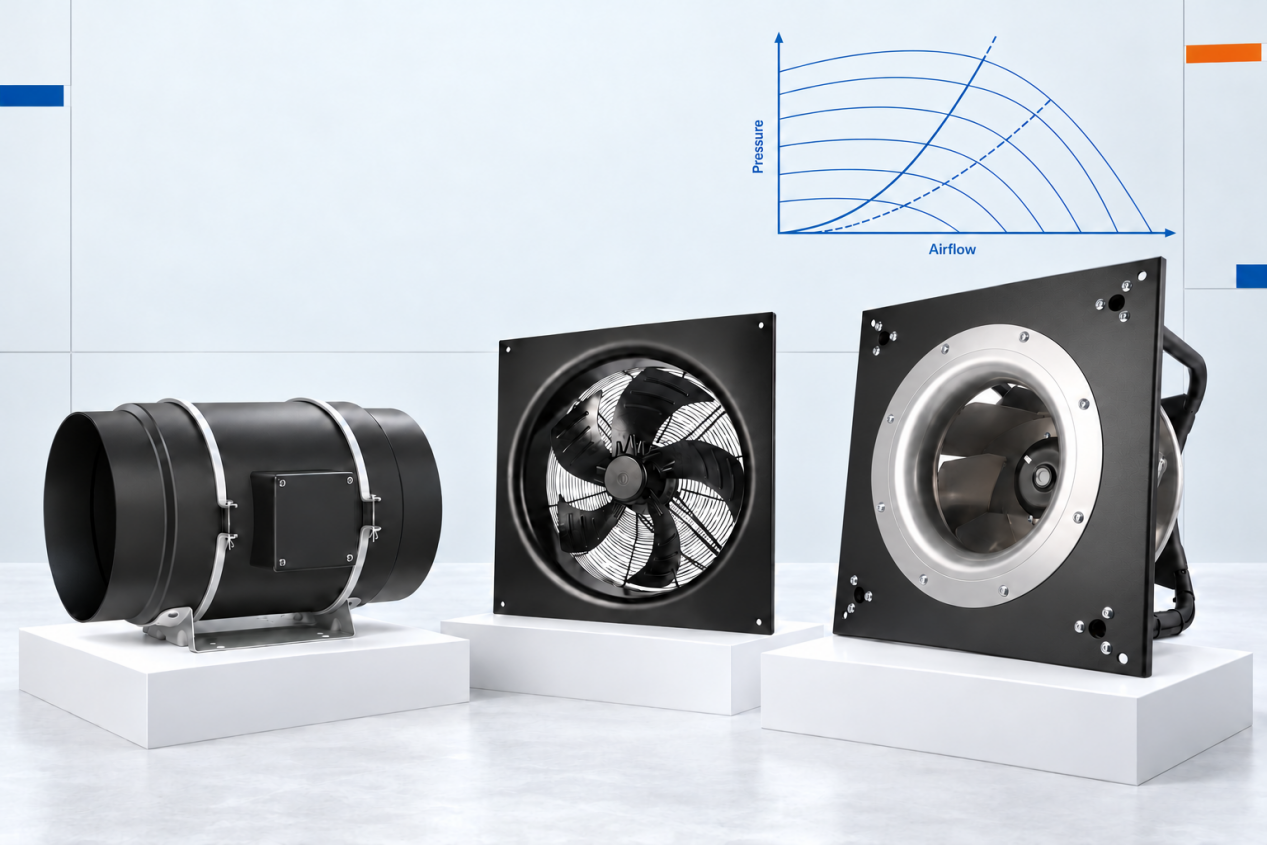
Several fans work together to pull in the air from the surrounding environment and distribute airflow evenly to reduce the risk of hotspots. The multiple small fan arrangement also allows better control of air pressure. Because it uses multiple small fans, the FWU can adjust the amount of airflow based on the cooling requirements of the data center. The FWUs also provide redundancy and serviceability for data center cooling. If one fan fails to work, the remaining fans can continue to work to maintain partial cooling capability.
Fan Wall, FanGrid, Fan Array, FWU: Understanding Key Terms
There are several technical terms related to fan-based cooling systems, including Fan Wall, FanGrid, Fan Array, and Fan Wall Unit (FWU). Though these terms are closely related, they do not always refer to the same thing.
Different suppliers may use the same term to describe different scopes of supply, and understanding these terms is also important for evaluating FWU solutions.
|
Term |
What it actually refers to |
What it includes |
Where you meet it |
|---|---|---|---|
|
Fan wall / FanGrid / fan array |
An arrangement of plug fans inside a section of an AHU or CRAH |
Fan modules, frame, wiring, control sequence. Coils and filters belong to the host unit |
AHU and CRAH builders, retrofit packages |
|
Fan Wall Unit (FWU) |
A complete packaged cooling unit whose fan section is a fan wall |
Fan array plus coil, filters, casing, controls, condensate management. A finished product |
Data hall cooling, hyperscale and colocation projects |
|
Fan wall fan / plug fan |
The individual module, a backward-curved centrifugal impeller with the motor inside the hub |
Impeller, EC or AC motor, inlet ring, mounting plate |
Component procurement, spares |
Why Data Centers Specify a Fan Wall Unit?
In a documented LONGWELL array case, a 50-fan CRAH retrofit at a 2 MW Tier 3 colocation site moved PUE from 1.45 to 1.32 and cut fan energy 28%. A top-3 precision cooling OEM measured 38% fan energy reduction and 6.5 dB(A) lower noise on a new CRAH platform built on the same EC plug fan family, with PUE contribution at 1.28 against a 1.42 baseline. Fan wall units (FWUs) have a lot benefits for data center cooling.
- Improved Energy Efficiency: Traditional cooling systems can often operate at high power levels even the data center is not working at its full capacity. FWUs can be adjusted according to the actual cooling requirements.
- Built-in Redundancy: When one fan has failures in the FWUs, the remaining fans can still work to meet the requirement of the airflow. This avoids the complete cooling interruption.
- Space-efficient Design: FWUs are composed of several small fans, but they occupy less space than traditional large cooling equipment. This is beneficial to high-density data center environments.
- Flexible Airflow: FWUs are often equipped with proper control system and this allows each fan in the FWUs to operate at different speed. This enables more efficient airflow management.
|
Driver |
What the fan wall changes |
Number to ask for |
|---|---|---|
|
Redundancy |
N+1 moves from a spare unit in the corridor to a spare cell inside the running unit |
The one-fan-off array curve, at design duty |
|
Part-load efficiency |
Two levers instead of one: slow every fan, or stage cells off. Most hours are part load |
Annual kWh from your load profile, not a single-point kW |
|
Rack density |
Higher airflow per unit of floor area, and units can be stacked where ceiling height allows |
Airflow per m² of footprint, at the real static pressure |
|
Airflow uniformity |
Several inlets across the coil face instead of one jet, which reduces hot spots downstream |
Face velocity distribution and where it was measured |
|
Service without shutdown |
One module out and back in while the array keeps running |
Module mass, removal path, isolation method |
|
Raised floor avoidance |
Horizontal discharge designs remove the underfloor plenum from the construction sequence |
Discharge arrangement and required clearance |
Fan Wall Unit vs CRAH: What Actually Differs?
Both cool a data hall with chilled water and both use an EC fan array. The difference is architecture, and it decides the building works, not just the equipment schedule.
|
Aspect |
CRAH |
Fan wall unit (FWU) |
|---|---|---|
|
Airflow path |
Upflow or downflow, often into a raised floor plenum |
Usually horizontal, straight through the unit |
|
Footprint and stacking |
Floor-standing, generally not stacked, density limited by floor area |
Compact, stackable where ceiling height allows, density rises with height |
|
Per-unit capacity |
Up to a few hundred kW in a typical unit |
Higher per unit; several hundred kW is common, ratings vary by supplier |
|
Construction impact |
Downflow configurations usually require a raised floor |
No raised floor required |
|
Service access |
Front or rear, unit often isolated for fan work |
Rear module access, individual fans swapped live |
|
Best fit |
Server rooms, smaller halls, switch and MMR rooms |
Hyperscale and colocation halls, high-density racks |
What to Put in a Fan-Wall RFQ?
Seven items separate a quotation you can compare from one you have to re-open:
- Duty. Normal, minimum, maximum and critical-fault airflow and static or total pressure, with units and air condition.
- System boundary. Filters, coils, dampers, plenums, ducts, leakage allowance and clean versus dirty states.
- Array identity. Full module model and suffix, quantity, frame layout, partitions, inlet clearances and exact document revisions.
- Curves. Normal active-array curve, part-load states and the declared one-fan-off condition.
- Controls. Command, feedback, alarm, communications, staging logic and the responsibility split.
- Mechanical service. Envelope, mass, mounting, guarding, isolation, access and removal path.
- Acceptance. Where airflow, pressure, electrical input, sound and distribution will be checked, and by which method.
Ask the supplier to mark the proposed operating points on the current array evidence and to list every assumption behind them. That turns a question about terminology into a specification an engineer can review and a buyer can compare. If the array sits inside a data hall, the duty-point workflow in our data center fan selection guide covers the additional checks on entering air condition and control.
The Module Inside the Fan Wall: the LONGWELL LWBE3G Platform
Since the fan array carries most of an FWU’s performance, it is worth seeing what the component side actually ships. LONGWELL builds the plug fan modules and array frames that go into CRAH units, packaged fan wall units and retrofit frames, which makes this the one section of the article where we talk about our own hardware.
The LWBE3G is a backward-curved centrifugal impeller driven by an EC external-rotor motor. Motor and wheel sit in one sealed package: no belt, no coupling, no shaft seal. At the validated duty range of 200 to 300 Pa static pressure and 4,500 to 16,000 m³/h per fan, the platform holds static pressure efficiency of 73 to 82 percent. Control accepts 0 to 10 V, PWM or Modbus, and the full platform is certified to EN 55014-1/2 and FCC Part 15 Class B, the electromagnetic envelope a data hall actually demands.
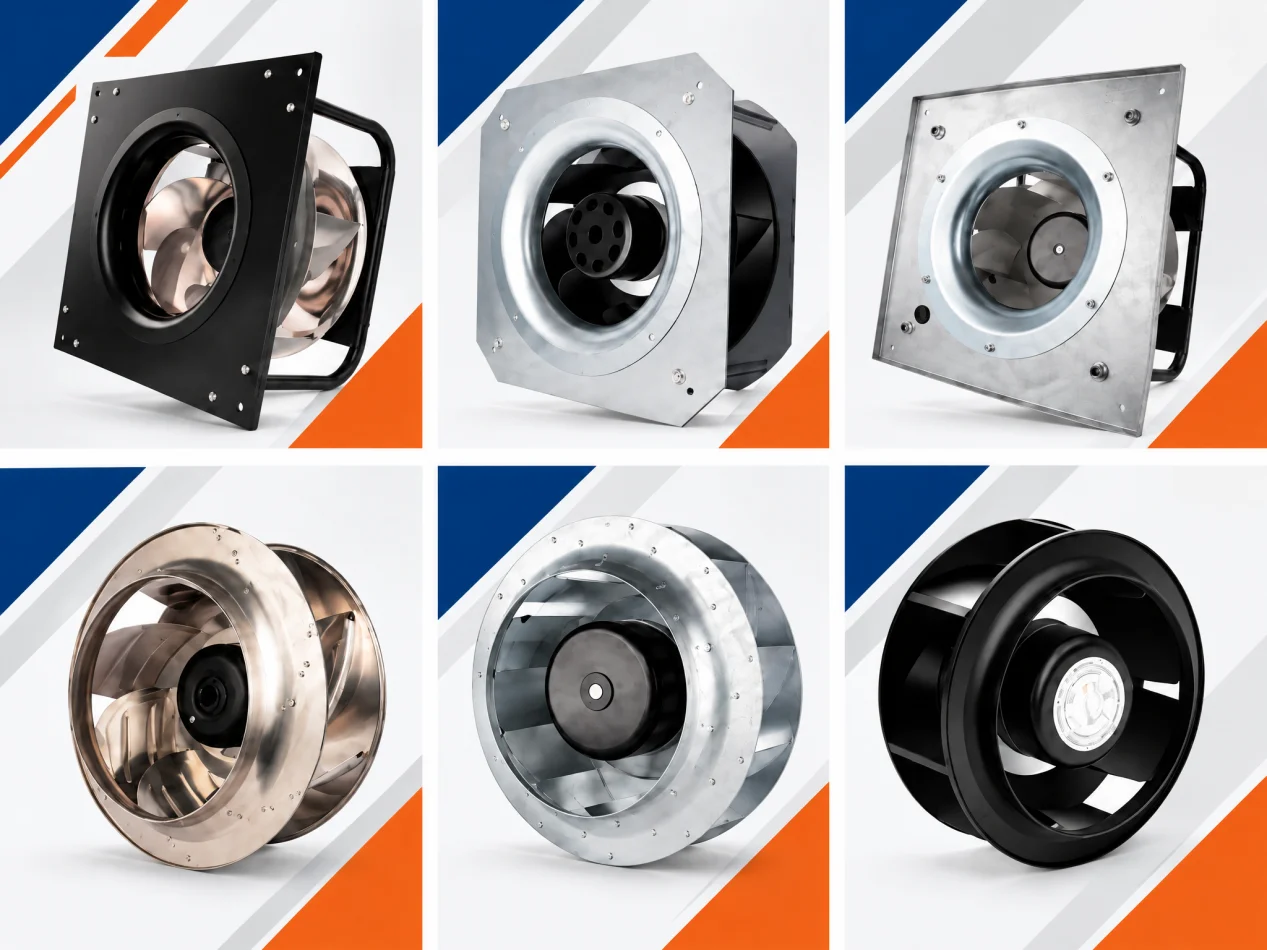
The platform runs from 220 mm to 630 mm impeller diameter, and the size maps to the job:
|
Application |
Impeller size |
Series |
Role in the array |
|---|---|---|---|
|
CRAH / CRAC |
280 to 355 mm |
LWBE3G280 / 355 |
The highest-volume segment; 2 to 4 fans per typical unit |
|
In-row cooling |
250 to 355 mm |
LWBE3G250 / 280 |
Short air path, lower pressure, up to about 40 kW per rack |
|
Fan wall / FanGrid arrays |
450 to 630 mm |
LWBE3G450 to 630 |
6 or more fans per air handler with N+1 |
|
1 MW-class precision cooling |
630 mm |
LWBE3G630 |
21,950 m³/h at 1,597 Pa from a single 5,600 W module |
|
Rear-door heat exchangers |
200 to 280 mm |
LWBE3G220 / 280 |
Compact, low-pressure, up to 75 kW per rack |
|
Condensers and cooling towers |
by project |
LWAE3G axial EC |
Layers 3 and 4 of the cooling chain, outside the FWU |
FAQs
What is a fan wall unit (FWU)?
A fan wall unit is a cooling air-handling unit with bank of small fans running as one air-moving system instead of a single large fan.
Does a fan wall unit need a raised floor?
Not if it discharges horizontally. Downflow CRAH configurations normally need a raised floor plenum; horizontal fan wall designs remove that construction step and the associated cost.
Is N+1 in a fan wall really redundant?
Only if the one-fan-off case has been calculated and the control sequence is documented. An extra cell that cannot bring the array back to design duty is spare capacity, not redundancy. Ask for the one-fan-off array curve at the critical duty point.
Can LONGWELL plug fans replace the fans in an existing fan wall unit?
Usually yes. LWBE3G modules are dimensionally compatible with the premium European brands they commonly replace, so most cabinets accept them without AHU rework. A retrofit still starts with the existing duty, section dimensions and electrical supply rather than with the fan alone, and the one-fan-off case has to be recalculated for the new curve.