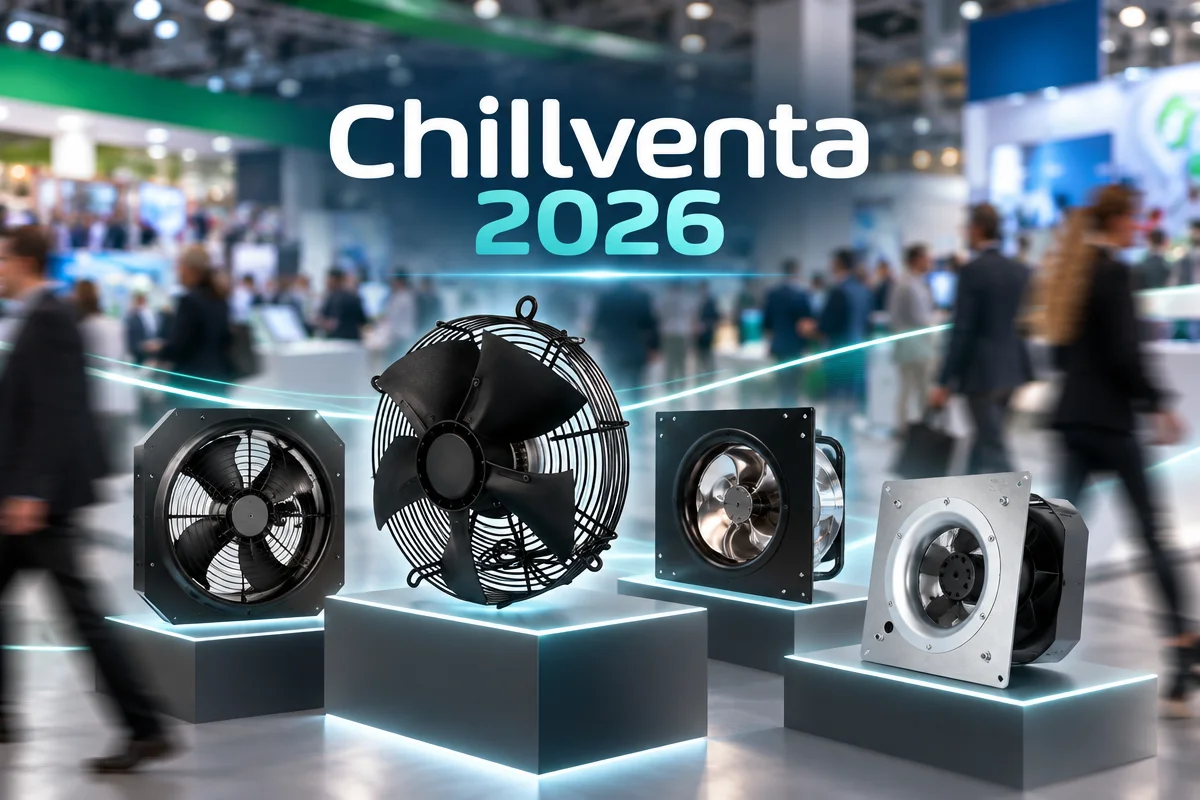
Chillventa 2026 runs from 13 to 15 October at the Exhibition Centre Nuremberg. In 2024 the show hosted 1,010 exhibitors from 49 countries and 33,076 trade visitors, and 74% of those exhibitors came from outside Germany. The 2026 exhibitions space will pass the 2024 level. The event provides a broad view of technologies and applications shaping the HVAC&R industry. Its 2026 programme covers subjects ranging from heat pump technologies and refrigeration to air conditioning, ventilation, data center cooling, energy efficiency and system control.
Chillventa 2026 provides the chance for both fan suppliers and HVAC OEMs. The event is highly relevant to the work LONGWELL does every day: developing airflow solutions for HVAC equipment, heat pumps, refrigeration systems, data centers and other thermal-management applications. Read on for more information about Chillventa 2026.
What Chillventa 2026 Signals About Itself?
|
Chillventa 2026 session / feature |
Cluster |
What it signals for fan specification |
|---|---|---|
|
“What a 30% heat exchanger performance gap means for commercial refrigeration” |
Refrigeration |
Component-level gaps are now quantified in public sessions. Fans carry the same exposure. |
|
“Influence of the door design and the use of the pressure relief valve on the energy efficiency of a cold room” |
Applications |
Nothing is too small to be measured any more. |
|
“Specifying variable speed control for compressors: efficiency, reliability and power quality aspects” |
Components |
Variable-speed thinking has moved out from the compressor to every rotating part. |
|
“Gas detection under EN 378 & EN 14624: compliance, best practices and challenges” |
Safety |
Flammable refrigerants push documentation duties onto every component in the air path. |
|
“Cooling Smarter: reduce energy use and increase reliability in chillers, heat pumps and data centre cooling” |
Cross-sector |
Three duty profiles that used to be separate are now discussed as one control problem. |
|
Combined heat pump / AC / ventilation focus in Halls 7 and 7A; dedicated data centre cooling stream at CONGRESS |
Structure |
Air-moving equipment is no longer a fringe of this show. |
Trend 1: Energy Efficiency Is Becoming a System-Level Requirement
The energy efficiency is one of the major forces for refrigeration, air conditioning, ventilation and heat pump technologies. For example, on 1 January 2027, self-contained air conditioners and heat pumps up to 12 kW using refrigerants with a GWP of 150 or more can no longer be placed on the EU market, subject to a safety exemption rising to 750.
Under such conditions, the fan’s motor efficiency, aerodynamic performance, operating point and control strategy can therefore influence the equipment’s overall energy consumption. For OEMs, the goal is to select an airflow solution that matches the actual operating requirements of the equipment.
Trend 2: Heat Pumps Are Creating New Requirements for Airflow
European heat pump demand restarted in 2026. EHPA reported roughly 575,000 residential units sold across 11 countries in the first quarter, up 17% on the 494,000 sold a year earlier, with France, Germany and Poland averaging +25%. Heat pumps are an important part of the HVAC&R landscape covered by Chillventa. The 2026 specialist programme includes topics such as industrial heat pumps, high-temperature heat pumps, low-GWP refrigerants and heat pump system applications.
Trend 3: Data Center Cooling Is Becoming a Major HVAC&R Challenge
Data centre cooling now has a dedicated stream at the 2026 CONGRESS. Under the EU Energy Efficiency Directive, large data centres report power usage effectiveness, water usage, energy reuse and renewable share on an annual cycle. The 2026 specialist programme will include sessions addressing high-efficiency fan strategies for AI data centers and changing requirements created by high-density computing.
Though liquid cooling has become more and more common, it has not removed air-side equipment. Dry coolers, condensers and free-cooling coils still run fans, often at ambient temperatures a comfort application never sees, and most of their operating life is spent at part load.
Trend 4: Efficiency Scrutiny Has Reached the Component Level
This is where the 2026 agenda does the most useful work. The industry is now publicly measuring gaps between parts that datasheets call equivalent. For example, Hillphoenix publishes the underlying mechanics plainly: shaded-pole motors run at 15–25% efficiency, permanent split capacitor motors at 30–50%, EC motors at 60–75% and above. What this demonstrates is that the efficiency of the fan motor and its control strategy can have a significant effect on the lifetime energy consumption of the whole equipment.
Trend 5: Variable-Speed Operation Is Changing How HVAC Fans Work
ErP 2026 regulation revises how the best-efficiency point is defined, fixes it to a defined inherent fan speed, and adds provisions for how that speed is determined on variable-speed driven fans and multi-speed motor fans — with verification tolerance widened to ±5% precisely because those products vary. It also explains the session title sitting in the Chillventa programme: “Specifying variable speed control for compressors: efficiency, reliability and power quality aspects”. Variable-speed thinking started at the compressor. It has reached every rotating part.
5 Fan Questions Buyers Will Ask in Nuremberg?
1. How far does EC actually pay for itself?
Moving to an EC fan can change several parameters such as lower electrical input at the same duty point, variable-speed operation, and better efficiency at part-load conditions. In a convenience store condensing unit the fan runs 6,000 to 8,000 hours a year. That is where the payback lives — and as Trend 3 above makes clear, whether it pays back in two years or four depends on your baseline and your hours.
For buyers, the useful question is therefore not simply “How much more efficient is EC?” but “What will this specific fan save over its actual operating profile?”
2. What does the shift to R290 change in the air path?
The wider adoption of R290 (propane) and other lower-GWP refrigerants is changing how OEMs look at condenser and evaporator design. The condenser and airflow system cannot simply rely on large components to provide operating margin. The air path becomes a safety topic. Once the refrigerant is flammable, the fan’s position relative to the classified zone matters. Get it in writing. Speed control becomes a compliance tool. Modulating at partial load keeps refrigerant distribution even and head pressure steady. For OEMs working with R290, the question is “Can the complete fan and air-path design deliver the required thermal performance while fitting the safety and compliance requirements of the system?”
3. When did noise become a compliance issue?
Noise has become more and more important as heat pumps, refrigeration equipment, and HVAC systems move closer to residential and commercial environments. In Germany, noise is no longer only about comfort. Urban heat pump installations increasingly sit behind a permitting limit, so the sound figure has to survive review, not just read well on a datasheet.
What matters is sound power measured to a stated standard plus the octave-band spectrum, not a single dB(A) total taken in a favourable room. Blade geometry does most of the work here. The useful buyer question is “Can you provide the complete acoustic test data, including the frequency spectrum and test conditions?”
4. Why is the fan becoming one part number?
OEMs are under pressure to reduce assembly, simplify sourcing, and minimize the number of components that have to be qualified. A separate motor, bracket, impeller, guard and controller is five purchase orders, five failure modes and five sets of drawings.
For a buyer this shows up as a shorter BOM, fewer assembly hours, and one point of accountability when something fails. It also changes second-source strategy: once the fan is a single integrated part, the replacement has to match geometry, control protocol and wiring, not just airflow.
5. Is a qualified second source becoming a procurement requirement?
For fan buyers, the second supply-chain is important because the production line can be delayed by a relatively small component even when the rest of the system is available. The supply risk cannot only be affected by the factory capacity but also be affected by regional demand changes, logistics disruptions, and sudden shifts in HVAC demand.
A second source should be technically evaluated before the original component becomes unavailable. That means drawing-level comparison: mounting cut-out, shaft height, rotation direction, control curve, wiring polarity. “Equivalent to” on a datasheet is not a qualification.
12 Questions to Ask Any Fan Supplier at Chillventa
- At which operating point was that efficiency number measured? Give me the curve, not the peak.
- Which test standard — ISO 5801 or AMCA 210? Same fan, different numbers.
- Sound power or sound pressure? Reverberant room or free field? At what distance?
- What is bearing L10 at my duty temperature? Grease behaves differently at −30 °C.
- Does the motor start at my ambient minimum, or only at room temperature?
- What is the real IP rating against my washdown practice? A cold room hosed weekly needs more than IP54.
- Control input — 0–10 V, PWM or Modbus? And what is the lowest controllable speed before stall?
- What happens to the curve when the coil ices up?
- Lead time at my MOQ, and at ten times my MOQ? One container or twenty?
- Does the replacement drop into the same cut-out? Dimensions in millimetres, please, not “equivalent to”.
- What is the written spare parts commitment for year six?
- Can you send the third-party test report, or only your own datasheet?
LONGWELL: Reliable Airflow Solutions for Global HVAC&R Applications
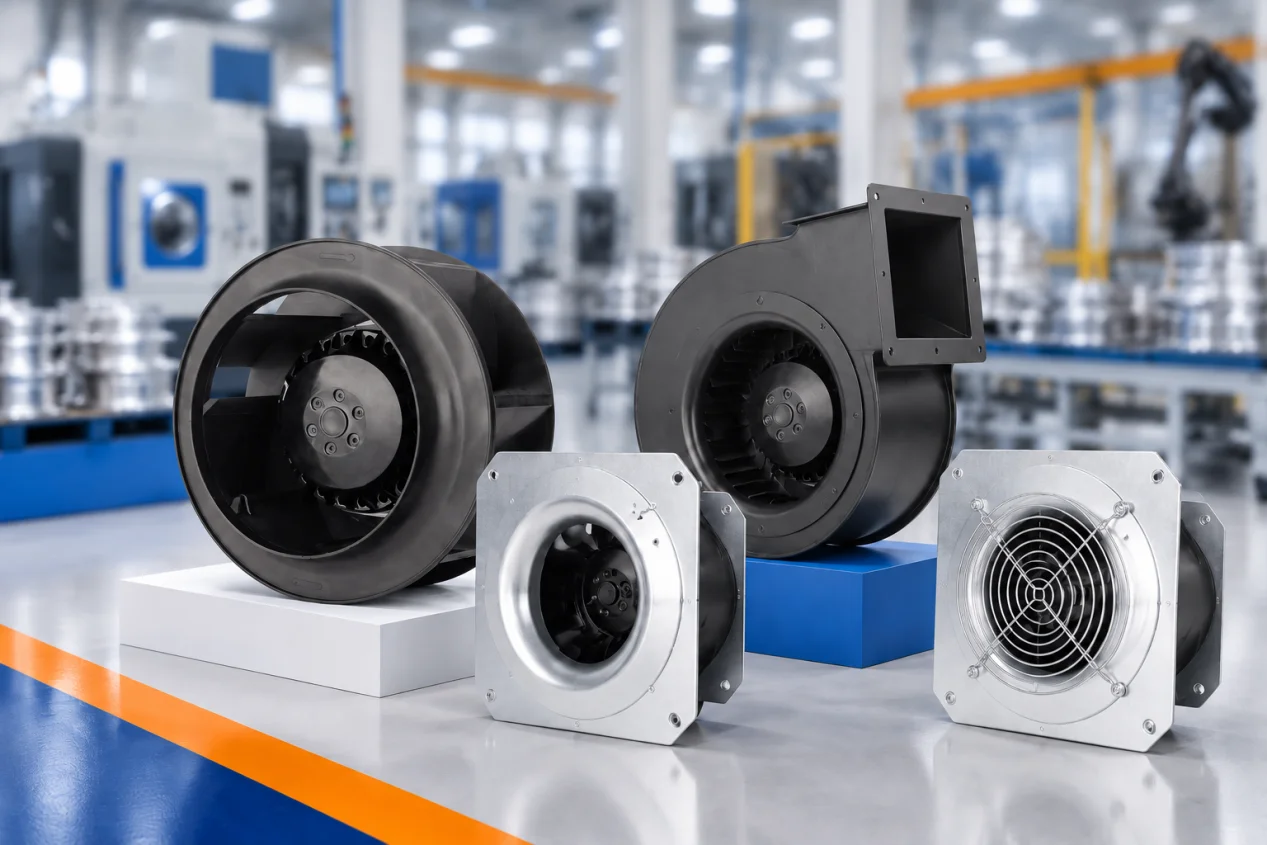
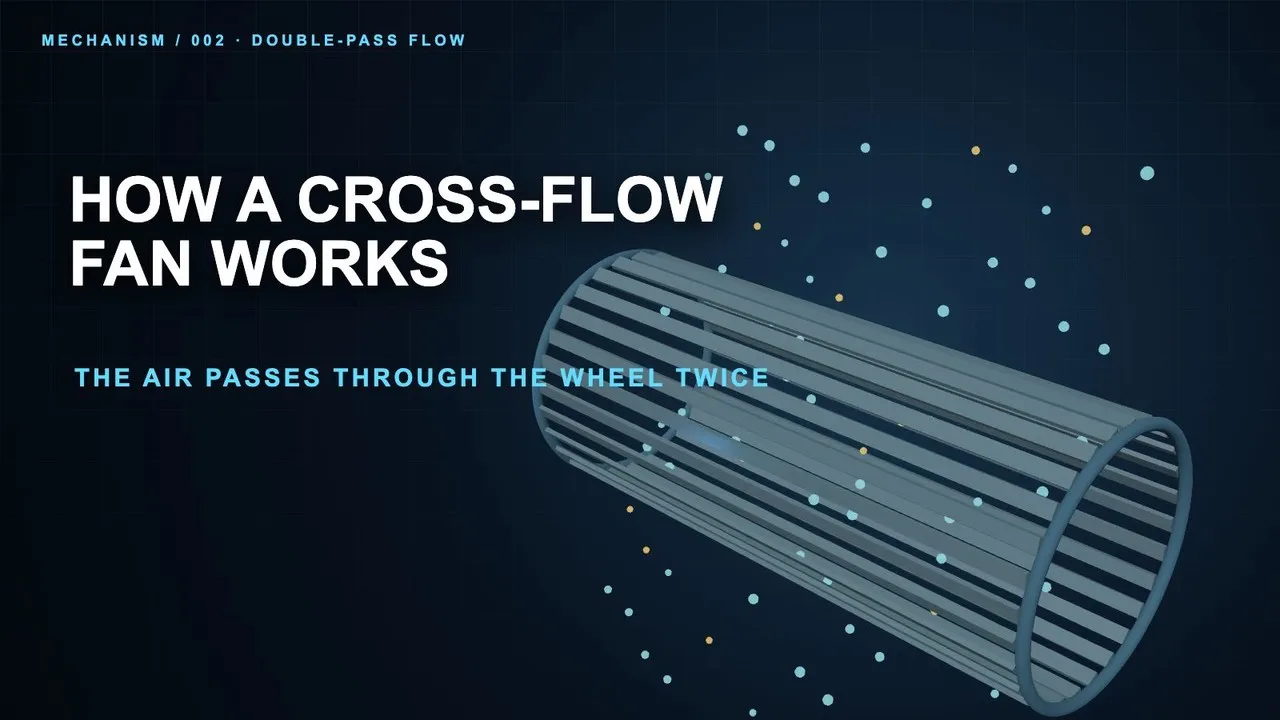
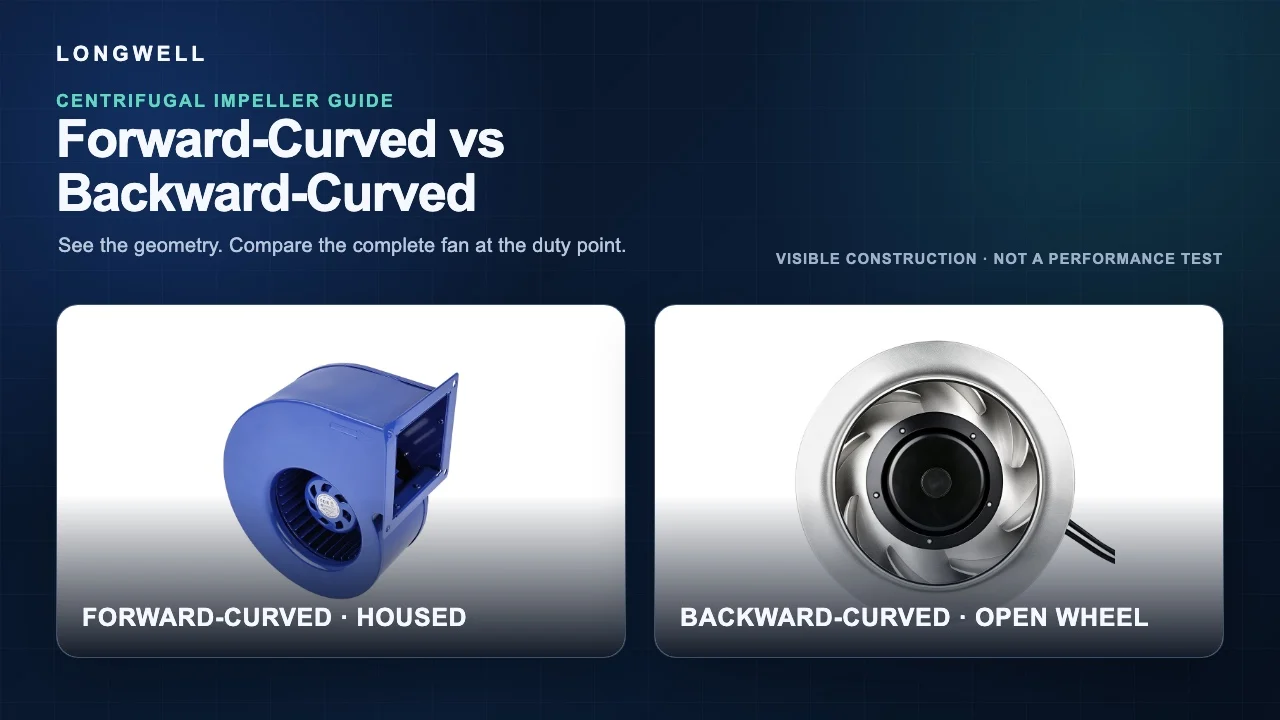
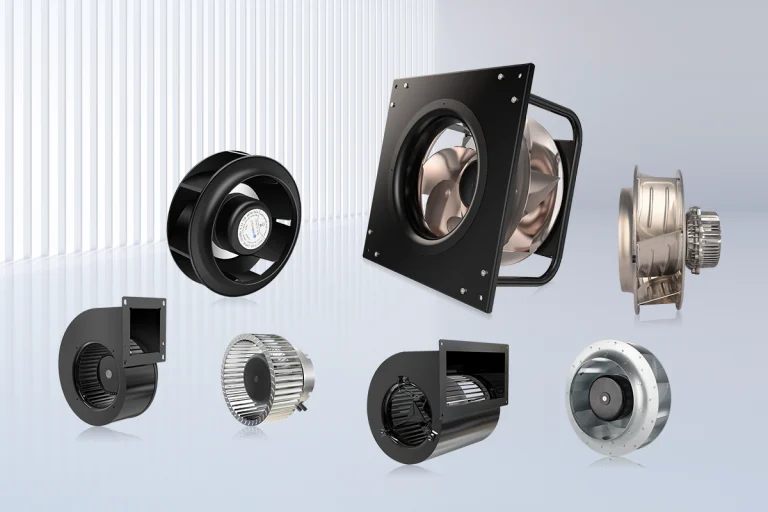
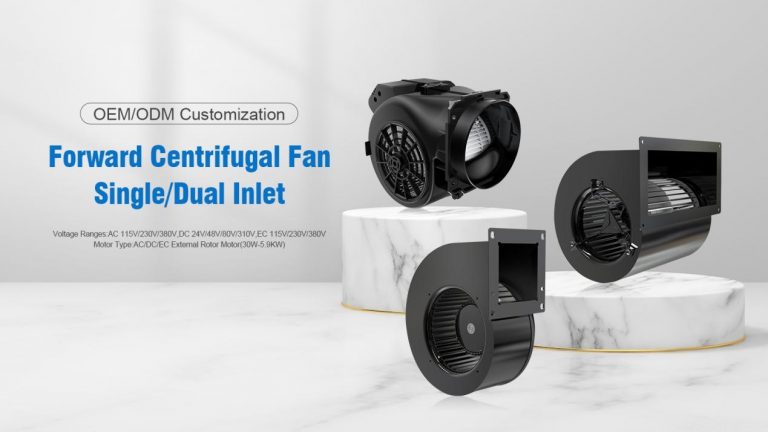
LONGWELL develops centrifugal, axial, cross-flow and duct fan solutions across AC, DC and EC platforms, and manufactures them in Yuyao, China. Equipment makers come to us with a duty point and a space constraint. We help turn those into a tested, production-ready airflow solution.
LONGWELL Main Product Platform
|
Platform |
Typical duty |
Where it goes |
|---|---|---|
|
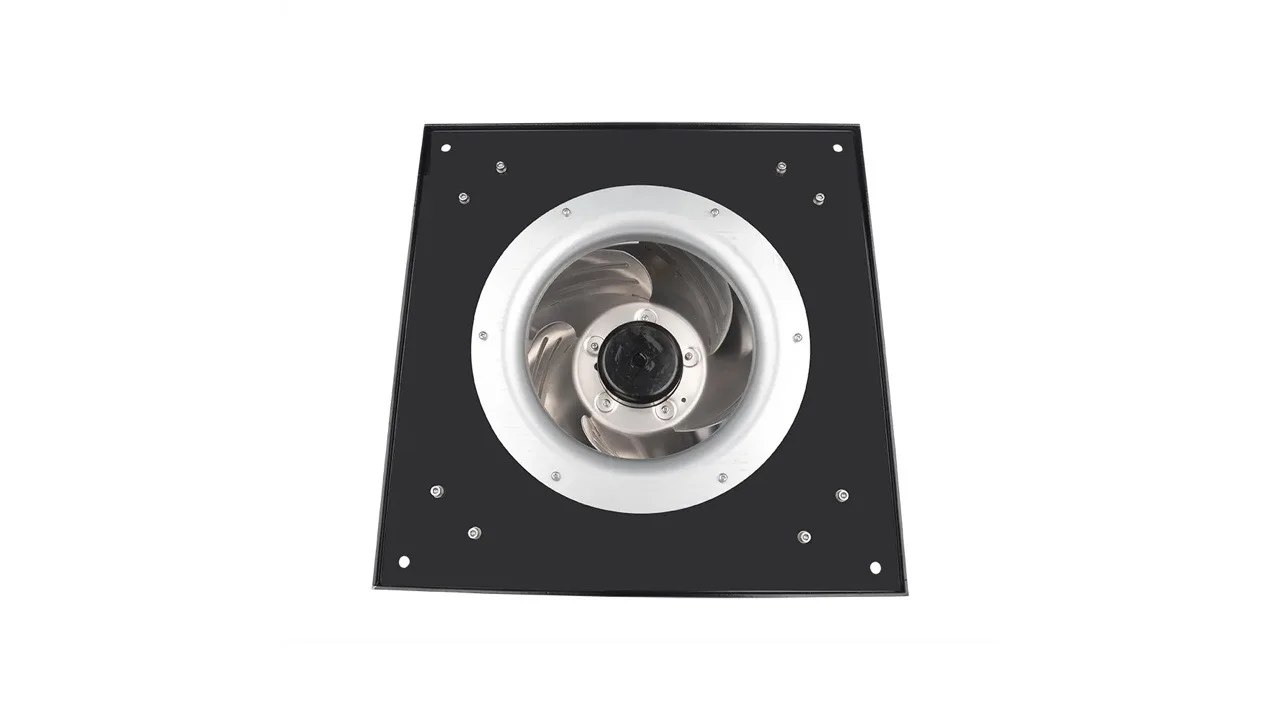
Centrifugal fans |
Higher static pressure, ducted systems |
Air handling units, equipment cooling, filter-loaded ventilation |
|
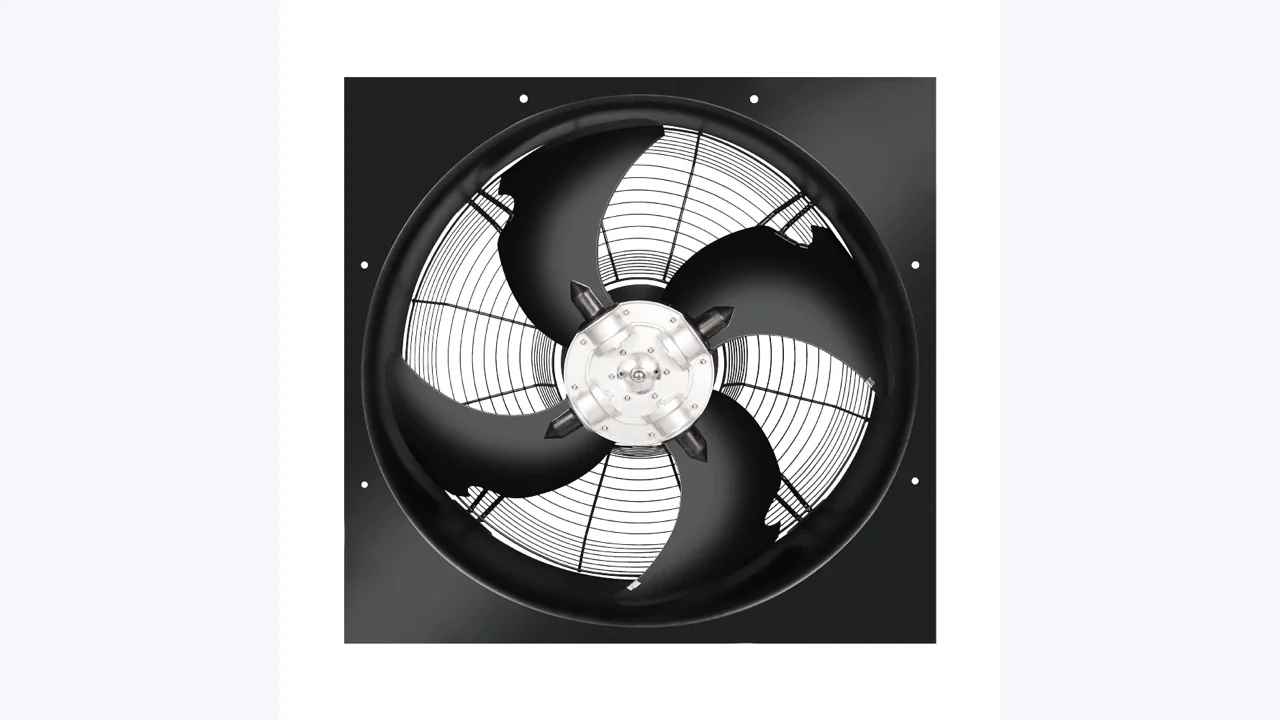
Axial fans |
High airflow at low pressure |
Condensers, heat exchangers, dry coolers, general ventilation |
|
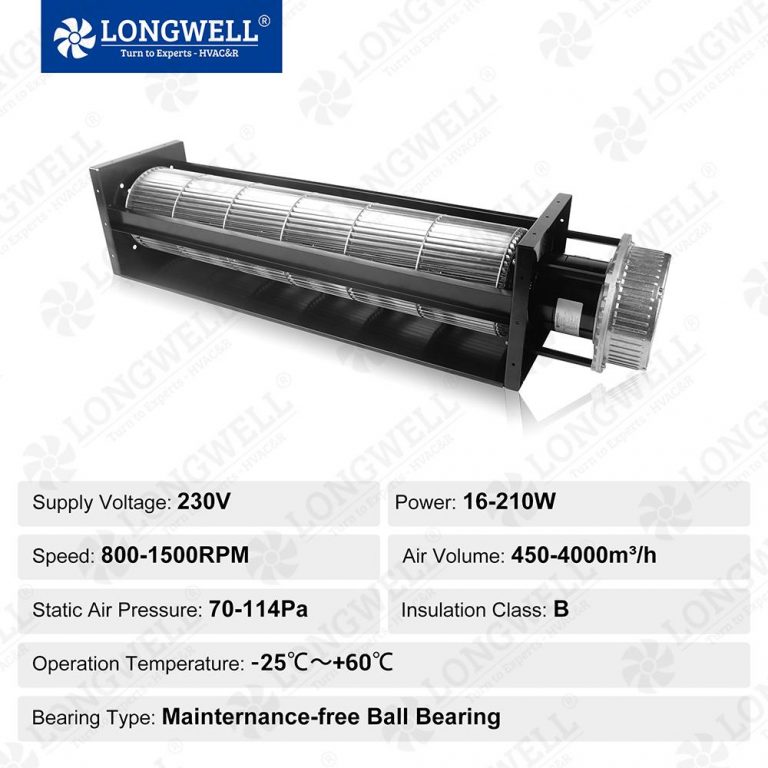
Cross-flow fans |
Low profile, wide even discharge |
Fan coil units, air curtains, display cabinets, appliances |
|
Duct fans |
In-duct boost and local extract |
Residential and commercial ventilation paths, equipment extract |
|
Motors & drives |
Integrated or standalone drive |
Control-matched replacements, retrofit packages |
Chillventa 2026 will bring the global HVAC&R community together in Nuremberg from October 13–15. LONGWELL is continuing to follow the industry’s technology development and work with OEM customers around the world.
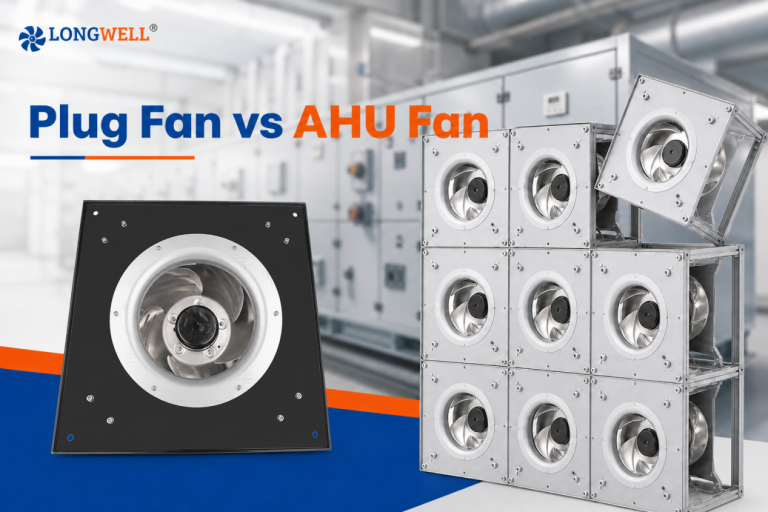
From EC centrifugal fans for AHUs and data center cooling to EC axial fans for heat pumps and condensing units, LONGWELL focuses on developing airflow solutions around real equipment requirements.
For HVAC OEMs, distributors, engineers and system manufacturers looking for a fan supplier, the starting point is not always a product number.
It is the application.
Tell us your airflow, static pressure, dimensions, voltage and control requirements. LONGWELL can help evaluate the appropriate fan solution for your equipment.