Most “best HVAC fan manufacturers” lists answer a question procurement teams are not asking. They rank companies by revenue or regional footprint. If you buy fans for OEM equipment, data centers, or retrofit projects, the useful ranking is not brand fame. It is a shortlist scored on four dimensions: OEM customization capability, EC part-load efficiency, replacement risk control, and verifiable certification and delivery. This guide aims to list 10 best HVAC fan manufacturers based on OEM customization and energy efficiency in 2026.
What Do Current “Top 10 HVAC Fan Manufacturers” Lists Actually Compare?
Most lists you find fall into two categories: whole-HVAC brand lists and component supplier lists. None of the top-ranking pages evaluate OEM customization boundaries, EC part-load efficiency, replacement risk, and certification/delivery verifiability in one place. That is the gap this article fills.
For HVAC OEMs, distributors, and procurement engineers, identifying a well-known manufacturer is only the first step. The more important question is whether that manufacturer can meet the technical, commercial, and supply-chain requirements of a specific project.
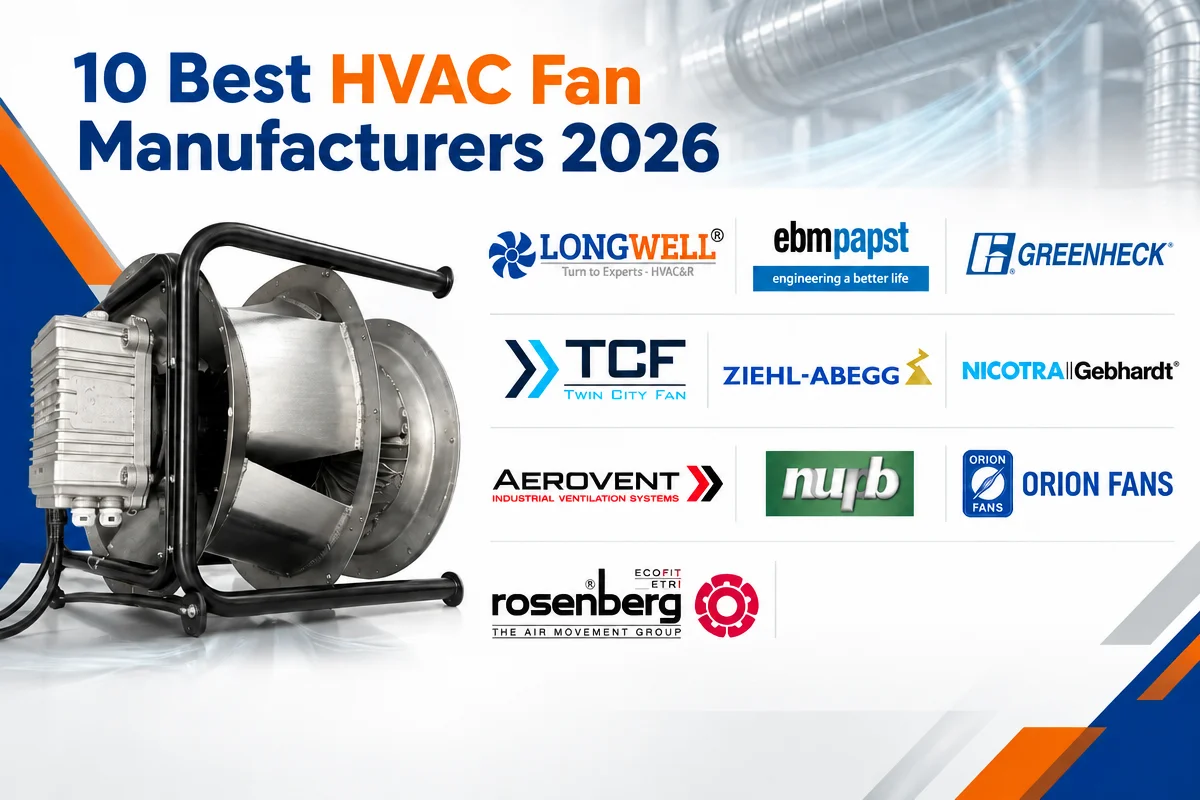
10 Best HVAC Fan Manufacturers for OEM Customization and Energy Efficiency [2026]
|
# |
Manufacturer |
Positioning |
EC product coverage |
Typical applications |
|
1 |
Greenheck |
Broad commercial/industrial ventilation portfolio |
Yes |
Commercial HVAC, general ventilation |
|
2 |
Twin City Fan |
Industrial and commercial fans; retrofit programs |
Yes |
Industrial process, commercial |
|
3 |
ebm-papst |
EC fan technology pioneer; large EC catalog |
Extensive EC |
AHU, refrigeration, electronics cooling |
|
4 |
Ziehl-Abegg |
EC and AC fans, impeller technology |
Extensive EC |
AHU, ventilation, elevators |
|
5 |
Nicotra Gebhardt |
Centrifugal fans and plug fans for AHU OEMs |
EC plug fans |
AHU, ventilation |
|
6 |
Aerovent |
Industrial fans and ventilators |
Yes |
Industrial process, dust collection |
|
7 |
New York Blower |
Industrial OEM fans and blowers |
Yes |
Industrial process, OEM |
|
8 |
Orion Fans |
Compact AC/DC/EC fans and fan trays |
Yes |
Electronics, telecom, enclosures |
|
9 |
Rosenberg |
EC fans and ventilation units |
Yes |
AHU, ventilation units |
|
10 |
LONGWELL |
EC fan solution provider, industrial & commercial |
EC centrifugal, axial, and cross-flow series |
AHU, data center CRAH, cleanrooms, OEM |
ebm-papst

Positioning: EC fan technology pioneer with the industry’s largest EC catalog, spanning compact axial to large centrifugal and plug fans.
- OEM customization: Strong OEM capability; high-volume OEM variants. However, developing new aerodynamic designs or geometries may require new tooling, additional validation, and longer lead times.
- EC part-load efficiency: ebm-papst is regarded as the benchmark in EC fan technology. Their EC motor plus impeller integration is the reason “K3G/R3G/W3G” model numbers became de facto cross-reference anchors across the industry.
- Certification/delivery: Offers comprehensive global certification; premium pricing is the documented trade-off, which is precisely why a second-source market exists.
- Best fit: OEMs standardizing on a single global EC platform with premium budget headroom.
Ziehl-Abegg

Positioning: A well-established manufacturer of EC and AC fans with a strong heritage in impeller-technology. Its portfolio covers backward-curved centrifugal fans, axial fans, and specialized ventilation and drive solutions for applications such as elevators and HVAC systems.
- OEM customization: strong aerodynamic engineering support; EC platforms such as ZAvblue and ZAbluefin cover large plug and axial duties common in AHU OEM work.
- EC part-load efficiency: competitive EC portfolio; verify per-model part-load curves — platform-level marketing numbers are not a substitute for the curve at your duty point.
- Certification/delivery: European manufacturing base with global certification; lead times and pricing position it as a premium alternative to ebm-papst.
- Best fit: European OEMs and elevator/HVAC applications where impeller efficiency at part load is the deciding criterion.
Nicotra Gebhardt

Positioning: A well-established supplier of centrifugal fans and plug fans with a large installed base in European AHUs.
- OEM customization: AHU-OEM-oriented; free-running impellers and plug fan configurations are core product offerings.
- EC part-load efficiency: EC plug fan lines available; older installed AC units represent the main retrofit volume.
- Certification/delivery: Established European certification footprint; verify current delivery terms per region.
- Best fit: European AHU OEMs and replacement-parts channels working on legacy installed stock.
Rosenberg
Positioning: EC fans and complete ventilation units, strong in European AHU and unitary equipment supply.
- OEM customization: Offers solutions at both components and finished ventilation units levels. Buyers should decide early which procurement mode they are in.
- EC part-load efficiency: Broad EC coverage; request per-model curves as with any supplier.
- Certification/delivery: European certifications standard; confirm North American market documentation if you ship units across markets.
- Best fit: European replacement parts and AHU component supply.
Greenheck

Positioning: Broad commercial and industrial ventilation portfolio covering fans, ventilators, and hood-ventilation products.
- OEM customization: Strong on configured-to-order variations within standard platforms — size, motor, mounting, accessories.
- EC part-load efficiency: EC options available across key lines; verify the specific model’s part-load curve against your duty point for accurate efficiency.
- Certification/delivery: Established North American certification and service footprint; strong for buyers who need a brand of record.
- Best fit: North American unit OEMs and projects where a domestic brand of record is contractually required.
Twin City Fan
Positioning: Industrial and commercial fans with structured retrofit and replacement programs.
- OEM customization: One of the stronger custom-engineering cultures in the group — industrial process fans often start from a spec, not a catalog.
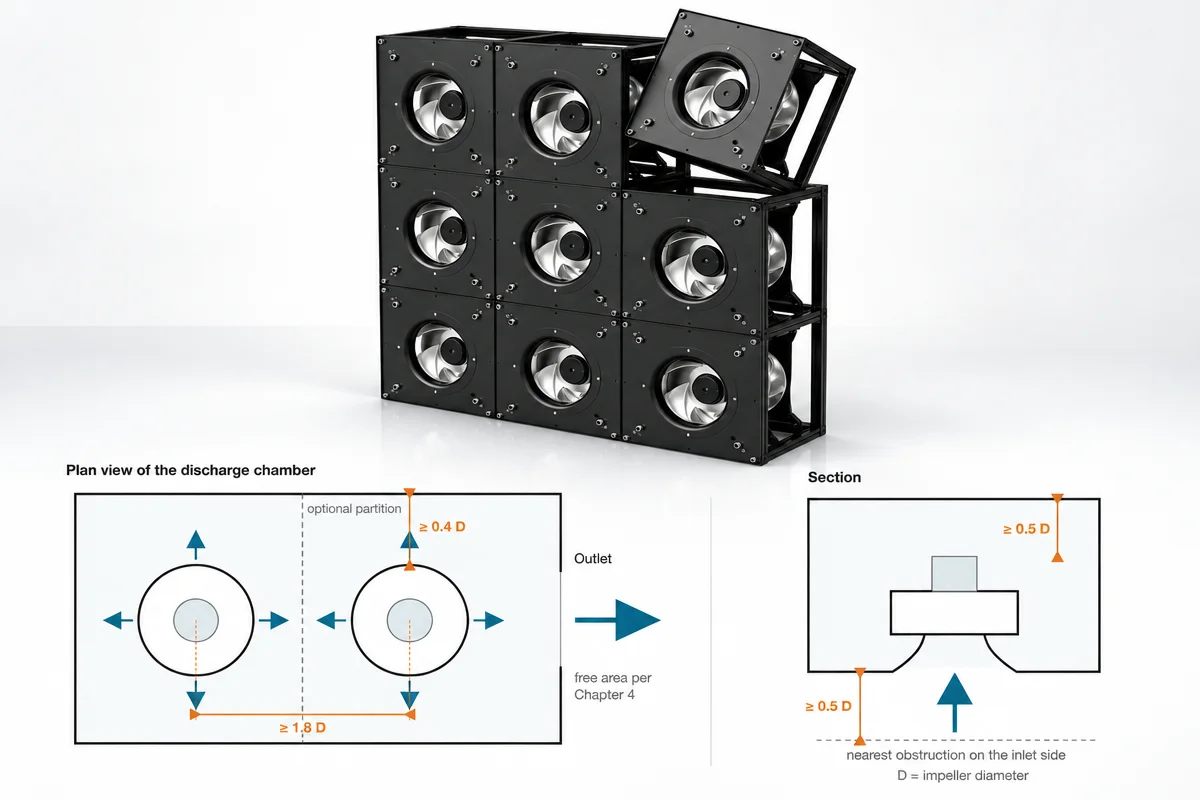
- EC part-load efficiency: EC upgrades available across centrifugal and plenum lines; their retrofit literature emphasizes fan-array redundancy, which matters for critical facilities.
- Certification/delivery: North American manufacturing base; AMCA-related ratings — request the actual test reports per model.
- Best fit: industrial process ventilation and fan-wall/fan-array retrofits where engineering support during replacement is part of the purchase.
Aerovent
Positioning: Industrial fans and ventilators — process, dust collection, and heavy-duty applications.
- OEM customization: Typically follows an engineered-to-order approach, with fan configurations developed around specific operating conditions and project requirements.
- EC part-load efficiency: EC availability varies by line; heavy industrial duty often still runs AC at constant speed, where the EC case must be made on measured hours × load rate, not catalog efficiency.
- Certification/delivery: North American footprint; AMCA ratings — request underlying test data.
- Best fit: Industrial process and dust-collection duty where mechanical robustness dominates the decision.
New York Blower

Positioning: Industrial OEM fans and blowers with a long North American installed base.
- OEM customization: similar engineered-to-order profile to Aerovent; strong on OEM-specific configurations for process equipment builders.
- EC part-load efficiency: EC options on selected lines; evaluate part-load economics case by case.
- Replacement risk: legacy installed stock creates steady cross-model substitution demand; documentation quality of the original installation determines verification speed.
- Certification/delivery: North American certification and service; confirm lead times for engineered orders.
- Best fit: industrial OEM equipment builders needing US-based supply.
Orion Fans
Positioning: Compact AC/DC/EC fans and fan trays for electronics, telecom, and enclosures.
- OEM customization: strong at the small end — connector, harness, and packaging variants are their home turf; aerodynamic customization is limited by platform size.
- EC part-load efficiency: EC lines available for electronics cooling; duty points here are usually high-static, low-flow, where part-load cube-law savings are smaller than in AHU duty.
- Certification/delivery: recognized electronics-industry certifications; fast-moving catalog.
- Best fit: electronics, telecom cabinets, and enclosure OEMs — a different sourcing universe from AHU fans, listed here because many “top 10” lists conflate the two.
LONGWELL

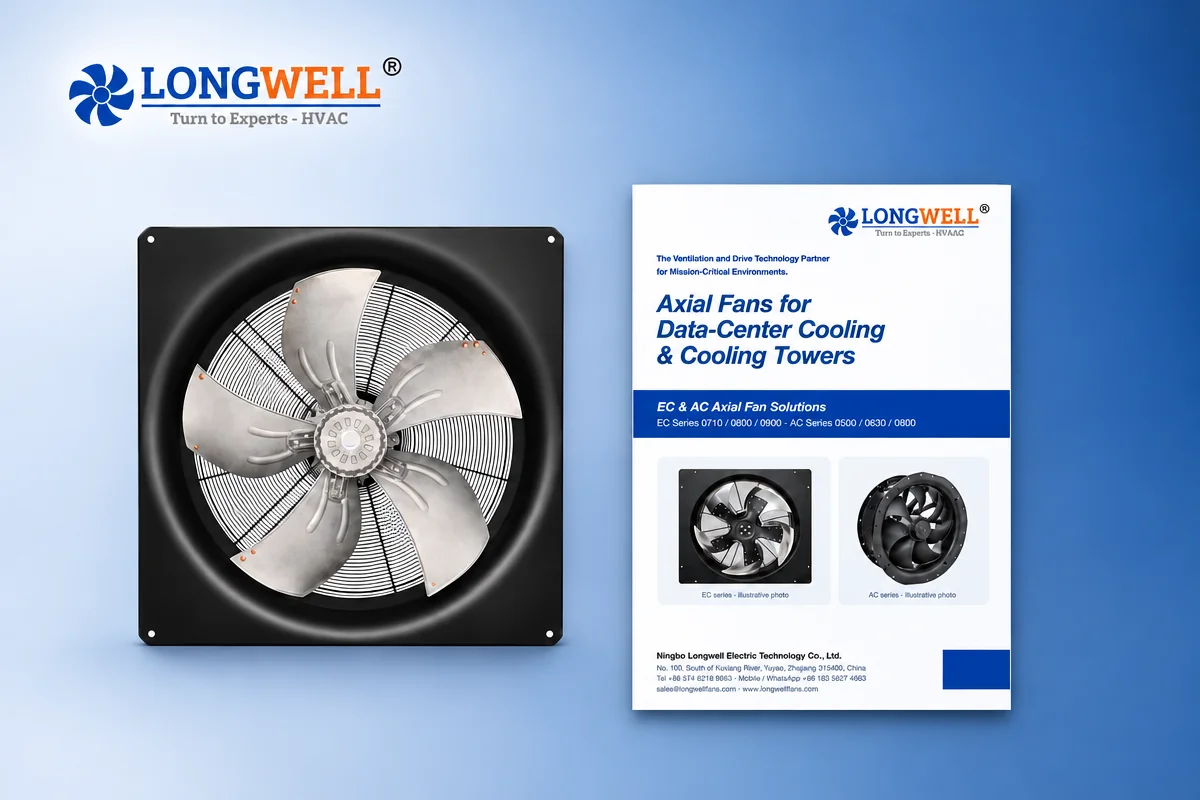
Positioning: EC fan solution provider for industrial and commercial ventilation, exporting to 30+ countries; the entry in this list evaluated primarily on replacement-path engineering rather than brand age.
- OEM customization: EC centrifugal, axial, and cross-flow series with OEM-level variants — control interfaces (0–10V / PWM / Modbus), flanges, harnesses, and labeling. Flagship LWBE3G EC fan: 73–82% static pressure efficiency, 4–6 dB(A) noise reduction. Series coverage: LWBE backward-curved centrifugal, LWAE3G EC axial, LWCD cross-flow, LWAA AC axial as the retrofit baseline.
- EC part-load efficiency: the value proposition is EC performance at OEM-viable cost; verify part-load curves per model at your duty point, as with every other entry.
- Replacement risk control — the differentiator: documented, model-level cross-reference mappings for ebm-papst K3G and R3G series, Ziehl-Abegg ZAbluefin and ZAvblue, Nicotra ADH/DD, Rosenberg DRAE500 and others, each requiring the three-step verification (curve → signal → dimensions).
- Certification/delivery: ETL/UL-equivalent documentation for North America, CE for European markets, written delivery terms for export volume.
- Best fit: OEMs and retrofit projects seeking a second source to ebm-papst, Ziehl-Abegg, or Nicotra hardware with engineering-neutral, model-by-model verification — not a claim of superiority over any listed manufacturer.
- Start from data: shortlist and size candidates with the fan selector tool before any RFQ.
OEM Customization: What Fan Manufacturers Can Actually Customize?
OEM capability is an important consideration when sourcing HVAC fans. OEM buyers often ask for customization without knowing which changes are routine and which trigger re-testing or re-tooling. Here is the practical boundary.
Customizable (usually routine):
- Impeller diameter, blade type, and basic electrical parameters
- EC motor power rating within the series range
- Control interface: 0–10V, PWM, or Modbus
- Mounting flanges and brackets
- Nameplates, labels, and packaging
Restricted (cost or lead-time consequences):
- Certified electrical architecture — changes may require re-testing and re-certification
- Impeller blade profiles tied to existing molds — a new profile means new tooling
- Safety-related firmware parameters — these are fixed by certification and compliance requirements and are not open to modification
- New operating voltage or power range — may require additional electrical and thermal testing
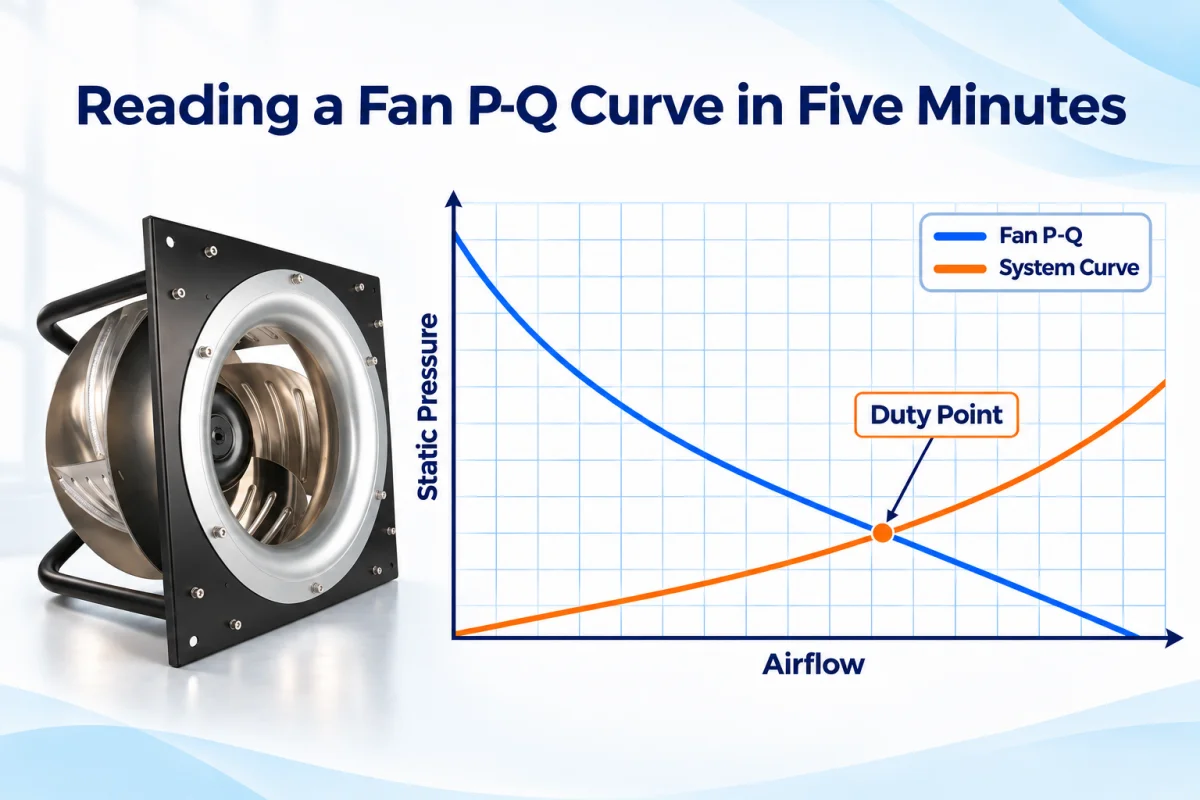
Correct RFQ sequence: duty point and installation constraints first, appearance and labels last. Before you write the RFQ, answer five questions:
- Actual operating point (CFM and static pressure)
- System resistance curve or duct static pressure estimate
- Control signal from your existing controller, and feedback requirements
- Installation envelope: flange type, bolt pattern, airflow direction, clearance
- Certification requirements per target market, in writing
EC Fans vs AC Fans in HVAC Equipment
Three efficiency concepts get confused constantly:
- Motor peak efficiency — a single number on the datasheet
- Fan aerodynamic efficiency — how well the impeller converts shaft power to air power
- System part-load efficiency — how the whole assembly performs at the duty your equipment actually runs at
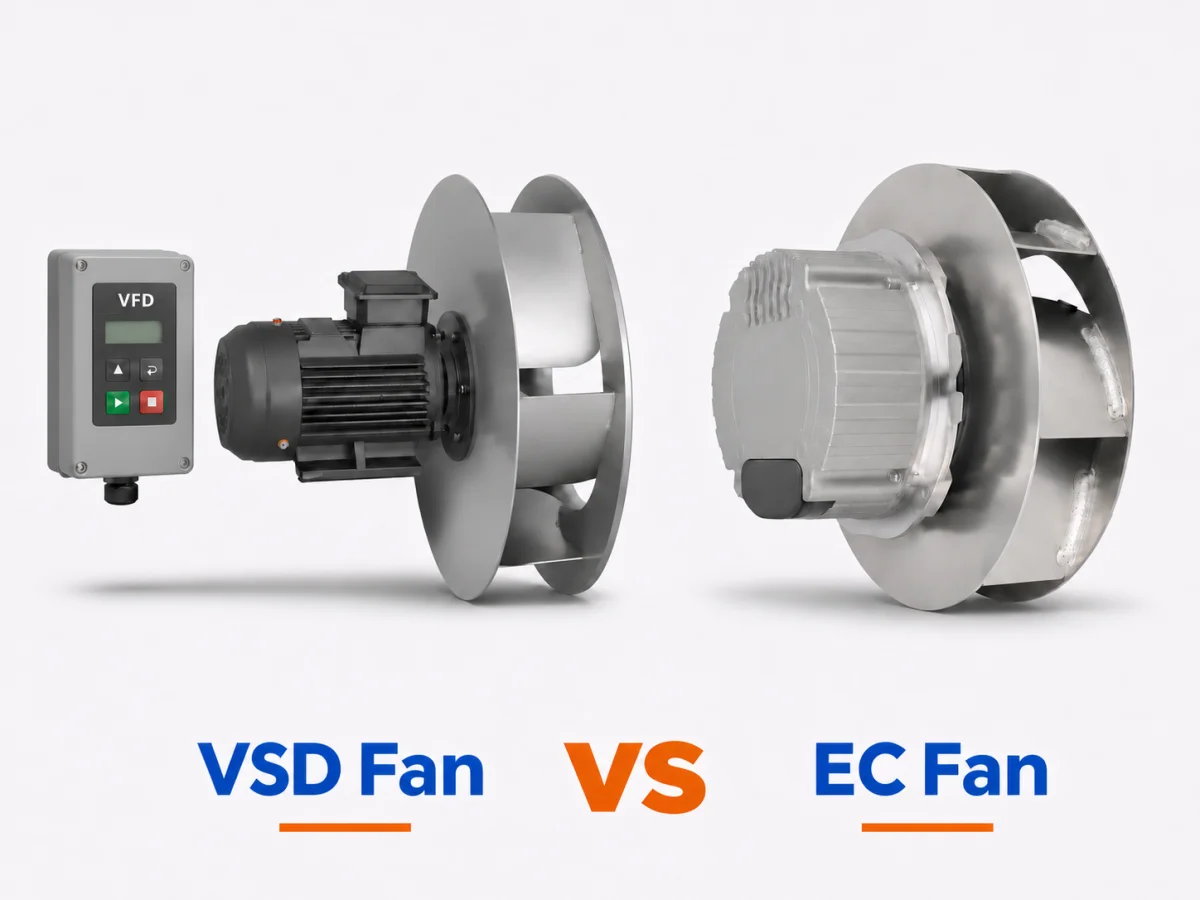
The savings come mainly from the third one. Most HVAC equipment operates at 60–80% of design airflow for most of the year. By the fan affinity laws, power drops roughly with the cube of speed — so an EC fan that modulates down to match real load saves far more energy than the nameplate efficiency difference suggests. This is also why the distinction between motor types matters: LONGWELL’s comparison of EC vs DC vs AC motor efficiency and cost covers the motor-level differences. That is the difference that matters for your TCO.
For engineering balance, AC fans still make sense in some cases that require constant-speed full load operation like refrigeration and condensers, traditional AHUs, and some industrial ventilation applications.
How to Shortlist and Validate a Fan Supplier: A Practical Checklist
- RFQ must include: Duty point data, system resistance estimate, control signal and feedback, installation dimensions, certification requirements, and target market.
- Key validation questions: Can you provide certification documents matching this exact model number? What were the test conditions behind your performance data? Do you have comparable replacement cases? Warranty terms, in writing?
FAQs
Can I replace an ebm-papst or Ziehl-Abegg fan with a different brand without downtime?
Yes. But you need to check crucial compatibility parameters and communicate carefully with engineers from other manufacturers. Model-level cross-reference guides, such as the ebm-papst K3G710 alternative guide, document the mapping so you start from data instead of guesswork.
How much energy will I actually save by switching from AC fans to EC fans?
It depends on annual running hours and real load rate. Most HVAC equipment runs at 60–80% of design airflow most of the year, and by the fan affinity laws power drops roughly with the cube of speed. Estimate your case with LONGWELL’s EC vs AC energy savings ROI calculator, then confirm against measured duty points.
Does LONGWELL offer OEM customization, and where are the limits?
Yes. LONGWELL offers OEM customization and you can contact us directly for more OEM information.