Key Takeaways
- A VSD fan is a fan plus a separate variable speed control drive; an EC fan is a fan whose drive is built into the motor.
- Control integration is fundamentally different. VSD fans require panel space, enclosure cooling, and screened cabling configured by the panel builder.
- EC fans generally hold the advantage at part load, which directly lowers annual electricity cost weighted by real operating hours.
- Neither technology wins everywhere. EC fans suit wide-range variable airflow, tight spaces, and remote control installation, while VSD fans fit sites already running one drive.
Many commercial and industrial facilities are modernizing aging HVAC systems. Fan upgrades are becoming an important part of efforts to reduce operating costs and improve airflow control. For engineers and facility managers, a retrofit also presents an opportunity to reevaluate the existing fans for the changing ventilation demands. A practical question usually raises in this stage: to keep the AC motor and add a variable speed controller or retrofit the fan to EC unit? Both methods offer variable speed options, but the decisions are totally different in many aspects. This blog explains a VSD fan and an EC fan of their working principle, compares their installation, controls, efficiency, and maintenance requirements, and explores which technology best suits your applications.
VSD Fan vs EC Fan: How do They Work?
What is a VSD Fan?
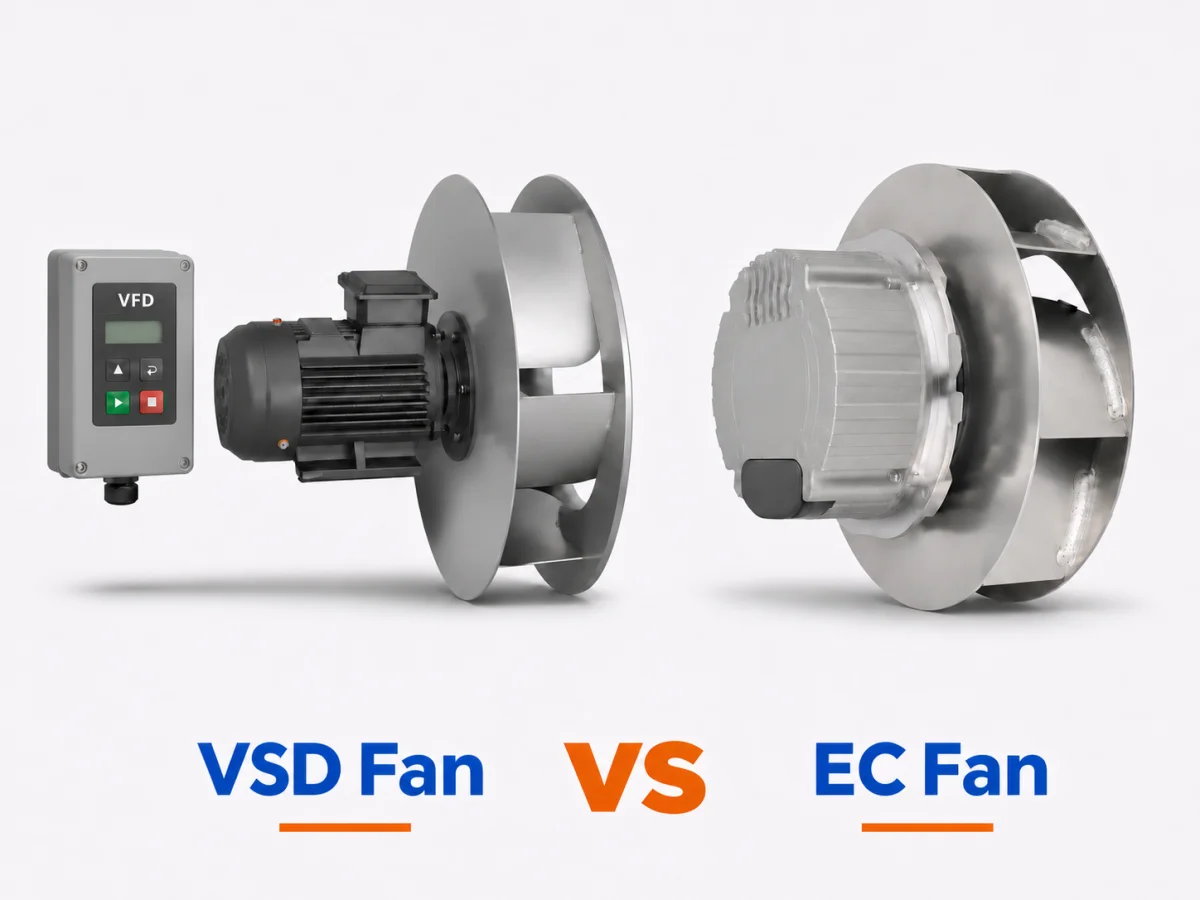
A VSD fan is an AC fan whose speed is set by a separate variable speed drive, also called a VFD fan. The fan has an AC induction motor coupled to the impeller. The drive is a separate product, usually mounted in a panel or on a wall. The drive connects to the motor by a screened three-core cable. Inside the variable speed drive, the incoming AC supply is rectified to a DC link, smoothed by capacitors, and switched by an IGBT inverter into a pulse-width-modulated output. V/f control is suitable for applications with steady loads. Sensorless vector control is used when higher starting torque or more precise speed control is needed.
What is an EC Fan?
An EC fan is a fan with an electronically commutated motor. A brushless permanent-magnet synchronous motor whose commutation is performed by electronics built into the motor housing. The supply is rectified inside the terminal box of the motor and switched to the stator winding by an integrated inverter. Permanent magnets replace the rotor winding, so there is no magnetizing current and no rotor copper loss. Part-load efficiency of an EC fan stays high, with its speed control adapted to 0-10V, PWM, or a Modbus digital command. The key differences between a VSD fan and an EC fan are their packaging. An EC fan does not have a separate drive, drive enclosure, EMC filter, and screened motor cable. It only has supply and control wiring, which is a fraction of the VSD scope.
6 Main Differences of VSD Fan and EC Fan
1. Installation
A VSD is a separate cabinet item: it takes panel or floor space, and it brings the surrounding electrical scope with it, including filtering, screened cabling over distance, and thermal management of the enclosure. An EC fan carries its drive electronics on the fan itself: no panel footprint, no panel cooling, no long motor cable, and the electrical workload shrinks to a supply connection and a control signal. However, it is not automatically the smaller installation. While asking for a quotation from the fan supplier, remember to ask for the AC fan with a VSD’s price.
2. Control System
VSD and EC fans differ in how their motor controls are configured and integrated with the building management system (BMS). A VSD fan is typically programmed. Motor parameters, acceleration ramps, carrier frequency, and current limits are set on site, and the result is point-tested against the building management system. That is normally performed by the drive supplier’s engineer; they can adjust the VSD fan according to the test results.
Most of EC fans are set completed in their manufacturer before installed. The control type, such as 0-10V, PWM, and Modbus, is confirmed, speed limits and fault behavior are defined, and most functions are pre-configured.
3. System Efficiency
Before talking about fan efficiency, define the efficiency layer first. The efficiency has three layers. The first is the motor, the second is the drive, and the third is the system that includes filters, cable, and duct. The motor efficiency is the first layer. Partial-load behaviour matters more than rated efficiency, because fans rarely run at design duty. Belt drives and gearboxes add their own losses on the VSD route when they are part of the motor and drive. The EC motor removes them by direct drive. At the same time, a large VSD set running long hours at steady load can match or beat a small EC unit.
4. Operating Cost
The operating cost mostly refers to the electricity cost every year. It is calculated based on the input power (kW) of each working condition multiplied by the operating hours, and then multiplied by the electricity price. The costs of a fan over a year can be totally different in these two kinds of fans even though they work under the same duty point. There is one cost that belongs to the VSD fan: additional cooling for VSD equipment.
Maintenance cost is another component of operating cost. The usual claim is that EC fans are simpler to maintain daily due to their integrated design. However, an EC failure is usually met by replacing the complete fan. If an external VSD fails, it can often be replaced separately from the motor.
5. Storage
Electronic assemblies degrade while unpowered, and the two packages differ in what has to be kept. A VSD package stores more item types, because the drive, filters, and fuses are separate stocked goods. The panel itself needs protection against condensation. An EC package stores fewer items, but the electronics move with the fan, so the storage conditions apply to the fan as a whole. The fan must be kept dry, dust-free, and free of condensation.
6. Retrofit Difficulty
Both VSD fans and EC fans can be retrofitted. Adding a drive to an existing AC motor is a small mechanical scope and a moderate electrical one covering panel space. Replacing the existing VSD fan with an EC unit is equally convenient. The duty point and mounting stay the same; a control interface that the existing controller can drive is all the controls side needs. For remote fans and fan walls, the EC fans add genuine layout freedom, because drive and motor share one housing.
In practice, the two paths are often taken side by side across a plant, with drive retrofits where motors are healthy and EC replacements where units are ageing, or space is tight.
VSDs vs EC Fans Comparison Table
| Dimension | VSD fan package | EC fan package |
| Where speed control sits? | Separate drive in a panel or floor cabinet | Integrated in the motor housing |
| Installation scope | Panel space, enclosure cooling, filtering and screened cabling, procured and installed by the panel builder | Supply connection and a control signal, with the electronics travelling on the fan |
| Annual operating cost | Energy plus panel cooling that runs whenever the drives run | Energy weighted by real operating hours and load profile |
| Maintenance and spares | Module swap plus re-commissioning, spares stocked per power band | Board or complete unit exchange, spares specific to the manufacturer |
| Storage | More stocked item types, and drive capacitors need conditioning after long unpowered periods | Fewer items, and the storage conditions apply to the fan itself |
| Retrofit | Add a drive to an existing AC motor, a small mechanical and moderate electrical scope | Replace the fan, a mechanical and controls job |
Which Technology Suits Your Application?
EC Fans are Better When
- Airflow varies over a wide range for long hours, as in variable air volume systems, where part-load efficiency carries most of the annual kWh.
- Space is the constraint, as in packaged units, terminal equipment and plant rooms where a drive panel would take usable floor area.
- Fans are remote or arranged in a wall, so the VSD route would need a long motor cable and the filtering that goes with it.
- Per-fan control and monitoring is wanted, with each fan reporting its own speed, power, and fault.
- A retrofit cannot accommodate a drive panel, or the existing panel has no spare capacity.
VSD Fans are Better When
- The site already runs one drive family, adds to it, and stocks its modules, so a new VSD fan fits the maintenance system.
- Motor size is beyond the EC range. Check airflow and pressure coverage before assuming an EC unit is available.
- Existing AC motors are in good condition, and adding a drive is a smaller scope with a shorter shutdown than replacing the fan.
- The environment at the fan is hostile, as in high-temperature ducts and corrosive or washdown areas, where keeping electronics in a clean plant room is worth the cable and filtering cost.
- One large drive serves several fans, so enclosure and cooling cost is shared across the group.
Retrofit Using LONGWELL EC Fans
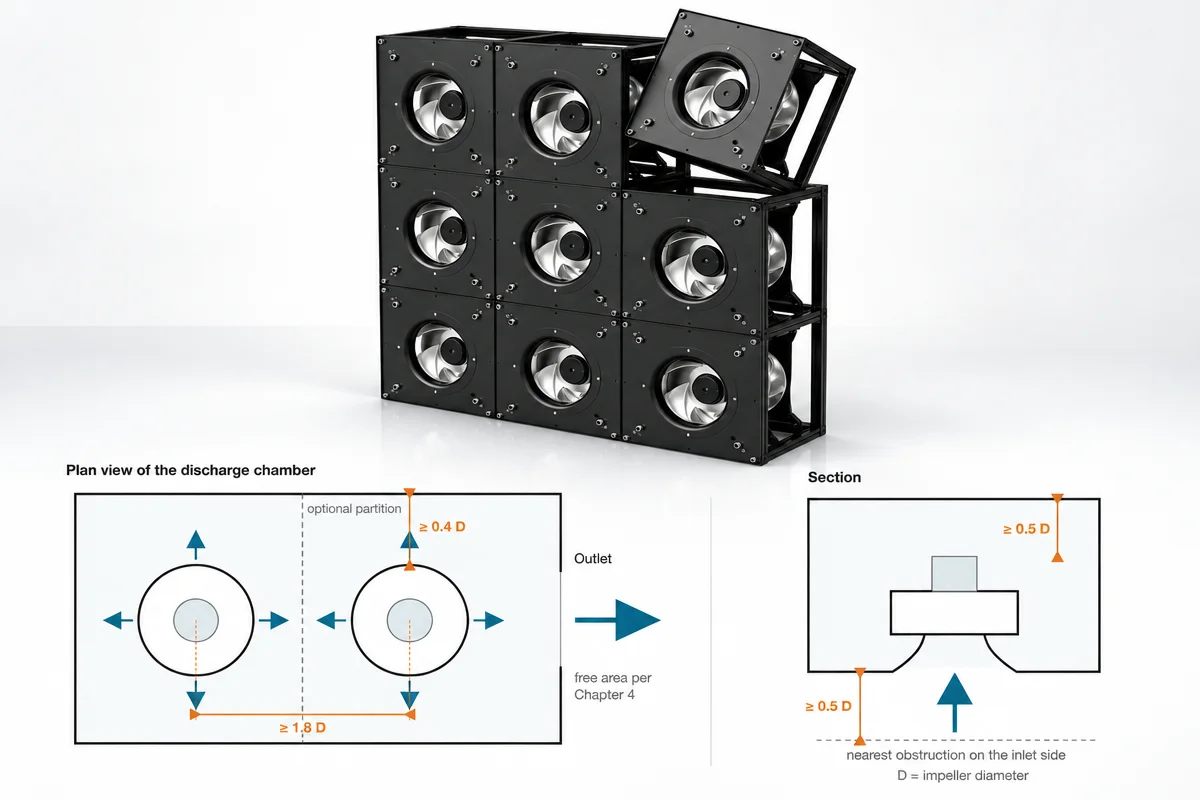
LONGWELL’s retrofit project is devoted to changing a single aging belt-drive AC fan to a parallel array of EC plug fans, also called the EC fan grid. Typical retrofits cut ventilation energy by around 30 percent, with payback in two to three years. An office-building AHU of about 75,000 cubic metres per hour on three 11 kW plug fans saved around 35 percent with payback of about 2.5 years, and a data-centre array reported similar savings, payback of about 2.3 years and a fault rate about 25 percent lower. Beyond the electricity bill, the array carries N+1 redundancy, so the remaining fans speed up when one stops, and service needs no shutdown. Lower noise comes from balancing many small impellers, and the identical modules make later expansion simple.
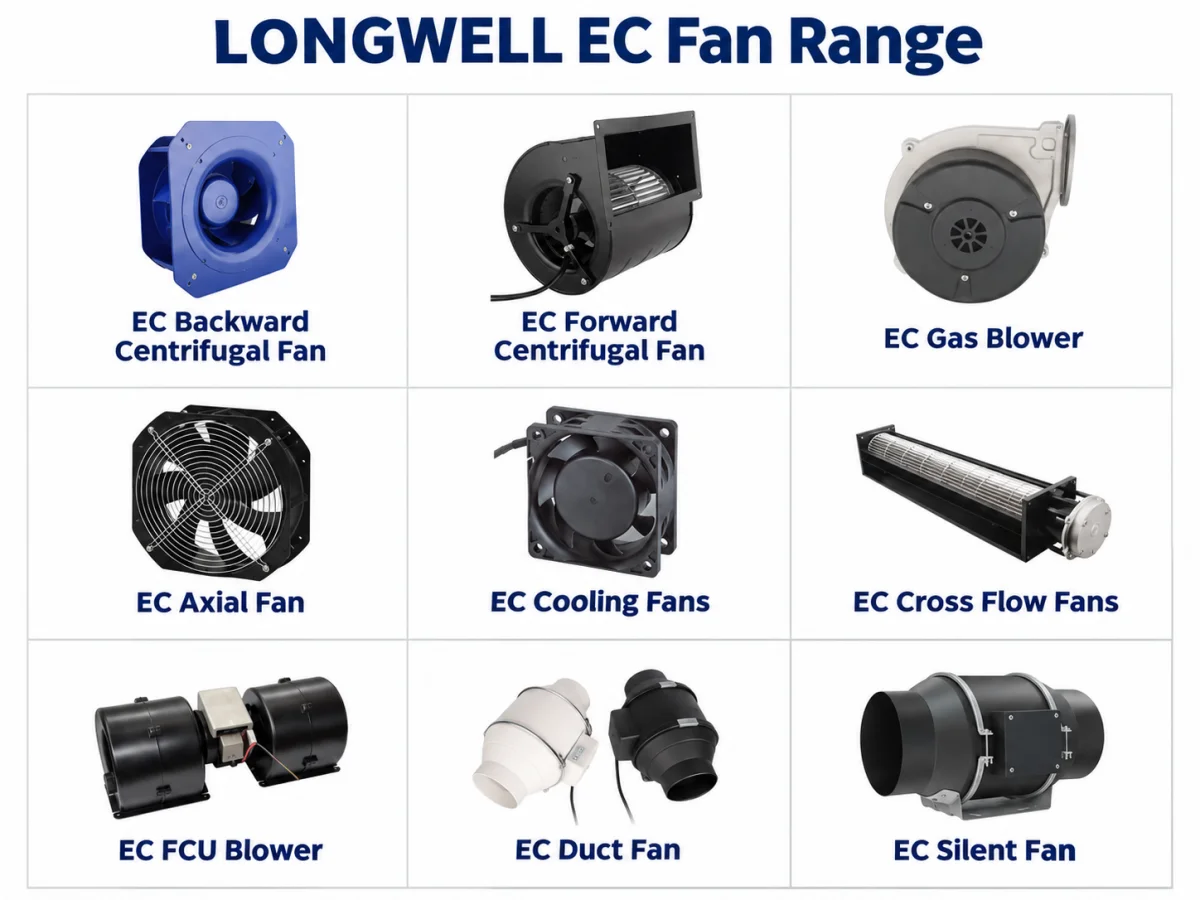
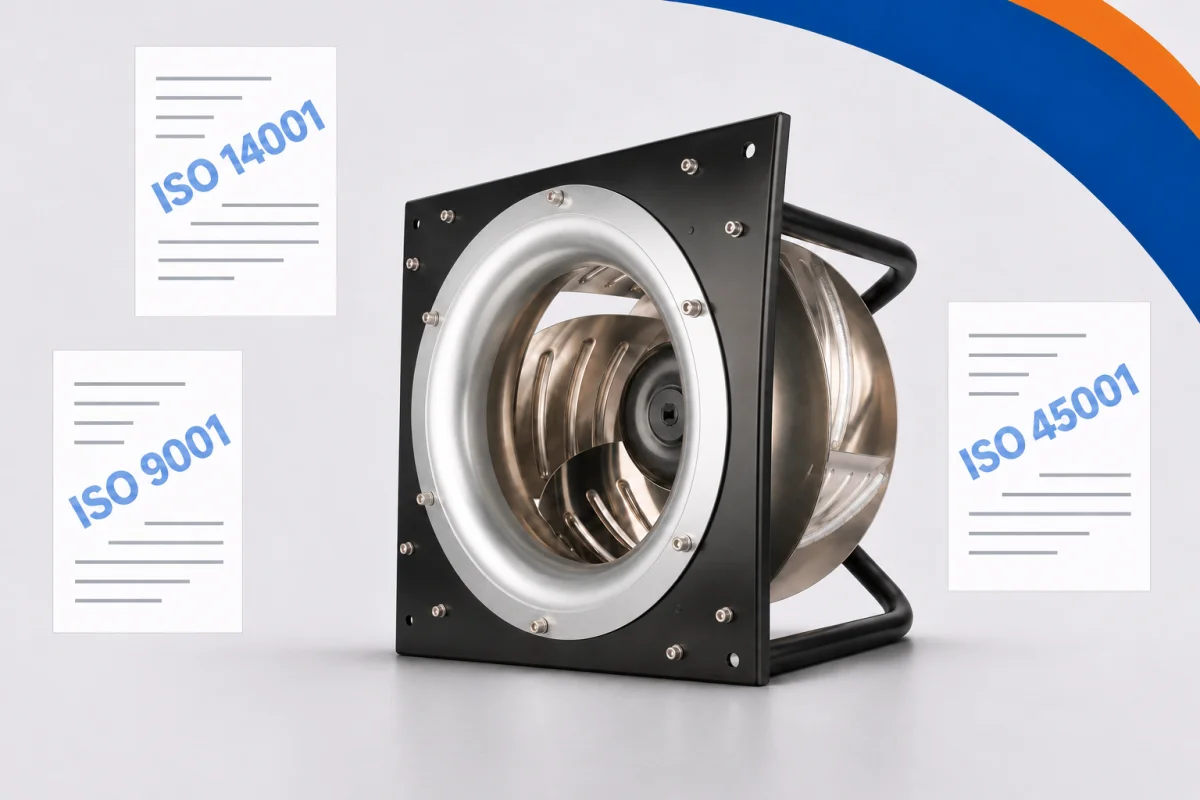
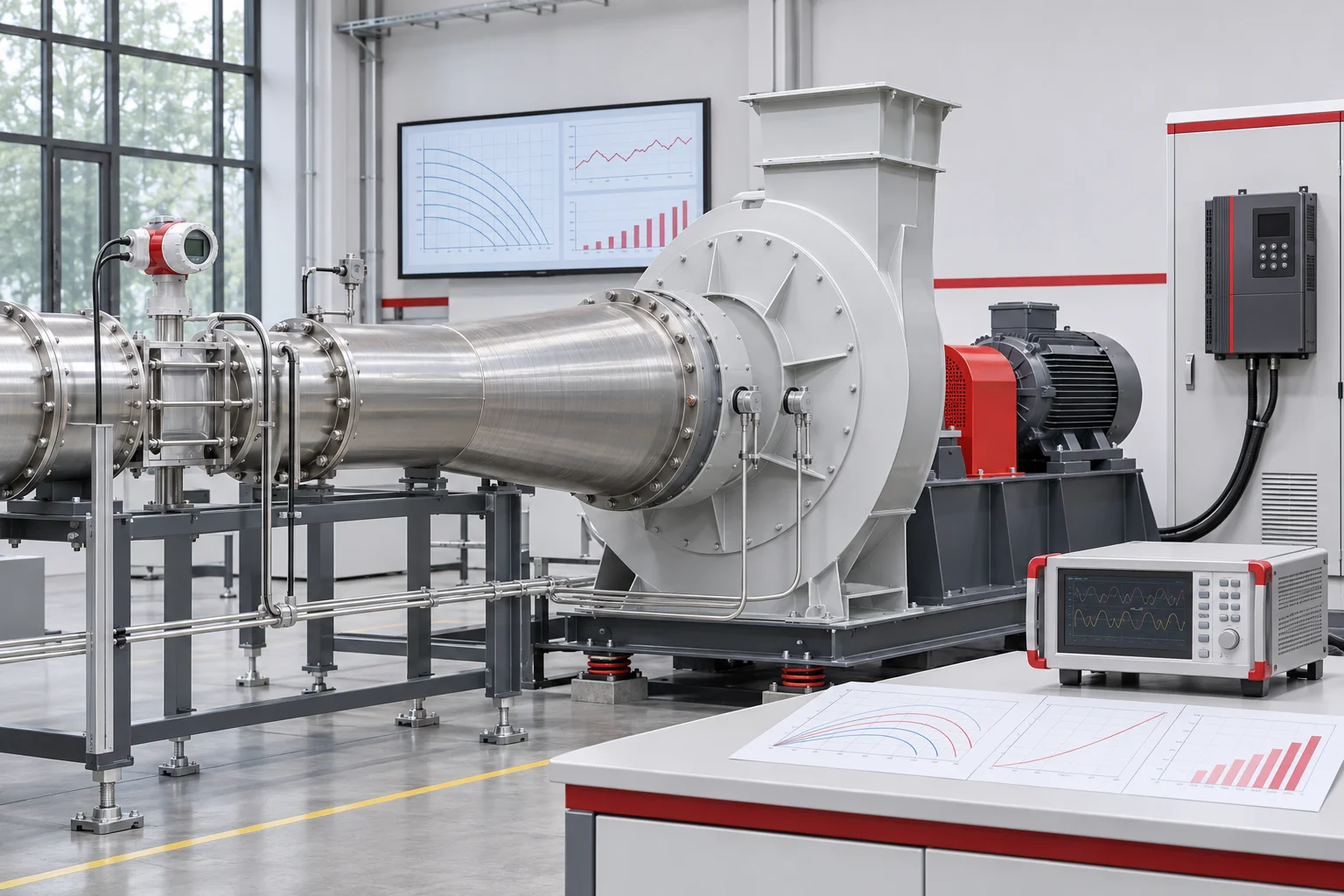
LONGWELL serves more than 500 clients in over 30 countries, with the LWBE3G plug-fan and LWAE3G axial platforms engineered as form-fit replacements for imported units, tested to AMCA 210 and certified to ISO 9001, 14001 and 45001. Samples from stocked sizes are provided in 1-3 days, and bulk orders in 15 to 30 days.
FAQ
Does a direct-drive fan need a VFD?
If the motor is an EC motor, there is no need to install a VFD. If it is a conventional AC motor running at variable speed, yes.
Can I replace a VFD setup with an EC motor?
Yes. Match the duty point and then consider the mounting. Provide a control signal the EC fan accepts, typically 0 to 10 V, PWM, or a bus telegram. The existing VFD output cannot be reused.
What are the disadvantages of EC motors?
EC fans combine electronics in the fan’s environment. Heat or moisture might shorten board life. The initial cost of EC fans might be higher.
Is an EC motor a VFD?
No. A VFD is a separate power converter that can be applied to many motors. An EC motor is a motor with a dedicated inverter.
Choose the right ec axial fan
Longwell manufactures 152 ec axial fans in-house. Send airflow, static pressure and voltage — an engineer replies with a matching model, performance curve and price within one working day.