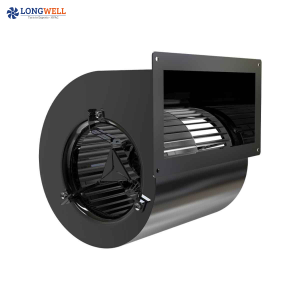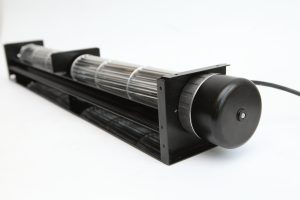
A North American HVAC equipment customer uses LONGWELL cross-flow fans in trench convectors and fan-assisted trench heating units. Both the LWCD-30 and LWCD-40 series are in use across the customer’s product line.
The customer’s priorities came from earlier experience with this type of equipment: noise near occupied spaces, control that works with the heating unit, and service-life concerns that can add maintenance work. The application provides a useful reference for equipment manufacturers assessing a cross-flow fan as part of a complete trench convector.
A factory view of the trench convector
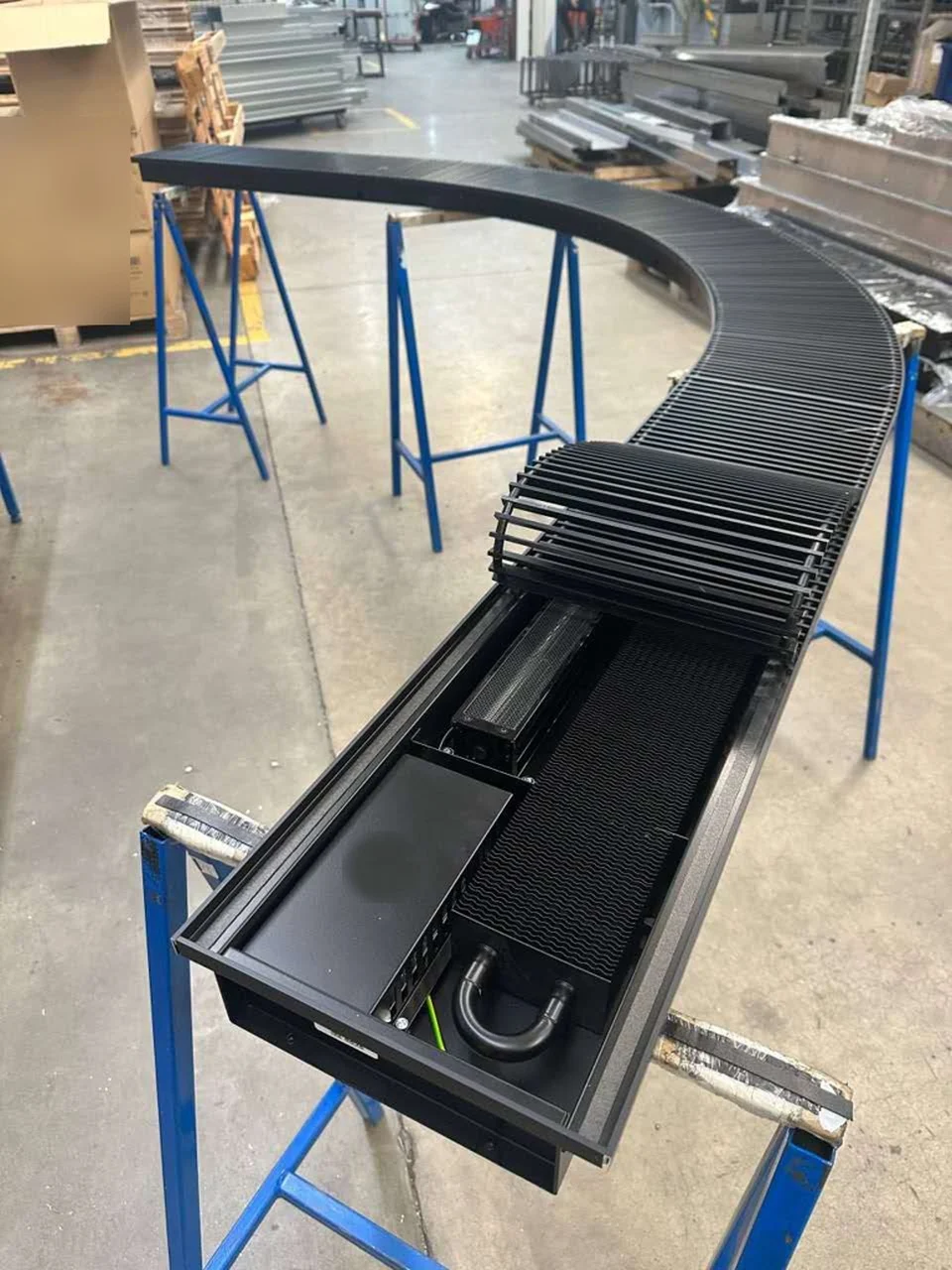
The photograph shows a long-grille trench unit, a finned coil and the fan or cover sections. It gives a view of the product arrangement that a standalone fan photograph cannot provide.
For a similar development, the fan position should be reviewed alongside the coil, grille, mounting points and available space. A prototype assessment can then consider how the selected fan works within that assembly and under the unit’s intended control arrangement. Those checks belong to the complete heating product.
Project models and LWCD-40 selection options
The project uses both the 30 and 40 cross-flow fan series. Known LWCD-30 part numbers in the application include:
- LWCD-30190MN-07
- LWCD-30350MN-07
- LWCD-30718MN-06
- LWCD-301082MN-01
The LWCD-40 series is also in service in the product line. For further selection discussions, LWCD-40190MN-07 and LWCD-40350MN-07 are representative options in the current catalogue. These are catalogue options only; the case materials do not identify the customer’s installed LWCD-40 part numbers.
A series name helps define the starting range. The exact part number still needs to correspond to the heating unit’s specification. Extending a product line to another unit size calls for a fresh check of the mounting, electrical supply and control requirements.
What the customer reported about actual use
According to the project feedback, the earlier noise, control and service-life issues have been addressed, and the customer is very satisfied with the fans in use. This is qualitative feedback from an operating application.
The case materials do not include before-and-after acoustic measurements, control-accuracy results or service-life test hours. A new heating-unit design needs evaluation under its own operating conditions.
For another equipment manufacturer, these three priorities can become practical items in a prototype evaluation. Define the operating conditions and acceptance criteria for the complete unit, then record the results. That provides a basis for comparing configurations within the manufacturer’s own product range.
Prepare the details needed for cross-flow fan selection
A useful enquiry begins with the trench convector application and the specification of each unit to be equipped. Photographs help, especially when they identify the coil, grille, proposed fan position and maintenance access.
| Information to provide | What to identify |
|---|---|
| Assembly view and available space | Fan layout, fixing points, clearances and service access |
| Unit specification and airflow requirements | The needs of each product size and the relevant coil and grille arrangement |
| Electrical supply and controls | Actual supply conditions, controller interface and intended operating modes |
| Evaluation priorities | Noise assessment conditions, control interaction and expected use conditions |
Putting these details together helps move from a series-level discussion to a specific part number. It also establishes what the prototype needs to demonstrate. Experience from an existing product line is a useful reference, while the new assembly needs assessment against its own conditions.
For cross-flow fans for trench convectors or fan-assisted trench heating units, send LONGWELL an application photograph and your specification requirements to discuss the appropriate series and models.
Choose the right cross flow fan
Longwell manufactures 495 cross flow fans in-house. Send airflow, static pressure and voltage — an engineer replies with a matching model, performance curve and price within one working day.