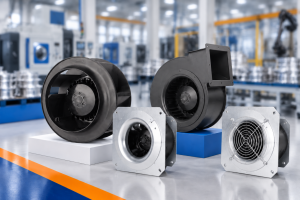
Australia and New Zealand have moved Energy Rating product registration to RECAP. For fan suppliers and HVAC OEMs using three-phase motors, the immediate task is to verify scope, migration status and model-level evidence rather than assume that a new efficiency threshold applies to every product.
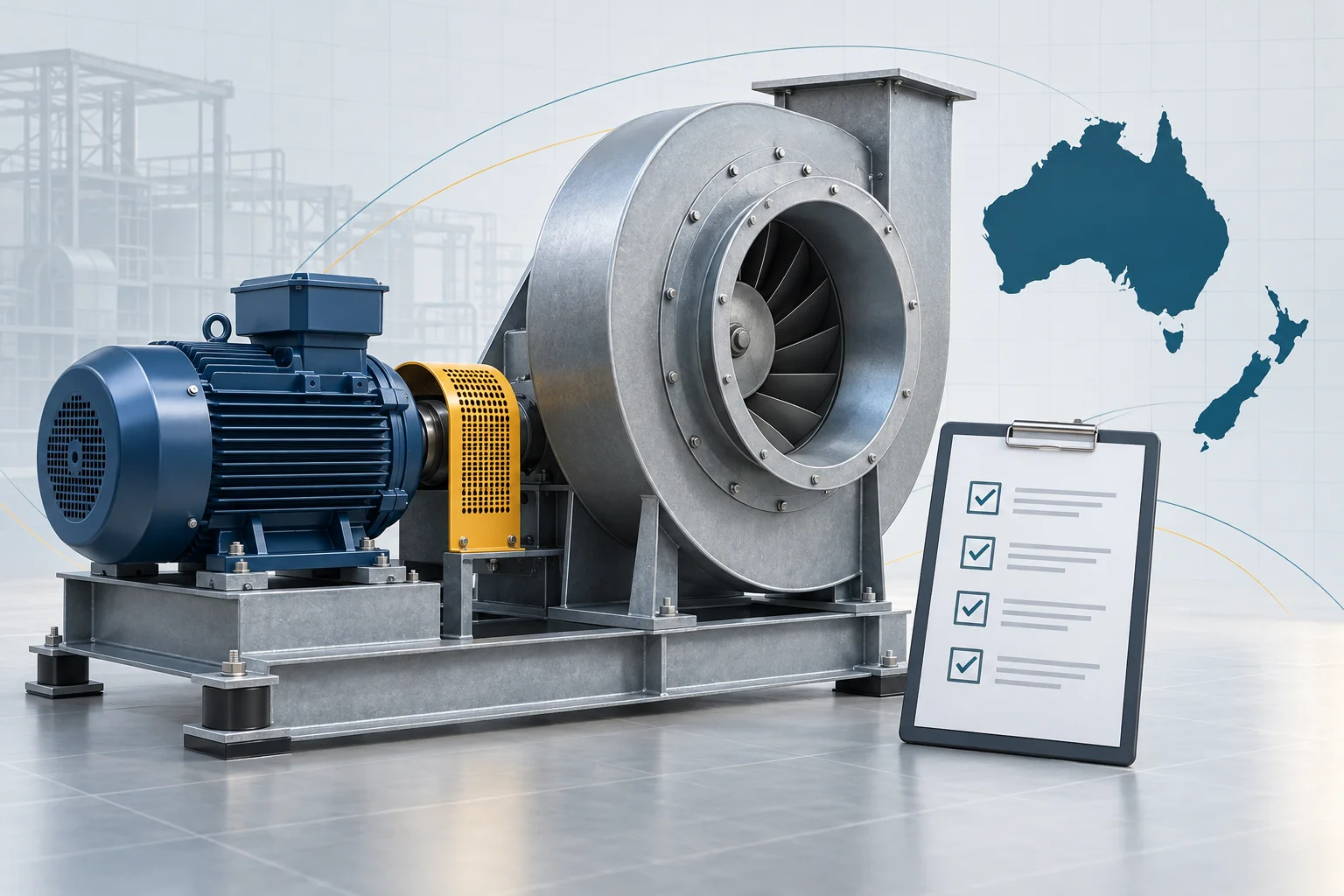
Australia and New Zealand Energy Rating RECAP migration and model evidence review Updated 8 October 2026
What changed
Energy Rating announced on 7 October 2026 that RECAP had gone live on 6 October. All new product registration applications must now be made in RECAP. Accounts, company information, submitted applications and applications under assessment are being migrated. Unsubmitted drafts from the previous system are not migrated and must be recreated.
This is an administrative platform change. It does not by itself place every fan or motor into a new mandatory efficiency class. The responsible supplier must still identify the applicable GEMS product determination, establish who holds the registration and connect each claimed model to acceptable test evidence.
Who should act now
An immediate migration review is sensible for:
- Australian or New Zealand responsible suppliers, importers and brand owners selling GEMS-regulated products.
- Businesses with submitted, pending or planned registrations for three-phase cage induction motors.
- Fan, air-handling, cooling and HVAC OEMs that embed a regulated motor in equipment.
- Teams that left unsubmitted drafts, incomplete evidence packs or unresolved model families in the former system.
A motorised fan does not receive one automatic regulatory answer. Scope depends on the current product determination, ratings, construction, intended use, exclusions and the legal role of the local supplier. RCM, electrical safety, EMC and GEMS energy-efficiency registration are related market-access workstreams, but they are not interchangeable.
Eight-step RECAP migration check
- Verify the account and company. Confirm users, entity details, contact email and application permissions. Preserve a dated record of the migrated company profile.
- Reconcile submitted work. Compare RECAP with the old project list. Check application numbers, model coverage and status for submitted, under-assessment and registered items.
- Recreate unsubmitted drafts. Energy Rating states that drafts were not migrated. Save the old evidence where available and rebuild the application without dropping attachments or model variants.
- Identify the responsible supplier. Align the Australian or New Zealand applicant role with contracts and product records. Do not assume that the overseas manufacturer is the local registration holder.
- Lock the model identity. Make the product name, model code, rating plate, output, voltage, frequency, phase, pole count, duty and construction revision consistent.
- Bind the test evidence. The efficiency report should identify the applied model or an accepted family relationship. Retain the test method, laboratory, report revision and limits of coverage.
- Trace embedded motors. Record the motor model, supplier, bill-of-material revision and substitution rule. A fan performance curve does not replace motor-efficiency evidence.
- Archive the transaction. Keep the submission time, submitting user, attachment list, receipt, information requests and final decision so the registration can be audited later.
Evidence pack for a fan or motor project
|
Evidence group |
What to include |
Frequent failure |
|---|---|---|
|
Model identity |
Model-code logic, rating-plate image, specification and outline drawing |
Report model and production rating plate do not match |
|
Electrical rating |
Voltage, frequency, phase, poles, rated output, duty and ambient conditions |
“380 V” is supplied without frequency, phase or duty |
|
Motor efficiency |
Efficiency class and values, load points, test method and full report |
A catalogue claim is treated as recognised test evidence |
|
Fan performance |
Required airflow, static or total pressure, speed, input power and curve |
Fan or system efficiency is substituted for motor MEPS evidence |
|
Embedded traceability |
Motor supplier, BOM, revision, substitution rule and change notice |
A motor is changed without checking registration coverage |
|
Market access |
Responsible supplier, GEMS scope decision, RECAP record, RCM and safety file |
RCM or wiring compliance is treated as GEMS registration |
|
Change control |
Winding, material, dimensions, cooling method, rating plate and firmware changes |
Sample, registered unit and production unit differ |
Read the three-phase motor policy correctly
The 2026 Decision Regulatory Impact Statement for three-phase cage induction motors addresses relevant bare motors and motors incorporated into equipment. It records that energy ministers agreed to the recommendations on 8 May 2026 and that the detailed regulations are still being developed.
Suppliers can therefore prepare IEC test reports, efficiency data, rating plates and embedded-product traceability now. They should not present the recommendations as a new mandatory level that has already replaced the current product rules. Nor should conclusions for three-phase cage induction motors be automatically applied to single-phase, EC/BLDC, small-power or special-purpose motors.
Turn registration into procurement requirements
For a fan or HVAC equipment purchase, translate registration needs into verifiable purchase-order inputs:
- State whether the destination is Australia, New Zealand or both, plus the planned placing-on-market date.
- Supply the real duty point: airflow, pressure, ambient temperature, altitude and control method.
- Record the motor rating separately from the fan operating point.
- Require the supplier to identify the exact models and family logic covered by each report.
- Trigger a compliance review before changing a motor, winding, controller or rating.
- Keep the final GEMS scope and RECAP decision with the local responsible supplier or qualified compliance adviser.
LONGWELL’s Voltage, Frequency and Certification Checker can help structure basic market inputs. It is not a substitute for a product-determination assessment or a formal registration.
What LONGWELL can support
Once the destination, actual duty point and candidate configuration are defined, LONGWELL can prepare model-specific specifications, drawings, fan curves, wiring information and available motor or test evidence. We can also help reconcile the sample configuration with the planned production configuration.
Whether that file supports a GEMS registration depends on the applicable determination, applicant, accepted test evidence and final product configuration. LONGWELL does not use a product-family name as a registration conclusion and does not claim that an unverified model is registered in Australia or New Zealand. The local responsible supplier or its compliance professional should make the formal submission.
Frequently asked questions
Does every fan exported to Australia or New Zealand need a RECAP registration
No. RECAP is the platform for products managed under the Energy Rating framework. The need to register depends on the applicable determination, product ratings, intended use and exclusions. The words “fan” or “motorised” are not enough to decide scope.
Will an old draft appear automatically in RECAP
No. Energy Rating’s launch notice says unsubmitted drafts are not migrated and must be recreated. Submitted or under-assessment applications should be checked against the migrated record.
Does RCM replace GEMS registration
No. RCM, safety, EMC and GEMS obligations have different legal and technical boundaries. A project may need several of them, but one does not automatically replace another.
Can a fan curve prove that the motor meets MEPS
No. A fan curve supports the aerodynamic duty and input relationship. Motor MEPS requires model-level efficiency evidence under the applicable product rules and accepted method. The two evidence sets should be linked, not substituted.
What if the motor supplier changes
Stop treating the replacement as automatically equivalent. Reconcile the model, ratings, efficiency report, construction and registration coverage; update the BOM and change record; and have the responsible supplier decide whether the registration must be amended or replaced.
Send a project for evidence review
For a fan or motor evidence-pack review, provide the application, airflow and pressure, voltage, frequency, phase, ambient temperature, intended GEMS product determination, candidate motor model and existing registration or test evidence, plus the required standard and revision.
Contact LONGWELL’s engineering and sales team so we can first reconcile the duty point and model evidence, then identify which documents we can supply and which actions remain with the Australian or New Zealand responsible supplier.
Official sources and review date
- Energy Rating RECAP is live — sign in now, Energy Rating, published 7 October 2026.
- Decision Regulatory Impact Statement — Three Phase Cage Induction Motors 2026, Energy Rating.
- Electric motors industry publications, Energy Rating product information.
Reviewed 8 October 2026. Product determinations and RECAP status can change; re-check the official sources before submitting an application.