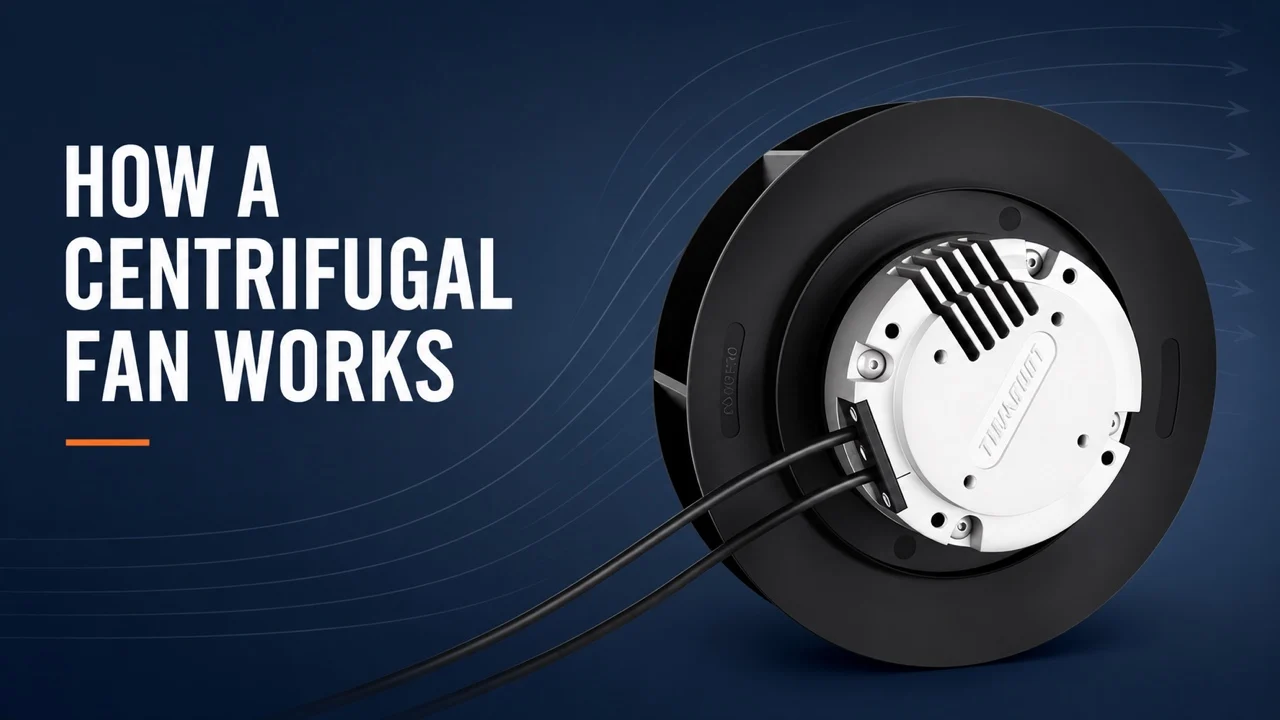
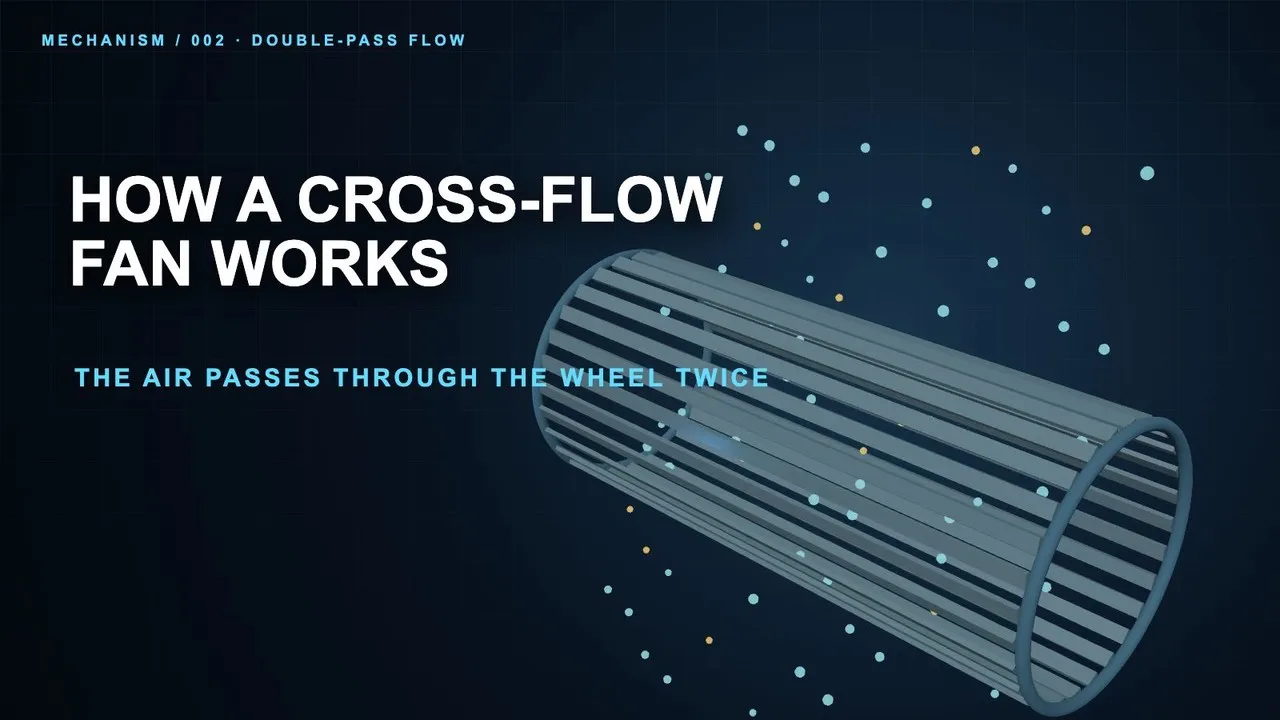
A centrifugal fan is easier to specify once you stop treating it as a box that “makes airflow.” It is a chain: air approaches the inlet, enters the eye of a rotating wheel, gains energy across the blades, leaves at the rim, and then meets a housing or plenum that directs the flow. Every part of that chain changes what a real system receives.
The video gives you the moving view. This article is the bench-side companion: what to look for in a teardown, which conclusions are safe, and what information turns the lesson into a useful fan inquiry.
Begin at the inlet, not at the outlet
Air normally enters a centrifugal wheel roughly parallel to its shaft. The central opening is the eye. From there, the rotating blades guide the air toward the larger radius at the wheel rim. The discharge direction is therefore different from the inlet direction, but “a 90-degree fan” is only a useful sketch, not a complete description of the three-dimensional flow.
Inlet condition matters before the air touches a blade. A blocked guard, an abrupt elbow, a poorly placed damper, or an uneven approach can change the wheel loading and the measured result. When comparing a catalog point with an installed fan, record the inlet arrangement instead of assuming that open-air and installed performance are interchangeable.
What the impeller actually adds
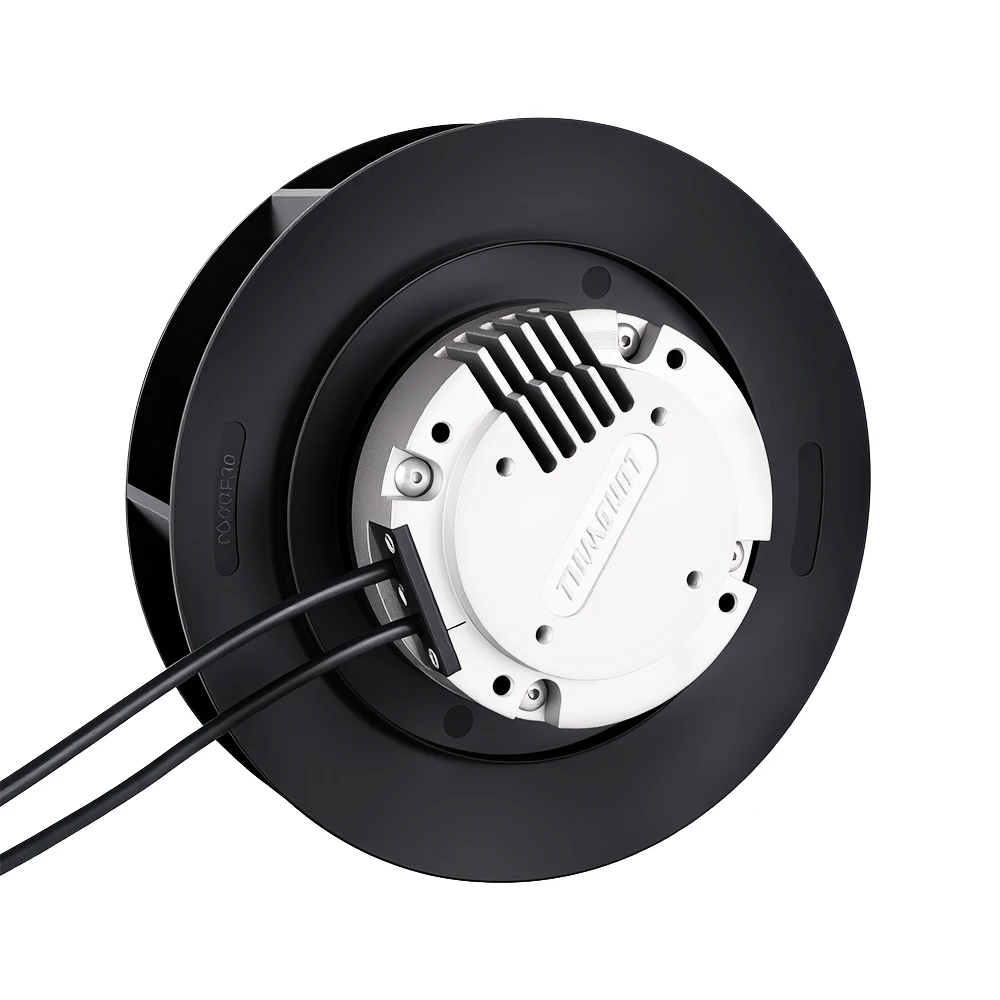
The motor supplies shaft power. The impeller transfers part of that power to the air, increasing its velocity and pressure potential. Blade angle, wheel diameter, width, clearance, speed, and inlet geometry all influence the transfer. A photograph can show the visible architecture; it cannot tell you a duty point, efficiency, sound level, or allowable speed.
That distinction is useful during a teardown. Look for rub marks, loose fasteners, damaged blades, contamination, cracks, and an incorrect rotation arrow. Do not energize an exposed assembly, touch a coasting wheel, or infer balance from a hand spin. Inspection narrows the next test; it does not replace guarded operation and controlled measurement.
A scroll and a plenum do different jobs
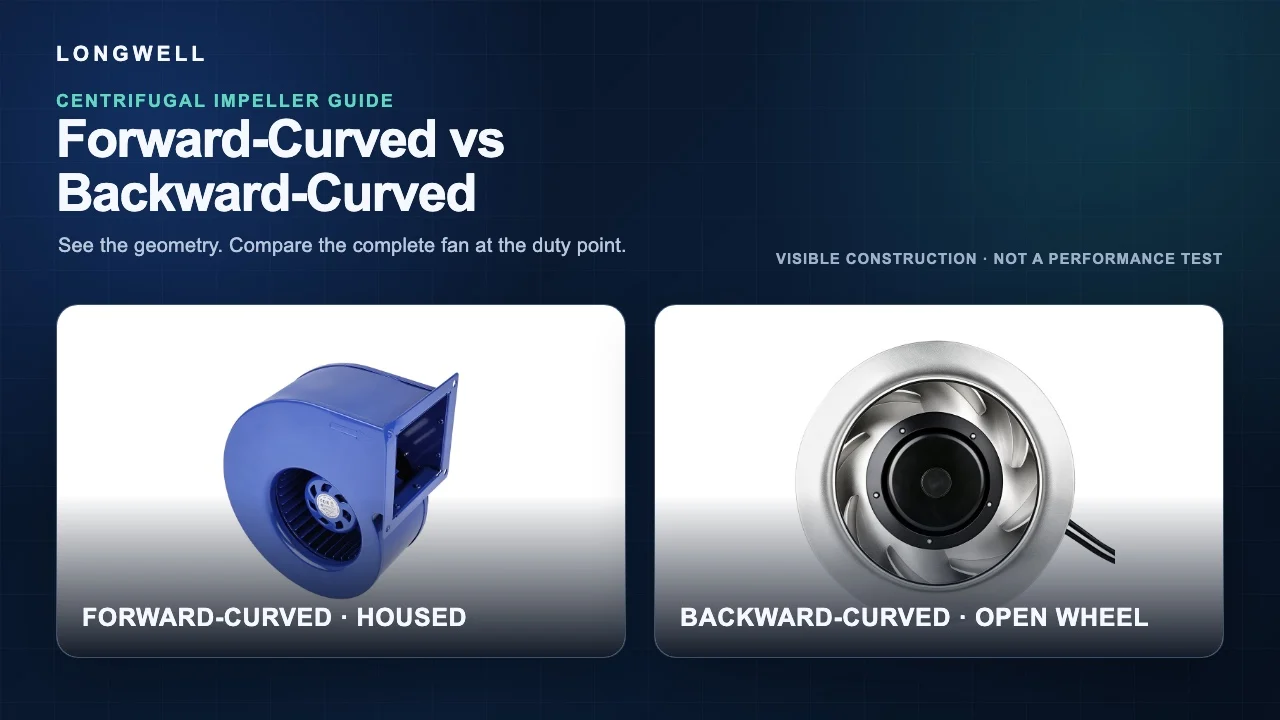
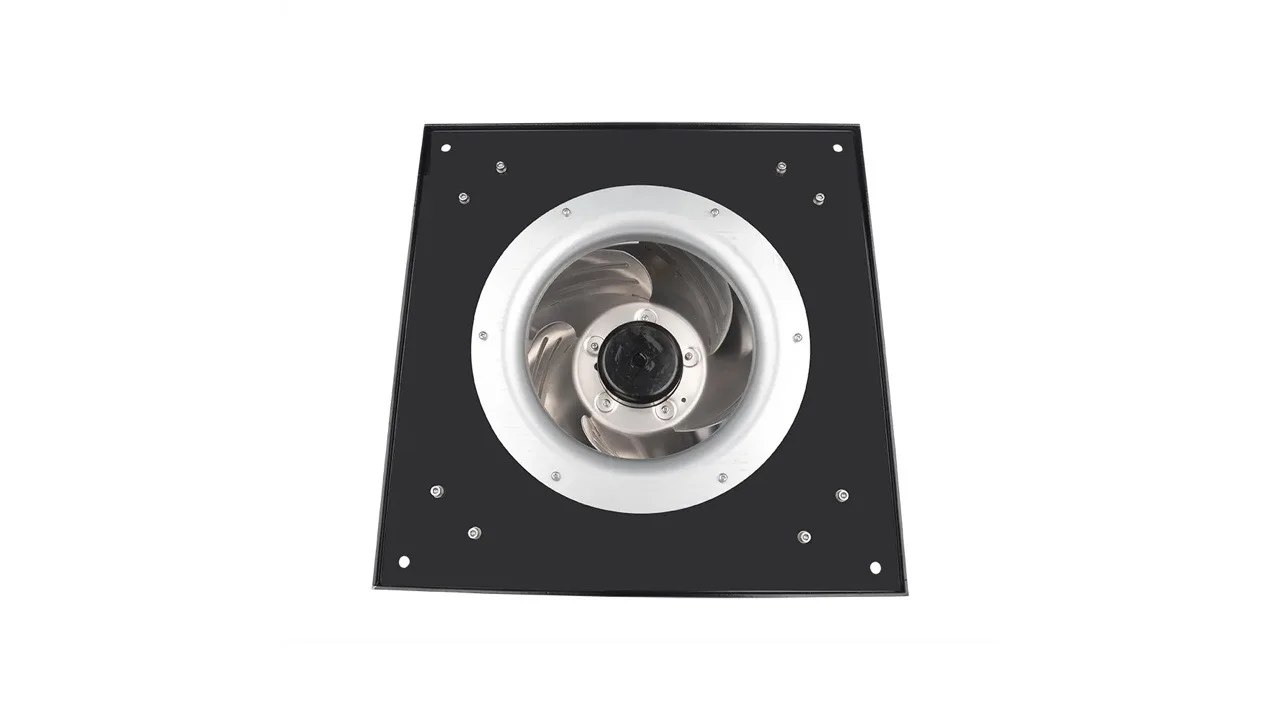
A housed centrifugal blower uses a scroll, also called a volute, to collect flow around the wheel and deliver it through a defined outlet. An unhoused backward-curved wheel can discharge into an equipment plenum instead. The air handler or cabinet then becomes part of the pressure-recovery and distribution problem.
This is why a bare wheel and a scroll-housed blower should not be compared by diameter alone. Mounting clearance, inlet cone, outlet condition, cabinet geometry, motor cooling, and the intended test configuration all belong in the comparison. Longwell’s centrifugal-fan range is a family-level sourcing map, not evidence that a pictured wheel fits a particular machine.
The system chooses the operating point
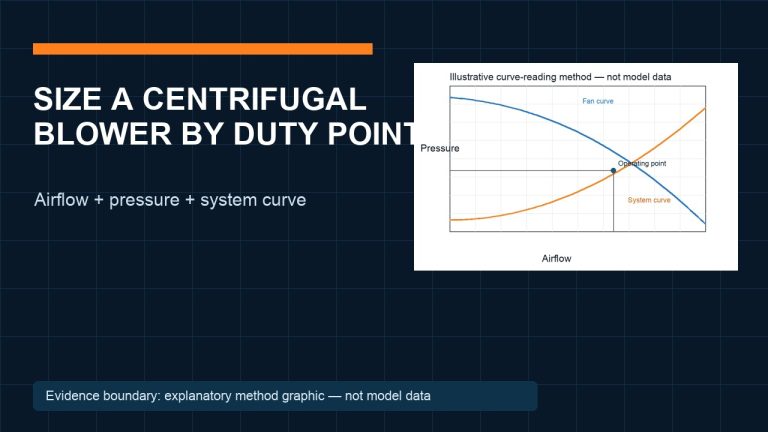
A fan curve relates airflow and pressure for a stated configuration and speed. The duct, filter, coil, grille, damper, enclosure, and process create a resistance curve. The installed operating point appears where the fan and system curves meet. Add resistance and the point moves; change fan speed and the fan curve moves. A free-air airflow number does not answer a filtered or ducted duty by itself.
For procurement, ask for the required airflow together with static or total pressure, and state where that pressure is defined. Also provide air temperature, density or altitude when relevant, motor supply, control method, sound objective, operating hours, space envelope, inlet and outlet conditions, and applicable safety or material requirements. Those inputs are more useful than asking for “the strongest fan” in a diameter class.
Blade labels are not a universal ranking
Forward-curved, backward-curved, backward-inclined, airfoil, and radial wheels have different curve shapes and application trade-offs. None is automatically best without a duty point and system boundary. A compact appliance blower, a clean-air plenum fan, and a material-handling exhauster solve different problems even though all may be called centrifugal fans.
If you need the broader terminology and family comparison, use the centrifugal fan principles and types guide. Keep its category-level guidance separate from model selection: exact curves, drawings, revision, motor data, and controlled test evidence still decide whether a candidate is suitable.
Use a teardown to ask better questions
A teardown can confirm visible construction: single or double inlet, wheel orientation, hub, inlet cone, housing, motor placement, fasteners, and accessible clearances. CAD can clarify the same visible structure when its exact model and revision are known. Neither source proves aerodynamic performance, certification, interchangeability, or a customer result.
Before removing anything, photograph the nameplate, wiring reference, rotation arrow, connector, mounting points, inlet and outlet, and every model suffix. Mark orientation and record clearances without changing them. If the assembly is under warranty, safety-controlled, contaminated, hot, energized, or difficult to isolate, stop and use the approved service procedure.
A centrifugal fan RFQ that engineers can answer
- Duty: required airflow, required pressure, and the definition and test condition for both.
- System: filters, coils, ducts, dampers, inlet restrictions, outlet arrangement, and expected resistance changes.
- Air stream: temperature range, density, humidity, contaminants, corrosion, and whether solids are present.
- Mechanical interface: envelope, wheel or housing configuration, mounting, inlet and outlet dimensions, orientation, and service access.
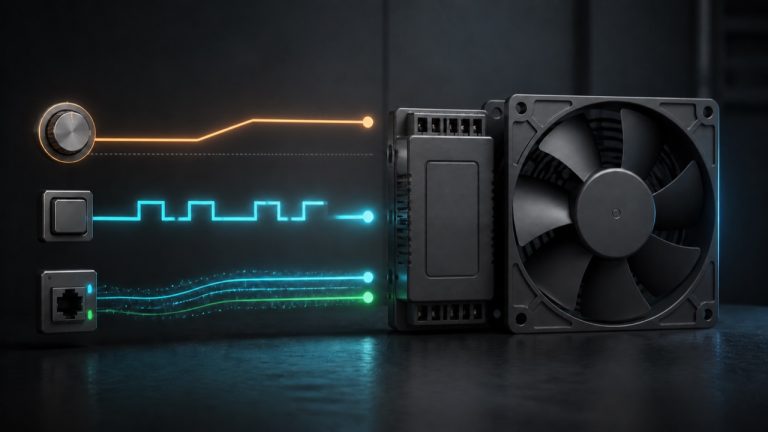
- Electrical and control: voltage, phase, frequency, speed command, feedback, protection, connector, and wiring standard.
- Acceptance: required curve point, sound basis, allowable vibration, documentation, inspection, test method, and revision control.
End the inquiry with the decision you need: a new system selection, an exact replacement review, or a custom integration study. Attach readable evidence and ask the supplier to identify assumptions. That keeps a useful animation from becoming an unsupported compatibility claim.
Choose the right centrifugal fan
Longwell manufactures 1,127 centrifugal fans in-house. Send airflow, static pressure and voltage — an engineer replies with a matching model, performance curve and price within one working day.