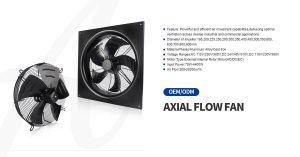
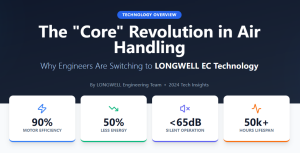
The ASEAN Centre for Energy published a green public procurement guideline for energy-efficient room air conditioners in October 2026. It is not a single ASEAN-wide law, but it shows how public buyers may screen efficiency, refrigerant, noise, durability and life-cycle cost—and how HVAC OEMs will ask fan and motor suppliers for evidence.

Fan and motor evidence for ASEAN green public procurement of efficient air conditioners Information checked 19 October 2026
Start with two boundaries
The Green Public Procurement Guidelines for Energy-Efficient Air Conditioners in ASEAN is a regional reference that Member States can adopt or adapt to their own standards, markets, laws and procurement systems. It does not automatically create one mandatory rule for every tender across ASEAN. Bidders must still check the purchasing country’s energy label, MEPS, safety rules, refrigerant requirements, tender documents and accepted verification methods.
The guideline also evaluates room-air-conditioner systems and procurement contracts. Whole-unit CSPF, refrigerant GWP, safety, installation and national-label compliance cannot be proven by a fan or motor alone. The component supplier’s job is to provide accurate evidence that an OEM or system integrator can use within the complete product file.
Why the signal matters now
The guideline cites the 9th ASEAN Energy Outlook projection that room-air-conditioner electricity demand will rise by about 115%, from approximately 134 TWh in 2025 to 288 TWh in 2040. It also connects procurement to the APAEC 2026–2030 goal of reducing regional energy intensity by 40% in 2030 compared with 2005.
A regional roadmap set a higher target equivalent to 6.09 Wh/Wh CSPF. The guideline says that, as of June 2026, only Singapore had reached that higher tier, while Malaysia had formally gazetted alignment by 2030. In other markets, the level often corresponds to the top national energy-label tier rather than a uniform market-entry floor.
The procurement lesson is simple: “ASEAN” is not one energy label. Prepare both the regional reference and the national proof required by the specific tender.
What the six mandatory screens cover
The guideline organises six criteria, each with a mandatory technical specification, scored award criterion and verification method.
|
Procurement criterion |
Baseline direction in the guideline |
Component-evidence implication |
|---|---|---|
|
Energy performance |
Highest applicable national label class or at least five-star; above 6.09 Wh/Wh CSPF where feasible |
Provide duty-point performance, electrical input and control-range data; never equate component efficiency with whole-unit CSPF |
|
Refrigerant and GWP |
ODP of zero and GWP no higher than 750 |
A fan or motor normally does not determine the refrigerant; mark this as outside component proof |
|
Safety |
Applicable national product safety/performance requirements and qualified installation/maintenance |
Provide electrical, insulation, protection and use limits; the OEM evaluates whole-unit safety |
|
Sound |
National requirements, or guideline recommendations where national limits are absent |
Give acoustic data with operating and test conditions, not an isolated dB value |
|
Durability and service |
At least a one-year complete-unit warranty, key spare parts, and repair/maintenance information |
Document spare parts, traceability, change notification and service access |
|
Life-cycle cost |
Inputs for purchase, energy, maintenance and warranty evaluation |
Supply data the OEM can map into system operating and maintenance assumptions |
Do not copy this table directly into a national tender. The buyer must calibrate thresholds against local labels, standards, market availability and procurement law.
The evaluation moves beyond lowest price
The guideline proposes a three-step evaluation:
1. Mandatory pass/fail screening. A bid failing any baseline technical requirement is excluded.
2. Weighted technical scoring. Performance beyond the minimum—such as efficiency, refrigerant impact, noise and warranty—earns points.
3. Combined technical and financial evaluation. A most economically advantageous tender approach uses life-cycle costing to replace or supplement lowest purchase price.
This changes what useful supplier evidence looks like. “High-efficiency motor”, “quiet fan” and the lowest quotation are not comparable claims. The file must allow bidders to compare products on the same boundary, duty and lifetime assumptions.
Seven evidence blocks for fan and motor suppliers
1. Duty-point performance, not a peak slogan
Provide performance at the airflow and static or total pressure specified by the OEM. State air density, temperature, test arrangement and tolerance. For variable-speed equipment, include representative points across the useful control range, not only maximum speed.
2. Electrical input and control boundary
Identify voltage, frequency, phase, input power, control signal, communications and failure behaviour. For an EC fan, distinguish internal motor/controller data from complete-unit input data so that boundaries are not mixed.
3. Comparable acoustic data
Tie noise data to airflow, pressure, speed, distance, acoustic quantity and test method. An isolated “below 45 dB(A)” does not support a tender and may confuse sound power with sound pressure.
4. Rated environment and safety attributes
State temperature, humidity, altitude derating, insulation class, ingress protection, thermal protection, grounding and installation limits. A component declaration must not be presented as whole-unit safety certification, but it should let the OEM complete its risk assessment.
5. Durability, repair and spares
List critical replaceable parts, recommended maintenance, expected availability, spare-part identification, warranty boundary and failure traceability. Public procurement does not ask suppliers to promise that nothing will fail; it asks whether equipment can be repaired, traced and supported.
6. Model and change traceability
Keep the quoted model, sample, drawing, report and production material aligned. Establish notification and reevaluation rules when a motor, controller, impeller, bearing or firmware changes.
7. OEM-ready data format
Deliver machine-readable tables and versioned curves rather than scans. State units, measurement boundary, test date and report identifier so the OEM can incorporate the evidence into whole-system CSPF, acoustic, LCC and tender matrices.
A supplier questionnaire for air-conditioner OEMs
|
Question |
Acceptable answer |
Return for correction |
|---|---|---|
|
What are airflow, pressure and input power at the specified duty? |
Versioned curve or data table with conditions and tolerance |
“High efficiency” or “large airflow” |
|
Under what duty and method was the acoustic result obtained? |
Acoustic quantity, operating point and test conditions stated |
One unexplained dB value |
|
Which statements are component-level and which require whole-unit verification? |
A clear evidence boundary |
Claiming the component proves RAC CSPF or refrigerant compliance |
|
What happens after a part or firmware change? |
Change notice, impact assessment and traceability process |
“Equivalent part within the same series” |
|
How are spares and repair information supplied? |
Critical-part list, identification and maintenance documents |
Only a warranty duration |
Four checks when adapting the guideline nationally
- National label and MEPS: confirm the local efficiency class and test method; do not automatically treat 6.09 Wh/Wh as every country’s market-entry floor.
- Refrigerant and safety: apply the purchasing country’s rules and tender clauses; keep component claims inside their evidence boundary.
- Accepted proof: confirm whether national labels, registrations, recognised reports, certificates or manufacturer documentation are accepted.
- Contract acceptance: verify that delivered models, installation, refrigerant record, commissioning report and approved bid evidence remain aligned.
Longwell’s support boundary
For a defined duty, Longwell can organise fan or motor performance curves, electrical input, control interfaces, rated environment, drawings, BOM traceability and change records. Existing catalogues, specifications and performance curves in the company knowledge base provide a starting point for a project evidence pack.
Longwell will not describe component data as proof of whole-unit CSPF, national energy labelling, refrigerant GWP or market access. The air-conditioner manufacturer must make any complete-system claim using the final design, applicable national requirements and recognised testing.
Frequently asked questions
Is the guideline already mandatory in every ASEAN country?
No. It is a regional reference that Member States may adopt or adapt within their own legal, market and procurement frameworks. The tender and national official sources control the actual requirement.
Is 6.09 Wh/Wh CSPF the market-entry minimum everywhere?
No. The guideline records different implementation stages. In several markets it is closer to a top label tier than a current market-entry floor.
Can fan efficiency prove the complete air conditioner’s CSPF?
No. CSPF depends on the full refrigeration system, controls and prescribed whole-unit test. Fan and motor data is one input to the complete evidence file.
Why must acoustic test conditions be included?
Because sound pressure, sound power, distance, operating point and test environment produce different and non-comparable values. A buyer needs traceable data on a common basis.
Why does public procurement ask about repair and spares?
The guideline includes durability, access to repair information, key-spare availability and life-cycle cost. Purchase price is only one part of the award decision.
Next action
If you are preparing a high-efficiency air-conditioning project for an ASEAN public building, school, hospital or other facility, send the target country, RAC capacity, fan duty, control method, noise target and tender evidence list to the Longwell engineering team. We can organise component data into an OEM-ready evidence pack and state the boundary of every item.
Official sources
- ASEAN Centre for Energy publication page
- Full Green Public Procurement Guideline PDF
- ASEAN Centre for Energy
Information checked on 19 October 2026. National procurement, efficiency, refrigerant and certification requirements can change; recheck the purchasing country’s official documents before bidding.