Key Takeaways
- Industrial cooling fans are generally used for cooling equipment and the working space.
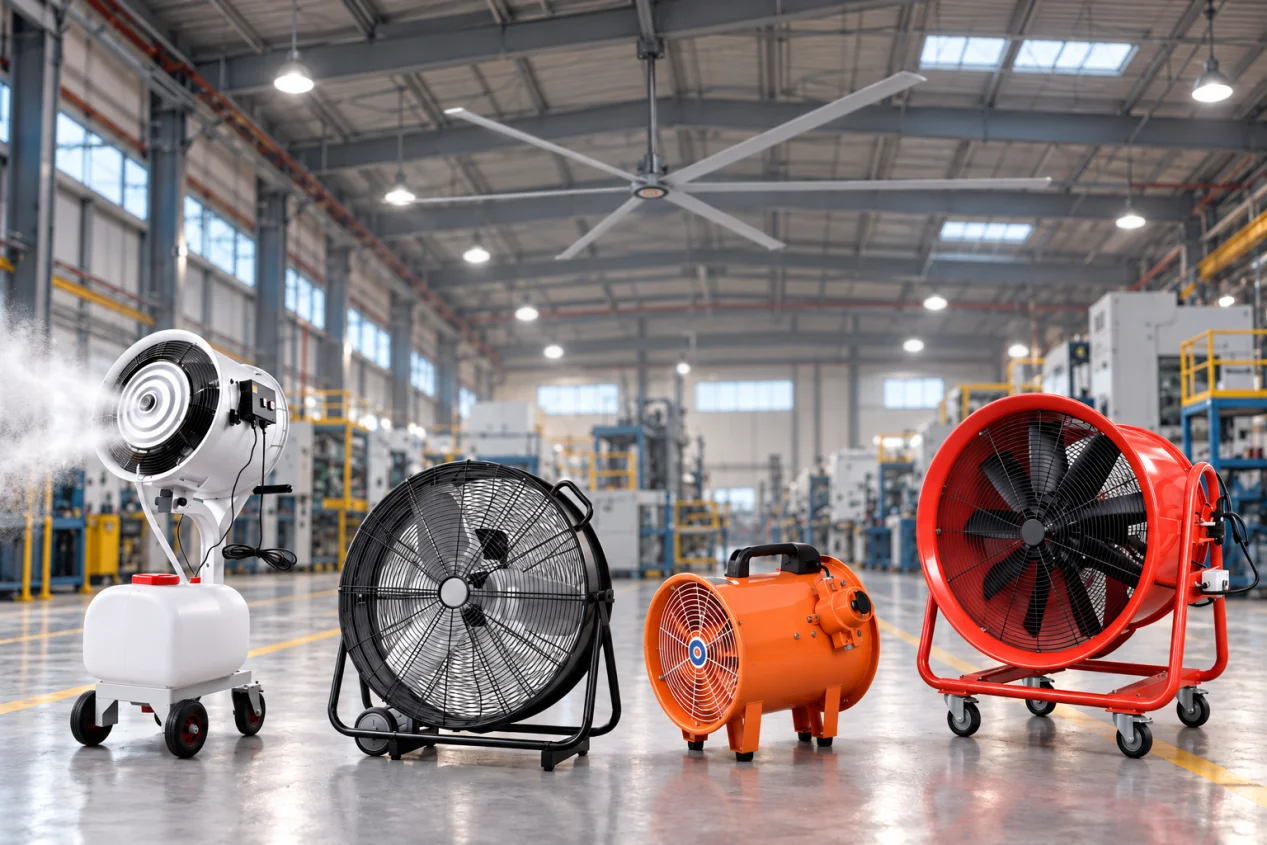
- The HVLS fans enable the circulation of air within large factory spaces. Floor, wall-mounted and mobile fan types offer targeted cooling. The mist fans provide additional cooling through the evaporation of water vapor.
- Axial fans work well with low airflow resistance. Centrifugal fans are better suited to higher resistance air paths.
- Common applications include: factories and warehouses, logistics facilities, and cooling systems in battery energy storage installations.
Prolonged exposure to high temperatures can put workers’ health at risk and place added thermal stress on machinery. This affects products’ service life and production reliability. In large industrial space, only use air conditioning to lower the working temperature may be impractical. Industrial cooling fans are used to provide air circulation at a single point, or within a certain area. Understanding the main types of industrial cooling fans and their suitable applications helps to find the effective solution for facility.
Industrial Fan vs Normal Fan: What are the differences?
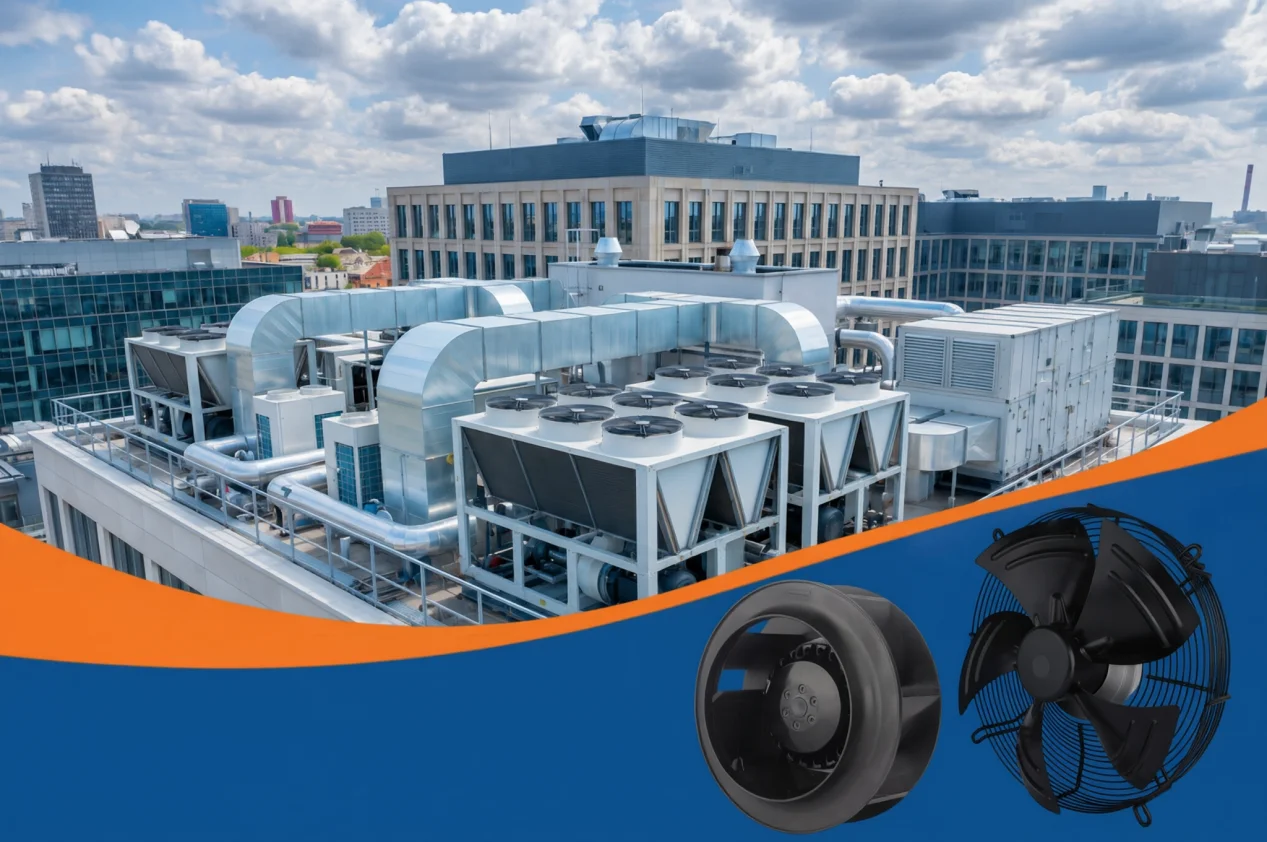
An industrial fan running beside a production line for an entire shift has different demands from a fan used in an office. Industrial models may feature metal housing and impeller, or other more durable materials. They are designed for more complex and dusty environments. Compared to normal fans, these applications often require large volume of air, and need enough pressure to push air through equipment or ducts.
Normal fans are generally used in residential or light commercial places. Most have lighter construction and are easy to move or reposition. Their main purpose is to circulate air within a room.
Industrial Cooling Fans for Space Cooling
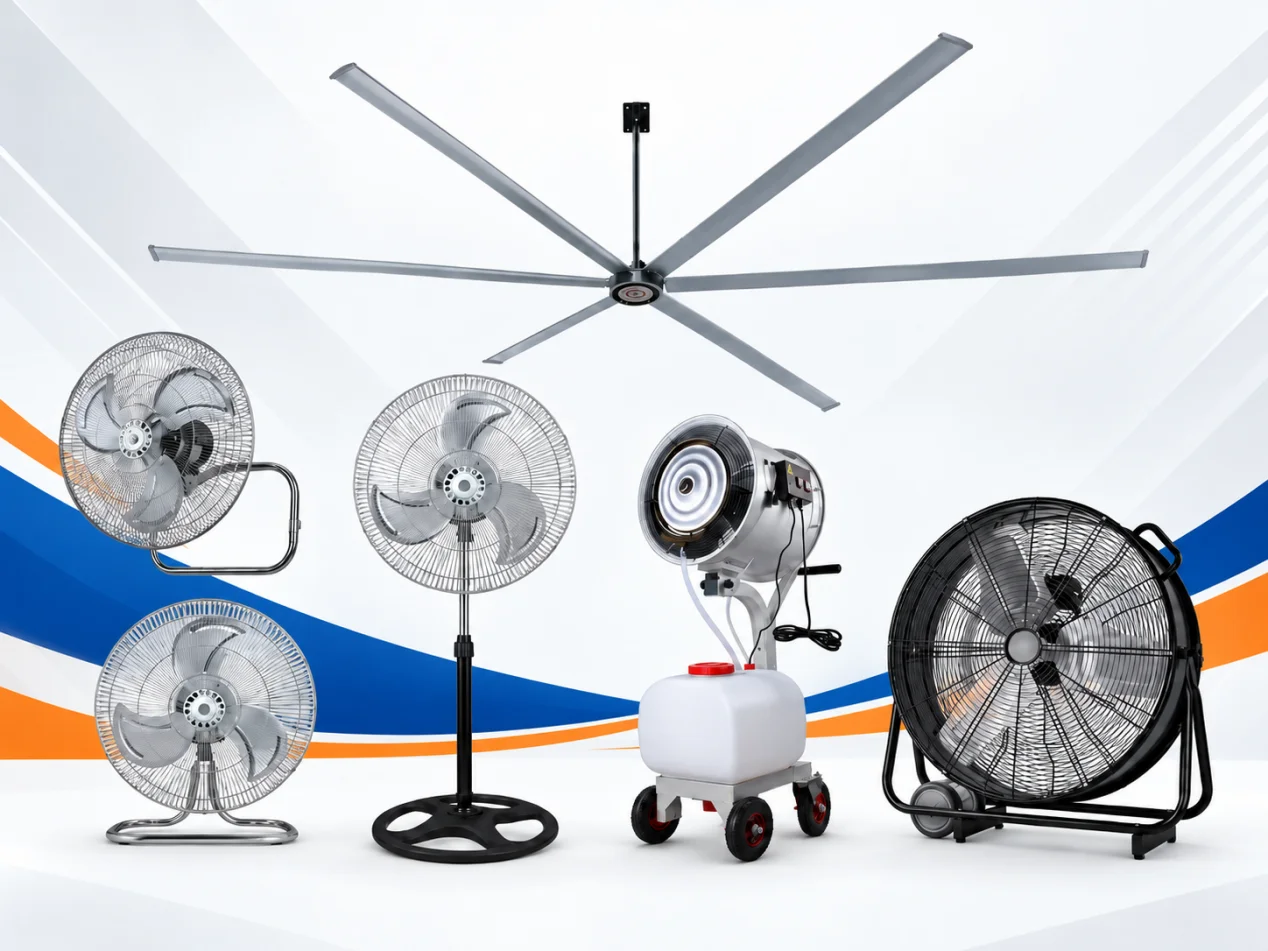
HVLS Ceiling Fan
HVLS stands for high-volume, low-speed. Mounted on the ceiling, these large-diameter fans circulate air across broad indoor spaces such as factories, warehouses, and production halls. LONGWELL’s catalogue lists blade diameters from 2.0 to 7.3 m, with model speeds of 55 to 100 rpm.
In winter, the ceiling fans can operate at a suitable low speed to move warm air accumulated near the ceiling back toward the floor. This helps reduce temperature stratification in high-bay buildings.
Wall-mounted and Floor Fans
Floor and wall-mounted fans sometimes share the same impeller and fan-head assembly, with different mounting hardware for floor or wall installation. Some 3-in-1 models can realize stand fan, floor fan, wall fan in one model.
Wall-mounted fans are practical for limited floor space conditions, such as workshops or production lines. Their mounting height, blade size, and fan angle determine how effectively the air reaches the intended area. Fixed-head models are suited to individual workstations, and oscillating fans can cover a wider range. Floor fans are more useful when cooling needs change. They can be places beside machinery, or positioned near hot workstations. For industrial facilities that require on-site cooling around machinery, the floor fans can quickly dry the floor after rinsing.
Mobile Drum Fan
Mobile drum fans are a type of industrial axial fan designed to move large volumes of air through open work areas. Their blade diameters typically ranging from 600 to 1,550 mm. Some models offer 360° pitch adjustment, allowing to change the airflow direction. The wheels and handles make it easy to move as cooling areas change.
Their large diameter, high airflow, and mobility make them useful for spot cooling across workshops and production floors. Since the airflow travels close to floor level, it can stir up dust, sawdust, or loose debris in the area. The wheeled base also needs clear floor space, especially near walkways.
Mist Fan
Misting fans are industrial floor- or wall-mounted fans fitted with an integrated misting system. Some models have a detachable misting unit, allowing the fan to be used with or without mist. They combine airflow with a fine water spray to provide localized cooling as the droplets evaporate. Misting fans are particularly effective in hot, dry areas, where evaporation happens quickly.
Water supply and mist output vary by model. LONGWELL’s industrial mist fans include tank-fed options and models that can connect to a water line, with adjustable mist output. Positioning the fan and setting the mist rate for the space helps keep cooling focused around the intended area.
Industrial Cooling Fans for Equipment Cooling
Axial Fans
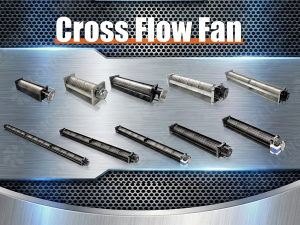
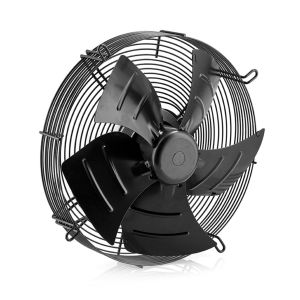
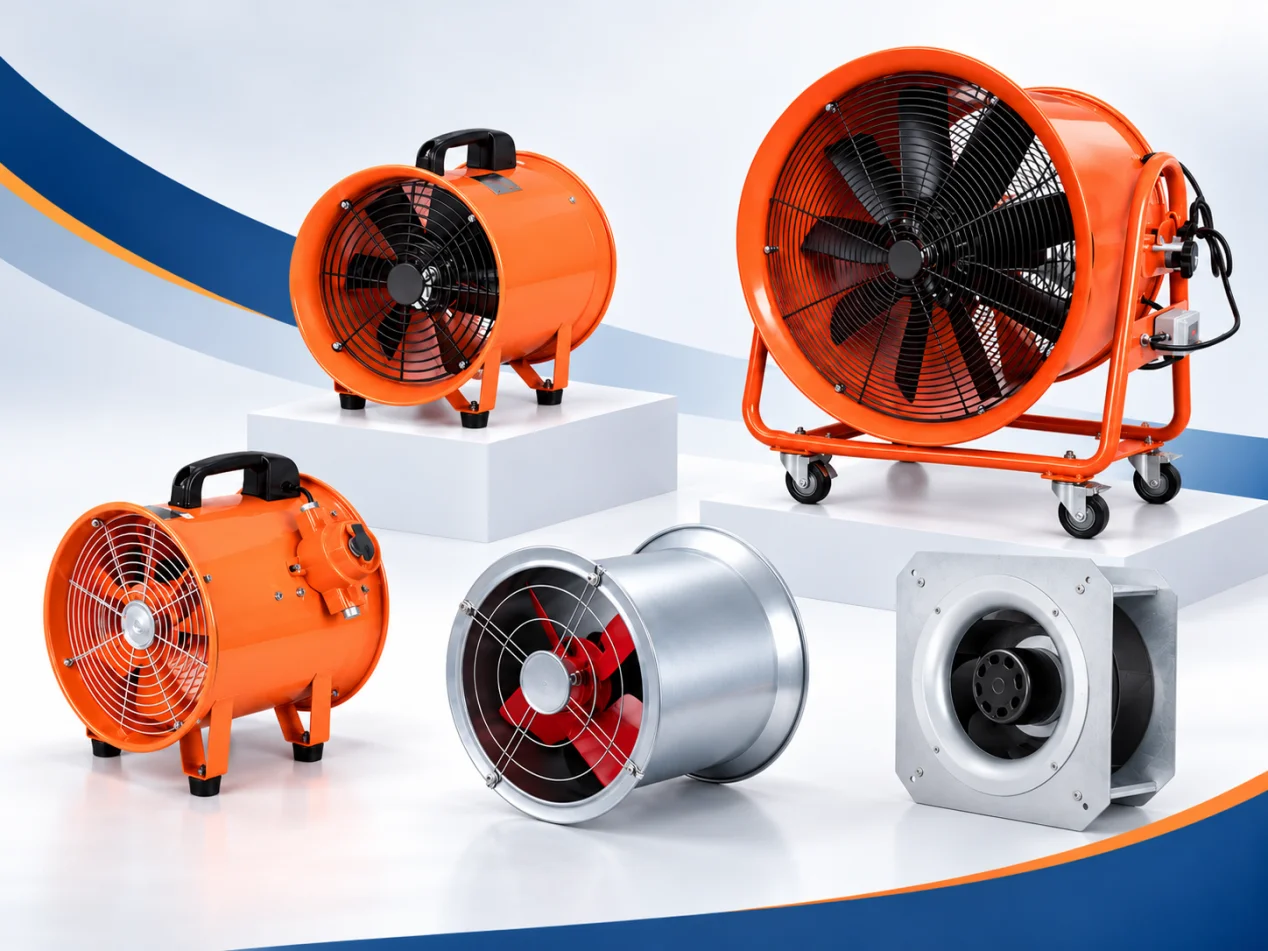
Axial fans are one of the most widely used types of industrial cooling fans. The working principle of an axial fan is moving air parallel to the fan axis. A tube axial fan places a propeller inside a cylindrical housing that can be installed in ductwork or through a wall. In equipment-cooling systems, it can exhaust hot air or process fumes and help maintain airflow through machinery. Axial fans work best in systems with a relatively direct airflow path and low resistance. Long duct runs, bends, and filters increase system resistance, so the fan’s pressure capability should be checked against the full system requirements.
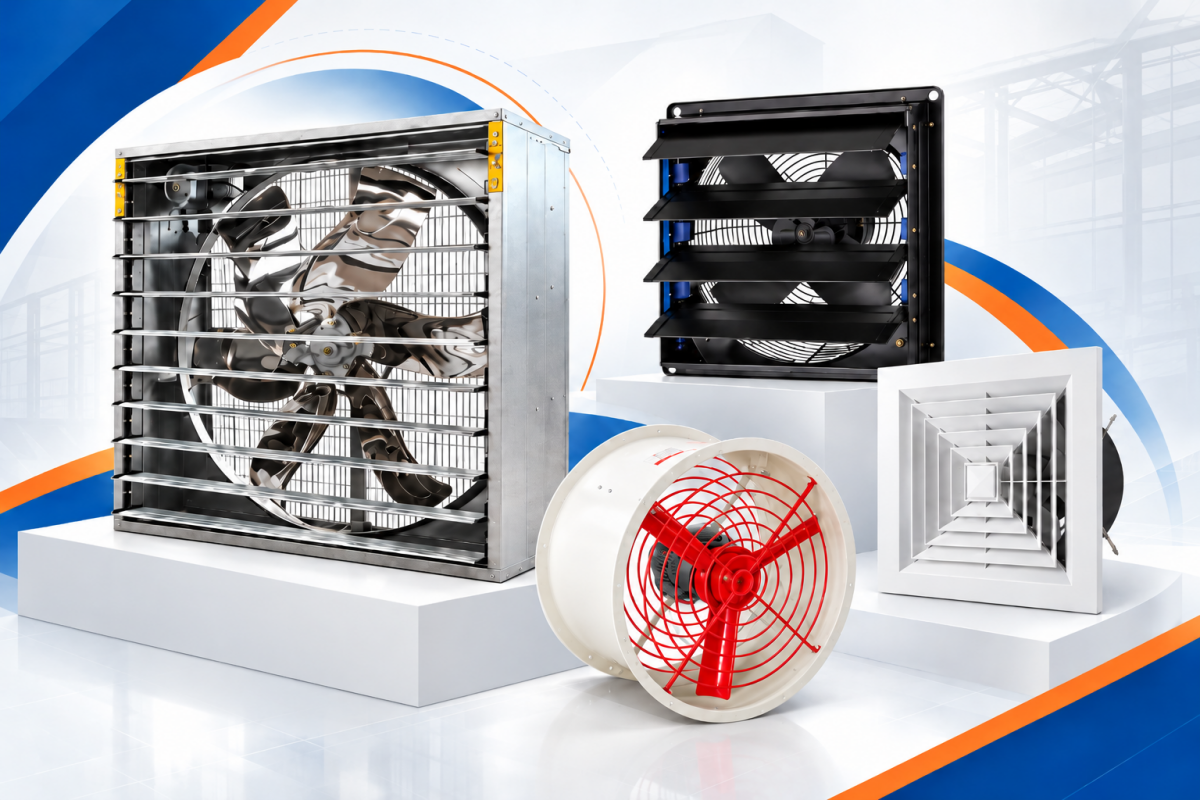
The explosion-proof axial flow fan combines a large volume of airflow with a structure designed for hazardous environments. Its electrical and mechanical components are specially selected to reduce the risk of igniting flammable gases, vapors or combustible dust during operation.
Portable Ventilator
Portable ventilators resemble tube axial fans, with a cylindrical housing around the impeller. Handles and a support bracket make them easy to move and position near the equipment or work area that needs airflow. LONGWELL models have impeller diameters ranging from 200 mm to 450 mm.
The portable ventilator can be considered as a mobile airflow device. Place it in the right position, plug in the power, and it will enable the output airflow. In facilities that use HVLS ceiling fans, portable ventilators can add focused airflow around machinery or specific workstations. The HVLS fans circulate air across the larger space, while the portable units direct airflow toward localized hot spots. For factories where a drum fan is too large, a low-profile industrial floor fan can provide strong, targeted airflow with a smaller footprint.
Centrifugal Fans
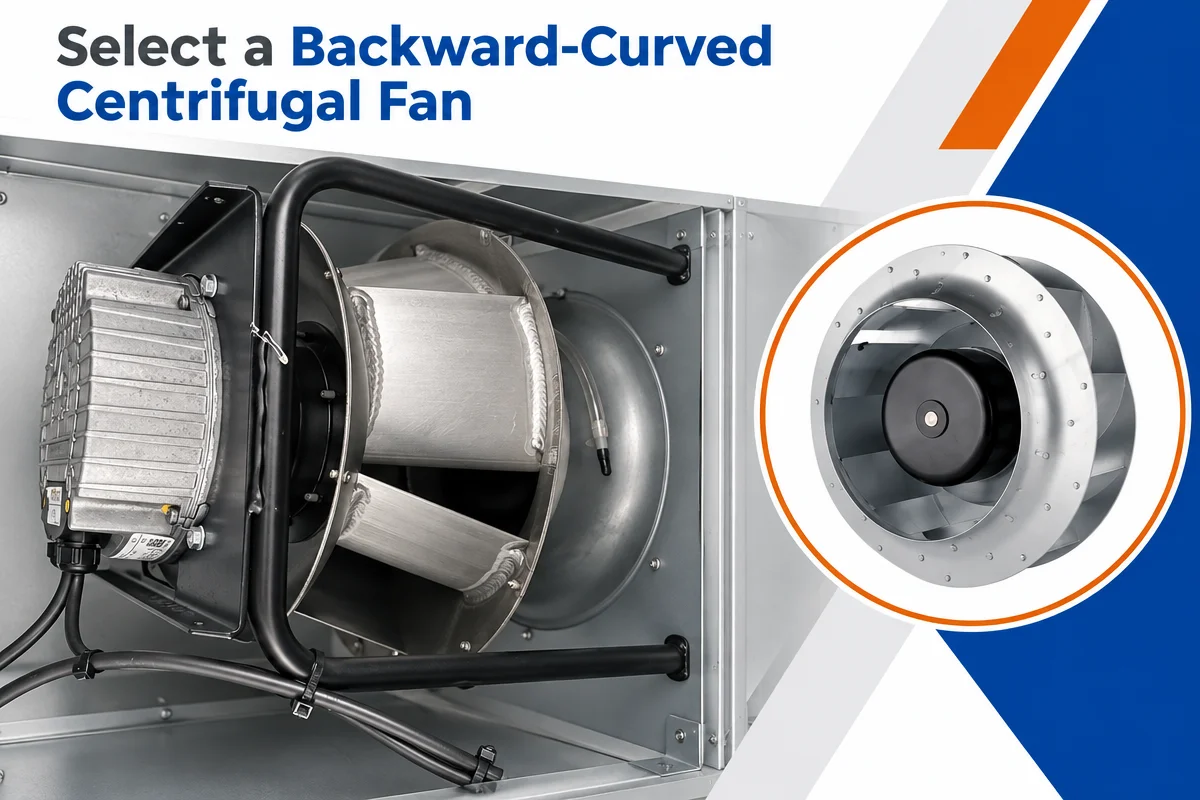
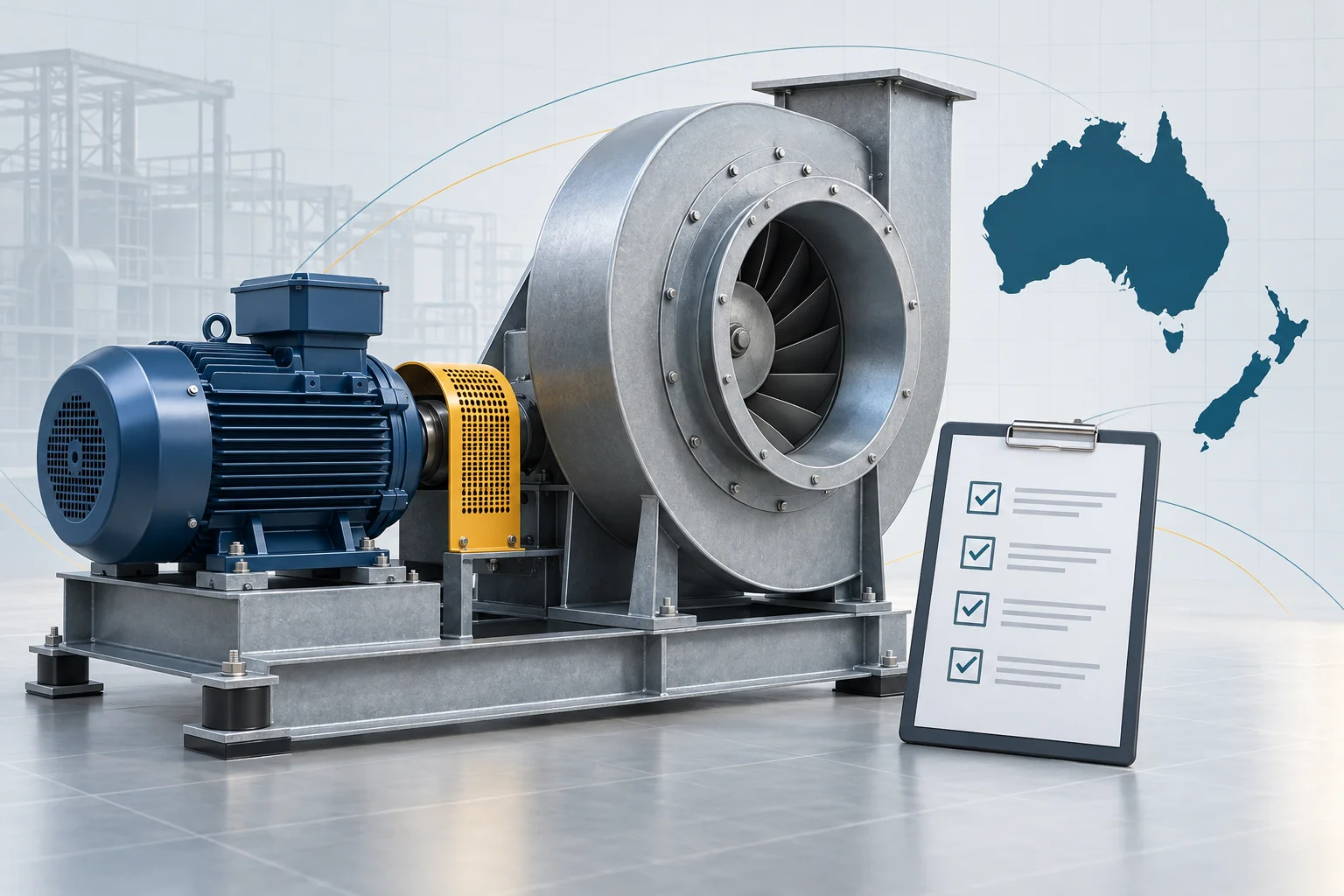
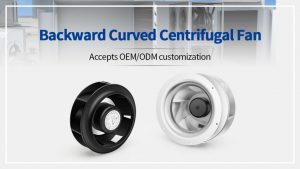
Centrifugal fans are often selected when a system needs more static pressure to overcome resistance. Air enters near the impeller’s axis and is accelerated outward by the rotating impeller. Then discharged at about 90° to the inlet direction from the housing. Centrifugal fans can handle dust-laden air, high temperatures, or corrosive gases in industrial processes.
Industrial Cooling Fan Applications
Manufacturing Plant and Warehouse Cooling
High ceilings are common in manufacturing plants and warehouses, allowing hot air to collect
above the occupied area. For facility managers, worker comfort also affects productivity. HVLS ceiling fans are used to circulate air through large spaces at a lower speed. When there remains some work area with limited air movement, portable or wall-mounted fans can provide additional airflow. Heat can slow work and impair fine motor performance. The heat stress can contribute to workers of reduced performance, lost productivity, heat illness, and more serious outcomes.
Logistics Facility Cooling
Logistics facilities often have high ceilings like warehouses, but their sorting lines, packing stations, and loading areas may shift throughout the day. Only use HVLS fans to circulate air is not enough. Conveyors, forklift components, and electrical equipment can generate considerable heat during operation. Floor fans are easier to move between these equipment and provide local cooling airflow.
Battery Energy Storage System Cooling
Battery modules generate heat during charging and discharging. In containerized battery energy storage systems (BESS), the HVAC system manages the internal temperature, while centrifugal fans can move conditioned air through ducts and internal airflow passages. The fan must deliver the required airflow against the resistance of these passages.
Some battery-related installations also require hazardous-area ventilation or emergency exhaust provisions. Where the applicable area classification calls for explosion-protected equipment, suitably certified centrifugal fans, including ATEX-certified models for relevant markets, may be specified as part of the ventilation system.
What Make LONGWELL’s Industrial Cooling Fans Perform Well?
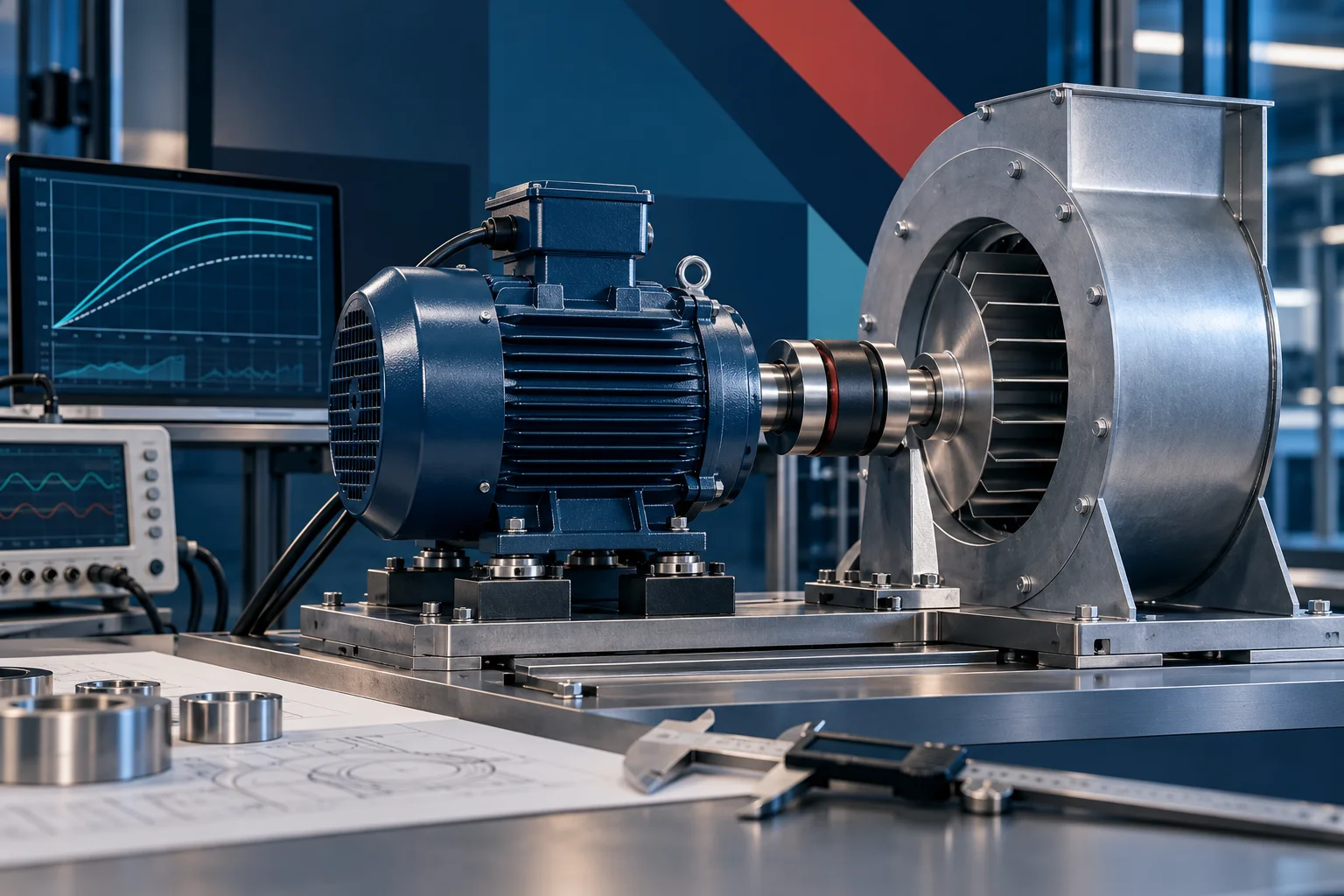
LONGWELL combines aerodynamic design with EC motor technology to develop cooling fans for different industrial applications. For battery energy storage systems (BESS), LONGWELL provides EC fan solutions that can be integrated with the control requirements.
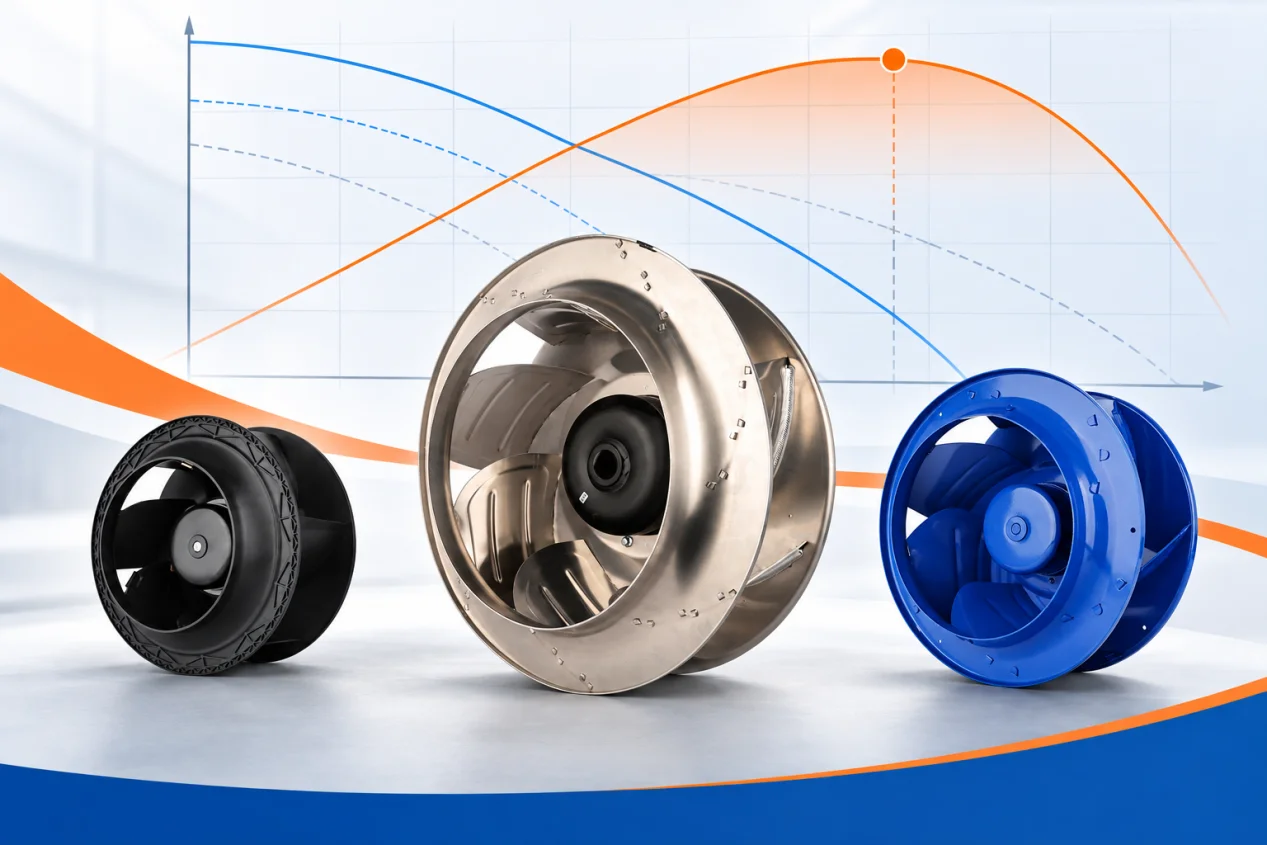
In OEM projects, fan specifications often need to be adjusted. Customers can also choose from metal, aluminum alloy, and plastic impellers. LONGWELL offers customization of fan dimensions, airflow performance, mounting arrangements, wiring harnesses, electrical interfaces, coatings, labels, and packaging.
Before the purchasing stage, customer can have a free fan selection consultation with LONGWELL. Once the fan model is selected, LONGWELL’s technical team can assist with configuration and installation, followed by warranty and after-sales support.
FAQ
Does an industrial fan use a lot of electricity?
Industrial fans generally consume more electricity than household or desk fans. Take a 20-inch industrial wall fan as example. It has a rated power of 120 W. Working at the full speed for one hour will consume 0.12 kWh.
How long can an industrial fan run continuously?
Industrial fans rated for continuous duty can operate 24/7. LONGWELL industrial fans can achieve a mean time between failures of over 60,000 hours.
Will an industrial fan cool a room?
Most industrial fans create the sensation of cooling by blowing air over the skin. In fact, the working principle is to accelerate the evaporation of sweat. The actual air temperature in the room remains basically unchanged. However, mist fans are different. The evaporation of water can lower the temperature of the surrounding air.
What happens if a fan runs continuously?
Some industrial fans that are not designed for continuous operation. When runs continuously, their motors and bearings gradually wear out. It may result in a reduction in actual lifespan.
Choose the right dc cooling fan
Longwell manufactures 38 dc cooling fans in-house. Send airflow, static pressure and voltage — an engineer replies with a matching model, performance curve and price within one working day.