
Sea or air is a shipment decision, not a fan-category rule. A compact urgent spare may justify air transport, while a large planned production lot may favour ocean transport. The answer changes with the packed dimensions, usable arrival date, complete quote scope and value of delay. Compare the same finished shipment under both options before booking.
Start with the packed fan, not its catalogue dimensions
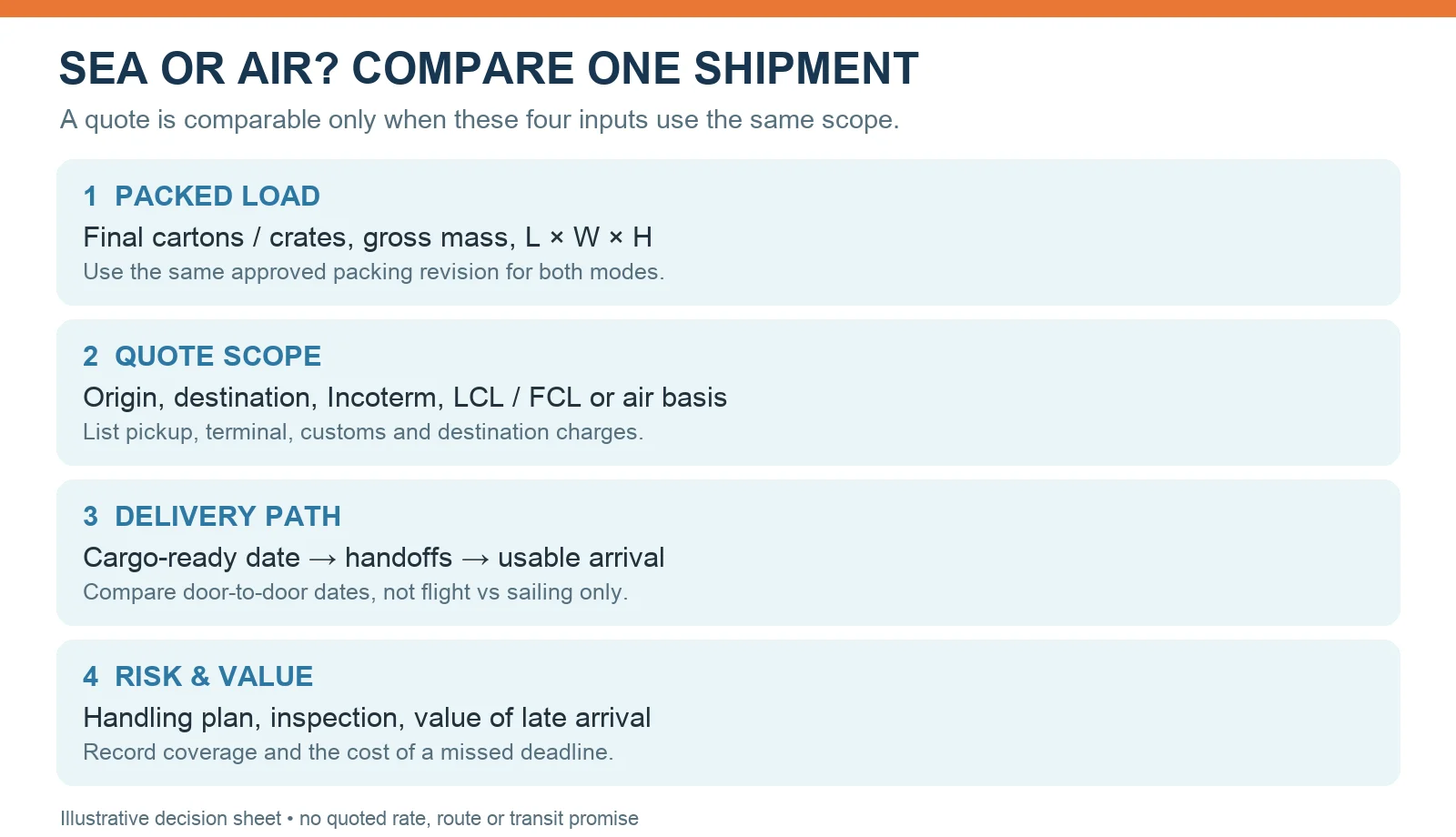
The forwarder needs each finished carton or crate’s external length, width, height and gross mass. A fan’s bare diameter is not its chargeable shipping size. Guards, terminals, shaft ends and controls may need protective clearance; the final packaging may also include dividers, a pallet or a crate. Record the number of packages and whether anything can be stacked. Recheck dimensions after a packaging change instead of carrying an early estimate into the freight comparison.
Air cargo may use the greater of actual and volumetric weight. IATA’s air-cargo explanation describes that charging basis and a common volume calculation; the applicable carrier and forwarder tariff must still be confirmed for the route. Ocean LCL and FCL have different space and local-charge structures. Ask the forwarder which measurements drive each offer instead of assuming that a fan is always “too bulky” for air.
Compare complete costs on the same commercial terms
A port-to-port ocean rate and an airport-to-airport air rate are not comparable delivered prices. Specify the same origin, destination, currency, shipment dimensions and delivery term in both requests. List pickup, origin handling, main carriage, fuel or security charges, customs services, duties or taxes where applicable, destination handling, storage exposure and final delivery. If the offer is LCL, ask about consolidation and destination charges; if FCL, include the container size and utilization assumption. Maersk’s current quote options distinguish ocean, LCL, inland and air services rather than treating them as one price.
Write the chosen Incoterm and named place beside each quotation. It determines the commercial handoff but does not by itself settle every service fee or the buyer’s total landed cost. Our fan-import Incoterms guide is a starting point for the handoff question; confirm the actual contract and forwarder scope for this shipment.
Draw the whole delivery path
A flight duration and a sailing duration omit much of the schedule. Start at cargo readiness, then add export preparation, pickup, cut-off, terminal handling, main movement, any transshipment, import clearance and delivery to the point where the fans can actually be used. Maersk distinguishes time on the water from door-to-door time and notes that route and destination change the result. Ask for a dated itinerary and identify which milestones are estimates, bookings or confirmed handoffs.
The arrival deadline may have a financial value, but it belongs to the buyer’s project data. A line-start date, planned maintenance window or prototype review can make a small air consignment rational even if the per-unit freight quote is higher. For a planned replenishment with schedule slack, sea may be attractive. Neither conclusion follows from a universal “air costs X times more” claim.
Check handling and packing for either mode
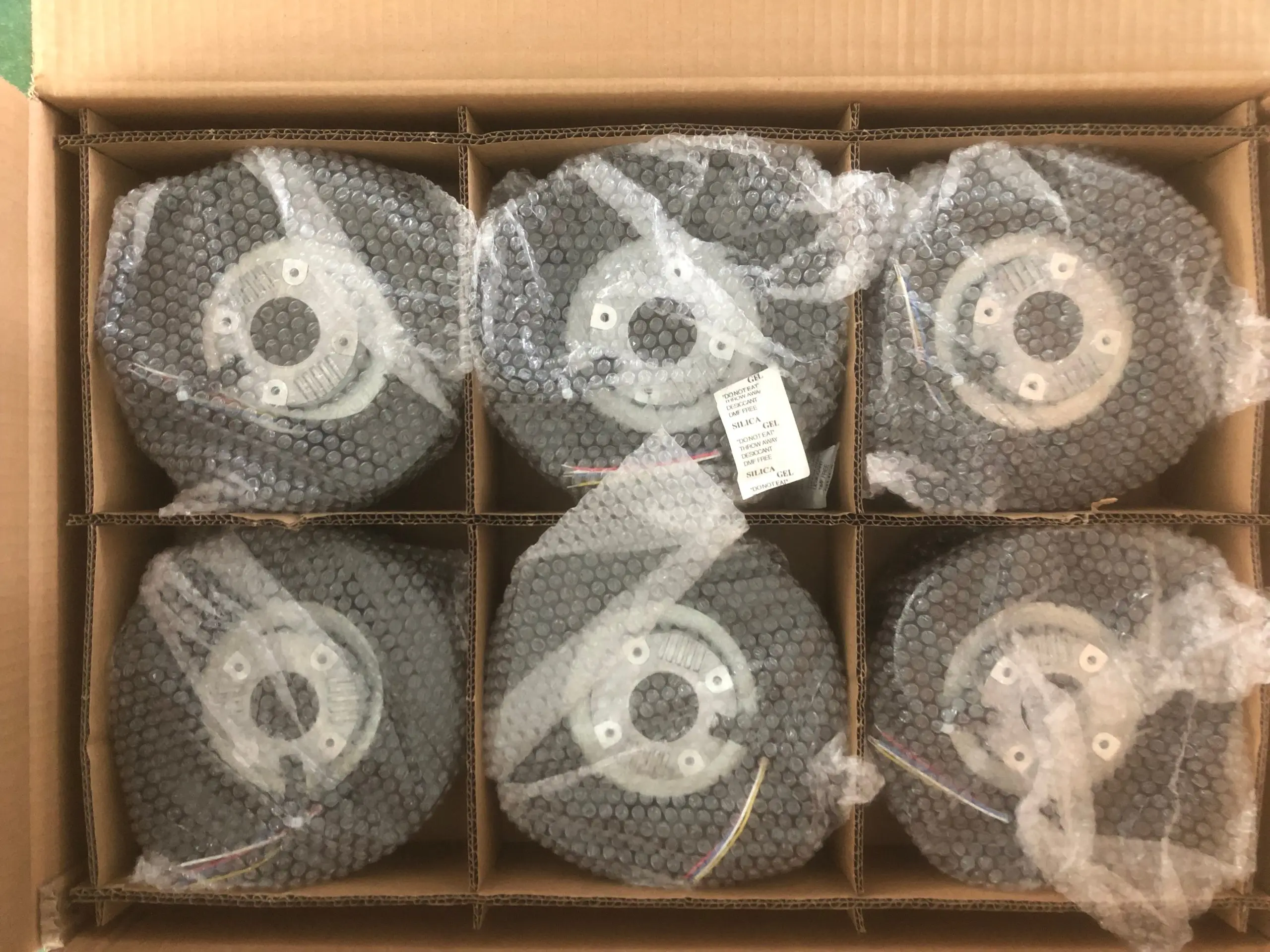
Protect the actual fan assembly, not an abstract product category. Ask how the impeller is restrained, how load reaches the carton or crate base, and how terminals, shaft ends and guards are protected. Moisture control, pallet strength, stacking and handling marks should be specified for the actual route and storage conditions. A photograph of one packed lot proves only that the pictured arrangement existed; it does not certify a new shipment. Our fan packaging guide offers questions to raise with the supplier, while the final packing plan needs approval for the exact model and route.
Record the inspection and claim procedure before dispatch. Who photographs the sealed packages, who checks them on arrival, and what is the deadline for reporting damage? Air is not automatically damage-free, and sea does not automatically damage a fan. Handling sequence and packaging design matter for both. If the pack changes to reduce air chargeable size, reapprove the protection plan rather than deleting padding by assumption.
Use a split shipment only when the numbers support it
A split can send just the units needed for the first test or installation by air while the balance travels by sea. Calculate two complete bookings, two sets of handling and documents where applicable, and the minimum genuinely critical quantity. Confirm whether the first units can be installed or qualified without the rest. The apparent schedule advantage disappears if a missing control, mounting part or document prevents use on arrival.
Send a forwarder-ready brief
Provide the exact fan models and quantities, final packed dimensions and mass per package, stackability, cargo-ready date, destination, required usable-arrival date, Incoterm and named place, plus any handling or moisture requirements. Request comparable sea and air options with explicit exclusions and quote validity. Keep the approved packaging revision with the quote so a later carton change triggers a fresh check. The booking decision should follow from those documented inputs and the buyer’s cost of delay.
For a shipment brief tied to your fan models and packaging, send the details to sales@longwellfans.com.