Incoterms are three-letter codes that define who arranges transport, who pays for it, and exactly where risk passes from seller to buyer.
That last point is the one that matters when something goes wrong, and it is the one most buyers skip.
EXW means the seller makes goods available at the named place without loading them. FOB means the seller delivers on board at the origin port and risk passes there. CIF adds sea freight and insurance to destination port, though risk still passes at origin. DDP means delivery at the named destination point with import clearance and duties paid, where legally feasible. Choose the rule from the actual handoff, route and import responsibilities; no rule is universally cheapest.
Six terms you may encounter
| Term | Seller arranges | Risk passes at |
|---|---|---|
| EXW | Goods available at named place; no loading | Named seller place, before loading |
| FCA | Export clearance and delivery to carrier | Named place at origin |
| FOB | Export clearance and loading on board | On board at origin port |
| CIF | Sea freight and insurance to destination | On board at origin port |
| DAP | Delivery to destination, duties unpaid | At destination |
| DDP | Import-cleared delivery to named point | Named destination point |
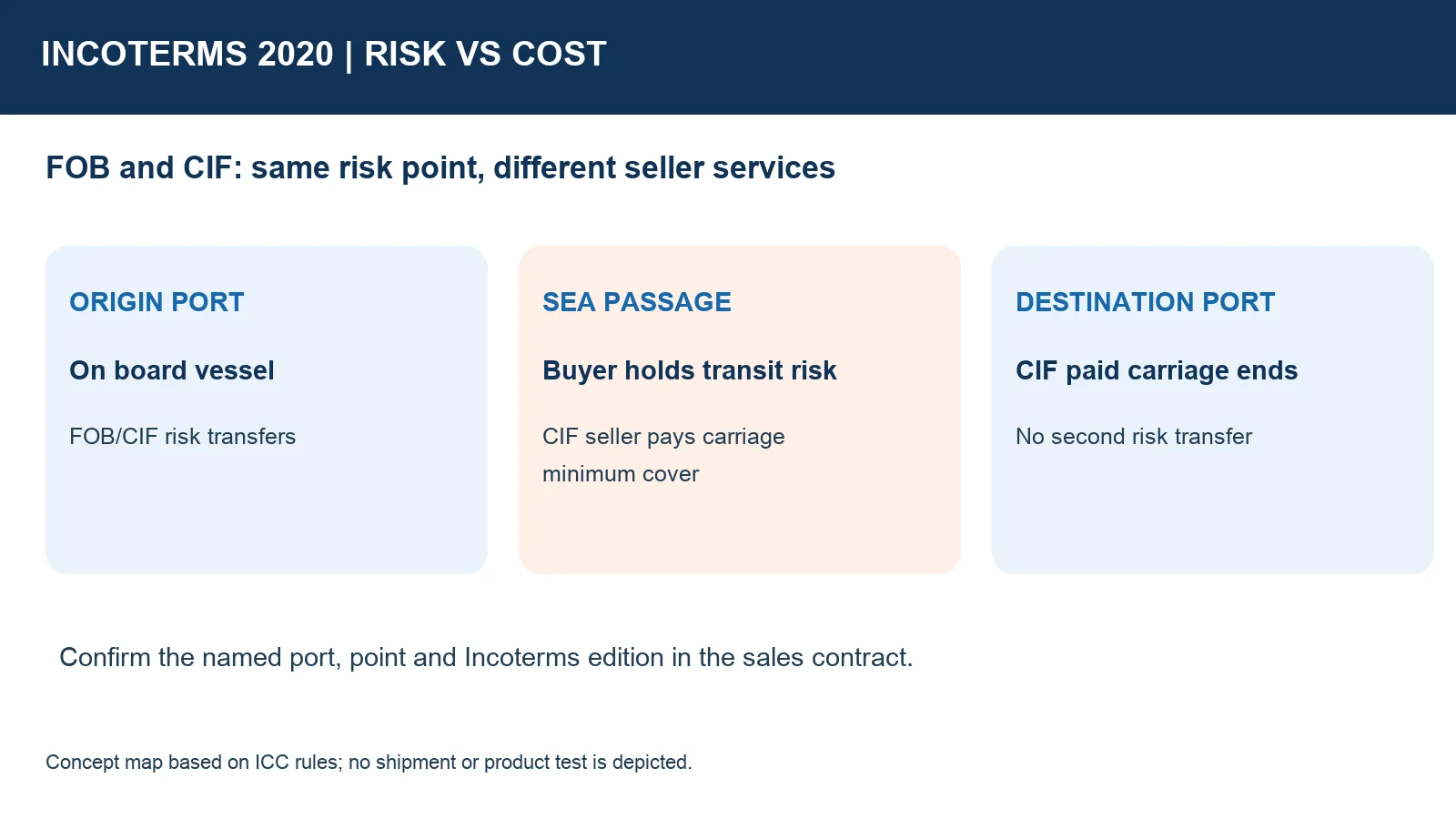
That CIF detail surprises people regularly. The seller pays the freight, and you carry the risk from the moment the goods are loaded.
Which term suits which situation
- EXW suits buyers with a freight forwarder already handling origin logistics.
- FOB is for an agreed on-board handoff in sea or inland-waterway transport; a container handed over at a terminal calls for FCA consideration.
- CIF includes seller-paid sea carriage and minimum cargo insurance to the named destination port, but risk still passes on board at origin. It is not a landed-duty price.
- DAP suits buyers who want delivery handled but will clear customs themselves.
- DDP may suit a route only when the seller can legally handle import clearance, duties and applicable taxes at the destination.
- Finally, FCA suits air freight and container consolidation better than FOB does.
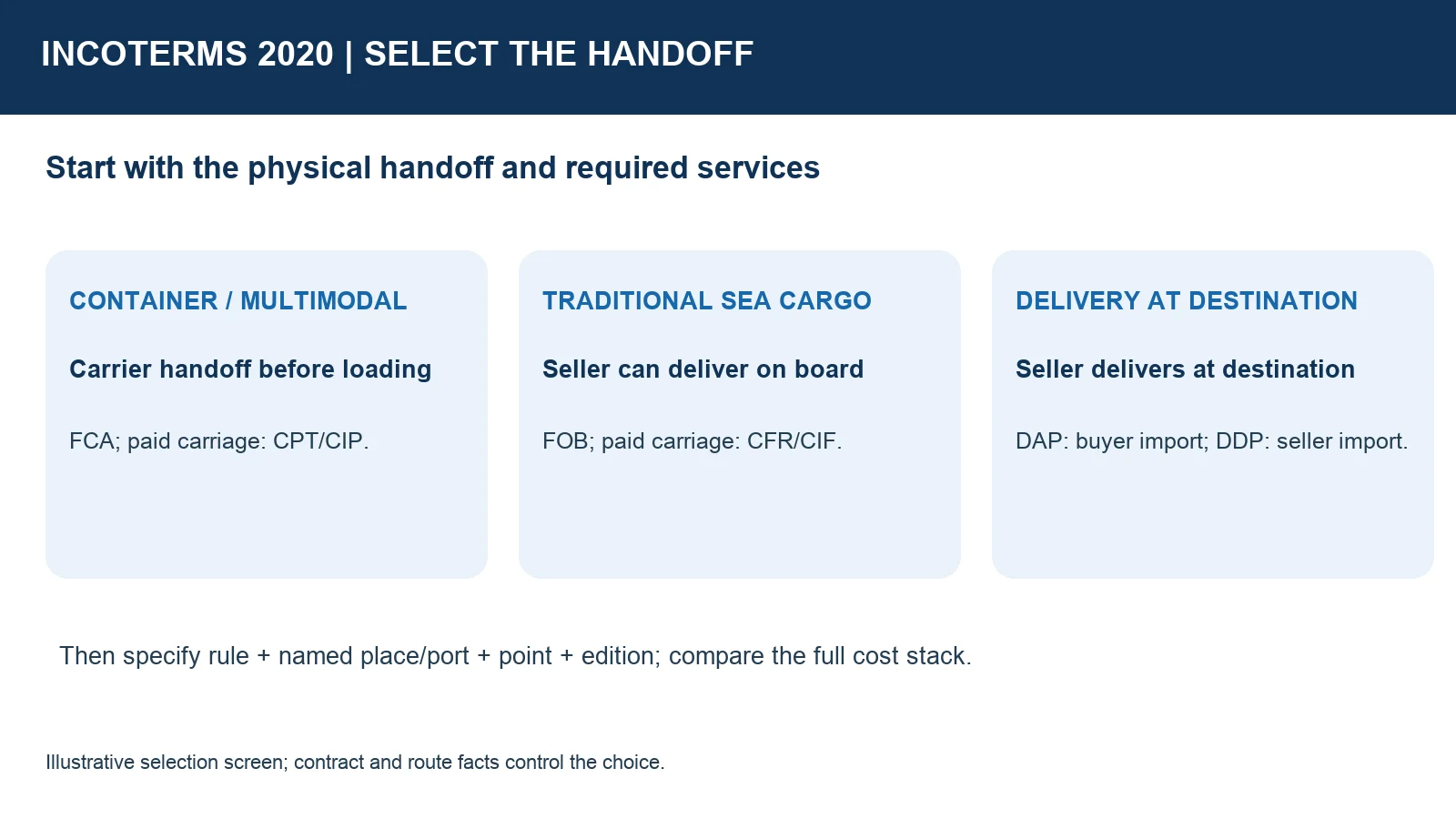
A quoted term is a contract choice, not evidence that it suits a specific shipment. For containerized industrial fans handed to a carrier before vessel loading, compare FCA, CPT or CIP with the sea-only rules.
Why risk transfer matters more than cost
Freight cost is visible and negotiable. Risk is invisible until a container is opened.
Under FOB and CIF, risk generally passes to the buyer when the goods are on board at the named origin port. Under CIF, the seller must obtain the specified minimum insurance cover; check the policy, exclusions and any extra cover needed. Separately agree a packaging specification appropriate to the actual fan model and route.
Packaging quality and Incoterms interact directly. If risk passes at origin, agree packaging and evidence of handoff suitable for the route and the exact fan model; request loading records where relevant. Our packaging guide covers what to require.
DDP looks easy and hides cost
A delivered price with duties paid is attractive on a first order, and it comes with two caveats.
First, compare the named delivery point, unloading, import taxes and any local charges in the quote. Second, verify who can lawfully complete import formalities in the destination country; a DDP promise alone does not establish that capability.
Select DDP only after destination import feasibility and the written cost scope are clear. Compare it against a route-appropriate FCA, CPT, CIP or DAP quotation on the same included-cost basis rather than assuming one term is cheaper.
Documents that go with the term
- Commercial invoice, matching the purchase order exactly.
- Packing list with carton dimensions and weights.
- Bill of lading or air waybill.
- Certificate of origin, where a trade agreement applies.
- Any product certification your market requires at import.
- Finally, insurance certificate where the term includes cover.
Check that the invoice, packing list, transport document and agreed delivery term refer to the same goods, quantities and named place. Ask your broker which documents and product requirements apply to the destination; this list is not a universal customs checklist.
Writing it into the order
A term without a named place is incomplete, and that is a common error.
For an actual on-board FOB transaction, write the named port and the agreed point where possible, for example “FOB Ningbo Port, Incoterms® 2020”; use another rule if the seller hands a container to a carrier before loading. Meanwhile agree who books the vessel, who pays terminal handling at each end, and what happens if the goods miss the booked sailing.
For the definitive rules, the ICC publishes and maintains Incoterms, and our freight comparison guide covers sea against air.
Incoterms FAQ
Which term should I use for a first order?
There is no first-order default. Map the real carrier handoff, destination import capability and services each party can control, then compare complete quotations under suitable rules.
Does CIF mean the seller carries the risk?
No. The seller pays freight and insurance to destination, though risk passes to you when the goods are loaded at origin.
Who arranges customs clearance?
It depends on the term. Under FOB and CIF you clear at destination. Under DDP the seller does, which is only possible where they can legally act as importer.
Do I still need cargo insurance under CIF?
Check the cover level, since CIF requires only minimum insurance. If the default CIF cover is insufficient for your cargo, arrange additional cover with an insurer and clarify who pays for it.
Incoterms decide where risk passes, not just who pays. Name the place, state the version, and match the packaging specification to the term you chose.