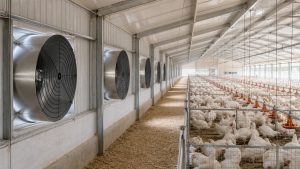
Specific speed is a way to locate a fan duty on a family map. It can help an engineer decide which impeller geometries deserve a closer look, but a number by itself cannot select a LONGWELL model or establish how that model will perform in an installed system. The useful question is: with the same airflow, stated pressure rise, gas density and speed basis, which candidate families should go to a curve review?
Before calculating, declare the formula and its units. A chart based on rpm, cfm and inches of water gauge produces different numeric values from a dimensionless expression built with coherent SI units. The scales cannot be mixed. A family map is a screening step; the actual release decision still needs a tested curve and the complete operating envelope.
Start with the duty point, not a catalogue number
Record the required volume flow Q and the pressure rise at that flow. State whether the pressure is static or total, where it is measured, and whether it includes installed inlet and outlet losses. Record the gas density at the stated operating condition. A pressure value copied from another temperature or installation can move the comparison before any fan is evaluated.
Speed is also an input. For a fixed duty, examining different candidate rotational speeds can suggest different feasible geometries. That is a comparison among designs, not a promise that turning up one existing fan will convert it into a different family. Under ideal similarity, the flow and pressure of that same fan change with speed together; its corresponding specific-speed coordinate does not simply follow the fixed-duty calculation.
State which specific-speed convention you use
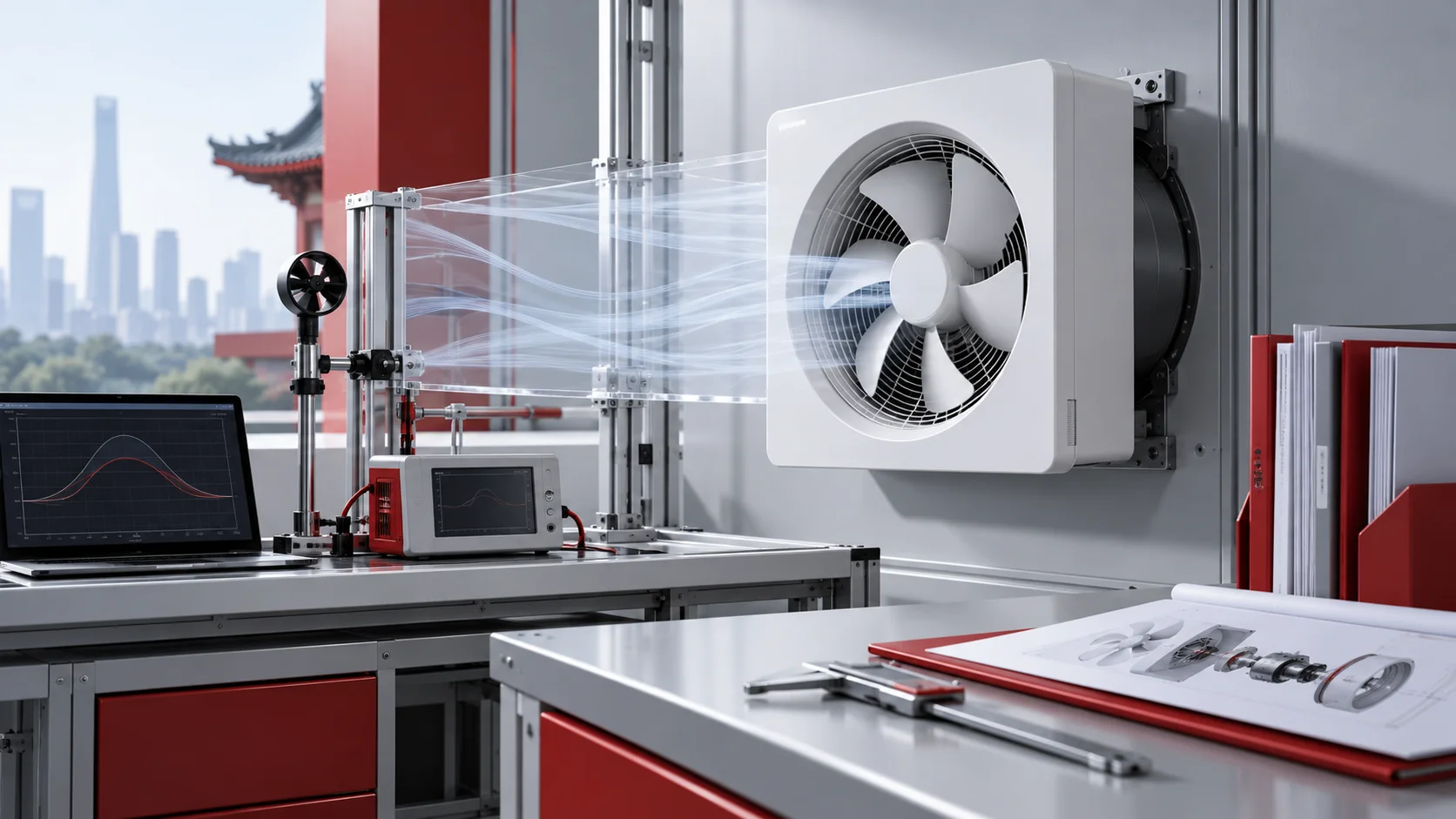
One dimensionless form is Ω = ω√Q / Y3/4, where ω is angular speed in radians per second and Y is specific energy, Δp/ρ, in joules per kilogram. Use Q in cubic metres per second, Δp in pascals and density ρ in kilograms per cubic metre. The chosen pressure definition must remain the same for every candidate. The diagram makes the required inputs and convention visible before anyone compares a value.
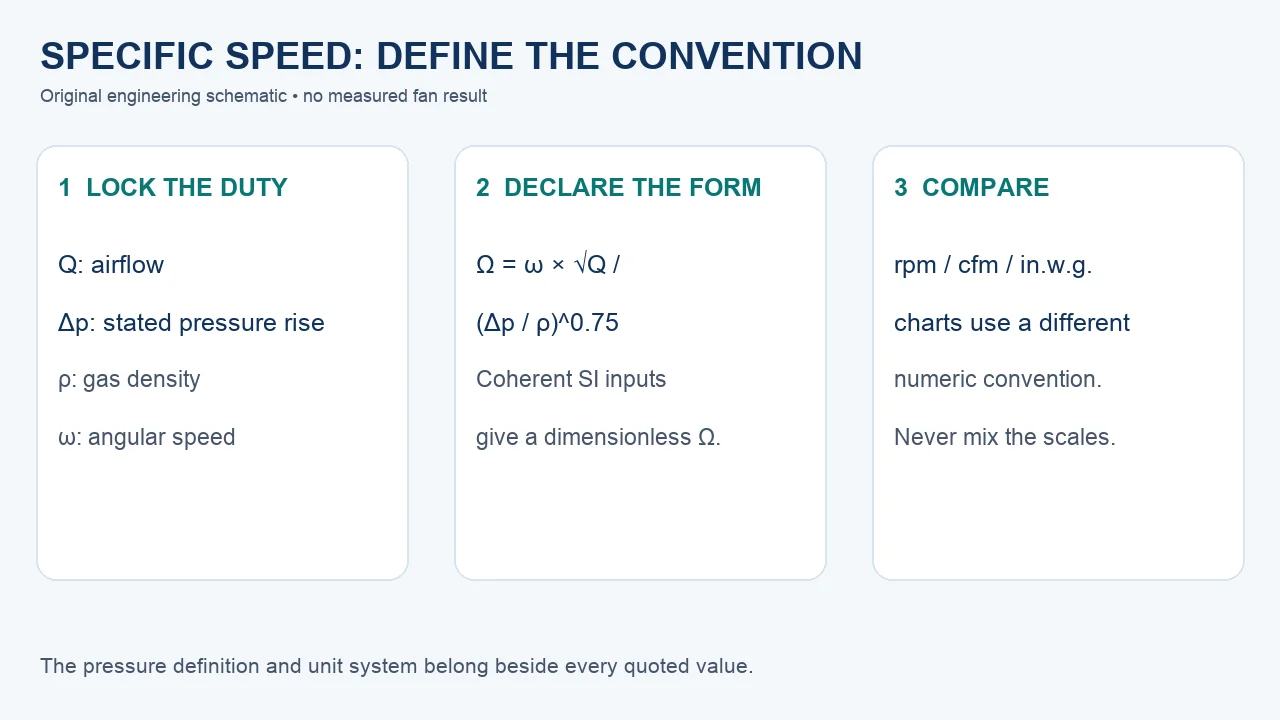
Some industry presentations use a specific-speed formula with rpm, cfm and inches of water gauge. Such charts can be useful when their own definitions and units are followed consistently, but their printed numbers must not be compared directly with Ω. Confirm any pressure-efficiency convention in a chart before using its range labels. This is especially important when two suppliers submit different calculations for what appears to be the same duty.
Use the result to shortlist families
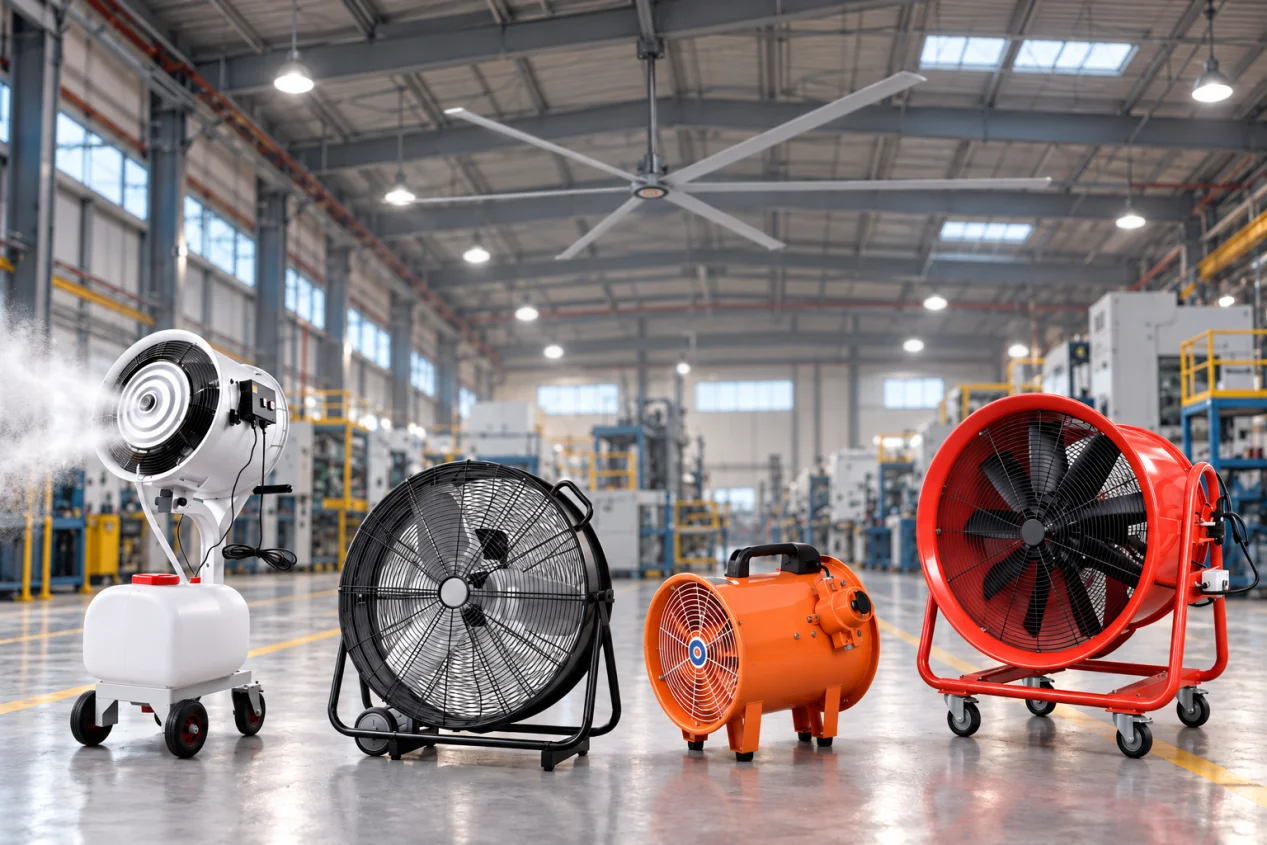
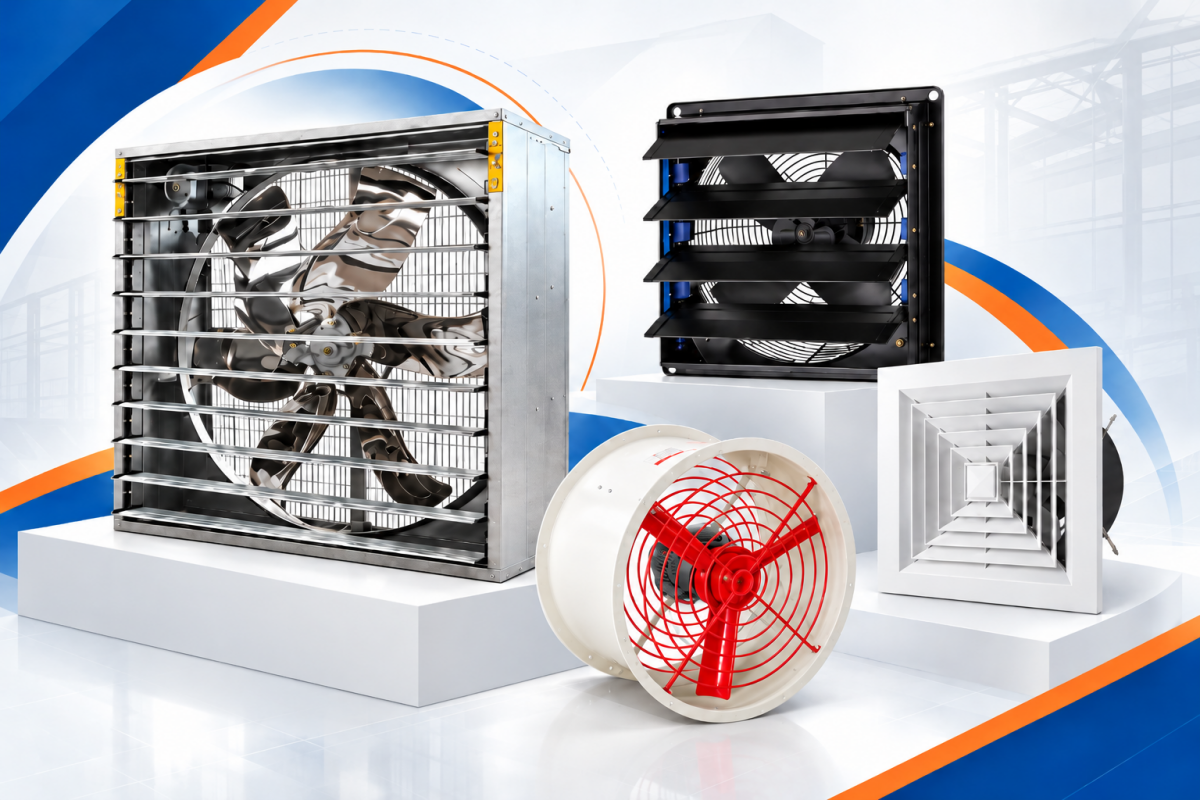
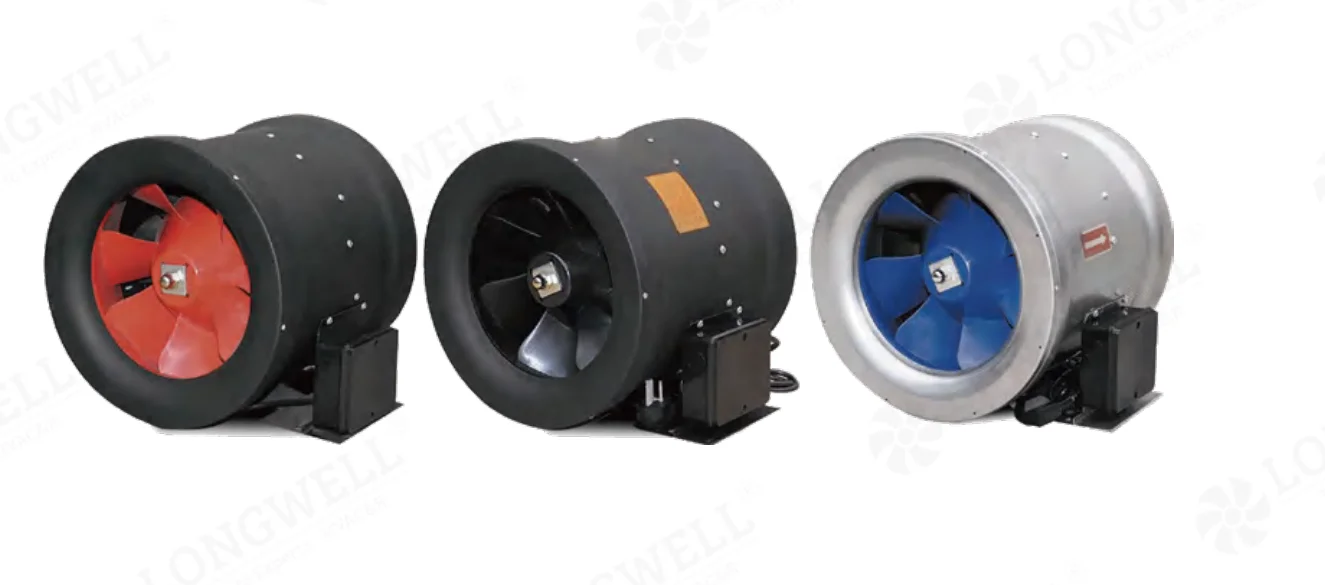
At a common convention and duty basis, lower specific-speed regions tend toward high-pressure, lower-flow centrifugal geometries; the higher-flow end tends toward axial geometry. Mixed-flow designs can occupy part of the transition. These are overlapping tendencies, not universal cutoffs. The LONGWELL centrifugal family, mixed-flow duct fan family and axial family show the range of physical forms to investigate. A category page establishes that a family exists; it does not prove an individual fan fits this duty.
The company mixed-flow catalogue illustrates the physical family with an inline casing and impeller arrangement. The pictured units are family examples from that catalogue, with no model, revision, curve or application claim assigned to this article. Their appearance helps distinguish the product form from the mathematical family map, while the final choice still depends on the exact candidate record.
Compare actual curves at the operating point
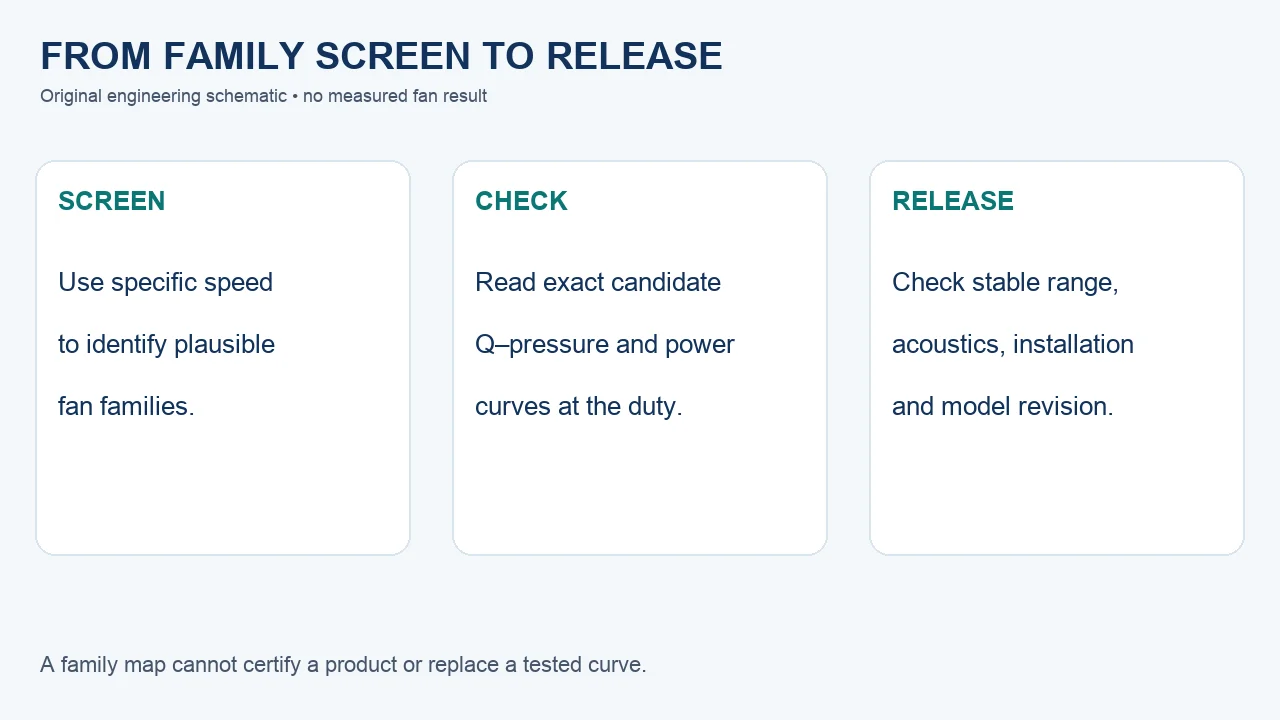
Once plausible families are known, ask for current pressure–flow and power curves for the exact proposed model and revision. Mark the required duty on each curve and check the operating point, absorbed power, motor margin and usable range. Review efficiency and acoustics at that point, not as isolated headline values. For variable duty, inspect the expected operating envelope rather than one nominal point.
Installation matters. An elbow or obstruction close to an inlet, an unsuitable discharge arrangement, or a dirty-air requirement can change what a bare catalogue comparison means. A physically convenient axial fan is not automatically the best system option, and a centrifugal fan meeting pressure is not automatically the most efficient installed choice. This is why the family screen should lead into a documented curve review and a check of the whole air path.
What specific speed cannot decide
It does not settle allowable sound, space, temperature, material compatibility, dust loading, controls, maintenance access or cost. It also does not replace a manufacturer’s tested curve or prove that an operating point is stable. Those limits explain why a numerically plausible family can lose to another after the actual system and constraints are included. The U.S. Department of Energy’s fan systems sourcebook describes overlapping axial and centrifugal capabilities and the wider factors involved in selection; AMCA’s fan-curve guide shows how exact candidates are read at a duty point.
The practical output of a specific-speed calculation is therefore a short list and a clear request for evidence. Ask for the exact model and revision, the test basis, the pressure definition, Q–pressure and power curves, and the conditions under which the candidate will operate. If two calculations disagree, first compare their unit systems and pressure definitions before debating the fan family.
Send a complete fan selection brief
For a useful engineering review, send the required flow, pressure definition and system resistance, gas density and temperature, speed or control constraints, operating envelope, electrical supply, inlet and outlet arrangement, sound limit and space available. LONGWELL can then review suitable family candidates against exact product evidence. A model recommendation must be tied to its current curve and installation boundary rather than to a universal specific-speed threshold.