“Blower” and “fan” are useful buying words, but they are not a universal engineering boundary. In some catalogues, a housed centrifugal unit is called a blower; in others, nearly the same architecture is sold as a centrifugal fan. A buyer who selects from the label alone can compare the wrong curves, the wrong pressure basis, or the wrong physical package.
The reliable answer is practical: identify the airflow path, define one airflow-and-pressure duty point, and request the curve and exact configuration that support it. The name can help you search. It cannot prove performance, fit, or equivalence.
The short answer: the label is not a test result
“Fan” commonly suggests moving a relatively large volume of air through a modest system resistance. “Blower” often suggests a more defined inlet-to-outlet path or a duty that needs greater pressure rise. Those are useful tendencies, not mandatory cutoffs. Product history, region, application language, and the standard being used can all change the name.
Use the label to find candidates, then set it aside. The purchase decision should be based on the required operating point, the shape of the performance curve, power at that point, sound requirements, controls, and the installation boundary. A catalogue category cannot replace any of those checks.
Read the airflow path before the product name
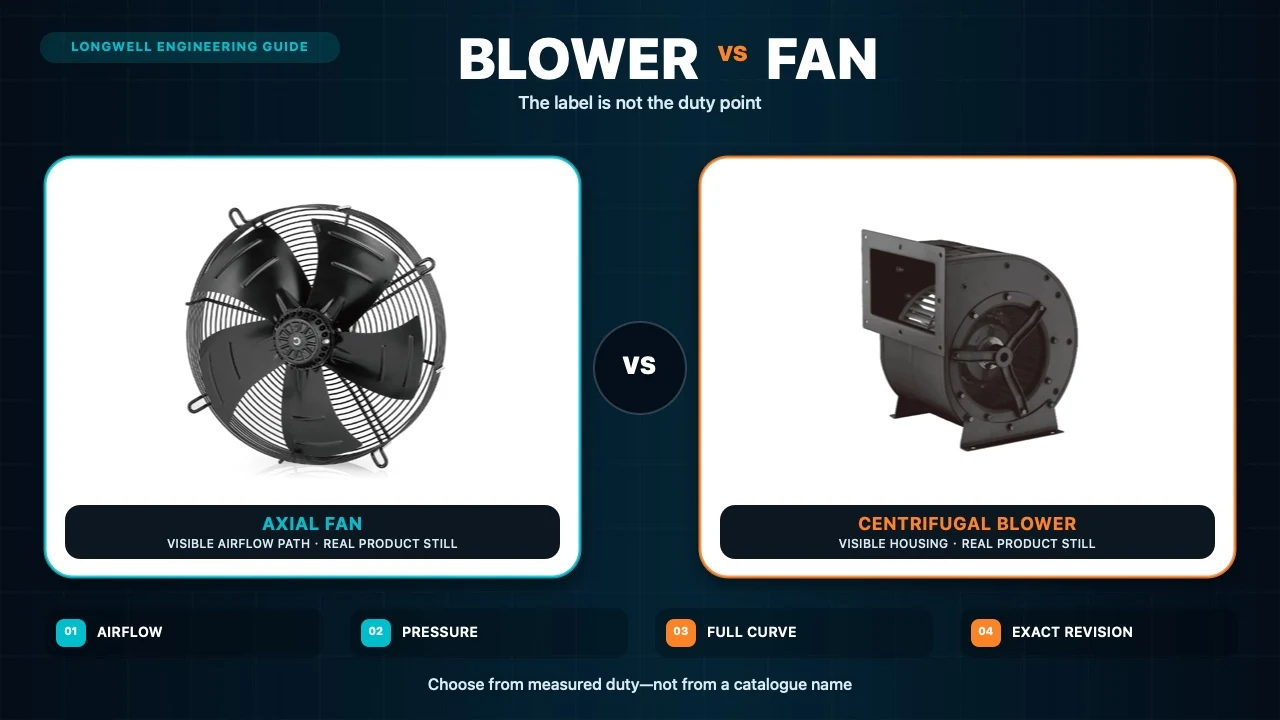
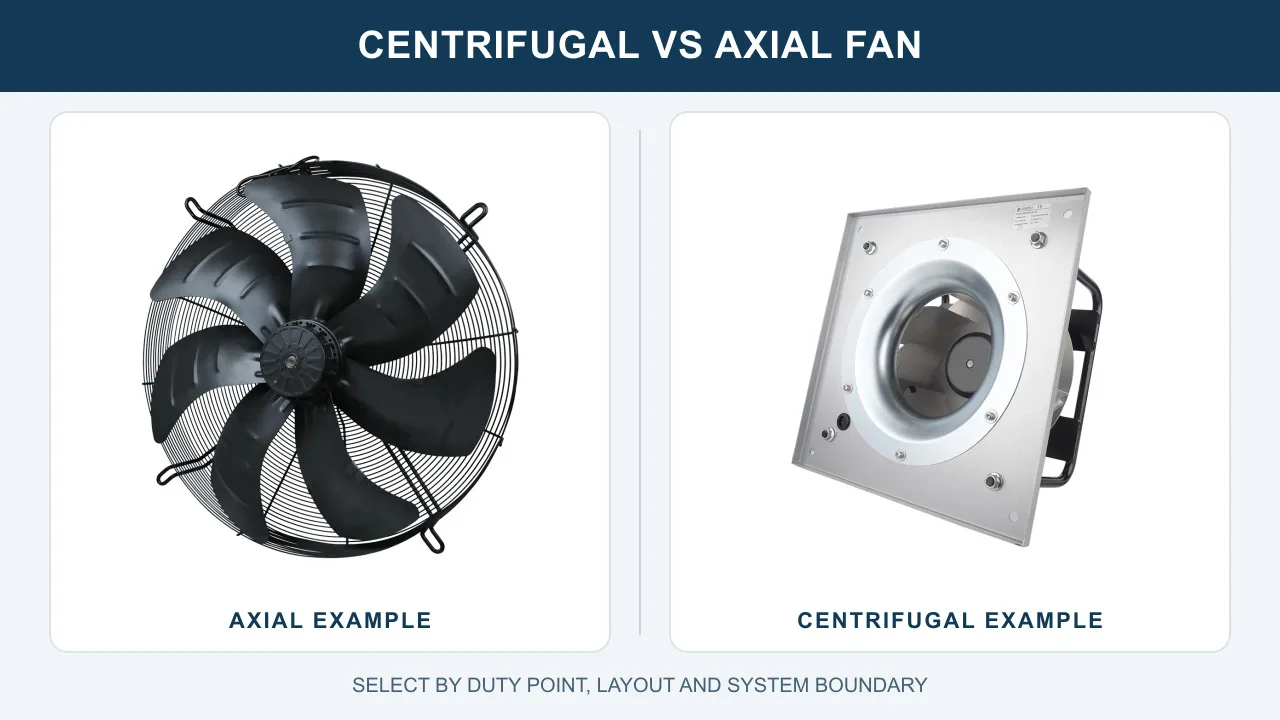
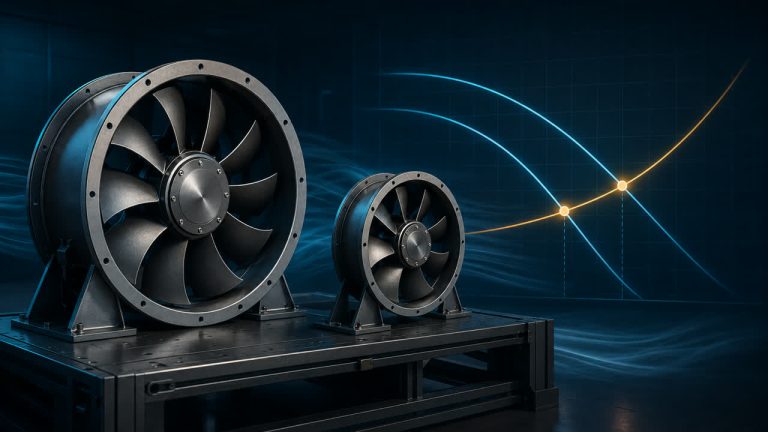
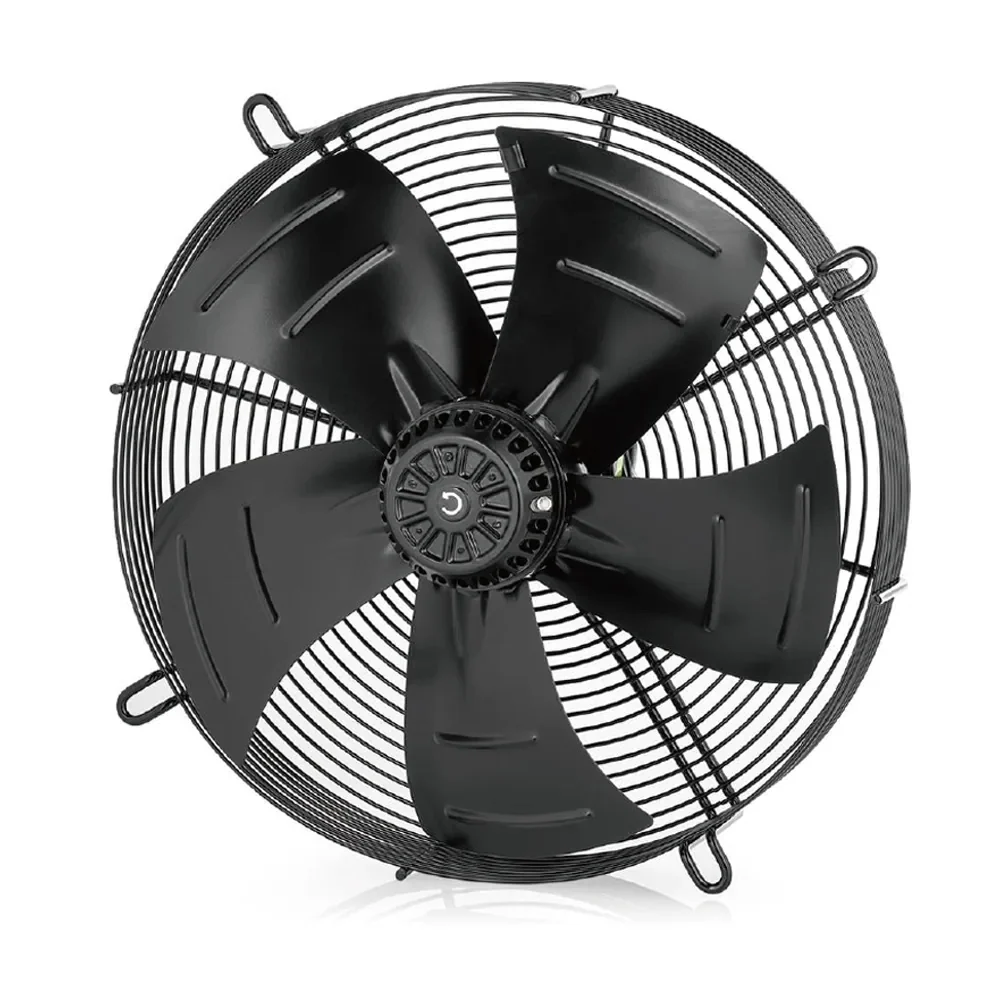
An axial fan moves air mainly parallel to its shaft. The open axial product shown below makes that visible: blades work across a broad circular area and the guard remains part of the physical package. The photograph proves visible construction only. It does not supply airflow, pressure, sound, efficiency, safety approval, or suitability for an installation.
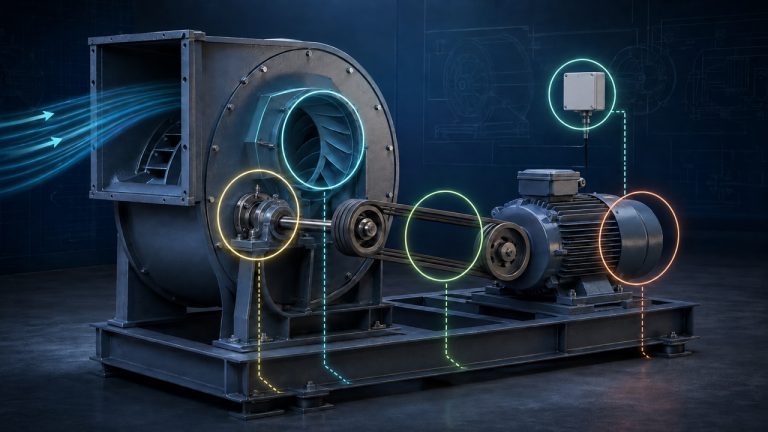
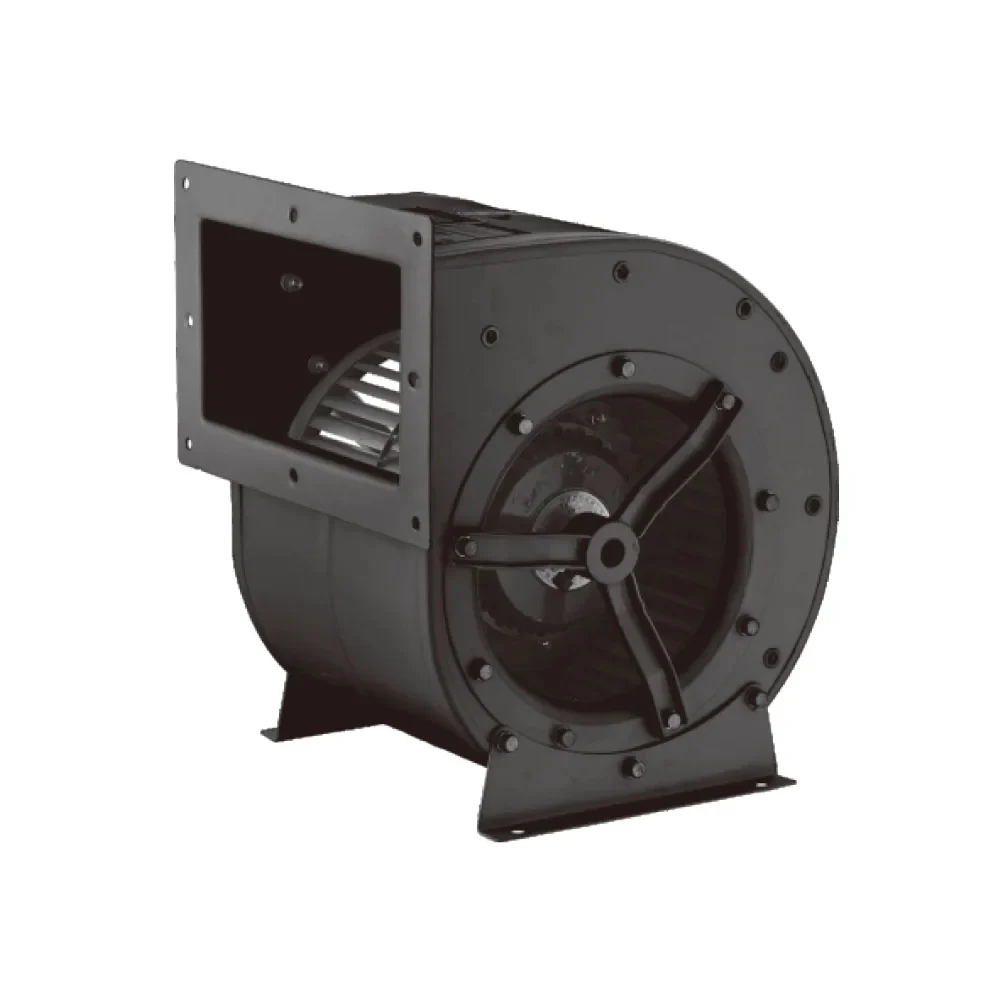
A centrifugal machine receives air near the impeller eye and sends it outward. A scroll housing can collect that flow and lead it to a defined discharge. The housed LONGWELL product below is a real centrifugal blower-family still, but the housing does not create a universal naming rule, and the image does not prove a curve or an exact project fit.
For architecture discovery, browse the current LONGWELL AC axial fan family and centrifugal blower fan family. These are family-level routes, not substitutes for an exact model, suffix, revision, or controlled submittal.
Treat pressure-ratio cutoffs as conventions, not universal law
You may see tables that separate fans, blowers, and compressors by pressure ratio. Before using one, check the referenced standard, edition, market, and product scope. Common conventions do not all draw the boundary in the same place, and some authorities explicitly treat “fan” and “blower” as overlapping terms.
When pressure ratio is relevant, calculate absolute discharge pressure divided by absolute inlet pressure. Do not divide gauge readings and call the result a pressure ratio. Also keep pressure rise, inlet condition, gas density, and temperature attached to the calculation. A bare ratio without those conditions is not enough to compare two quotations.
Put one duty point on the full curve
Start with the airflow the system must deliver and the pressure rise it must overcome. State whether that pressure is static or total. Add inlet absolute pressure, temperature, gas composition or density, altitude when relevant, contamination, and the expected operating range. These details turn a search term into an engineering duty.
Then place the duty point on the supplier’s complete performance curve. Maximum airflow and maximum pressure usually occur at different conditions; they cannot be joined into an imaginary operating point. Compare the fan curve with the system curve, and review absorbed power, motor capacity, speed, control margin, efficiency, and sound at the same point. Our guide to reading centrifugal fan curves explains that operating-point check in more detail.
Compare axial and housed centrifugal options without guessing
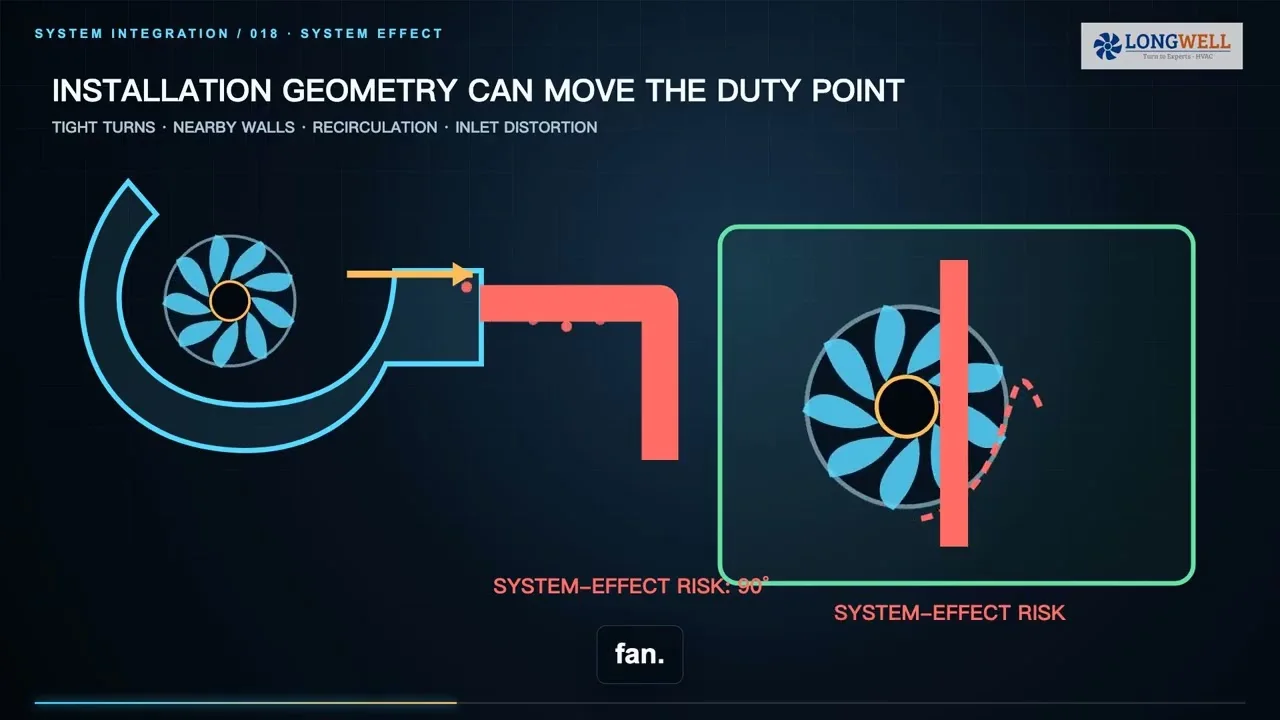
Begin with what each candidate has to do, not with which one appears more powerful. An axial arrangement may suit a broad, relatively open flow path and a centrifugal package may suit a ducted route with a defined discharge, but neither conclusion is automatic. Guards, filters, coils, bends, transitions, silencers, and inlet obstructions change the system resistance and can move the real operating point.
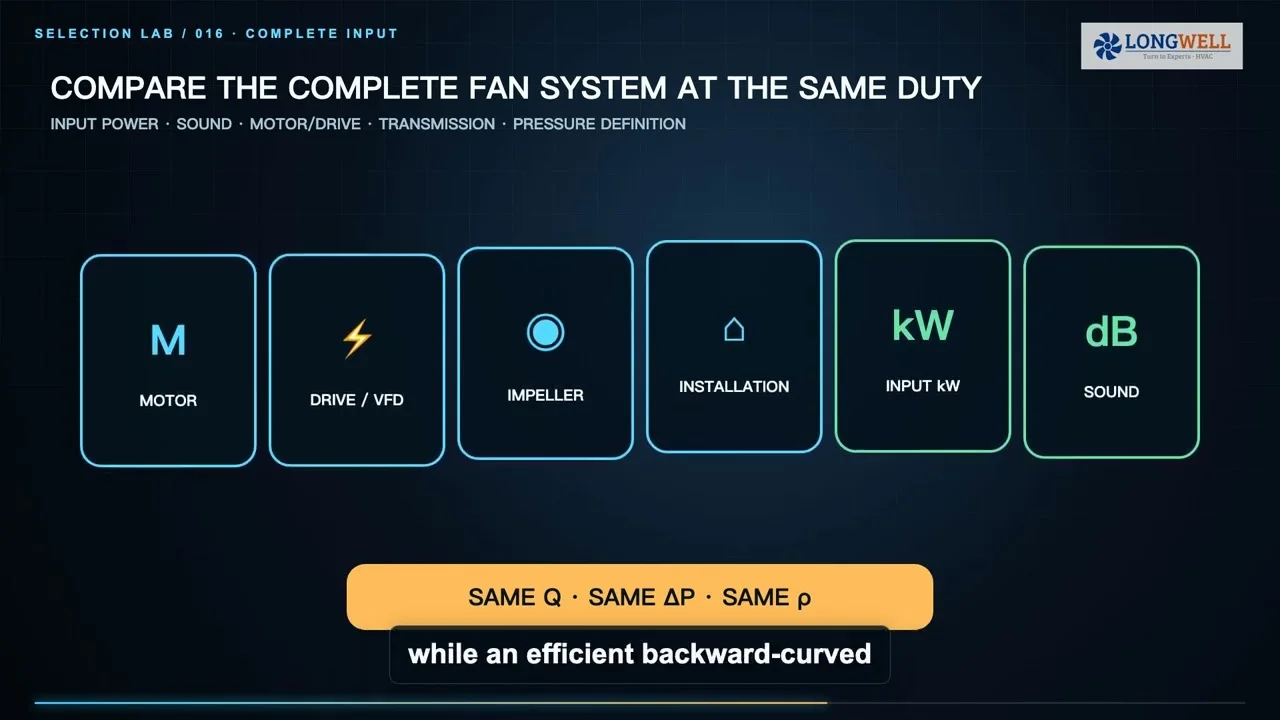
Compare quotations on the same units and conditions. Confirm the pressure basis, air density, speed, motor and controller, electrical input boundary, curve tolerance, and test or rating method. If one supplier quotes free-air flow and another quotes flow against resistance, the numbers are not ready for a price comparison.
What a supplier submittal must include
- Exact model, suffix, configuration, and document revision.
- Required airflow and static or total pressure at the declared duty point.
- Complete performance, power, and—when needed—sound data around that point.
- Inlet pressure, temperature, density or gas condition, and the applicable test method.
- Motor, drive, controller, speed range, power supply, and control interface.
- Dimensions, mounting, inlet and outlet details, rotation, materials, and environmental limits.
- The precise scope and revision of any certification or compliance claim.
A family brochure is useful for screening. It is not controlled evidence for a particular suffix. Keep every curve, drawing, certificate, and quotation tied to the same exact identity before approving a purchase.
Replacement and retrofit: six checks before equivalence
A replacement is not proven by a similar wheel diameter or housing silhouette. Check the required duty point, the full curve and power demand, the electrical and control interface, the mechanical envelope and connectors, the airflow direction and rotation, and the validation requirements of the host equipment. Also confirm whether upstream or downstream changes have altered the system resistance since the original unit was selected.
Photographs and CAD can verify visible structure when the exact suffix and revision are controlled. They cannot establish aerodynamic performance, certification, noise, or safe compatibility. For this article, no exact-revision CAD matched both illustrated product identities, so no nearby drawing was substituted.
Turn “blower vs fan” into an RFQ decision
Send one compact request: “Please quote the exact model and suffix for our stated airflow and static or total pressure, and return the supporting curve, absorbed power, motor and control configuration, air condition, test method, tolerance, dimensions, sound data if applicable, and document revisions.” Add minimum and maximum points when the system modulates.
That request does more than settle a vocabulary question. It gives engineering, purchasing, and the supplier the same decision endpoint. If two candidates cannot be compared at the same duty, pressure basis, configuration, and evidence revision, the blower-versus-fan label has not made them comparable.
Choose the right blower
Longwell manufactures 247 blowers in-house. Send airflow, static pressure and voltage — an engineer replies with a matching model, performance curve and price within one working day.