Shipping an industrial fan is a handoff between engineering, packing and receiving. The useful question is not whether a carton looks substantial. It is whether the agreed package protects the specific fan configuration against the handling and transport route, and whether both sides can tell what happened if damage is found.
Short answer: agree a packing plan for the exact unit, verify how the fan and the package are supported and restrained, record the outer marks and packing list, then inspect the shipment before installation. The pictures below show an example of container loading and a decision sequence; neither is a tested specification for every fan.
Start with the actual fan and transport route
Record the model and configuration, overall dimensions, mass, centre of gravity where relevant, exposed shaft or connector details, lifting points and destination. A small boxed component and a large assembled axial unit present different handling questions. Ask whether the fan will travel by parcel network, pallet, loose cargo or container, and whether there is a transfer between modes.
The packing method should follow those inputs rather than a universal material list. For example, a crate can protect a large assembly from contact, but the crate itself still needs a load path, handling points and securement appropriate to the journey. The IMO/ILO/UNECE CTU Code provides general guidance on packing and securing cargo transport units across land and sea. It is guidance for the transport unit, not proof that a particular fan crate has passed a test.
What a real container photograph can show
This LONGWELL image shows large guarded axial fan assemblies inside a container. Visible cardboard edge protection and stretch wrap help identify the handling arrangement. The picture does not reveal the restraint design, moisture barrier, crate rating, route or post-delivery result. Request those records for the actual order rather than treating a photograph as qualification evidence.
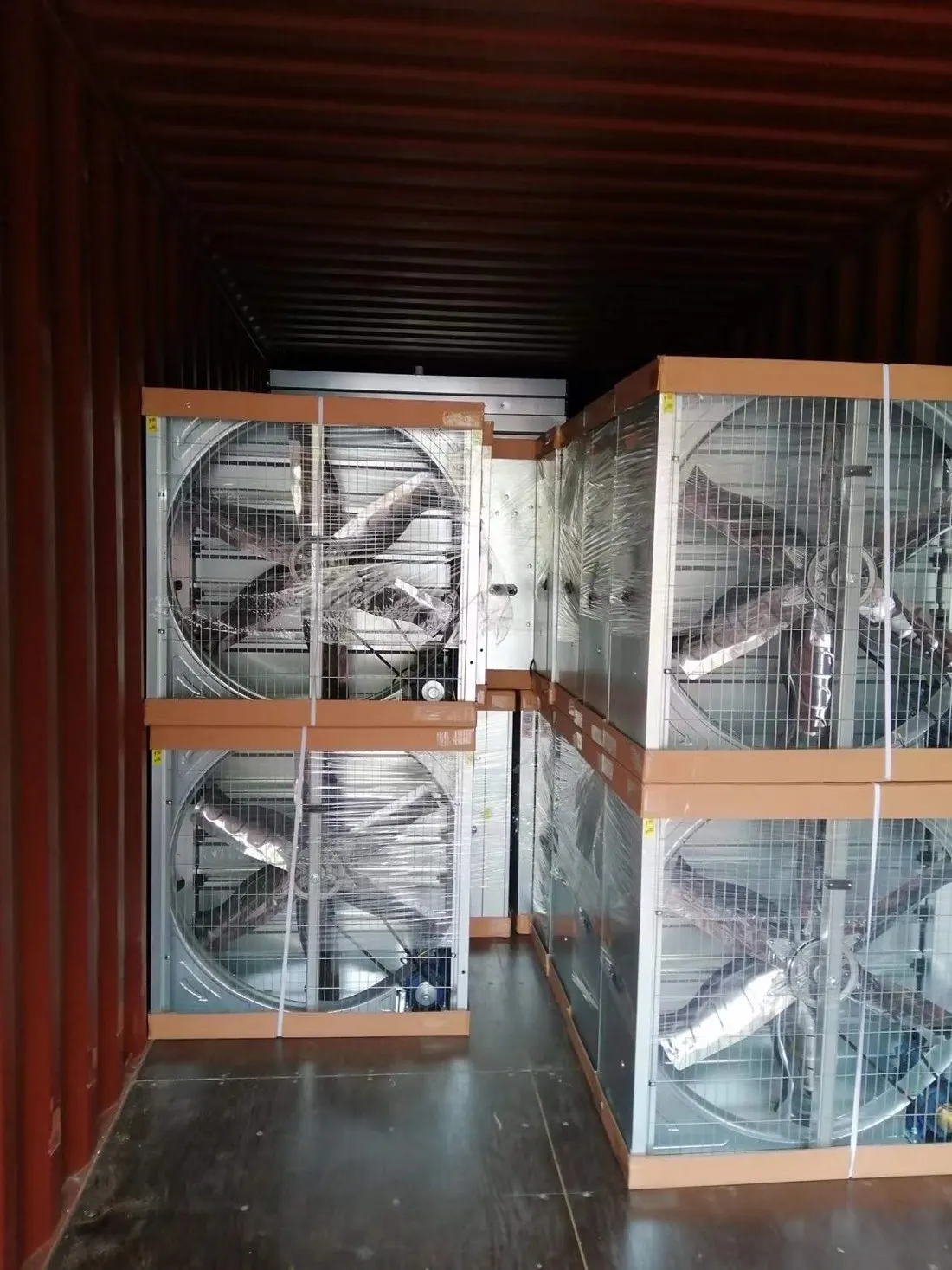
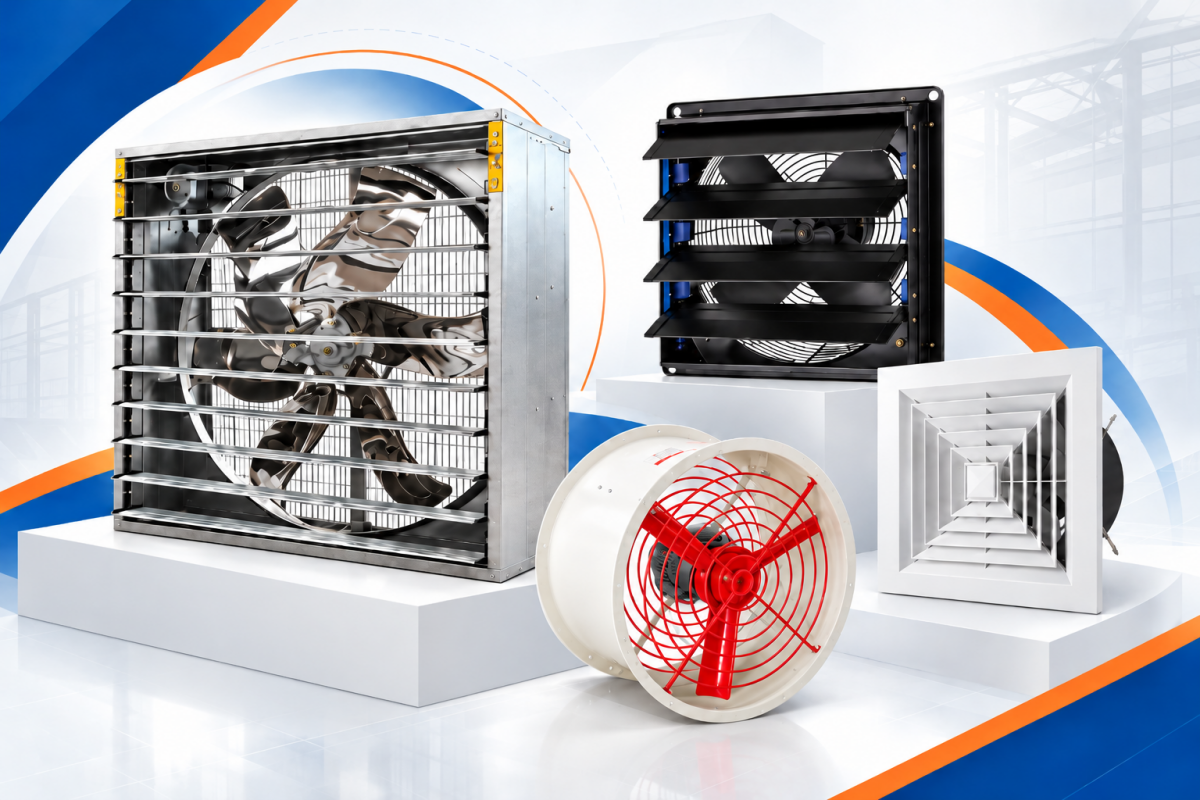
For an axial fan family, the visible grille and frame identify the type of assembly; the image does not establish an exact model or its operating duty. Buyers can browse the LONGWELL axial fan family to identify candidate formats, then ask for the selected model’s drawing and packing instructions. A family page is a starting point, not evidence of fit for a shipment or application.
Protect the unit without creating a new damage path
Before packing, identify which parts must remain clear of straps, pads and contact loads. Protect vulnerable terminals, cable exits, guards and shaft ends according to the drawing. If an impeller or other moving part needs restraint for the route, specify how it will be fitted and removed without loading a bearing or deforming a blade. The receiving team must know whether any transport restraint remains in place.
Transport vibration and impact are different bearing risks. SKF distinguishes true brinelling associated with shock overload from false brinelling associated with vibration while a bearing is stationary in its bearing damage guide. A noisy bearing on arrival needs inspection and a documented cause; the symptom alone does not prove when or how damage occurred. Do not prescribe a single wheel-locking method without the fan manufacturer’s instructions.
Agree the evidence at three handoffs
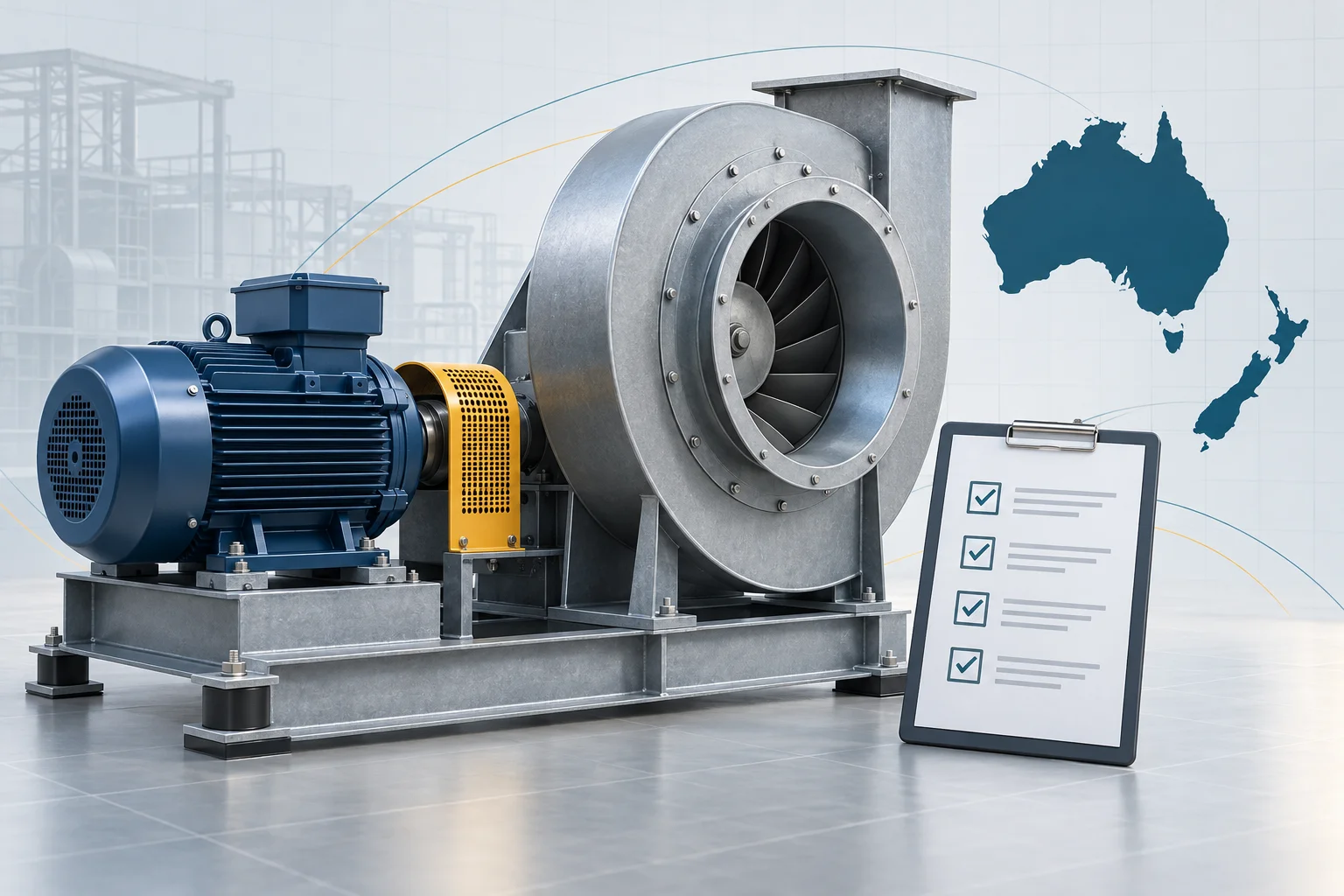
The most useful packing checklist separates decisions made before release, observations at dispatch and checks at receipt. LONGWELL’s internal outgoing inspection instructions call for a stated packaging requirement, a check against the customer’s transport mode, and photos of outer marks, product details and pallet packaging. Those instructions describe a review process; they do not certify every shipment. Ask for the approved order-specific record.
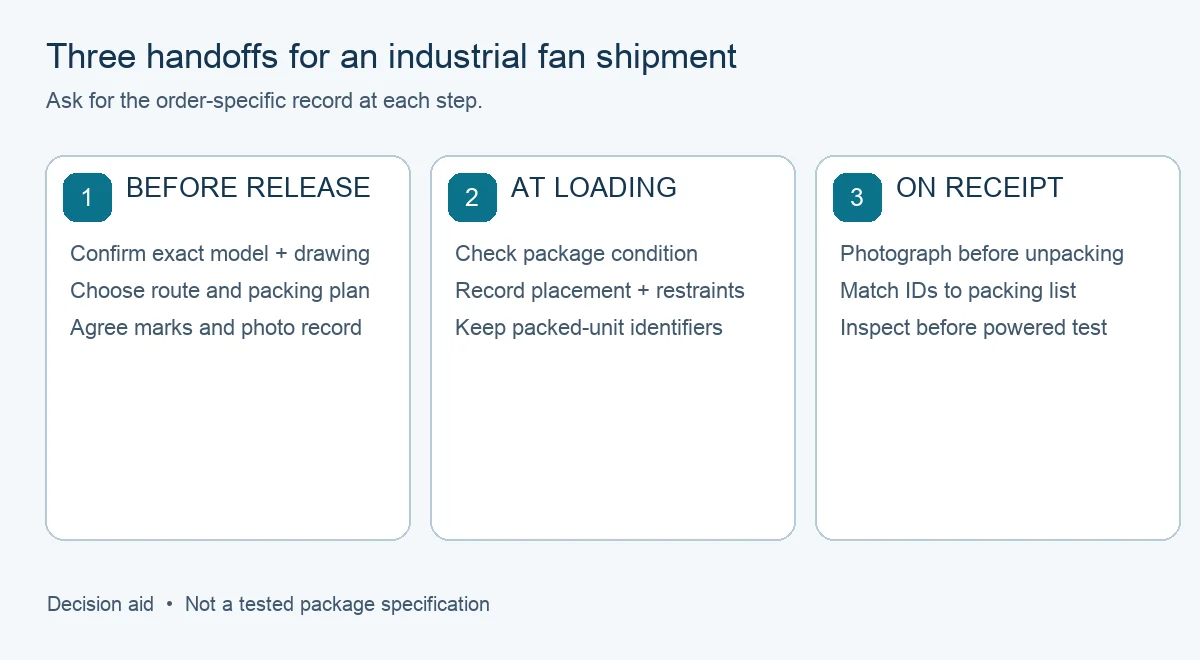
Before dispatch, agree the configuration, protective materials, package orientation, outer marks, serial or batch reference and who will record the packed unit. At loading, record the condition and placement of packages and the securement method. At receipt, document damage before unpacking, keep the packaging and compare identifiers with the packing list. The exact carrier notice period and risk transfer depend on the contract and transport documents, so check those terms rather than assuming a universal claims window.
Moisture and corrosion need a route-specific plan
Long routes and changing temperature can create moisture exposure, but the right control depends on the package design, environment and duration. A barrier, desiccant, corrosion-inhibiting material or indicator may be appropriate when specified for the actual item; none is automatically sufficient. If a coating, electrical component or bare machined surface needs special protection, identify it on the packing instruction and check that the material used is compatible.
For a large fan, ask how the packed unit is ventilated or sealed, where water can enter, and how the receiver should judge compromised packaging. A damp carton or staining should trigger an inspection, not an automatic conclusion that the fan is safe or defective. Preserve photographs and the packing list before changing the condition of the package.
Receiving inspection before commissioning
Match the package identifiers to the order and drawing. Inspect the frame, guard, impeller clearance, connections and visible surfaces. Remove transport restraints only as instructed. If damage, misalignment or unexpected bearing noise is suspected, stop and contact the supplier before powered testing. A brief run cannot replace the installation and safety checks in the model-specific manual.
For another view of the procurement handoff, the LONGWELL ordering guide explains the types of documents a buyer can request. Verify the actual model, revision and shipment terms on the quotation and packing record. That is more useful than relying on broad promises about packaging or delivery.
Need a packing review for your fan order? Send the model or drawing, quantity, destination and transport route to sales@longwellfans.com.
Choose the right industrial fan
Longwell manufactures 38 industrial fans in-house. Send airflow, static pressure and voltage — an engineer replies with a matching model, performance curve and price within one working day.