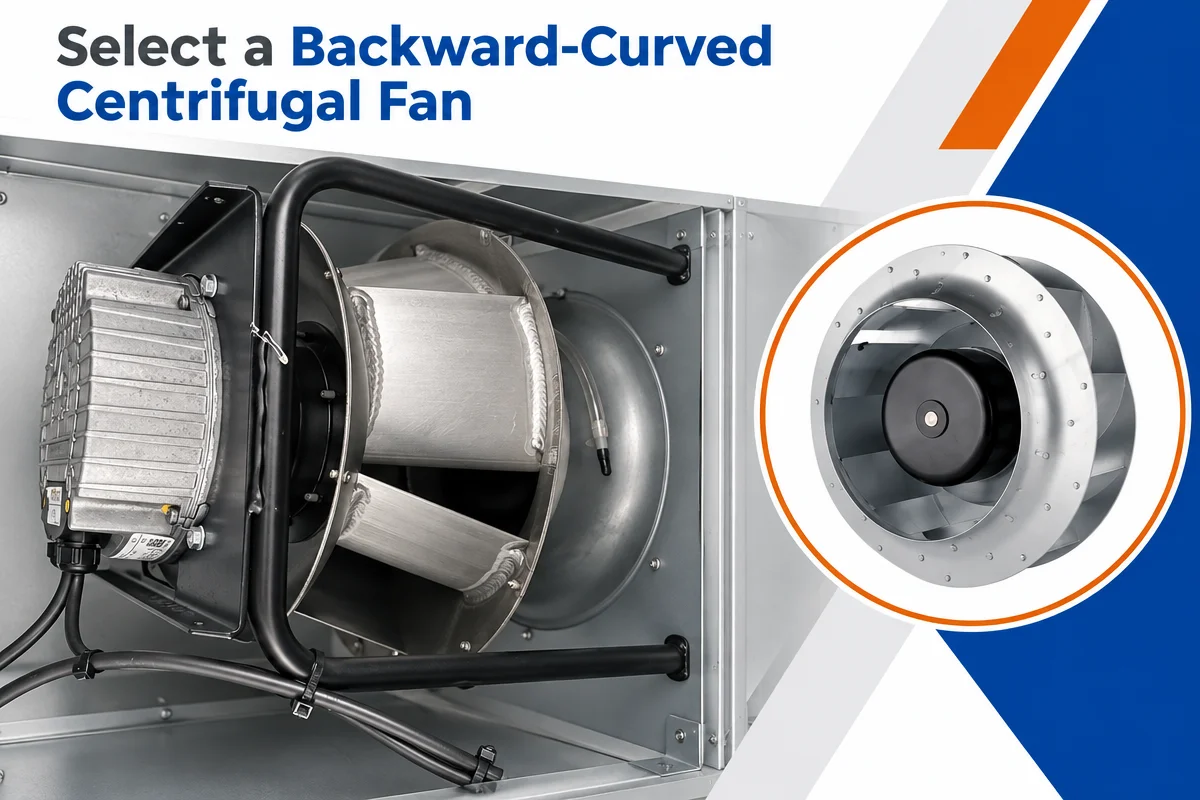
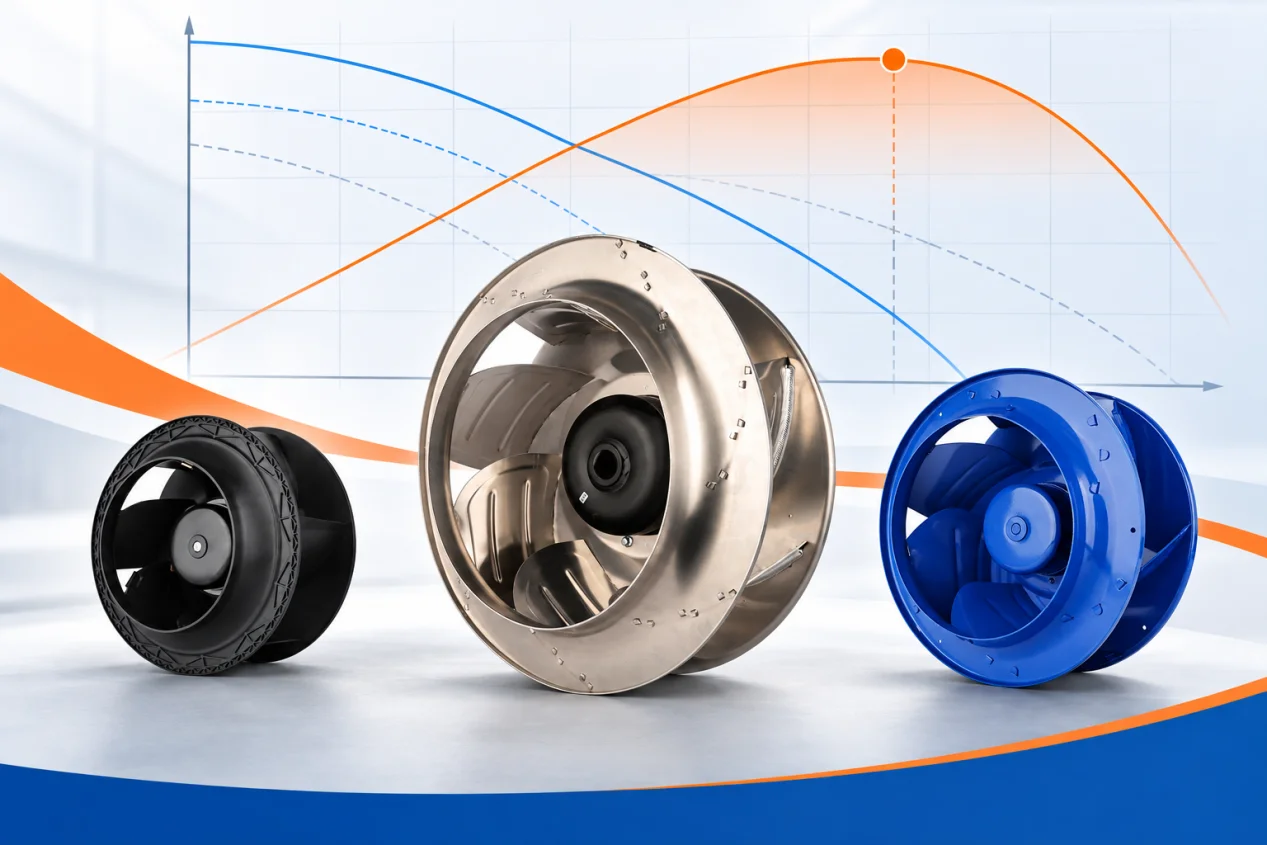
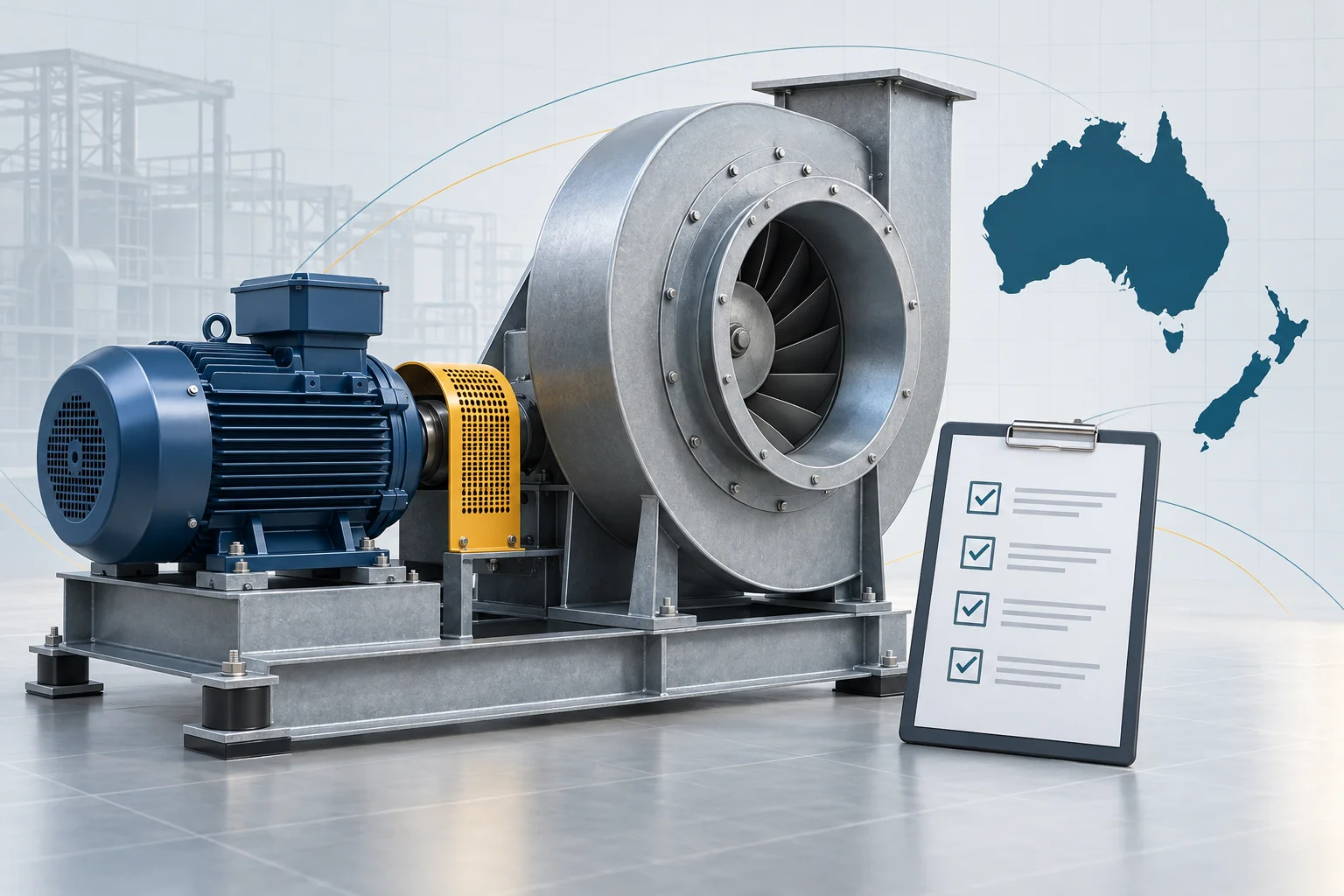
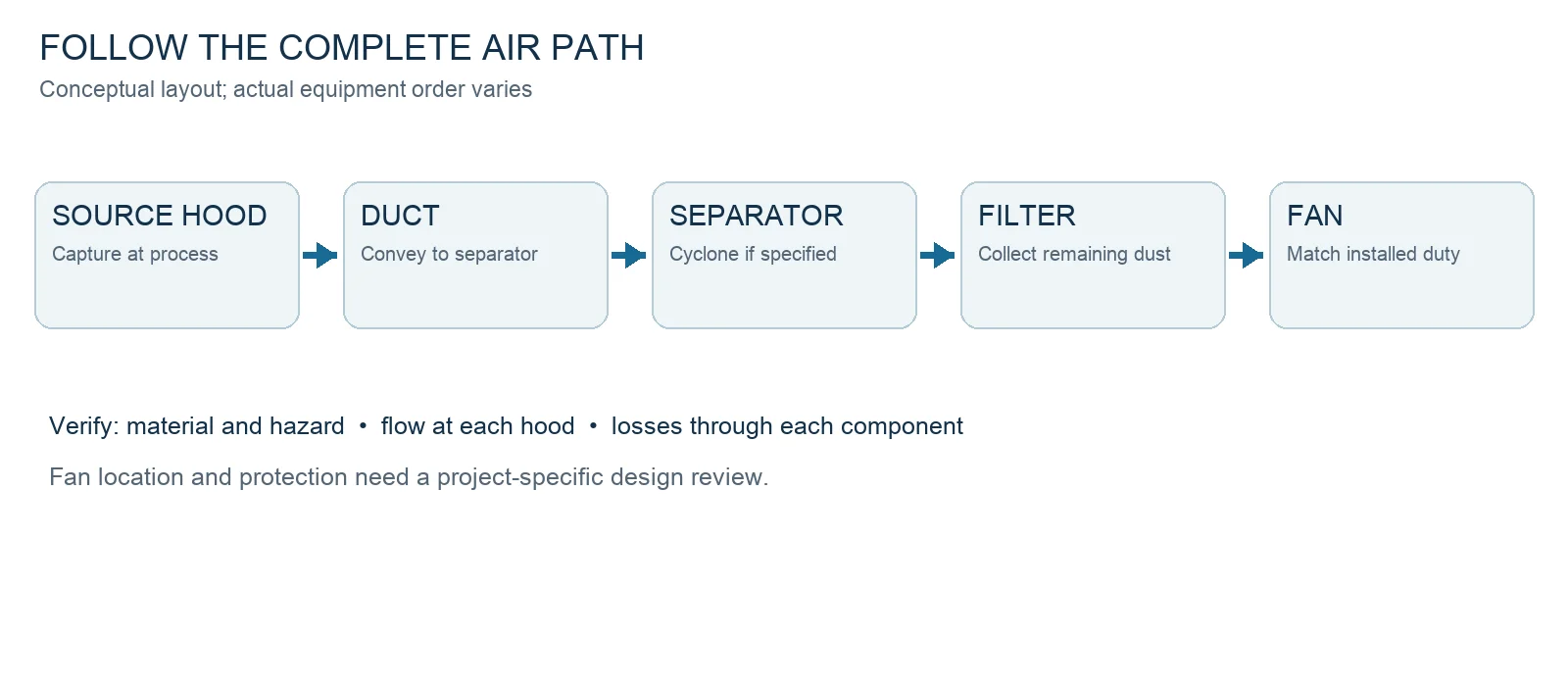
A dust-collection fan cannot be selected from a free-air flow number. The hood must capture material at the source, the duct must convey it, and any separator and filter add resistance. The practical decision is to define the material and the whole air path, then compare the required flow and pressure with an exact fan curve. A cyclone is one possible separation stage, not a universal requirement.
Trace capture and conveying before choosing the wheel
A hood that misses the dust at its source cannot be rescued by a larger fan somewhere downstream. Record which machines can run together, the capture arrangement at each port, and the proposed branch layout. In a conveying duct, material can settle if the air movement is inadequate for that particular particle size, loading and geometry. The needed transport condition is a design input, not a single speed that applies to wood chips, fine powder and metal turnings alike.
Inspect each branch and elbow as part of one route. A closed gate, a poorly placed pickup, a sharp transition or accumulated material may change the real duty. The original article presented a table of universal transport speeds; it has been removed because that table lacked the material and system basis needed to use the numbers safely. Have the system designer specify the conveying criterion for the actual material and operating combinations.
What a cyclone can and cannot do
A cyclone separates particles by changing the air path and directing some material toward a collection outlet. Its performance depends on particle properties, inlet conditions and the particular separator geometry. Fine particles can remain in the air stream, so a cyclone does not automatically replace a final filter. Some systems use a cyclone before filtration; others use a different pre-separator or no cyclone. Follow the equipment design rather than assuming a fixed sequence from a generic diagram.
The separator also adds resistance. Ask for the selected cyclone’s pressure-loss information at the required flow and material load, then include it in the complete pressure budget. No generic pressure drop or filter-life extension can establish what a particular installation will deliver.
Put the fan on the correct side of the process
Fan location changes what reaches the impeller. A fan on the filtered-air side has a different exposure than a fan that handles particle-laden air directly. Wheel geometry, housing construction, erosion allowance and access for inspection must match the actual airstream and maintenance plan. Radial and other centrifugal designs are possible engineering choices; the blade name alone cannot prove clog resistance, efficiency or suitability for an abrasive mixture.
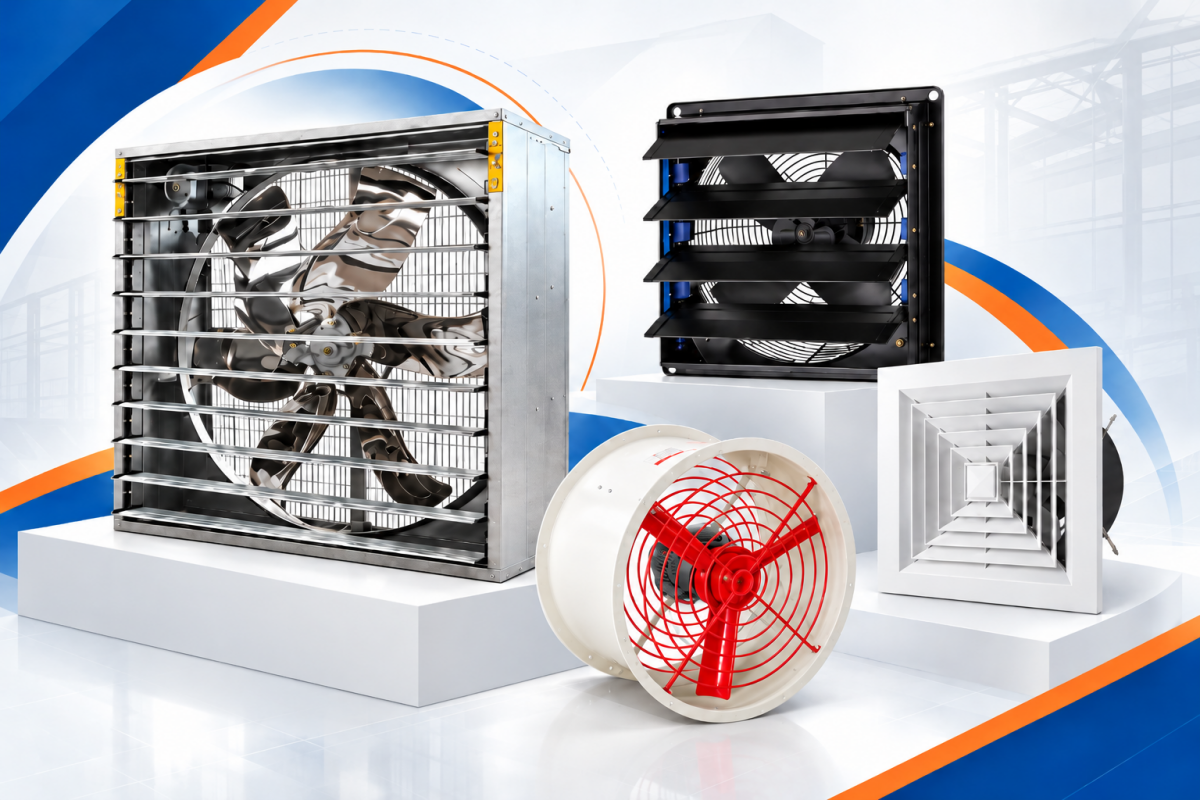
LONGWELL’s industrial centrifugal fan family is a product route for review. That family page identifies available options, not a certified match for a particular dust, separator or hazardous area. Request the exact model curve, construction, motor data and application limits before using it in a design. Our impeller comparison explains geometry vocabulary; it is not a substitute for a project-specific test or hazard assessment.
Build the pressure budget at the required flow
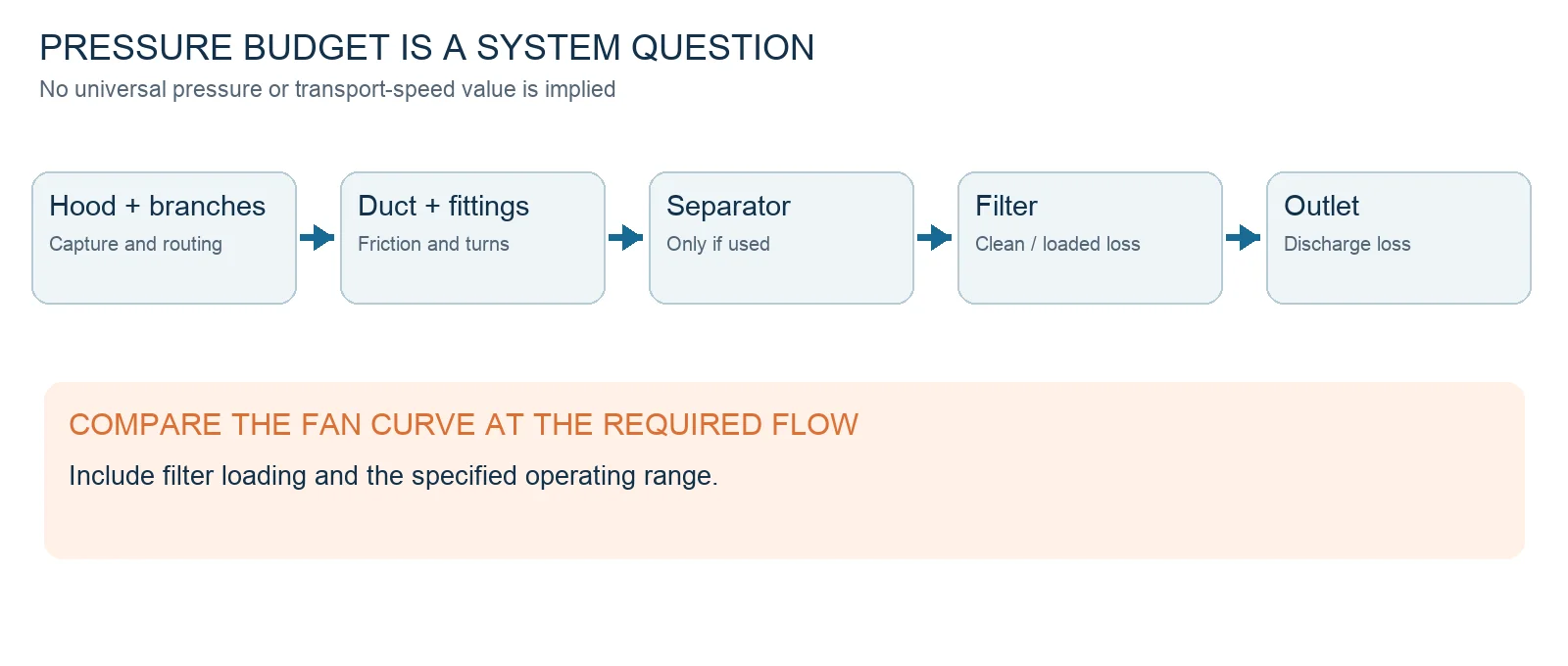
Combine the losses from the hood, branches, ducts, fittings, optional separator, filter, outlet and accessories at the intended operating flow. The filter deserves two checks: a clean state and the allowed loaded state from the filter maker. As resistance changes, the operating point can move along the fan curve. The US Department of Energy fan-system sourcebook describes why filter cleanliness and the whole system curve matter to fan performance.
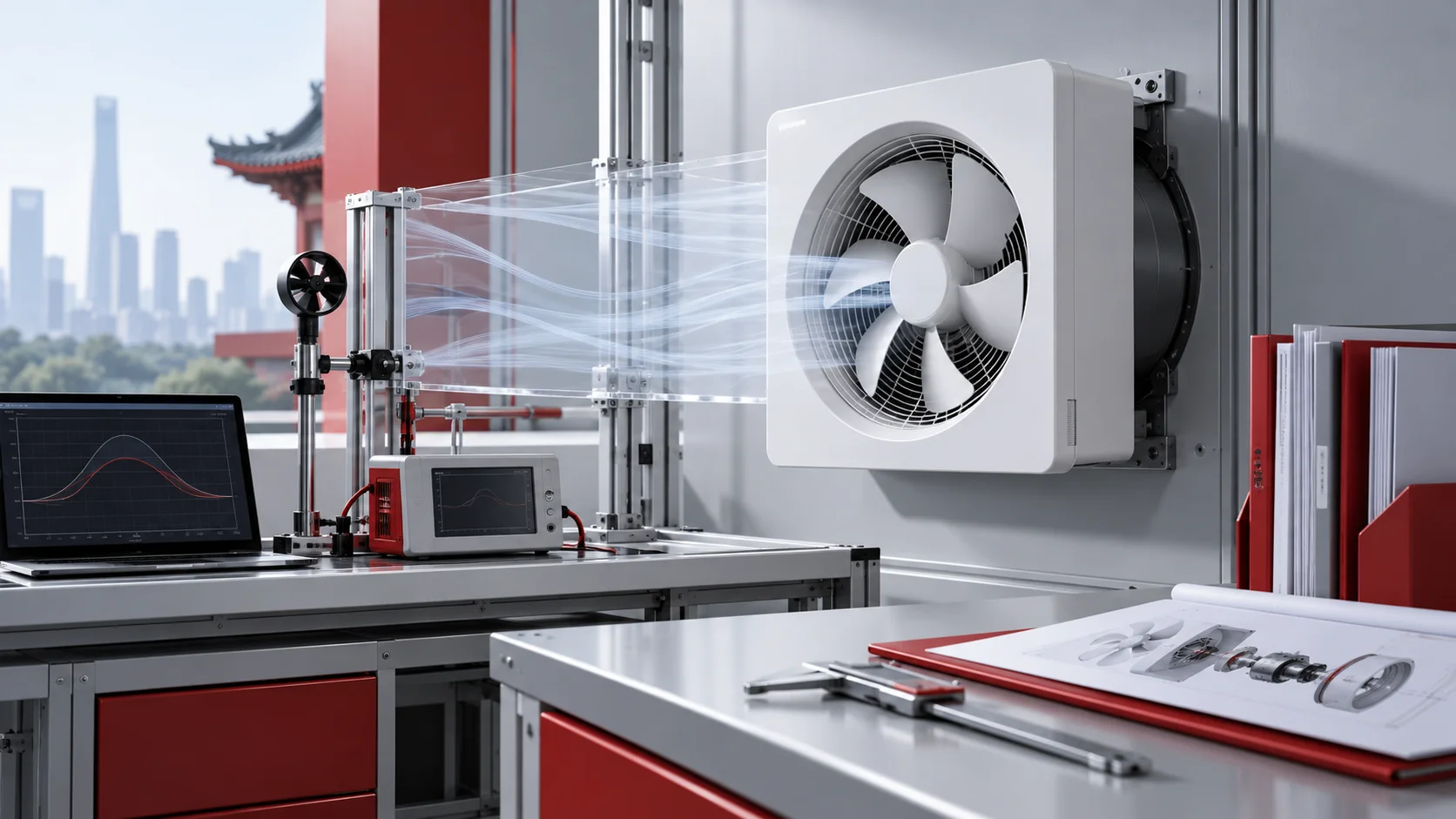
Ask the supplier for the exact pressure basis and a curve at the specified speed and air conditions. Then confirm electrical input, control range, noise requirements and the installation envelope. A catalogue maximum airflow at negligible resistance does not show the delivered flow through a loaded filter. Commissioning should compare the assembled system with the designer’s capture and conveying requirements; a fan curve alone is only one part of that evidence.
Keep combustible-dust decisions with the hazard assessment
Wood flour, some metals and other finely divided materials can create fire or explosion hazards. The material, process and site determine what protection is needed. Do not infer an explosion-protection rating from a family photo, a generic fan label or this article. The OSHA combustible-dust guidance describes the need to examine collection equipment, leakage, housekeeping and protective methods; the applicable design and inspection requirements need a qualified, site-specific review.
Record possible ignition sources, where dust can accumulate, separator and collector locations, isolation needs, safe discharge and the planned maintenance process. Those questions should be settled before ordering a fan or changing its speed. A lower-speed setting can alter capture and conveying, so energy optimization belongs after the minimum operating condition and safety case have been established.
A practical specification and maintenance handoff
For an inquiry, send the dust description and available hazard information, each hood’s required flow, simultaneous machine combinations, a duct sketch, the selected separator and filter data, clean and loaded resistance, outlet arrangement, power supply, controls, space constraints and the applicable site requirements. Identify what has been measured and what remains a design estimate. Ask for the exact candidate fan model and curve revision rather than a broad family claim.
During operation, compare capture at the hoods with the commissioned baseline. Check filter condition, branch settings, collection-bin level, duct deposits and fan vibration using the equipment manufacturer’s service instructions. A falling capture rate may have several causes; diagnosing the path prevents replacing a sound fan while the restriction remains elsewhere. Keep changes to gates, filters and fan controls in the system record so later checks use the same operating basis.
Choose the right blower
Longwell manufactures 247 blowers in-house. Send airflow, static pressure and voltage — an engineer replies with a matching model, performance curve and price within one working day.