Two inflatable products can reach full size in similar times yet finish with very different firmness. Fast filling is mainly a volume-and-flow problem, while final shape also depends on pressure, chamber geometry, fabric tension, valves, leakage, and load. Blower selection therefore begins with the product’s air architecture, not a single maximum-airflow number.
The first decision is whether the product is sealed after filling, supplied continuously, or topped up intermittently. Each mode creates a different flow-pressure envelope, motor duty, noise pattern, thermal condition, and control strategy. The framework below helps OEM teams turn that behavior into a testable blower specification without inventing universal targets.
Classify the Inflation Duty Before Choosing Hardware
A sealed inflatable fills, closes a valve, and then relies on its enclosure and valve system to retain air. A constant-air structure keeps a blower running to replace designed leakage through seams, vents, or openings. An intermittent system stops at a defined condition and restarts when top-up is required. These are distinct duties even when the products use similar hoses.
For sealed fill, evaluate the complete transient and the valve-closing event. For constant air, delivered flow must balance distributed leakage while the structure holds its intended shape under expected loads. Intermittent operation adds restart logic, pressure drift, acoustic cycling, and repeated thermal stress. Write these operating states down before comparing motors or impellers.
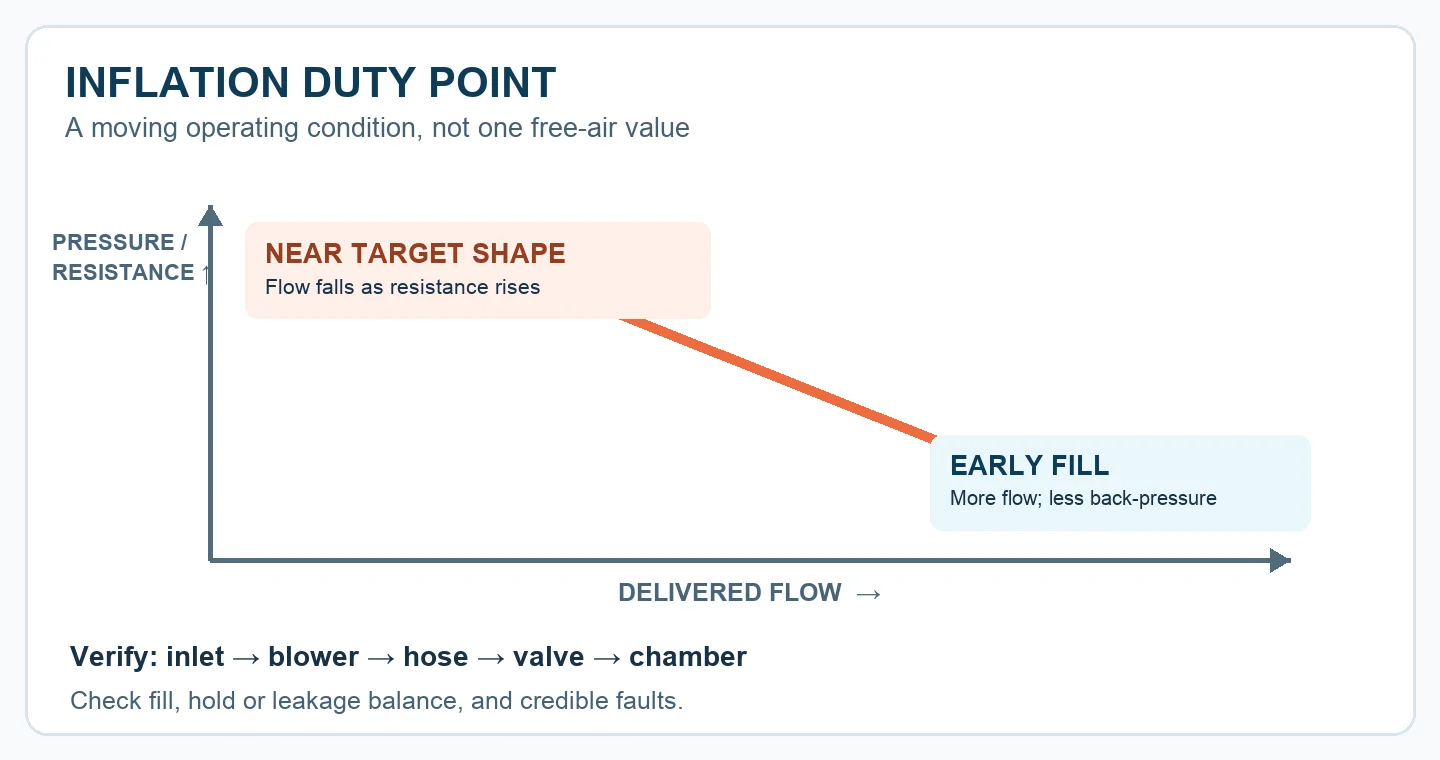
Estimate Fill Flow, Then Follow the Moving Duty Point
A useful first estimate divides usable volume by target fill time and adds expected leakage. It narrows the search, but it does not define the final blower. Air is compressible, the enclosure is compliant, and back-pressure changes as walls lift, chambers unfold, valves move, and fabric tension rises.
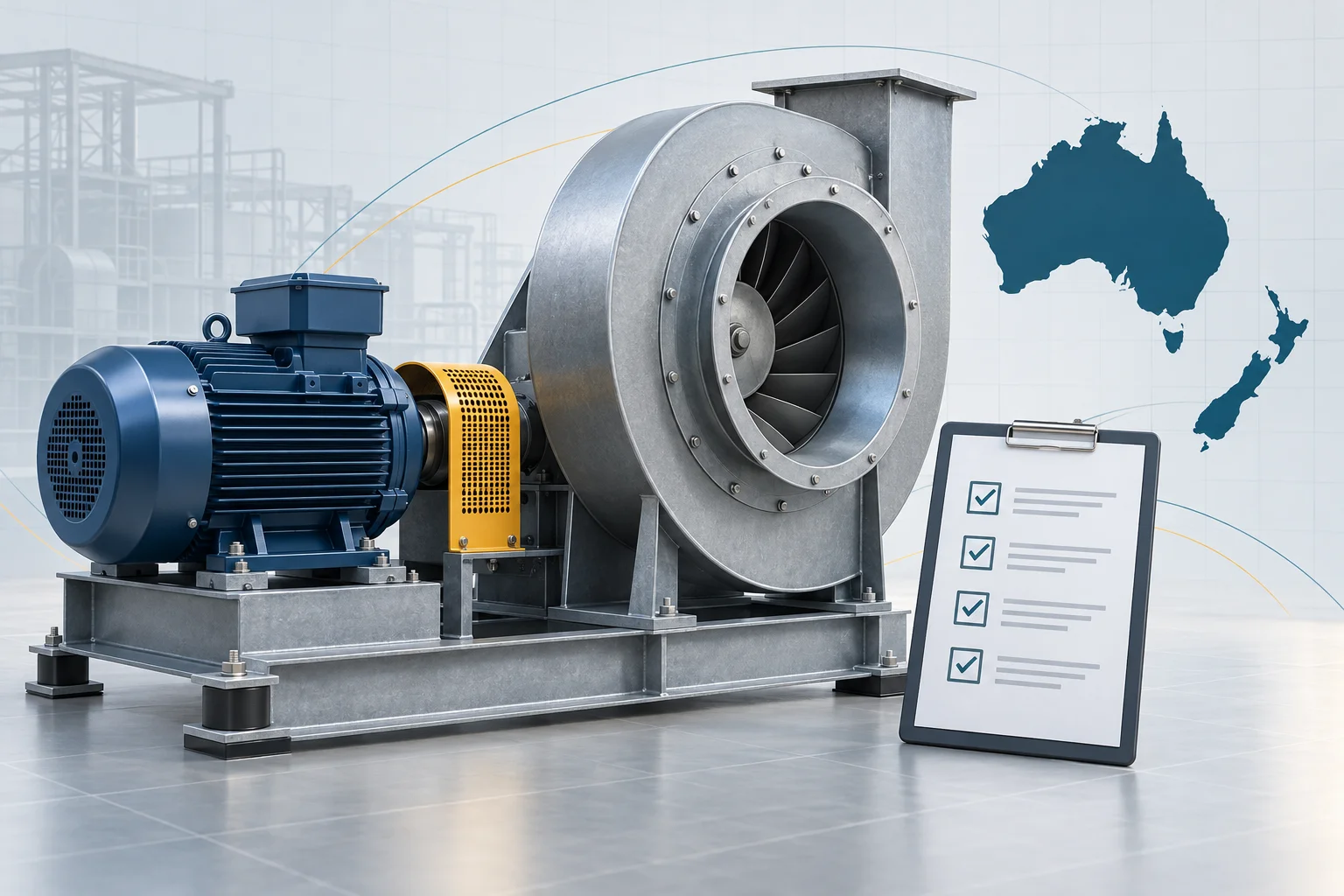
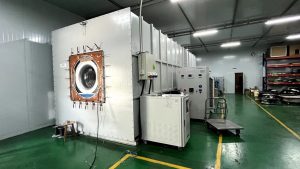
Review at least four states: empty and high-flow, shaping, firm at higher pressure, and hold or top-up. The blower curve must intersect the changing system curve through the required sequence. A motor chosen only for initial filling may fail to reach the final condition or run outside its thermal boundary. A unit chosen only for final pressure may fill slowly or consume unnecessary package space. This centrifugal-fan selection sequence is useful process context, but the assembled inflatable remains the acceptance article.
Model the Installed Air Path, Not Free Air
Inlet guards, impeller entry, outlet transitions, flexible hose, manifolds, chambers, valves, and check valves all consume pressure margin. Kinked hose, a partially opened valve, or a compact elbow can shift the operating point. Standardized free-air data cannot prove performance in the finished product.
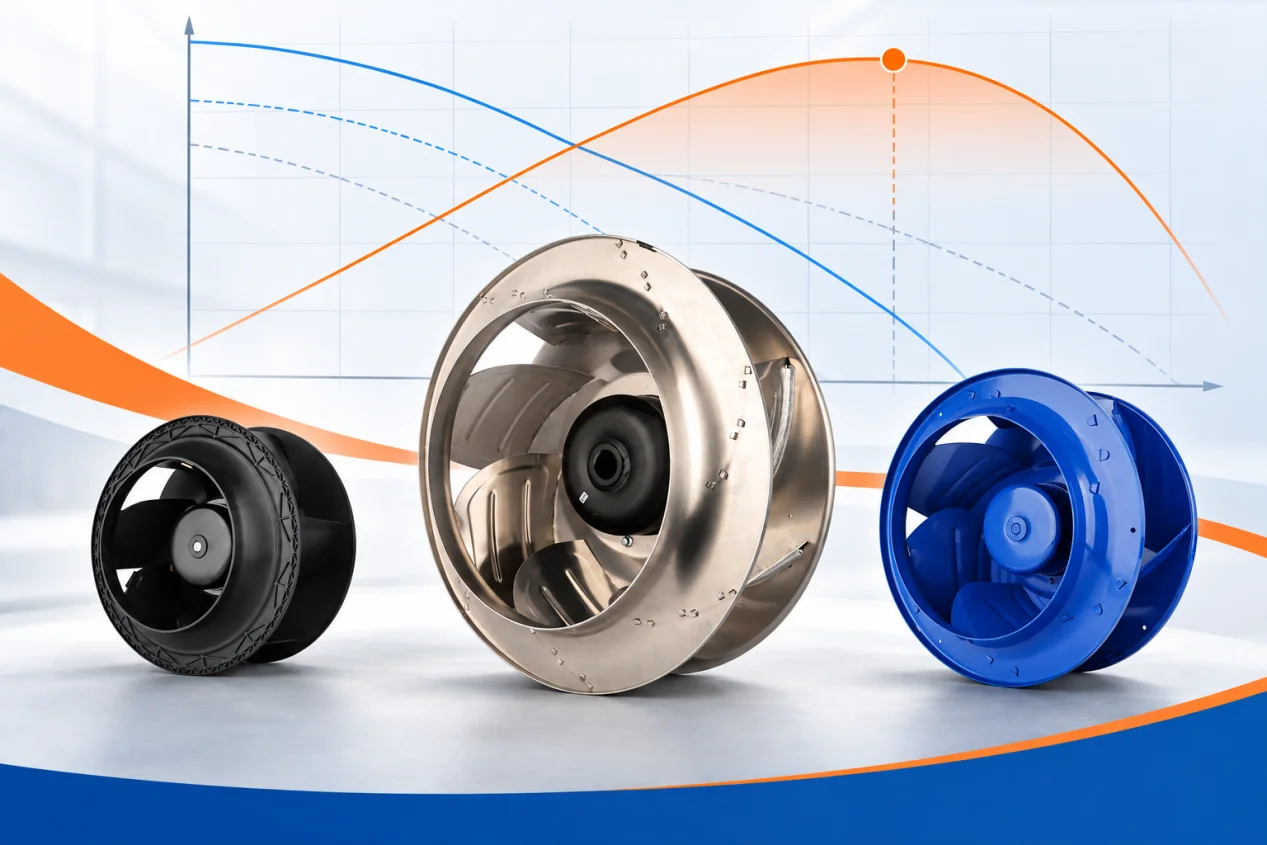
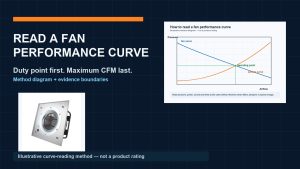
Compare candidates at the same supply, restriction, speed, temperature, acoustic boundary, package size, and duty cycle. Flow, pressure, electrical input, and temperature belong to the same operating point. A practical guide to reading centrifugal-fan performance curves can help organize that comparison; it does not replace testing with the actual hose, valve, chamber, and enclosure.
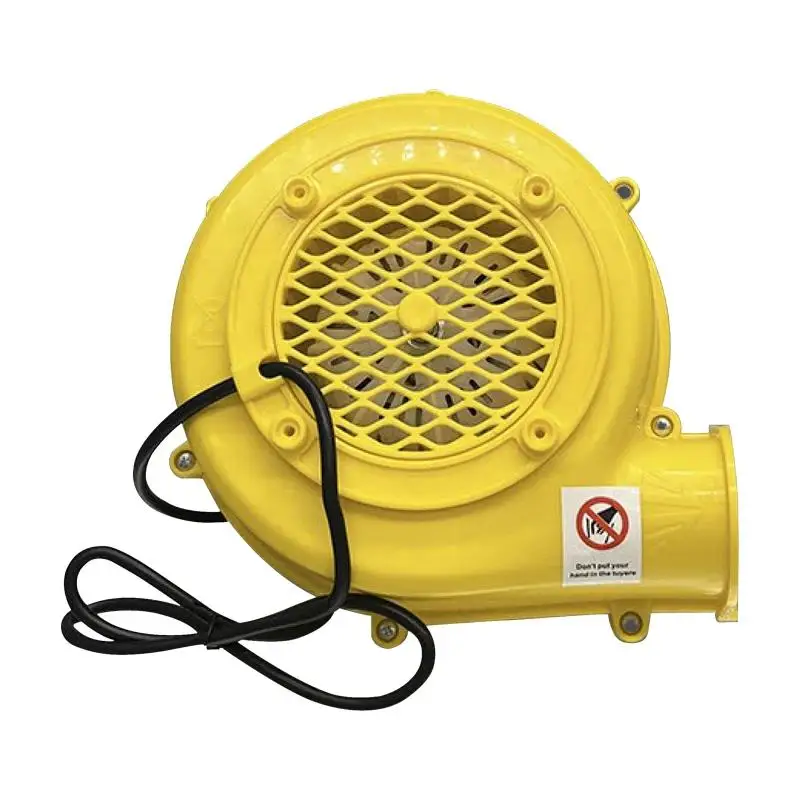
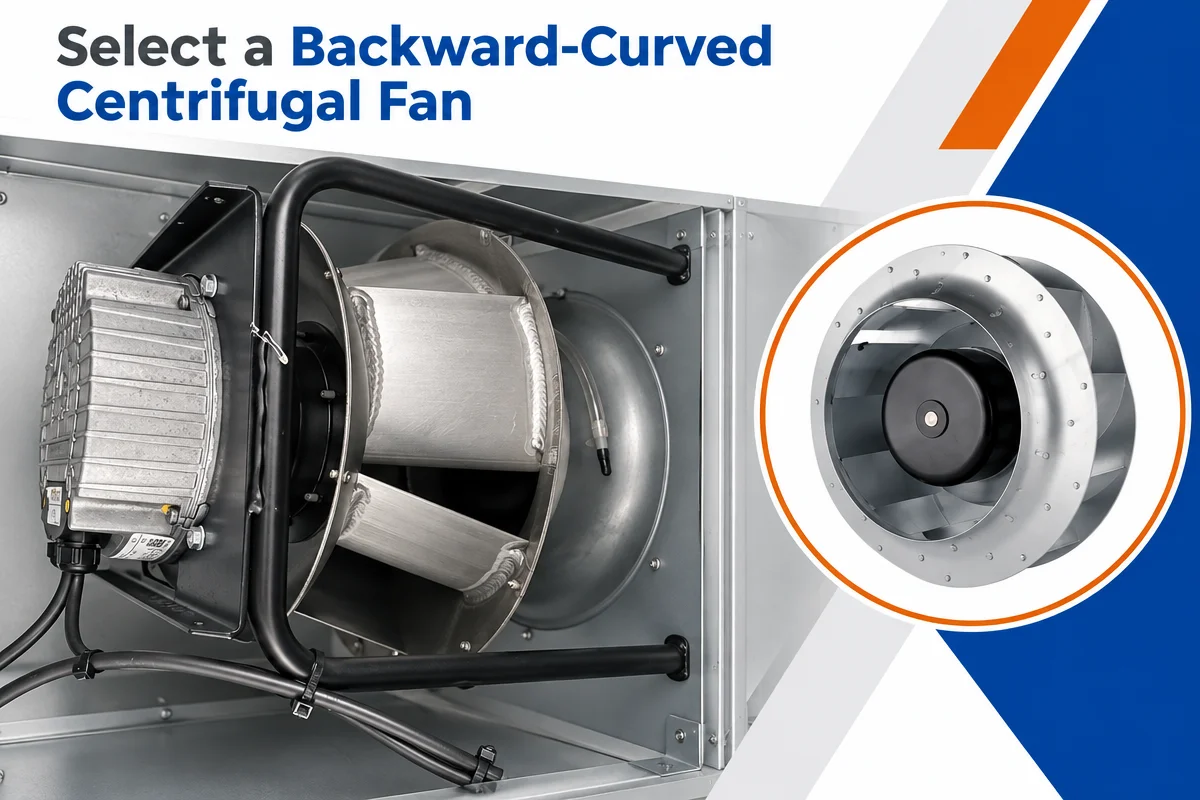
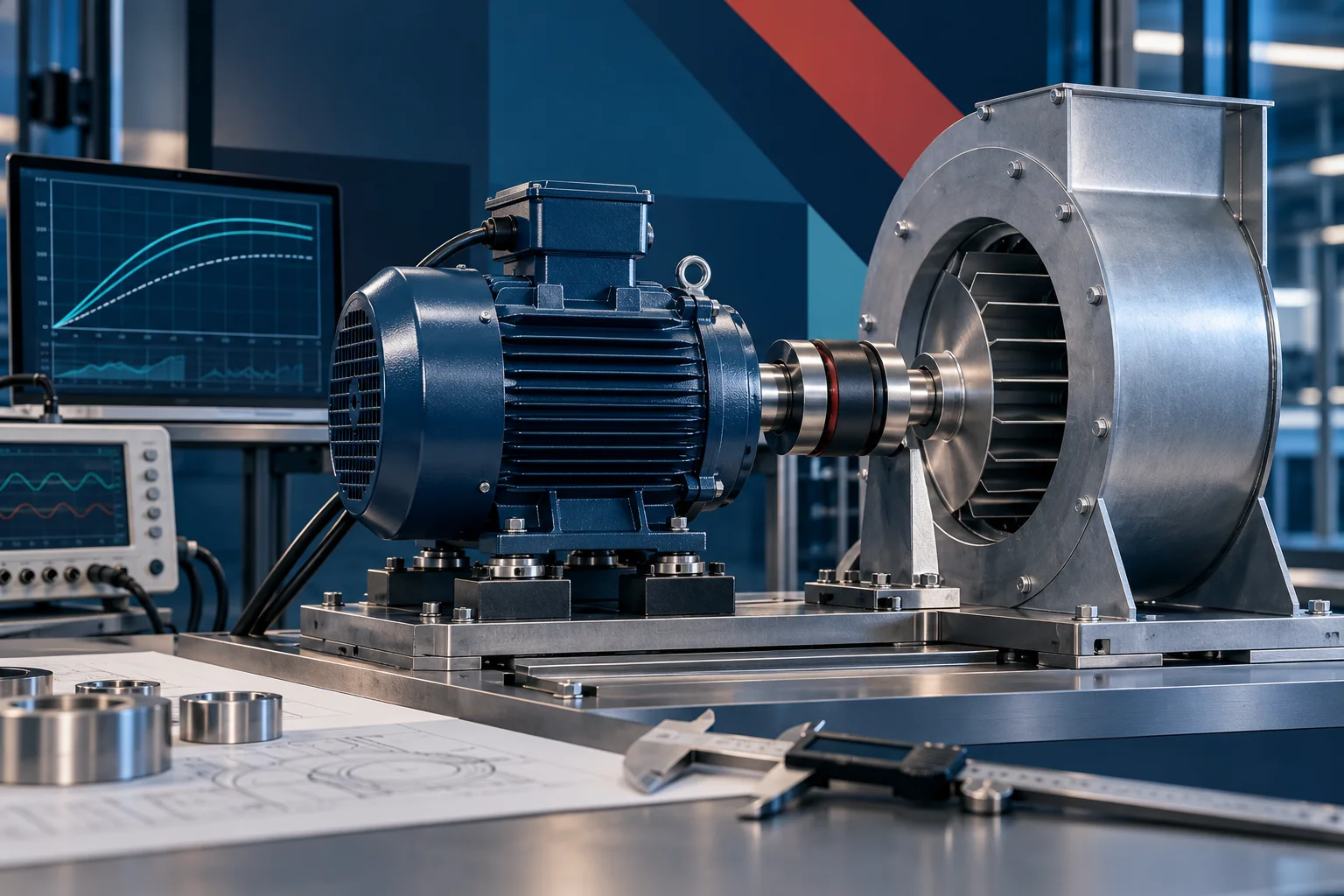
The image and this current inflatable-blower product example establish only visible product-family identity and application context. They do not prove a selected operating point, fill time, pressure, sound, thermal result, certification, compatibility, or suitability for a particular inflatable. Exact-model documentation and assembled-product validation are still required.
Coordinate Motor, Controls, Noise, and Fault Response
Motor temperature, supply tolerance, mounting, blade and motor tones, valve hiss, and structure-borne vibration all affect reliability and user experience. Measure sound in the assembled product and review its spectrum instead of relying on one bench number. Confirm temperature during the duty that actually applies: repeated fill cycles, continuous operation, intermittent top-up, hot restart, or an approved combination.
Control product state rather than merely commanding motor speed. Pressure, current, temperature, timers, valve position, or other feedback can define fill, stop, hold, top-up, and fault states. The sensor set depends on the product risk and architecture, but every commanded state needs a measurable acceptance condition.
Assess blocked inlet, kinked hose, large leakage, disconnection, timeout, overpressure, stall, hot restart, and reverse flow when credible. Define safe limits, relief provisions where required, alarm or shutdown behavior, and retry rules through the product safety process. Avoid copying fault thresholds from an unrelated enclosure.
Validate the Assembly Across Real Tolerances
Validation should cover usable volume, fill time, final pressure or shape, leakage balance, supply extremes, high and low temperature, repeated cycles, acoustic change, component tolerances, and endurance. Test the actual chamber, fabric, hose, valve, control, and blower assembly. Nearby fittings and packaging can create system effects that a standardized airway does not reproduce.
A reviewable OEM package should include volume, target fill time, pressure or shape window, leakage allowance, air-path geometry, blower curve, supply, controls, duty cycle, sound target, thermal limits, credible faults, and acceptance tests. Record measured operating points and tolerance results rather than converting catalog maxima into product guarantees.
Keep Product Safety Inside the Selection Boundary
Electrical, thermal, mechanical, pressure, fire, accessibility, and child-safety requirements depend on the complete product, intended use, and destination markets. General appliance-safety standards can frame a safety process, but the applicable product-specific requirements must be identified separately.
Ordinary air mattresses are not safe sleep surfaces for infants. Intended-use warnings and market requirements must remain prominent and must not be weakened by blower performance language. Final selection is complete only when the air path, controls, enclosure, user instructions, foreseeable misuse, and validation evidence are reviewed together.
Choose the right blower
Longwell manufactures 247 blowers in-house. Send airflow, static pressure and voltage — an engineer replies with a matching model, performance curve and price within one working day.