A fireplace blower can sit only centimetres from a firebox, yet its job is usually outside the combustion system. It moves room air through an appliance-defined passage, picks up heat from approved surfaces, and returns that air to the room. The flame, combustion-air inlet, chimney, flue, and sealed vent path are a different system.
That separation is the first selection rule. A room-air blower cannot be used to correct smoke spillage, poor draft, carbon-monoxide risk, overfiring, or an incorrect vent. Those conditions require the exact appliance procedure and qualified fuel or vent service. The blower decision begins only after the appliance model and its room-air path are positively identified.
Start with the appliance, not a fan that looks similar
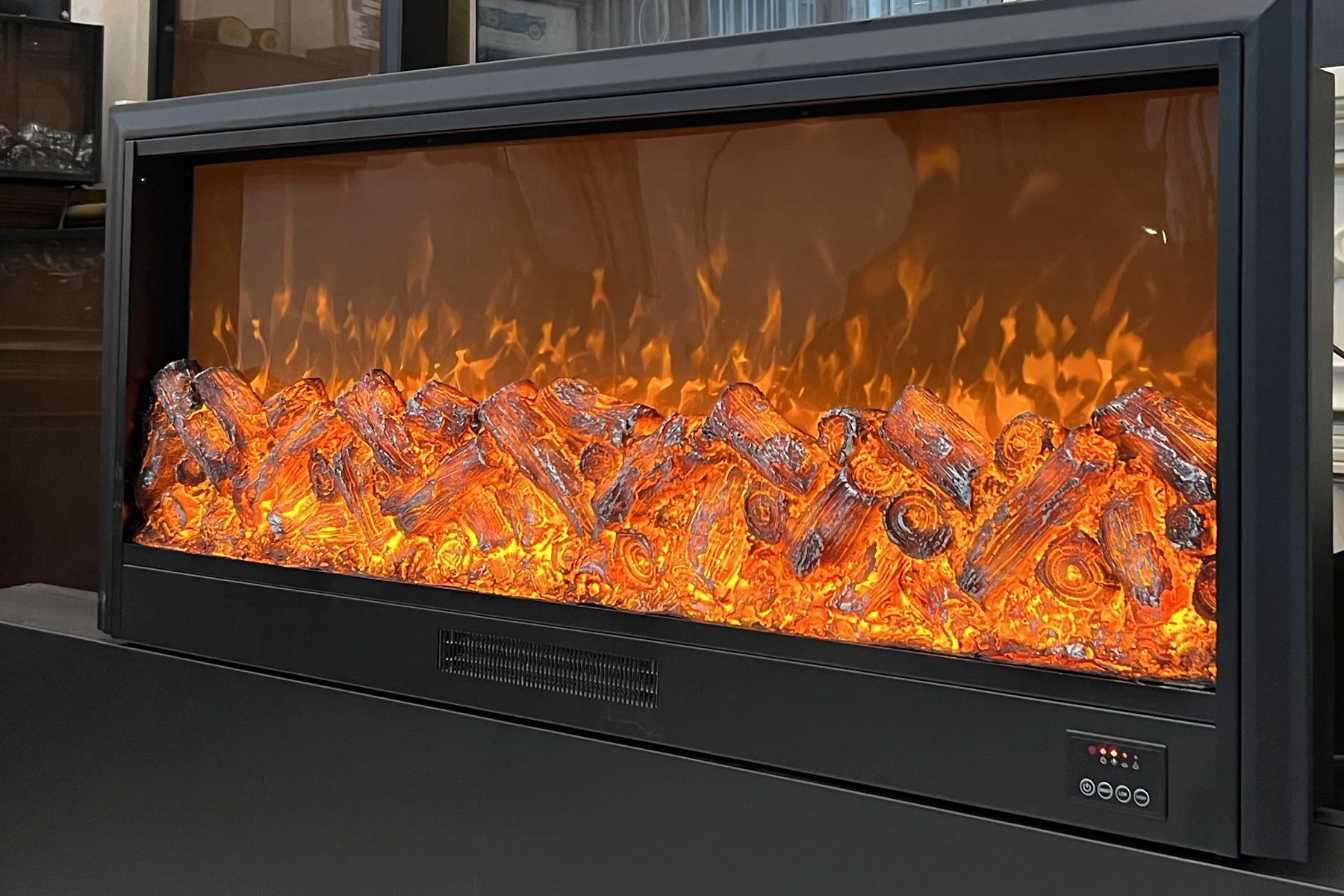
“Fireplace blower” covers several different systems. An electric fireplace may combine a resistance heater, electronics, and a room-air fan. A direct-vent gas appliance protects a sealed combustion and vent circuit. A wood stove or insert connects its firebox to a chimney. A pellet appliance may use separate convection and exhaust blowers. Never assume those functions are interchangeable.
Record the manufacturer, exact appliance model, rating plate, current manual, wiring diagram, and the name given to the blower in that documentation. EPA and U.S. fire-safety guidance reinforce the larger boundary: installation, venting, inspection, alarms, and safe fuel-appliance operation remain appliance and site responsibilities. A replacement or OEM design must preserve the appliance listing and every required interlock.
Trace the complete room-air loop
Many appliances deliver some heat by radiation and natural convection before a blower runs. Cooler room air enters an approved opening, passes around a heat-transfer surface or jacket, warms, and returns to the room. A blower adds forced circulation to that same documented loop. It changes room-air transport; it does not automatically increase combustion output or reduce fuel use.
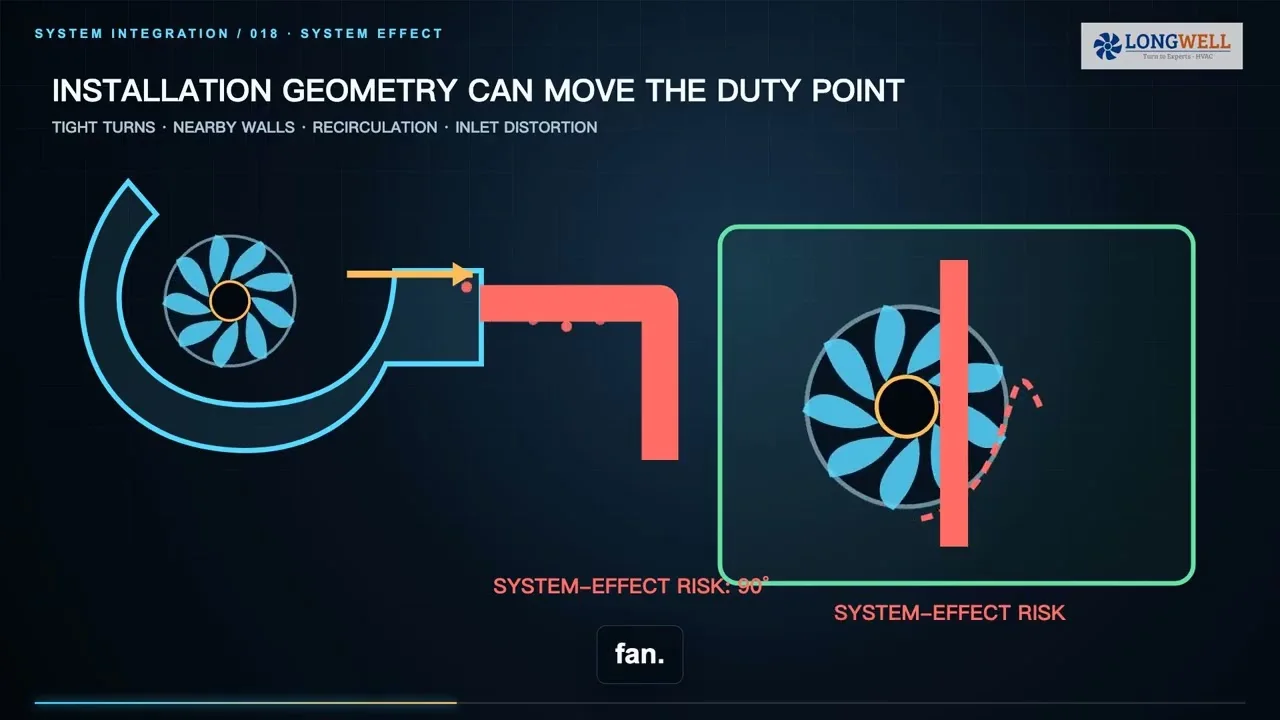
Draw the loop from inlet to outlet. Mark grills, bends, guards, heat shields, filters if specified, wiring, service clearances, and the smallest passages. Then define the required airflow and static pressure at the real installed resistance. A free-air airflow number is not an appliance operating point. The cross-flow fan selection guide is a useful continuation for assembling these inputs.
Choose architecture by geometry and resistance
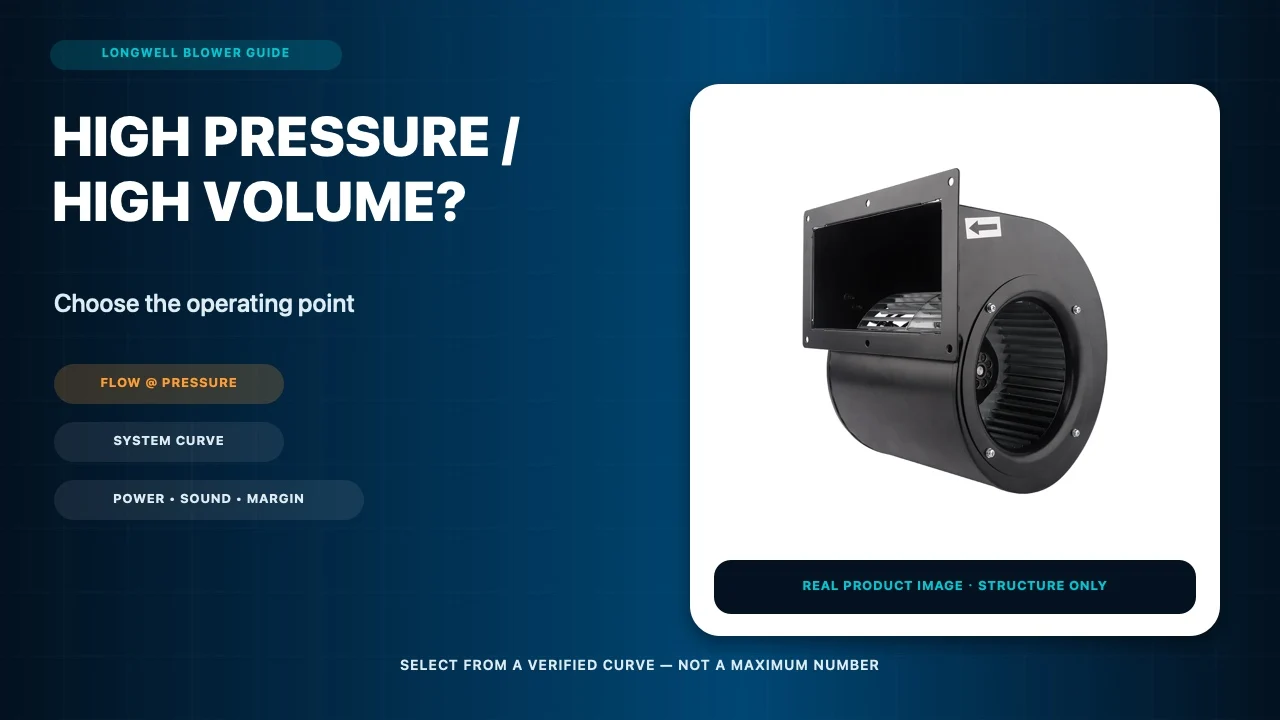
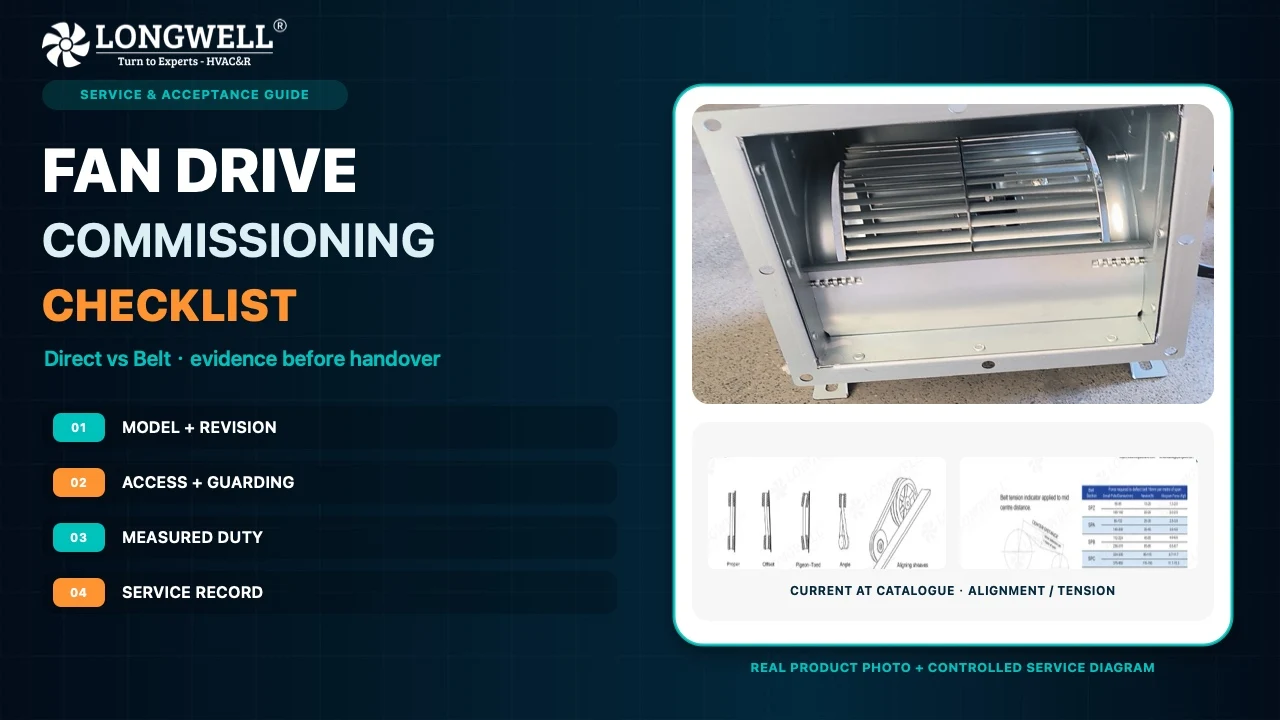
A cross-flow blower has a long cylindrical wheel and a long discharge edge, which can support a broad air curtain in a shallow cabinet. A single-inlet centrifugal blower concentrates flow through a scroll. Twin-wheel arrangements can distribute discharge across a wider assembly. None is universally better; the cabinet, pressure path, outlet width, temperature exposure, electrical supply, control method, and acoustic target decide.
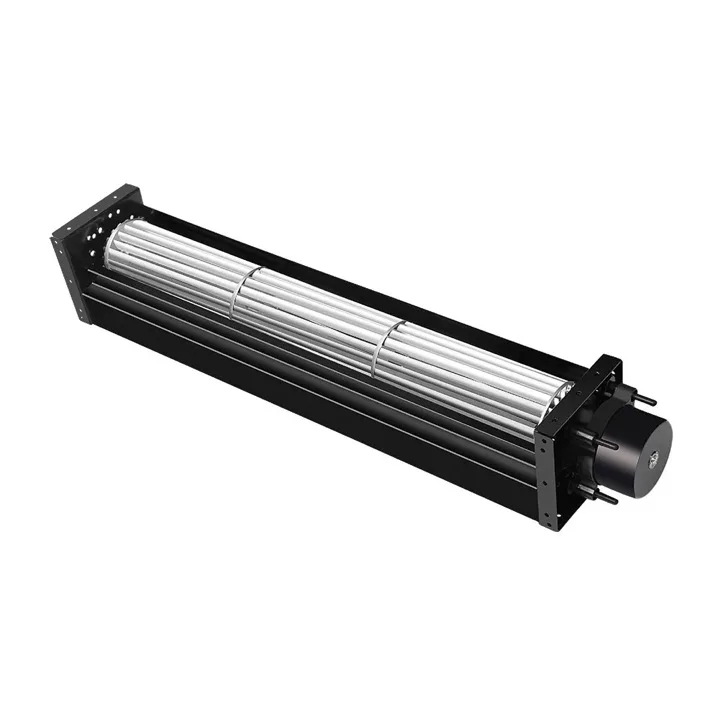
The pictured hardware proves only a visible long-wheel cross-flow form. It does not prove fireplace compatibility, temperature class, airflow, certification, or project suitability. This electric-fireplace tangential fan product page is a relevant application-identity entry point, but its page does not prove fit for another appliance. Require a model-level engineering review against the complete appliance duty.
Treat temperature and controls as appliance-specific
Some appliances enable the room-air blower with a thermodisc or sensor after the unit warms, then stop it during cooldown. Others use different sensors, electronics, or control sequences. There is no universal switch temperature, delay, mounting location, or restart rule. The manual’s sensing point and logic control the design.
Speed control changes airflow and sound, not the flame or chimney draft unless the appliance documentation explicitly says otherwise. Preserve grounding, strain relief, conductor temperature rating, insulation, motor cooling, inlet and outlet clearance, and separation from hot or moving parts. Never bypass a switch, overtemperature device, or safety interlock just to make the fan run.
Diagnose noise in the installed system
Noise is evidence, not an automatic motor verdict. A once-per-revolution component may point toward wheel imbalance. Broadband rush can indicate restriction or excessive velocity. A narrow tone may come from blade-to-housing interaction. Rattle can be a loose mount, guard, panel, or wire contact. Bearing roughness has another character.
Inspect the wheel and housing, mounting points, isolation elements, wiring, guards, clearances, and room-air path under the documented safe service procedure. During authorized operation, observe warm-up, start, speed response, airflow direction, vibration, contact, and cooldown. The fan noise troubleshooting guide adds a structured path for separating aerodynamic, mechanical, and installation causes.
Send an OEM duty package that can be reviewed
A useful request includes the appliance model; a sketch of the room-air inlet, heat-transfer passage, and outlet; target airflow and static pressure; supply voltage and frequency; control signal; sensor logic; expected ambient and local temperature exposure; installation envelope; mounting method; service access; acoustic limit; and acceptance test.
Also state what must remain unchanged: combustion and vent paths, certified clearances, firebox seals, safety devices, and the appliance listing. Verification should cover the installed operating point, electrical behavior, warm-up and cooldown logic, abnormal contact, vibration, sound, and the exact appliance acceptance criteria. That package lets an engineer evaluate a blower as part of the appliance—not as a generic accessory chosen by appearance.
Choose the right blower
Longwell manufactures 247 blowers in-house. Send airflow, static pressure and voltage — an engineer replies with a matching model, performance curve and price within one working day.