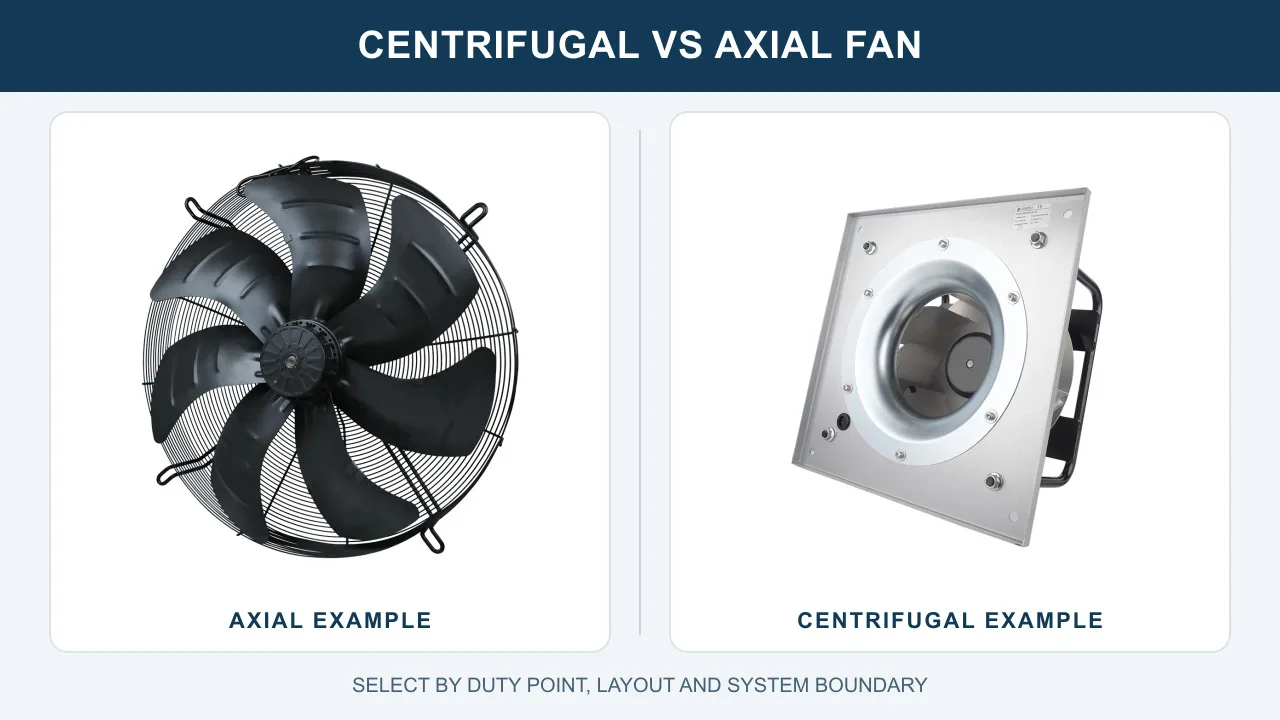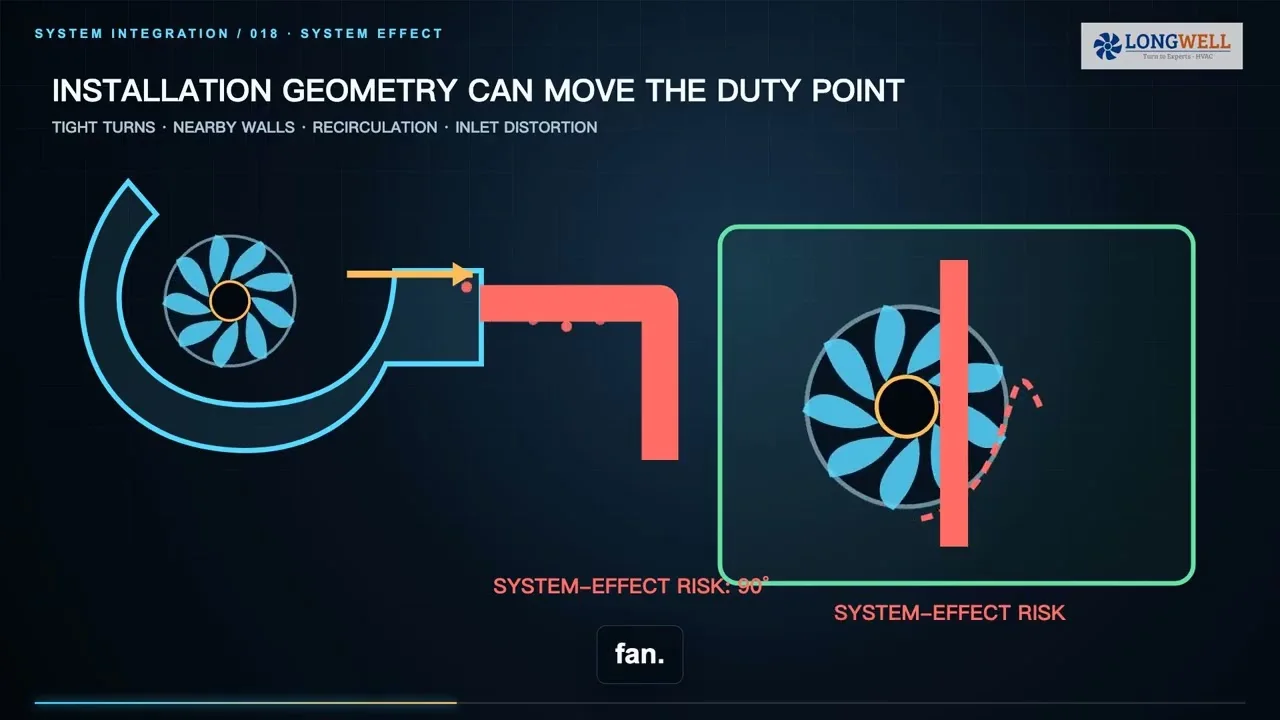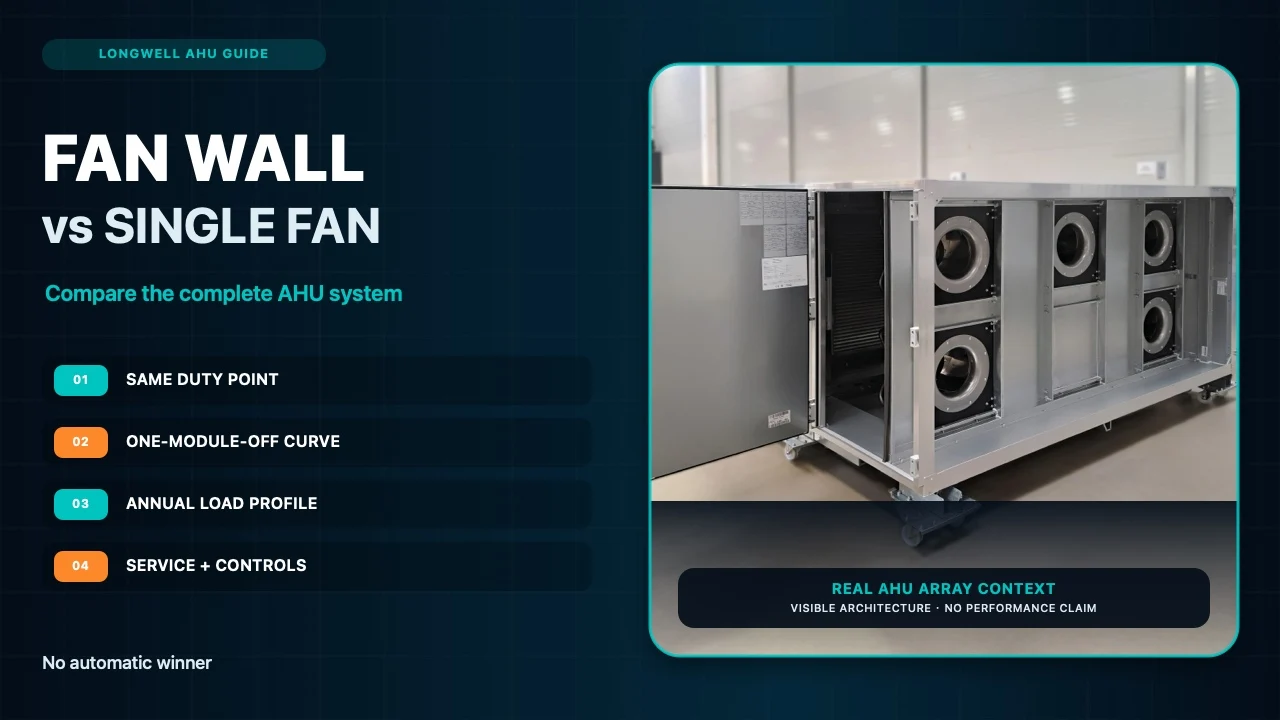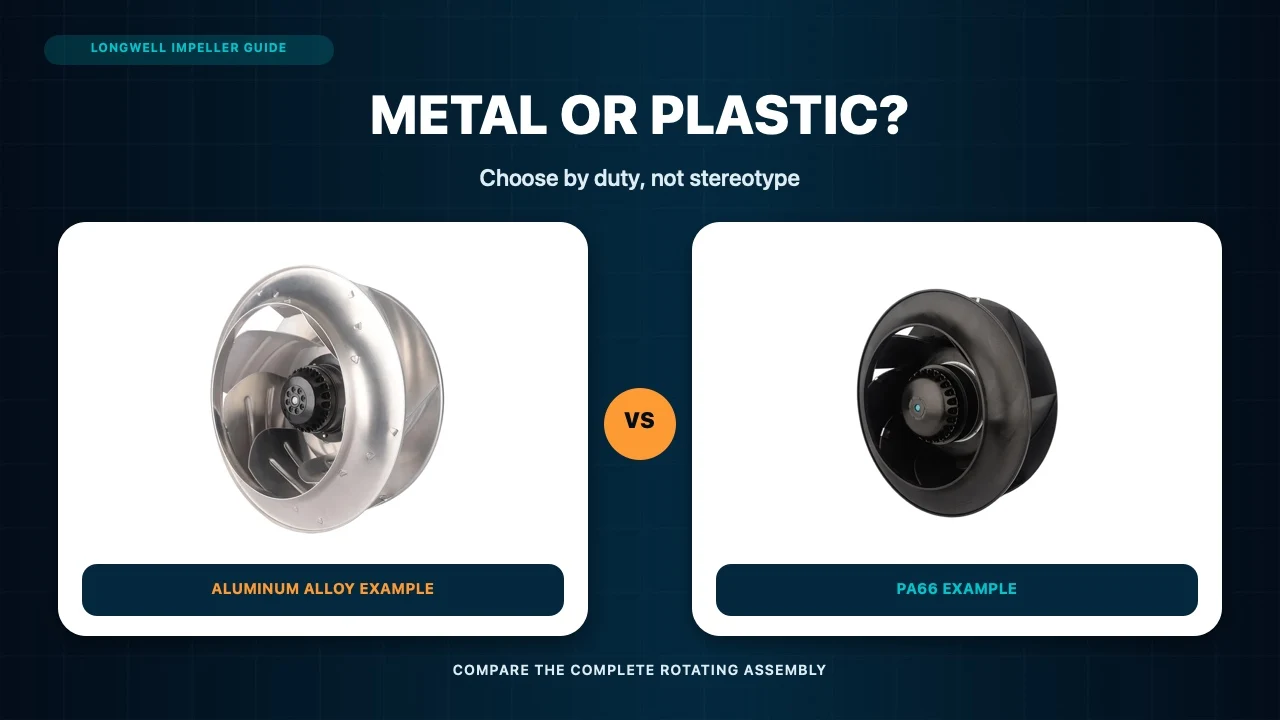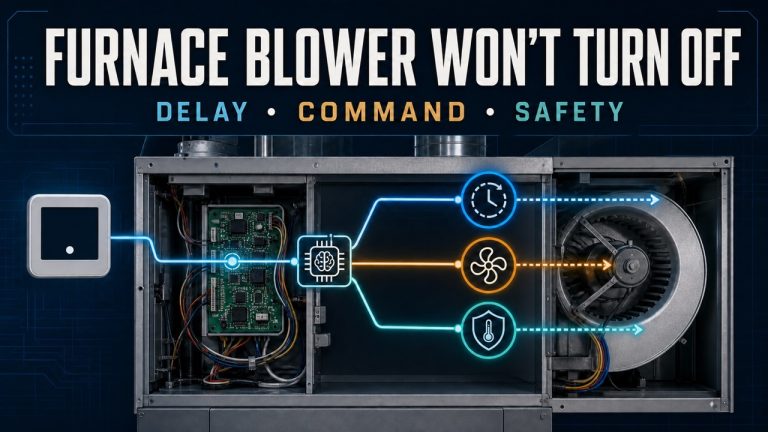
Cleaning a furnace squirrel-cage blower is appropriate only after you identify the circulating-air blower, find the exact furnace service instructions, and establish a verified safe state. The goal is not to make every surface look new. It is to clear the narrow blade passages without bending the wheel, moving a balance clip, wetting the motor, or losing the alignment needed for quiet rotation.
If the wheel is damaged, the motor has an electrical fault, or the assembly cannot be removed and reinstalled within the manufacturer’s procedure, stop and use a qualified service technician. Do not confuse this indoor-air blower with the combustion inducer or any flue-gas component.
Confirm that cleaning is the right next action
Start with symptoms and evidence. Weak airflow can also come from a loaded filter, blocked return, closed damper, fouled coil, wrong speed command, duct leakage, or a motor problem. With the system off, inspect what is safely visible and compare the wheel’s blade passages across its full width. A uniform layer of debris supports cleaning; a cracked hub, bent blade, loose balance clip, shaft play, scorched connector, or repeated electrical trip calls for diagnosis or replacement instead.
Record the filter condition, thermostat complaint, unusual sound, and the state of the wheel before removal. Longwell’s broader centrifugal fan maintenance guide is useful for routine inspection context, but the furnace model’s service manual controls this job.
Lock out the furnace and verify the safe state
A thermostat setting or blower-door interlock is not an energy-isolating device. Follow the site procedure and the furnace instructions to shut down, physically isolate, lock or tag the energy source, control stored energy, and verify de-energization before reaching into the cabinet. Fuel isolation, electrical testing, capacitor handling, and any energized diagnostic work belong to qualified personnel using the exact equipment procedure.
Wear suitable eye, hand, and clothing protection for sharp sheet-metal edges and contamination. Keep the work area dry and well lit. Photograph wire routes, connectors, mounting arms, the housing orientation, and every ground connection before disturbing them.
Identify the wheel, housing, motor, and balance features
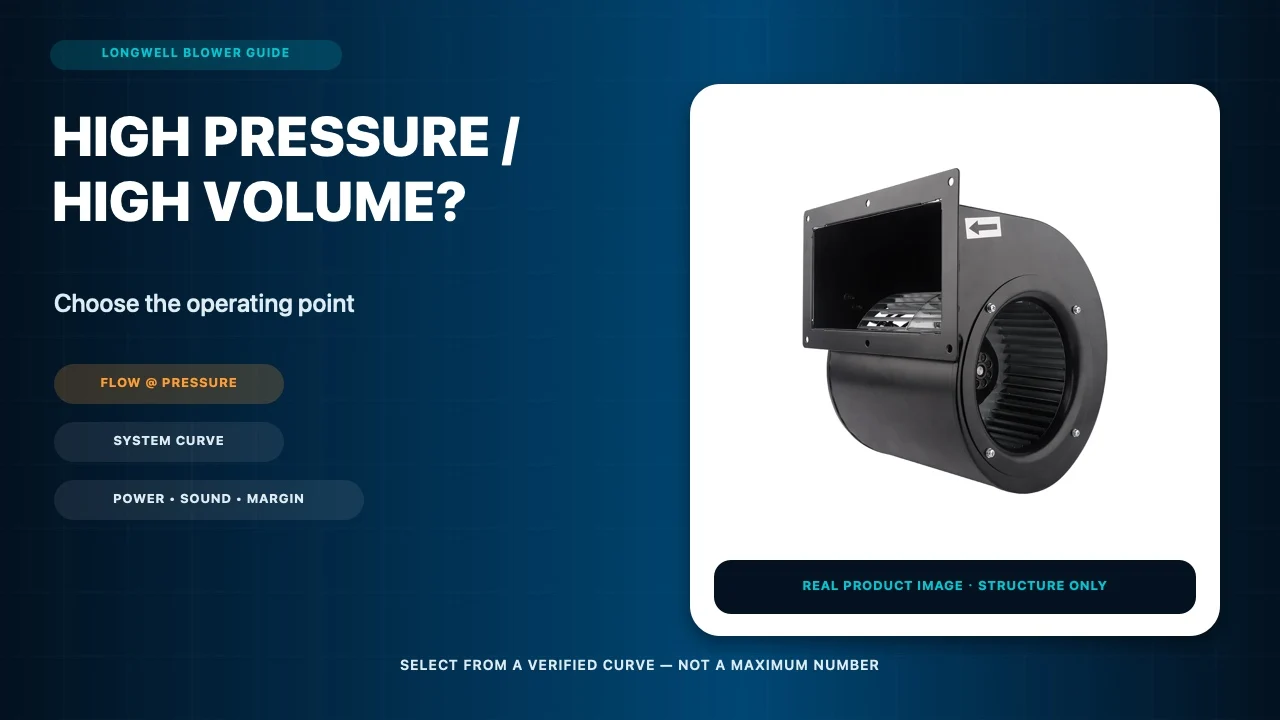
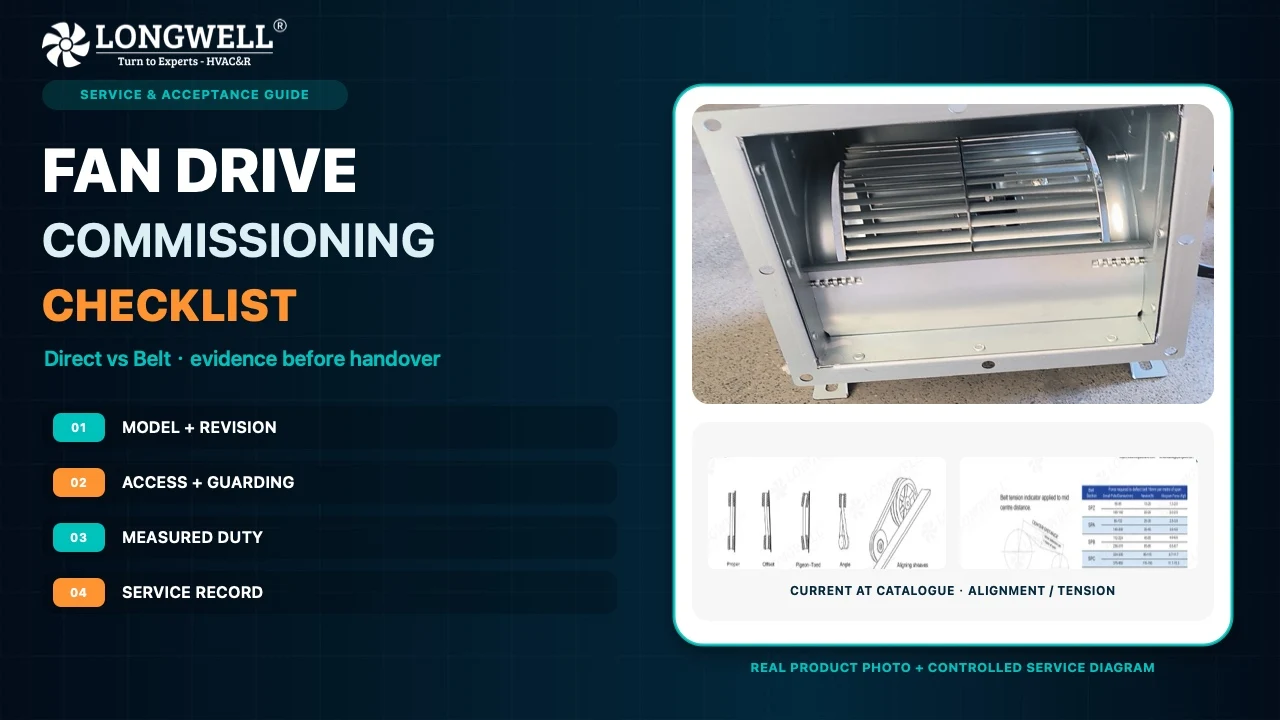
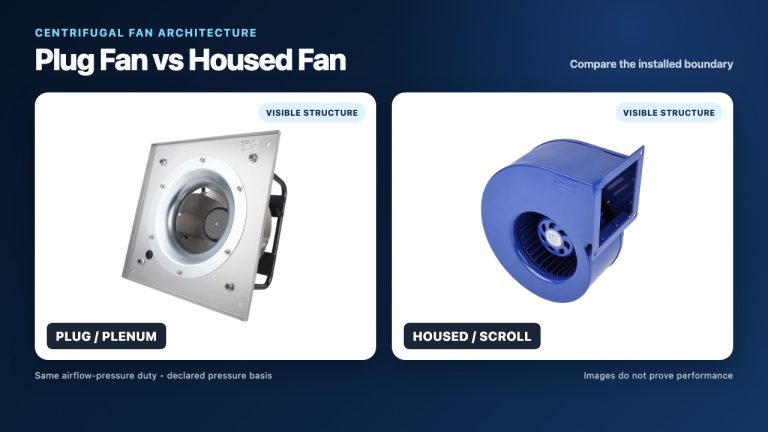
A squirrel-cage wheel has many closely spaced forward-curved blades. Air enters near the round side opening and leaves through the housing outlet. The dense passages make the wheel effective at moving indoor air, but they also trap lint and dust. The clean Longwell products below show that visible geometry only; they are not furnace replacement recommendations and do not demonstrate contamination or a cleaning result.
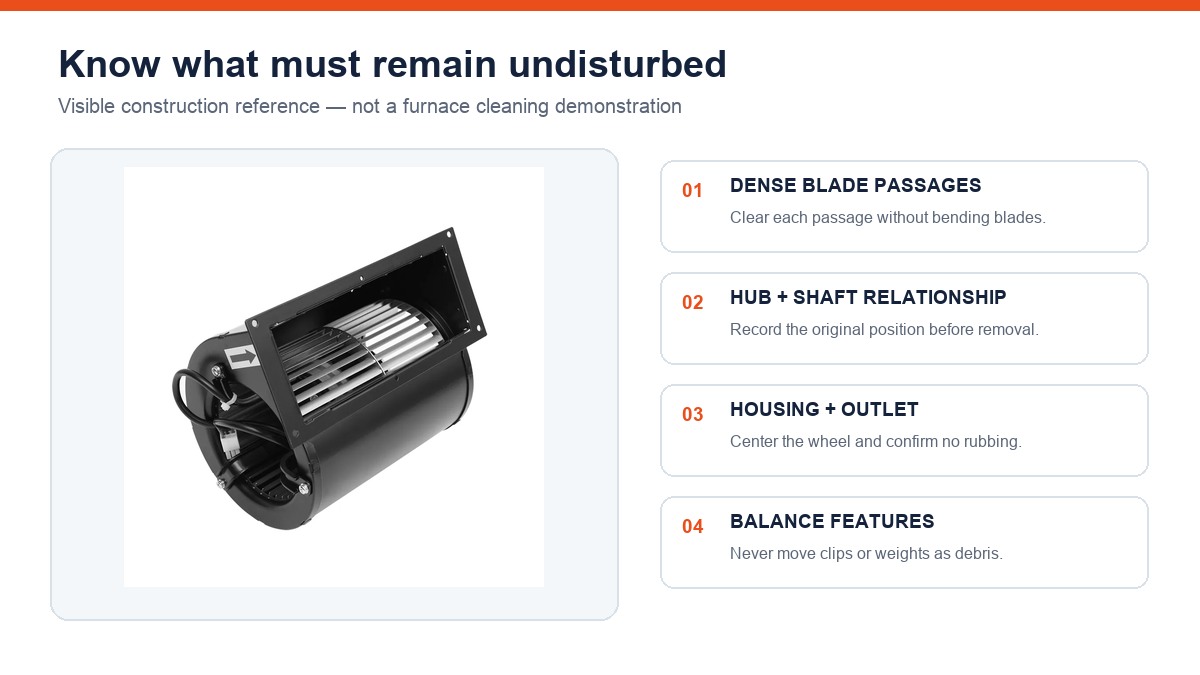
Locate any factory balance clips or weights before touching the wheel. Do not pry them off, slide them, or treat them as debris. Note the wheel’s axial position, the hub-to-shaft relationship, the housing cutoff, and the motor-mount orientation. If the exact manual requires removal, make durable reference marks where it permits them so the assembly can return to the same relationship.
Remove loose debris without changing the wheel
Use the method approved by the furnace manufacturer. A vacuum with a soft-brush attachment and a small soft brush are common service-manual methods. Support the wheel and work passage by passage; avoid side-loading the blades. Capture loosened material at the source instead of driving it toward the motor, control board, heat exchanger, or indoor coil.
Do not use compressed air to spread contamination through the cabinet. Do not bend a blade to reach behind it, scrape coatings with a hard tool, or spin the wheel with a powered tool. Turn it slowly by hand only when the equipment is verified de-energized and the service procedure permits it. A bright light from the opposite side helps reveal passages that are still bridged with debris.
Treat greasy residue as a separate service boundary
Loose dust and greasy film are not the same job. Some furnace manuals permit a removed wheel to be washed with an appropriate degreaser, but that does not authorize spraying liquid into an assembled furnace. The exact manual and chemical instructions must approve the cleaner, removal method, rinse or residue requirements, material compatibility, and full drying condition.
Keep liquid and degreaser out of the motor, bearings, connectors, insulation, controls, and cabinet. If the wheel cannot be separated as prescribed, or if the approved drying condition cannot be proved, stop rather than improvise. Never transfer torque values, solvents, conductor colors, or disassembly steps from a different furnace model.
Inspect what cleaning cannot repair
After the passages are clear, inspect the wheel under even light. Look for distorted blade spacing, cracks around the hub or end rings, corrosion loss, loose fasteners, missing or displaced balance features, shaft damage, and rub marks inside the housing. Cleaning cannot restore a bent wheel or correct a failing bearing or motor.
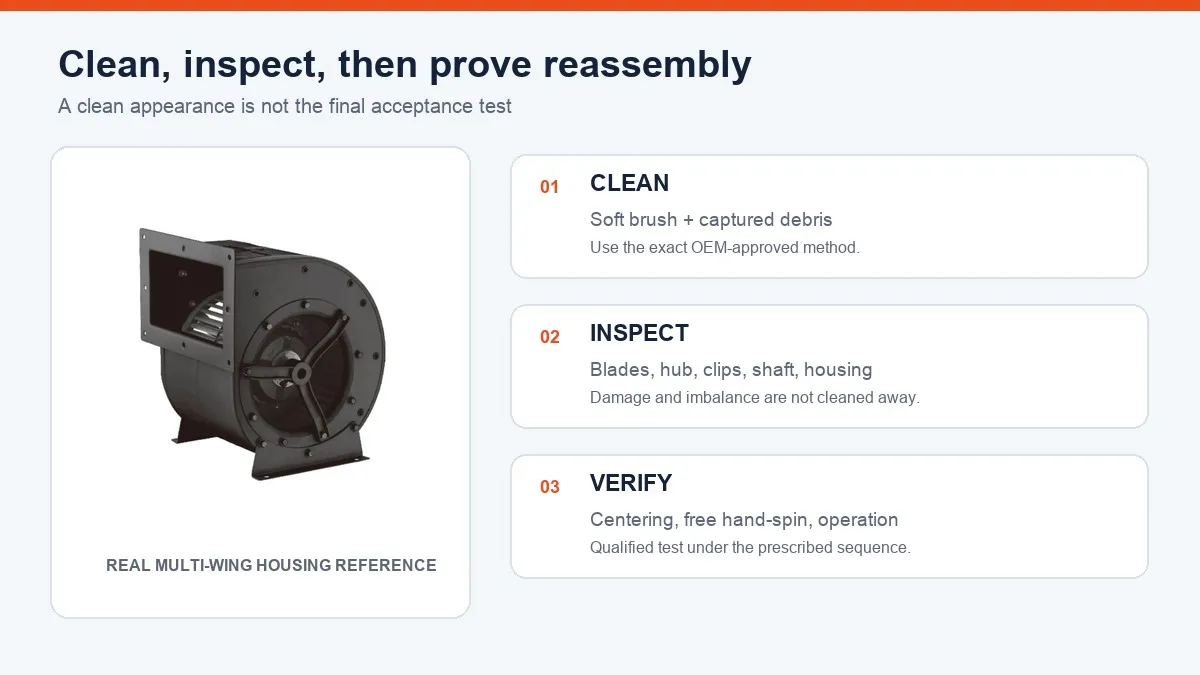
Check the housing for remaining debris and confirm that the motor ventilation path is clear without forcing material into the motor. Revisit the filter rack and nearby leakage paths; otherwise the same contamination can return. The Longwell multi-wing centrifugal fan family provides product-architecture context only. A family page cannot establish furnace fit, wiring, airflow, temperature suitability, or service compatibility.
Reassemble, hand-spin, and commission deliberately
Reinstall the assembly in the reverse order defined by the furnace manual. Restore the mounting-arm positions, wheel centering, hub location, shaft-flat relationship, cutoff plate, connectors, wire supports, grounds, guards, and access panels exactly as specified. Apply only the model-specific fastener values and checks. Before restoring energy, rotate the wheel slowly by hand and confirm free movement without housing contact.
Clear people, tools, and loose materials before any controlled test. Qualified personnel should then follow the prescribed temporary re-energization sequence, verify correct rotation and abnormal noise or vibration, and restore lockout before any further adjustment. After final assembly, run the required heating and cooling checks, confirm normal airflow and temperature rise where the manual requires it, and document the result.
A complete record includes before-and-after photographs, the exact manual revision, the observed defect or contamination, the method and cleaner if any, parts disturbed, restored connections, hand-spin result, operating checks, and unresolved findings. That record distinguishes a verified maintenance action from a cosmetic cleaning.
Choose the right centrifugal blower fan
Longwell manufactures 244 centrifugal blower fans in-house. Send airflow, static pressure and voltage — an engineer replies with a matching model, performance curve and price within one working day.