A fan marketed as “quiet” may be a good candidate, but the label alone cannot settle the question. A useful comparison must hold aerodynamic duty, acoustic quantity, test boundary and installation conditions steady. Otherwise, a lower number may describe a different test.
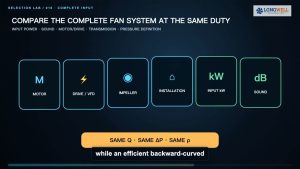
The accompanying video does not publish a completed head-to-head result or name a winner. It shows the evidence a fair fan-noise comparison should contain. That distinction matters: the goal is to choose from comparable data, not to reward the most attractive detached decibel figure.
Define what “quiet” means before comparing fans
Start with the outcome that matters in the application. Are you comparing source emission, the level at an occupied location, a broad A-weighted total, a frequency spectrum, a prominent tone, or a noise pattern that changes over time? These are related questions, but they are not interchangeable.
A specification becomes useful when it names the acoustic quantity, where or how it was determined, the operating condition and the relevant limits. Words such as “silent” or “whisper quiet” do none of that work. Treat them as an invitation to ask for the test basis.
Match airflow and pressure before you compare noise
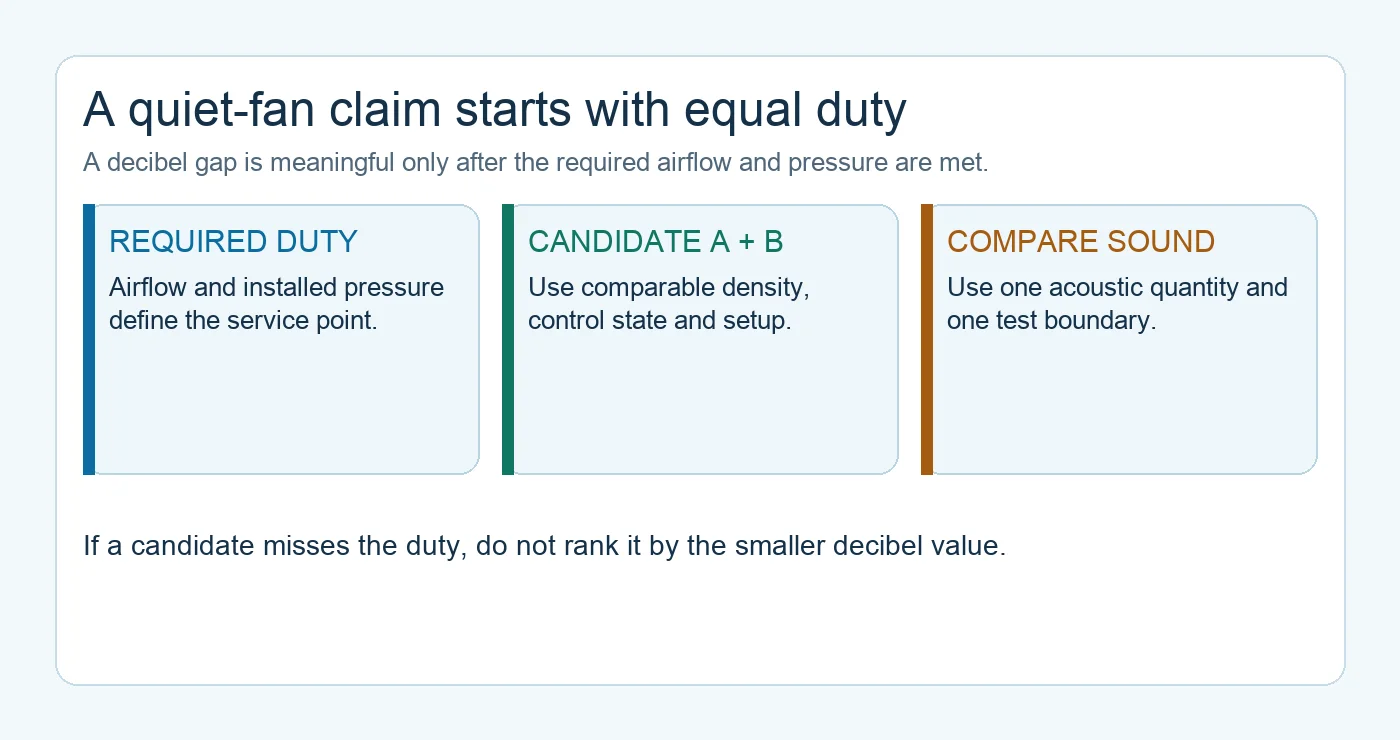
Noise must be compared at the duty the system actually needs. Confirm airflow, pressure, air density, speed or control state, and stable operation for each candidate. If one fan is moving less air or developing less pressure, a lower sound result may reflect reduced work rather than a better acoustic design.
This is the most important purchasing check: put the required duty point beside every acoustic value. If a supplier cannot reproduce the same duty, record that limitation instead of treating unlike operating points as a ranking.
Do not mix sound power with sound pressure
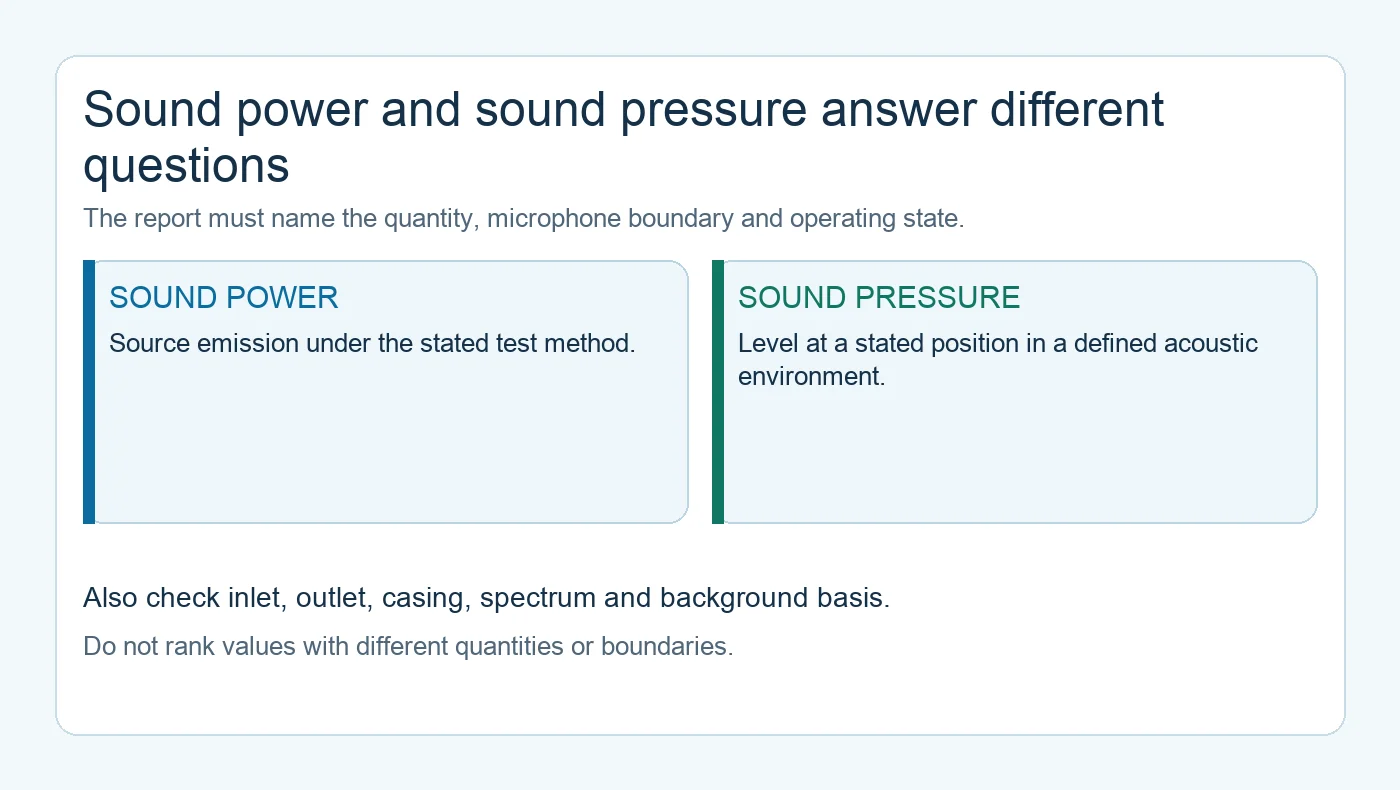
Sound power characterizes emission from a source under a stated method. Sound pressure describes the acoustic situation at a location; it changes with distance, direction, room response, reflections, background and installation. A sound-power rating for one candidate cannot be fairly compared with a room sound-pressure reading for another.
The units and labels on the report should make the distinction explicit. Also check whether the published boundary covers inlet sound, outlet sound, casing-radiated sound or another defined condition. A number without that context is incomplete, even when it looks precise.
Keep the test setup and installation boundary consistent
Duct terminations, elbows, transitions, guards, silencers, flexible connectors, mounts, panels and nearby obstructions can change what is measured. They may introduce turbulence, transmit vibration or allow sound to break out through a different path. A fair comparison uses the same arrangement or documents every material difference.
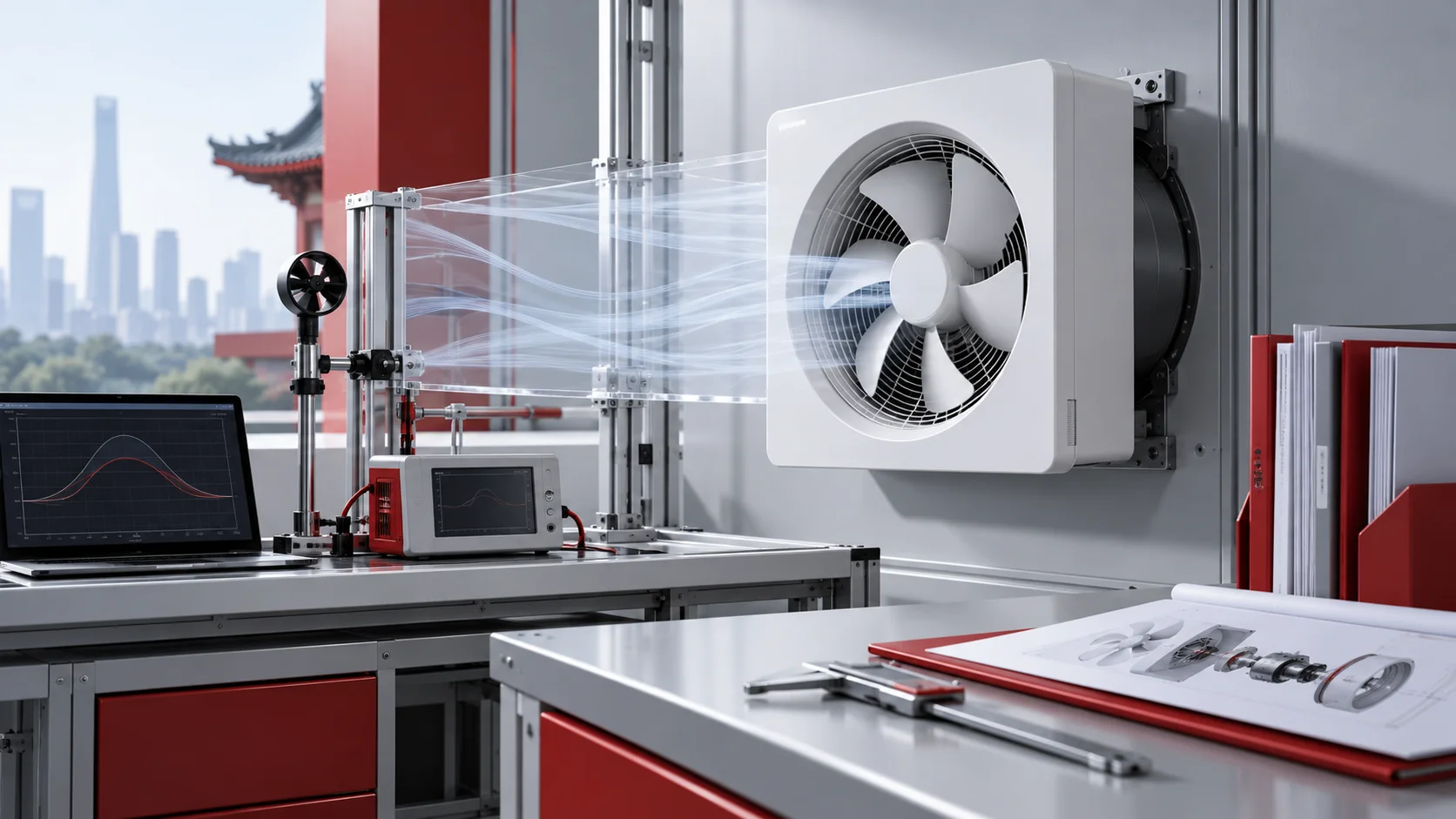
Draw the setup. Mark the measurement plane, microphone position, inlet and outlet condition, included accessories, and the parts of the system outside the reported boundary. This simple record makes it much harder for an installation effect to be misattributed to the fan.
Measure the background and document the instrument chain
The source-off background establishes whether the room and instruments can resolve the fan. The selected method determines how background is evaluated and when a correction is valid. If the separation is inadequate, the responsible result may be “limited” or “indeterminate,” not an invented difference created by ordinary subtraction.
Record the microphones, analyzer, calibrator, airflow and environmental instruments, together with their verification status and microphone geometry. Include range and integration settings, overload checks and instrument self-noise.
Look beyond one A-weighted number
A single A-weighted total is convenient for screening, but it can hide the character of the sound. Low-frequency energy, blade-pass tones, motor or drive switching tones and other narrow-band features may affect comfort even when the headline totals are close.
Ask for relevant octave-band or one-third-octave information when sound quality matters. The aim is not to collect more charts for their own sake. It is to learn whether the proposed fan introduces a tonal or low-frequency problem that the installation will amplify.
Use repeatability and uncertainty to judge close results
Repeat runs and reproduce the setup to separate product differences from ordinary drift. State run count, duty-point tolerance, environmental conditions and the uncertainty or repeatability limits used.
When the observed gap sits inside those limits, declaring a winner overstates the evidence. A shortlist can still move forward, but the decision should then rely on other verified requirements or additional testing rather than a false acoustic ranking.
Treat listening recordings as demonstrations, not measurements
Video and audio can make a tone or modulation easier to notice, but the recording chain changes the result. Microphone response, automatic gain, compression, room acoustics, editing, platform normalization and the listener’s playback device all influence what is heard.
Recordings are qualitative context when the chain and edits are disclosed. Quantitative conclusions require a documented measurement method and data; a phone app or online clip cannot replace them.
Separate fan selection from system-noise troubleshooting
Even a well-documented fan can disappoint when the inlet is disturbed, a flexible connection is taut, a mount creates a rigid bridge, or a downstream component regenerates noise. If an installed system is already loud, this guide to reducing centrifugal fan noise can help organize the inspection. Use it as troubleshooting navigation, not as proof that one change will solve an unseen system.
Measure where the acoustic requirement applies, then trace the path back toward the fan. That approach distinguishes source emission from room response, duct breakout, vibration transmission and locally generated aerodynamic noise.
Build a purchasing request that produces comparable evidence
Give every supplier the same request: the required airflow and pressure duty, the acoustic quantity and boundary, the test method, the installation arrangement, spectral detail where relevant, and the report with limitations. Add the actual operating modes rather than asking only for a single maximum or minimum point.
After those boundaries are clear, Longwell’s axial fan family and centrifugal fan family are family-level starting points for a shortlist without assuming that a motor label, wheel geometry or marketing category guarantees the acoustic result. Final selection still depends on current model data, matched-duty evidence and the intended installation.
A credible “quiet fan” decision is therefore not based on the smallest isolated number. It is based on a comparison that another engineer can understand, reproduce and challenge.