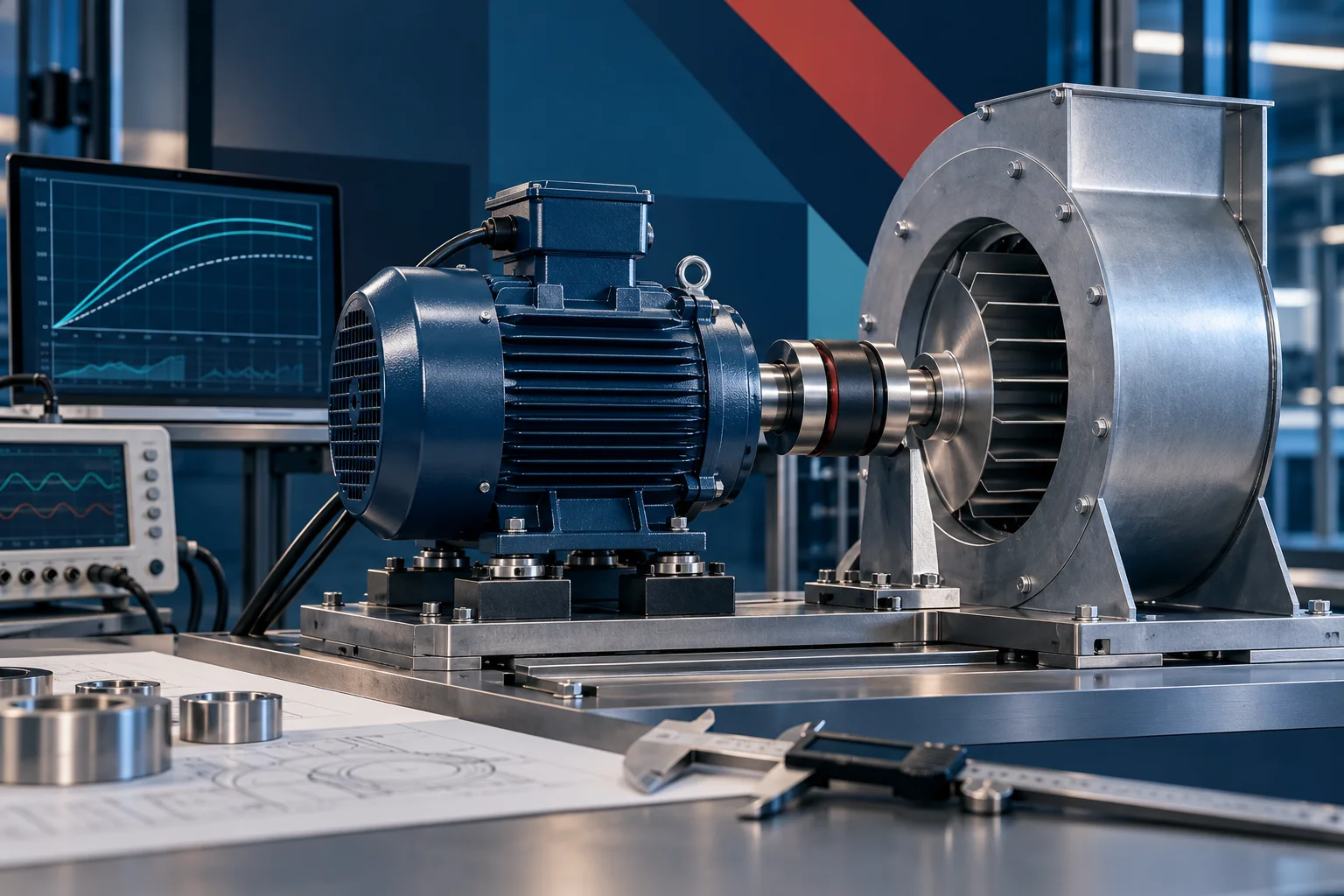
A motor marked Class F does not necessarily run at 155°C. The letter describes the thermal class of its insulation system; the winding temperature reached in service depends on load, ambient air, cooling, duty and the test method. For a fan replacement or a new OEM design, the useful question is whether the complete motor stays within its specified temperature limits at the actual operating point.
What Class B, F and H identify
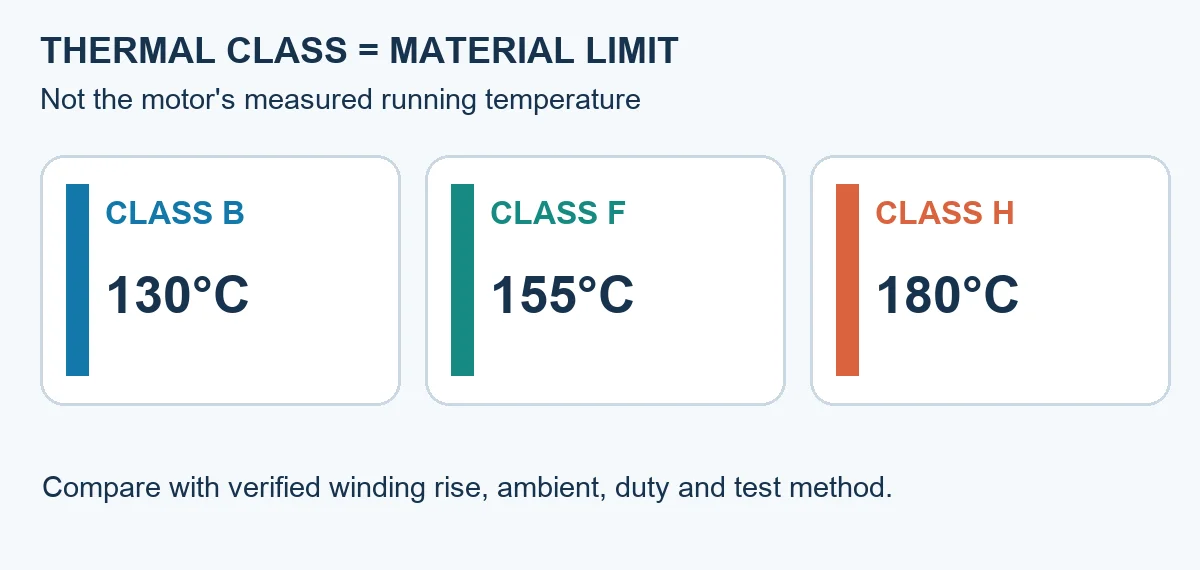
A thermal class is a rating for an insulation system, not a thermometer reading on a particular motor. The familiar reference temperatures are 130°C for Class B, 155°C for Class F and 180°C for Class H. They appear in NEMA’s IEC comparison guide. The applicable motor standard and manufacturer’s test report still govern the allowable rise for a specific design, method and service condition.
A higher class can offer a higher material temperature limit. It does not show that the motor is running cooler, that its bearings or electronics share the same limit, or that it will last longer in the proposed installation. Two motors with the same class may have different winding rises at their rated loads. The class letter is therefore an input to a thermal check, never a substitute for that check.
How temperature rise differs from operating temperature
Temperature rise is the increase above a stated reference ambient under stated test conditions. A complete winding-temperature assessment also depends on where and how temperature is measured, how hot spots are accounted for, and which duty and supply conditions apply. Do not add a generic allowance to every data sheet: use the method and limit stated by the relevant standard and the exact motor report.
For an illustrative calculation only, an ambient of 40°C and a documented 80 K winding rise would point to 120°C before any method-specific allowance. That arithmetic does not qualify a motor for 40°C ambient or establish its hot-spot temperature. If the application has hotter inlet air, frequent starts, a blocked cooling path or a different load, the measured rise can change. Obtain the maker’s rated ambient and duty, then verify the assembled fan in its intended enclosure.
Why “Class F insulation with Class B rise” needs context
This phrase describes a material class and a rise target under a defined test convention. It may indicate thermal design margin when both values refer to the same motor, rated load, ambient and method. It does not promise a fixed number of extra operating years. Insulation ageing depends on the actual winding temperature over time; bearings, grease, seals and a built-in controller can impose different limits.
A 25 K difference between class reference temperatures cannot be converted into a fixed multiplier for an unspecified fan motor’s life. Ask instead for the exact nameplate, winding-rise test and permitted ambient, and compare the motor’s thermal result with the applicable limit. If a higher class is proposed as a replacement, check voltage, frequency, load, mounting and cooling as well as the class letter.
Four inputs for a fan-motor thermal review
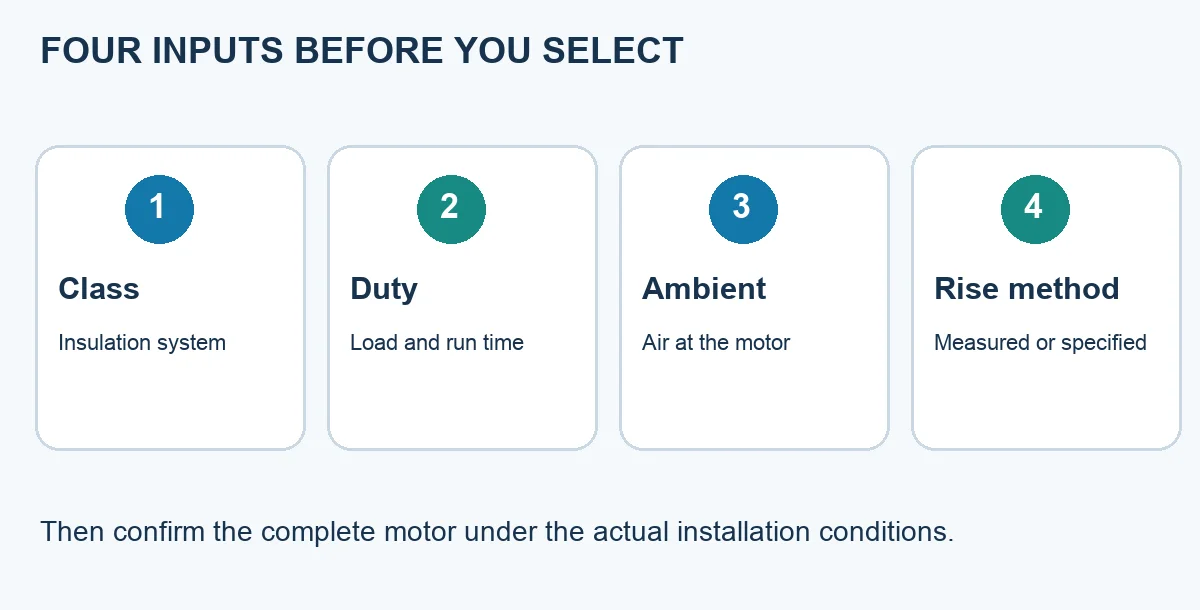
First, identify the insulation system on the exact motor documentation rather than inferring it from a product-family photo. Second, record the required duty: continuous running, cycling and starts can impose different thermal demands. Third, measure or specify the air temperature reaching the motor, which may differ from room ambient inside equipment. Fourth, obtain the winding-rise value, its test method and the conditions under which it was recorded.
Only then compare the evidence with the applicable standard and manufacturer limit. IEC 60034-1:2026 is the current rotating-machine rating and performance publication; its scope notes that integrated converter systems also require attention to the drive component. Use the edition and product rules applicable to the project, and do not assume that a motor winding class rates an EC controller board.
What to request from LONGWELL for a selection
LONGWELL’s AC motor family is a starting point for identifying possible constructions. The family page does not establish an insulation class, temperature-rise result or fit for this application. Send the exact motor model or target envelope, rated voltage and frequency, fan load or duty point, ambient at the motor, mounting arrangement, run pattern and any enclosure airflow constraints. Request the model-specific thermal documentation and allowable conditions before fixing the selection.
For an installed fan that runs hot, start with safe measurements and the equipment maker’s service procedure. Check that supply, load, rotation and cooling match the rated design; a hot case or a thermal trip alone does not identify the cause. Record the test conditions and let the motor and equipment manufacturers resolve any disputed limit. That approach turns the class letter into a useful boundary while keeping the actual motor temperature as a measured engineering question.