A discontinued fan cannot be replaced safely from diameter, voltage or a rival model number alone. The useful question is whether a current candidate will deliver the required airflow in this installation, fit its interfaces, respond correctly to its controls and remain suitable for the operating environment. The answer needs documents and a sample test, especially when the original drawing or setting file is missing.
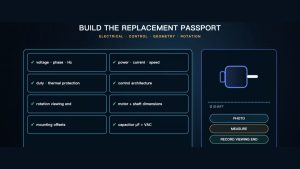
Start by identifying the incumbent as precisely as possible: complete model and suffix, revision, nameplate, impeller rotation viewed from a stated side, installation photos and any surviving drawing. Record what failed and what the equipment now requires. A cross-reference can suggest a family to examine; it does not establish a drop-in replacement.
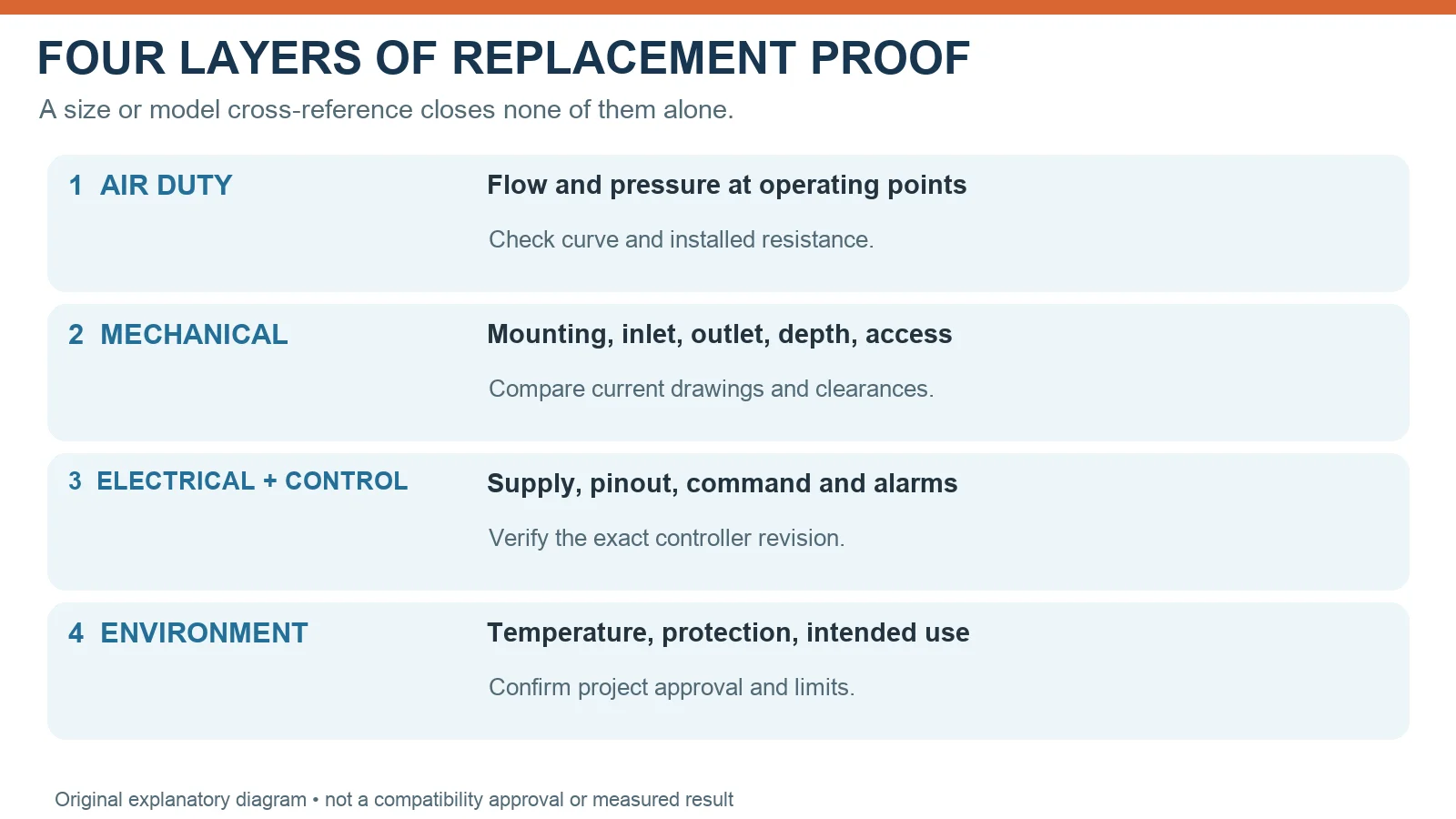
Build a four-layer evidence record
Use four columns for every candidate: air duty, mechanical fit, electrical and control behavior, and operating environment. Mark each item matched, open or incompatible. An unanswered control pinout is an open item, even when the new unit has the same connector shape. An incompatible item needs an engineered change to the host equipment or another candidate.
Reconstruct the operating duty
Gather the required airflow and static pressure at relevant operating states, including clean and loaded filters or changing control commands where applicable. Note which pressure definition was used and where readings were taken. A historic nameplate maximum, a free-air airflow figure and an installed duty point are different quantities. If a measurement cannot be made, calculate a bounded estimate from the equipment design and identify it as an estimate.
Ask for the proposed fan curve at the relevant speed or control setting and place every required duty point on it. The LONGWELL duty-point guide explains this method. A curve confirms only the aerodynamic part of the review; it cannot prove mounting, controls or project approvals. If the curve is based on a different assembly or test condition, request the correct record before selecting a model.
Compare the interfaces, not just the silhouette
Measure the mounting-hole pattern, inlet and discharge connections, overall depth, service clearance, cable exit and the space available to remove the unit later. Record impeller rotation with an explicit viewing direction. Compare drawings at the same revision and confirm any adapter plate or transition piece against the host equipment. A photograph helps identify a candidate, but it does not establish dimensional interchangeability.
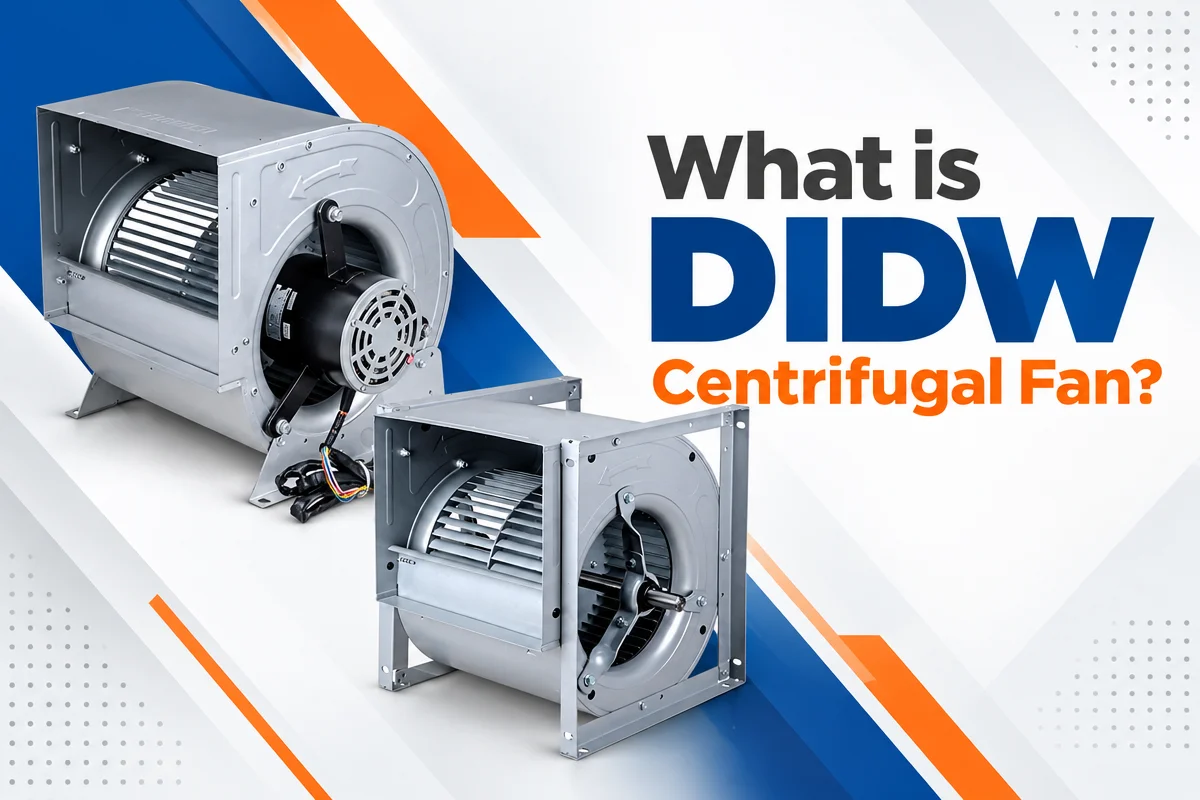
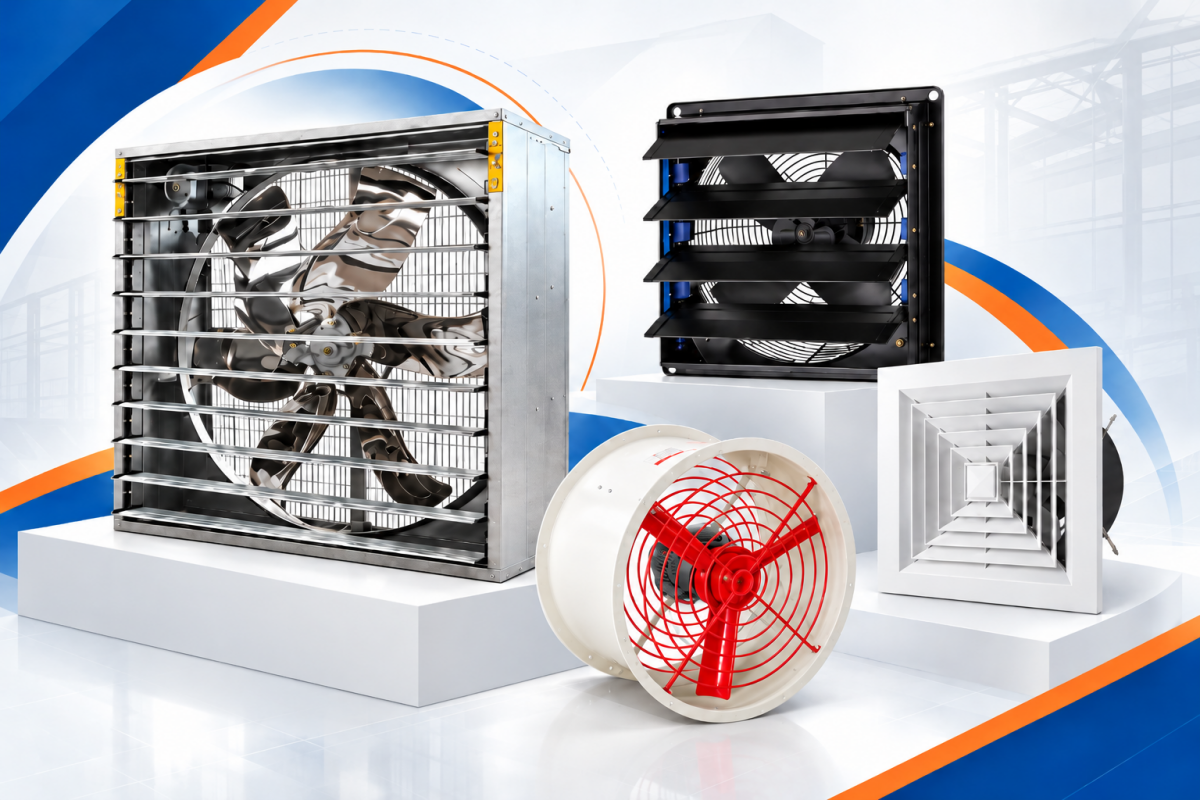
LONGWELL lists centrifugal fan families and axial fan families that can be screened by duty and physical form. These are family-level starting points, not an exact fit for an unidentified incumbent. A family drawing cannot prove interchangeability until the specific old and proposed models, suffixes and revisions are compared.
Check power and control behavior on the exact revision
Write down supply range, phase, protection, grounding, current limit, wiring and connector pin assignments. For controlled fans, include the command signal, feedback, alarm behavior, startup and response to loss of signal. Ask for the current wiring diagram and instruction for the proposed suffix; do not transfer a pinout or failsafe setting from a different member of the family. A change from AC to EC can require changes to wiring and control logic. Any claimed energy saving needs a comparison at the same delivered duty and operating schedule.
Prove the environment and release the change in stages
Confirm ambient temperature, exposure, ingress and cleaning needs, intended use, acoustic limits and approvals required by the actual equipment or market. Neither a family brochure nor a model-name cross-reference proves a project-specific approval. List the missing documents before a procurement decision.
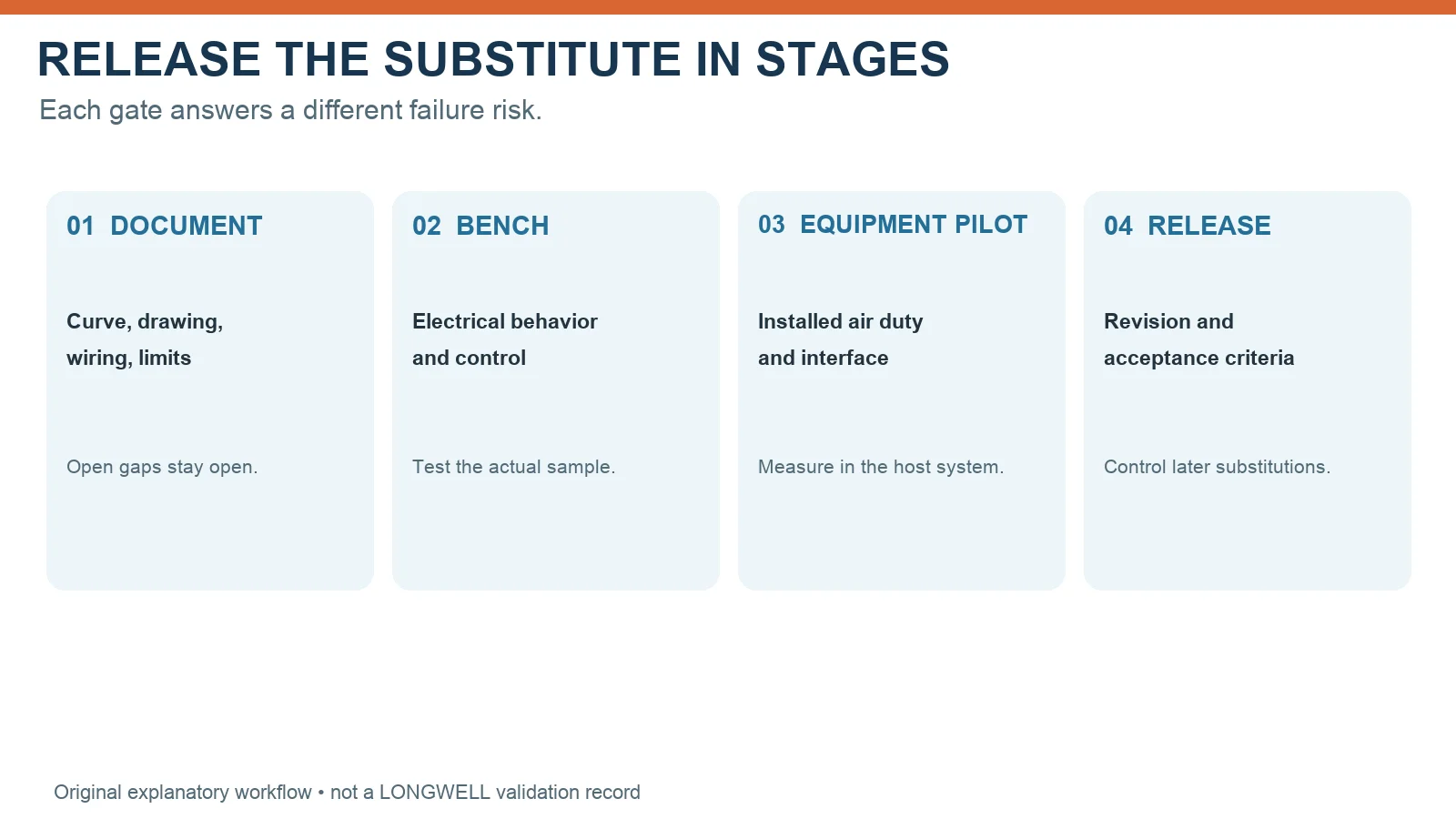
Then progress from document review to an electrical bench check, one equipment pilot and a controlled release. The pilot should verify installed airflow and pressure, electrical input, control states, vibration and accessible service clearance under the conditions that matter. Record the tested fan suffix, drawing and software revision, test method, result and disposition. Only then decide whether to release, redesign the interface or reject the candidate.
What to send for a candidate review
A useful request includes the old unit’s full model and revision, nameplate and installation photos, existing drawings, required airflow and pressure points, supply and control details, operating environment and any mandatory approval. Label measured values and estimates separately. If one layer remains open, state exactly which drawing, curve or trial result would close it. This avoids presenting a tentative family match as a verified replacement.