A duct fan submittal can look complete and still leave the approval question unanswered. The catalogue may show a maximum airflow, the drawing may show a round connection, and the quotation may call the unit “centrifugal.” None of those items proves that the exact fan will meet the installed duty.
Start with one useful correction: inline describes how the package connects to the duct, while centrifugal describes the impeller’s airflow path. A fan may be both. Approval therefore should not be a contest between two labels. It should be a documented check of duty point, curve identity, package geometry, controls, installation boundary, sound, environment and service access.
Freeze One Duty Table Before Comparing Evidence
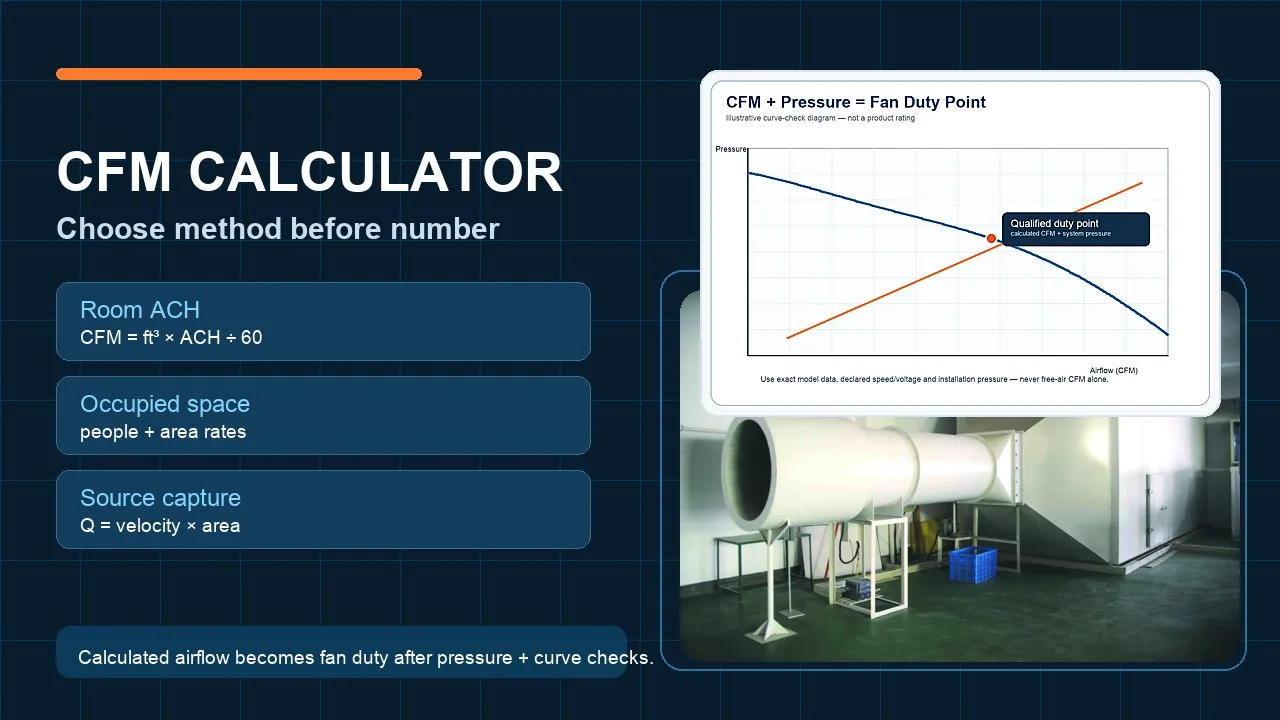
Put the required airflow and pressure in a short duty table. State whether the pressure is static or total, and record the air density or the temperature and altitude used for selection. Include the normal operating point, the clean-filter condition, the intended loaded-filter allowance and any minimum or maximum controlled-flow point.
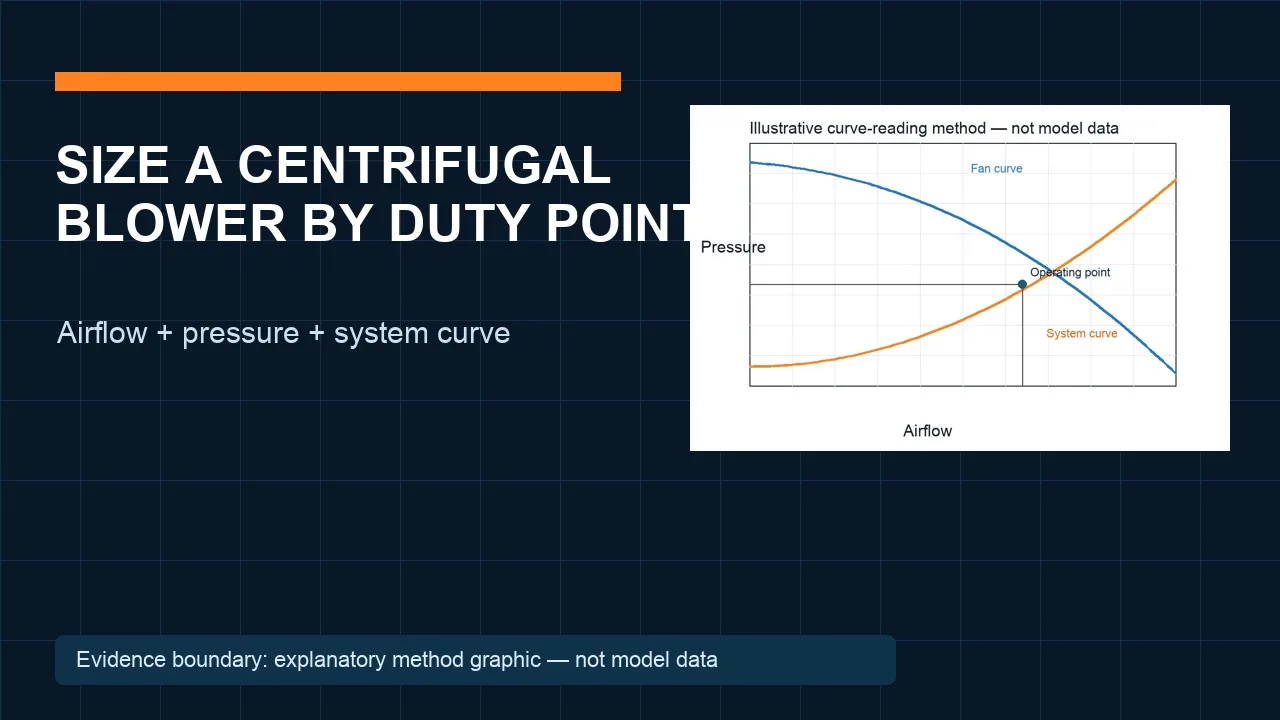
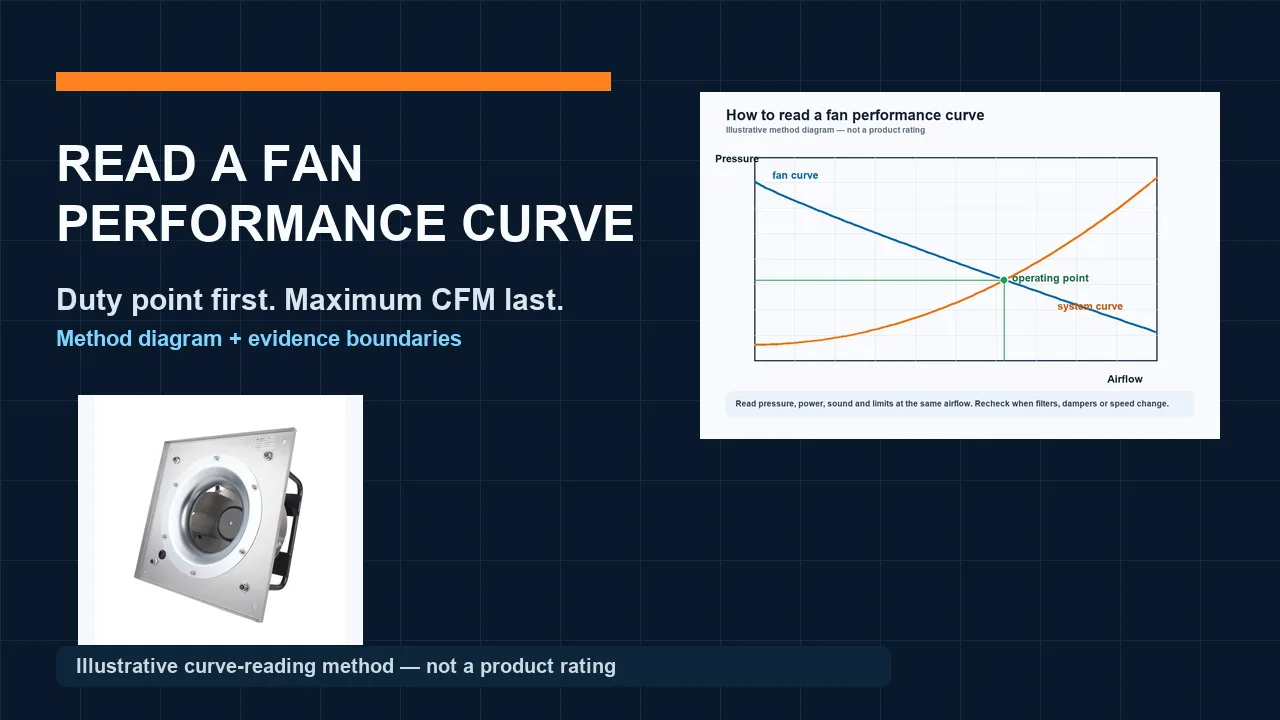
This step prevents a common submittal error: one candidate is quoted at free air while another is shown at the real system resistance. The installed operating point is where the fan curve and the system curve meet. A maximum-airflow headline near zero external resistance is not a substitute for that intersection. The centrifugal fan curve guide explains the reading sequence; the project still needs the exact model curve and the same declared duty for every candidate.
Lock Model, Suffix, Curve and Revision Together
The name on the offer, drawing, curve and electrical sheet must resolve to one configuration. Record the full model and suffix, motor technology, rated voltage and frequency, speed or speed range, controller identity, curve revision and test condition. If the drawing shows one outlet or controller and the curve belongs to another suffix, stop the approval until the supplier reconciles them.
A useful curve sheet identifies the tested or calculated boundary, units, speed, density basis and the exact fan configuration. Also ask which performance quantity is being plotted and whether accessories were present. A filter, silencer, guard, damper or transition can change the installed result even when the bare-fan curve itself is valid.
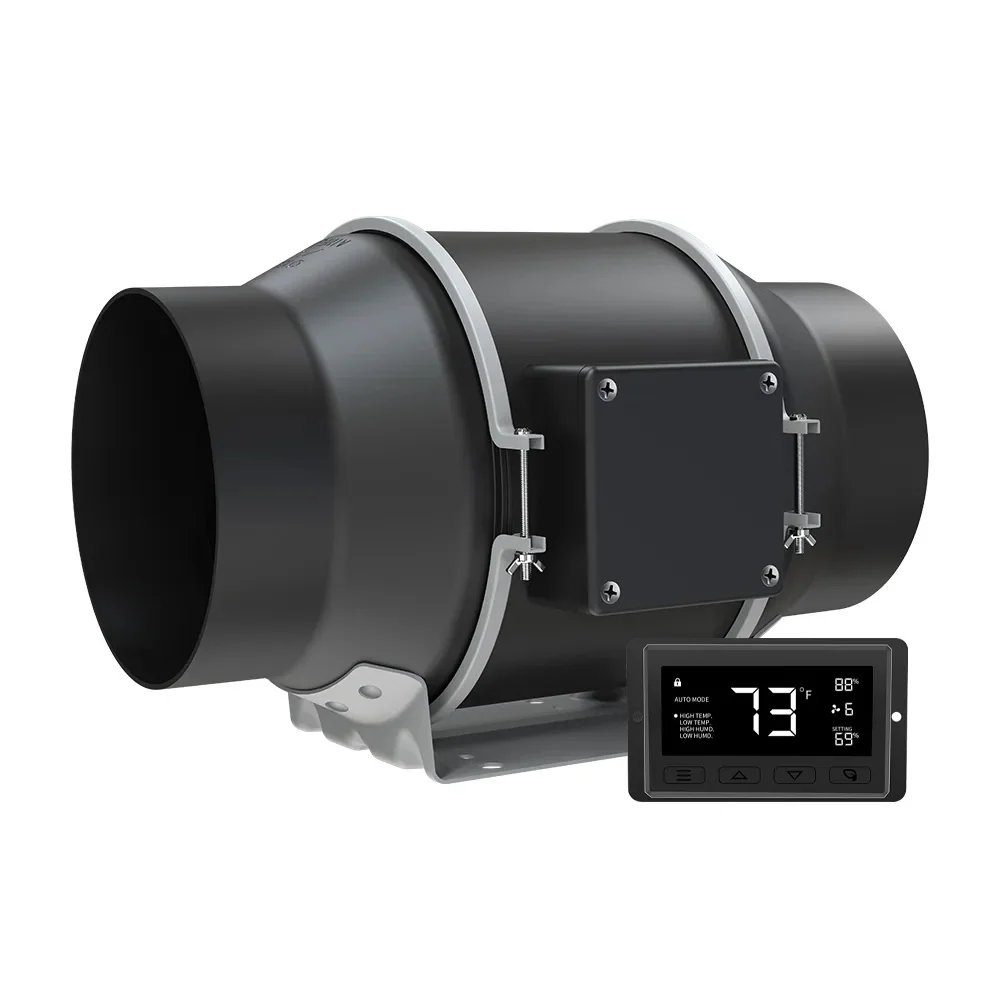
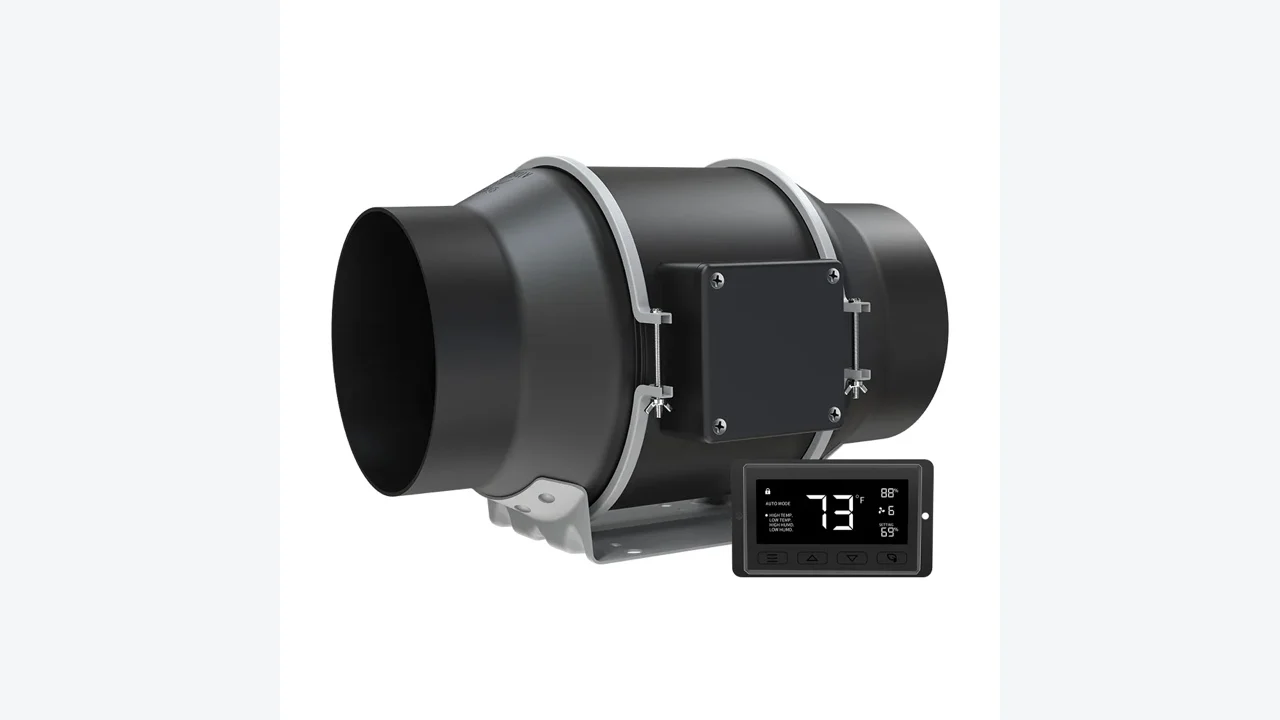
Real product photography can confirm visible housing, connection and controller features. It cannot prove airflow, pressure, sound, certification or suitability. Use the inline duct fan family index for discovery, then return to the controlled model documents before approval.
Describe the Package Without Treating Labels as Opposites
A round straight-through package may contain axial, mixed-flow or centrifugal geometry. A housed centrifugal fan may use a scroll and a side or rectangular discharge. An inline centrifugal package redirects air internally while keeping aligned duct connections. These forms create different space, transition and service requirements, but the shape alone does not award a universal pressure or noise advantage.
Check inlet and outlet size, orientation, overall envelope, mounting points, weight, required support and the removal path. When a compact round package is appropriate, the mixed inline duct fan family is a discovery route, not evidence that any listed model meets this duty.
Put the Installation Boundary on the Submittal
Trace the route from intake to discharge. Note reducers, elbows, dampers, filters, silencers, coils, grilles and diffusers. Then mark the fittings nearest the fan. A close inlet elbow may create swirl or an uneven velocity profile; an abrupt transition may load only part of the wheel; a poor discharge arrangement may limit pressure recovery. These system effects can move installed performance away from a laboratory curve.
The approval record should state the required straight lengths, transition limits, mounting orientation, flexible connectors, vibration isolation and access clearance. If the site layout cannot meet the manufacturer’s instructions, the designer must account for the loss. “Fits between the ducts” is not an installed-performance check.
Check Clean, Loaded, Controlled and Acoustic Points
Filters make a one-point selection especially weak. As resistance rises, the system curve changes and airflow usually falls at the same speed. Verify the intended clean and loaded points on the exact curve, then check input power, current, permitted speed range and stability at each required condition.
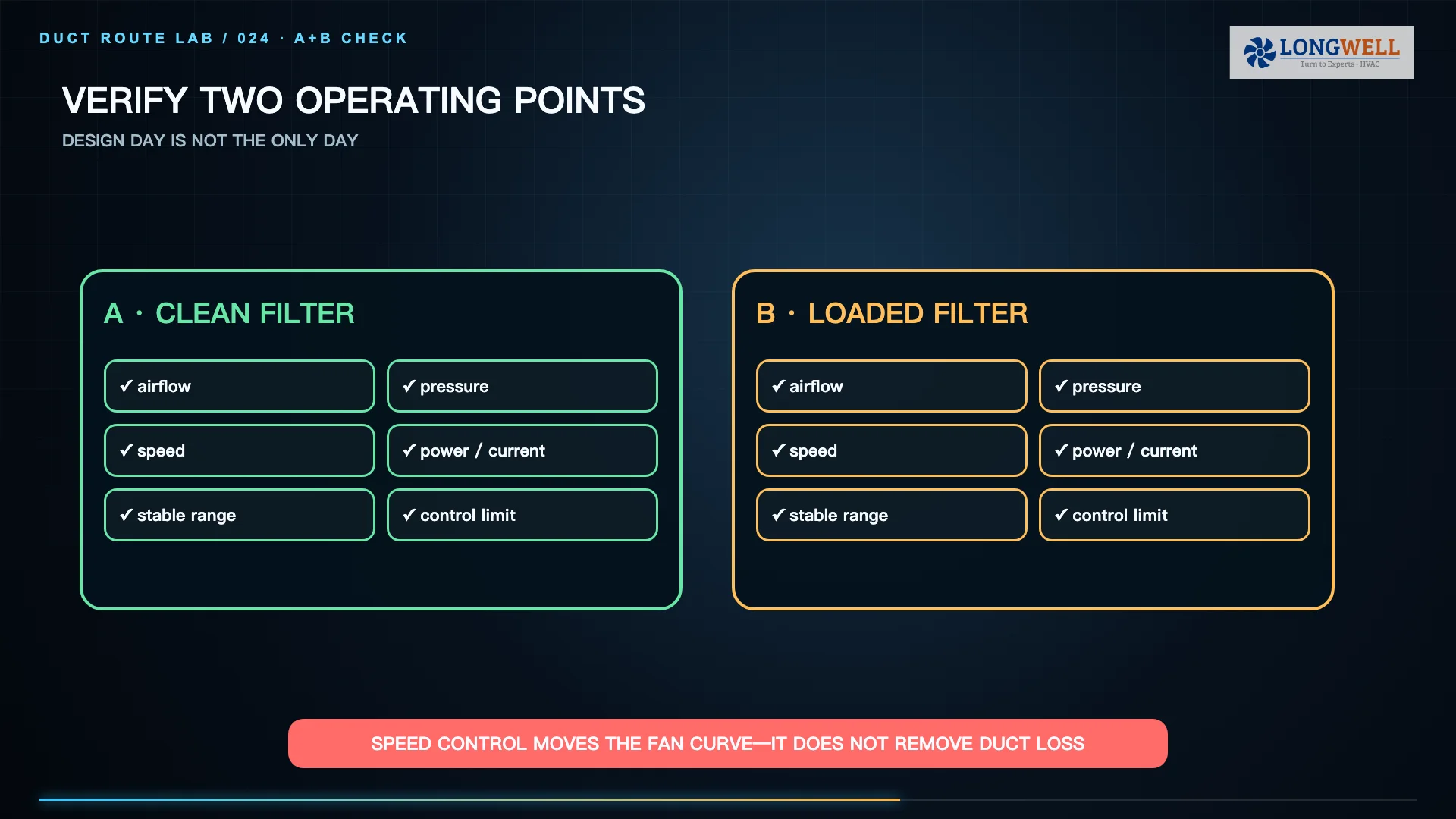
For speed control, record the control signal, minimum command, controller or drive identity, protection and any alarm interface. A controller moves the fan curve; it does not remove duct resistance. For sound, compare data at the same airflow, pressure, speed and test boundary. Do not accept “quiet inline” or “quiet centrifugal” as evidence. Duct breakout, grilles, fittings, motor tones, structure and mounting all contribute to the occupied-space result.
Reconcile Environment, Compliance and Service Access
Confirm the air temperature, humidity, condensate risk, outdoor exposure, grease, corrosive media and any hazardous contaminant. Match the electrical supply and protection to the exact motor and controller. If a certification or declaration is required, request the controlled document for the offered configuration; a generic company certificate or a mark visible in unrelated marketing artwork is not enough.
Finally, make maintenance physically possible. Show how the motor, cartridge, controller, filter and fasteners can be reached. State whether the duct supports the fan or independent hangers are required. Leave a safe removal path. A serviceable product on a catalogue page can become unserviceable above a finished ceiling.
Hold Approval When Any Critical Link Is Missing
- The airflow and pressure do not share one declared test boundary.
- The curve, drawing, electrical sheet and offer do not share the same model, suffix and revision.
- The clean and loaded filter conditions are not defined.
- The controller or permitted speed range is unclear.
- Nearby fittings, transitions or access clearances conflict with installation instructions.
- Sound, environmental or compliance evidence belongs to a different configuration.
A good submittal does not prove that inline is better than centrifugal, or the reverse. It proves that one traceable package can reach the required operating points, fit the real route, accept the specified controls and remain safe to service. Until those links agree, the honest status is “clarification required,” not “approved as noted.”
Choose the right duct fan
Longwell manufactures 254 duct fans in-house. Send airflow, static pressure and voltage — an engineer replies with a matching model, performance curve and price within one working day.