A fan factory audit should answer one purchasing question: can the supplier repeatedly build and release the exact fan configuration you intend to buy? A clean floor, a test machine and a certificate are useful starting points, but each shows only part of the picture. Follow a selected model and production lot through the instructions, observed work and dated records that governed it.
Before the visit or video call, write down the model, suffix, drawing revision, destination market and the requirements that could change your approval decision. This keeps the audit proportionate. A remote review may be enough to screen documents and trace one lot; an on-site visit can test what the camera cannot easily show. Neither format substitutes for the exact evidence needed for your order.
Choose the lot and lock its revision
Begin with a recent shipment or production order that you choose, rather than a prepared showcase sample. Record the customer’s approved part number, the manufacturer’s full model and suffix, the current drawing and bill of materials, and any approved deviations. Ask which site and which legal organization performed each critical step, including any outsourced operation. A factory-wide document cannot prove that a particular model, revision or destination market is covered.
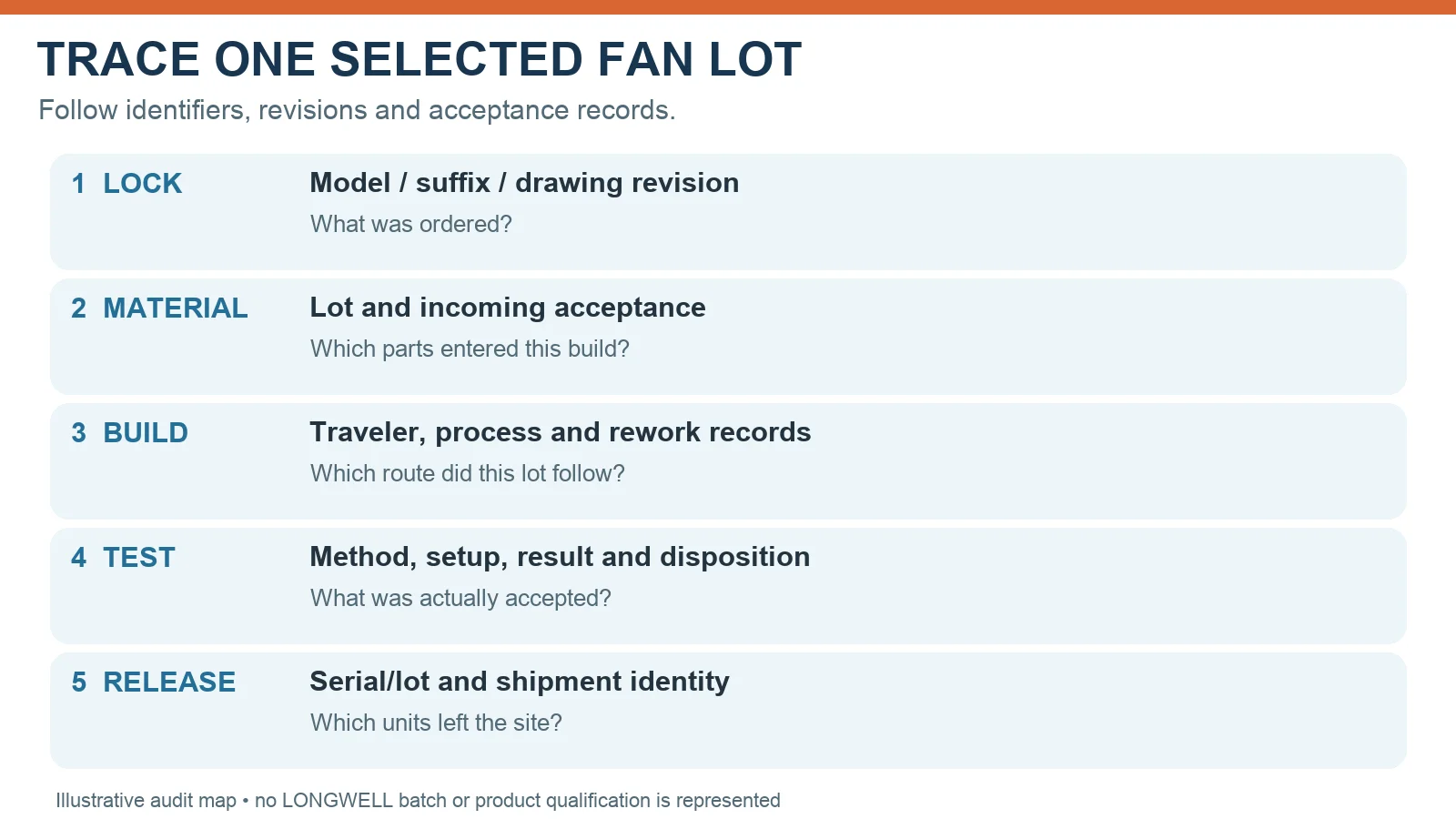
Trace the selected lot forward: incoming material identity, inspection decision, production traveler, process or rework history, test record, final release and shipping identity. Then start with a shipped serial or lot number and trace backward. If an identifier changes between systems, request the controlled cross-reference. A missing link is an audit finding to resolve, not a reason to guess which record applies.
Ask for an evidence pack before the call
Request the organization and site scope, the relevant process map, controlled work instructions, inspection plan, sample traveler and example test report. Ask for the document revision and effective date on every file. If a certification or declaration matters, inspect the issuer document, named entity, product or system scope, validity and intended market. The existence of a certificate on a company page does not extend it to every fan. LONGWELL’s document center is a starting point for identifying documents; request the current file that applies to the exact model and destination.
Protect confidential customer details while keeping the technical trail usable. Redacted documents can still show document IDs, dates, revision, sampled lot identifiers, acceptance criteria and dispositions. If redaction removes the link needed for traceability, ask the supplier to show the linkage live or through an agreed secure channel. Agree in advance which evidence can be retained and which can only be viewed.
Compare the instruction, the station and the record
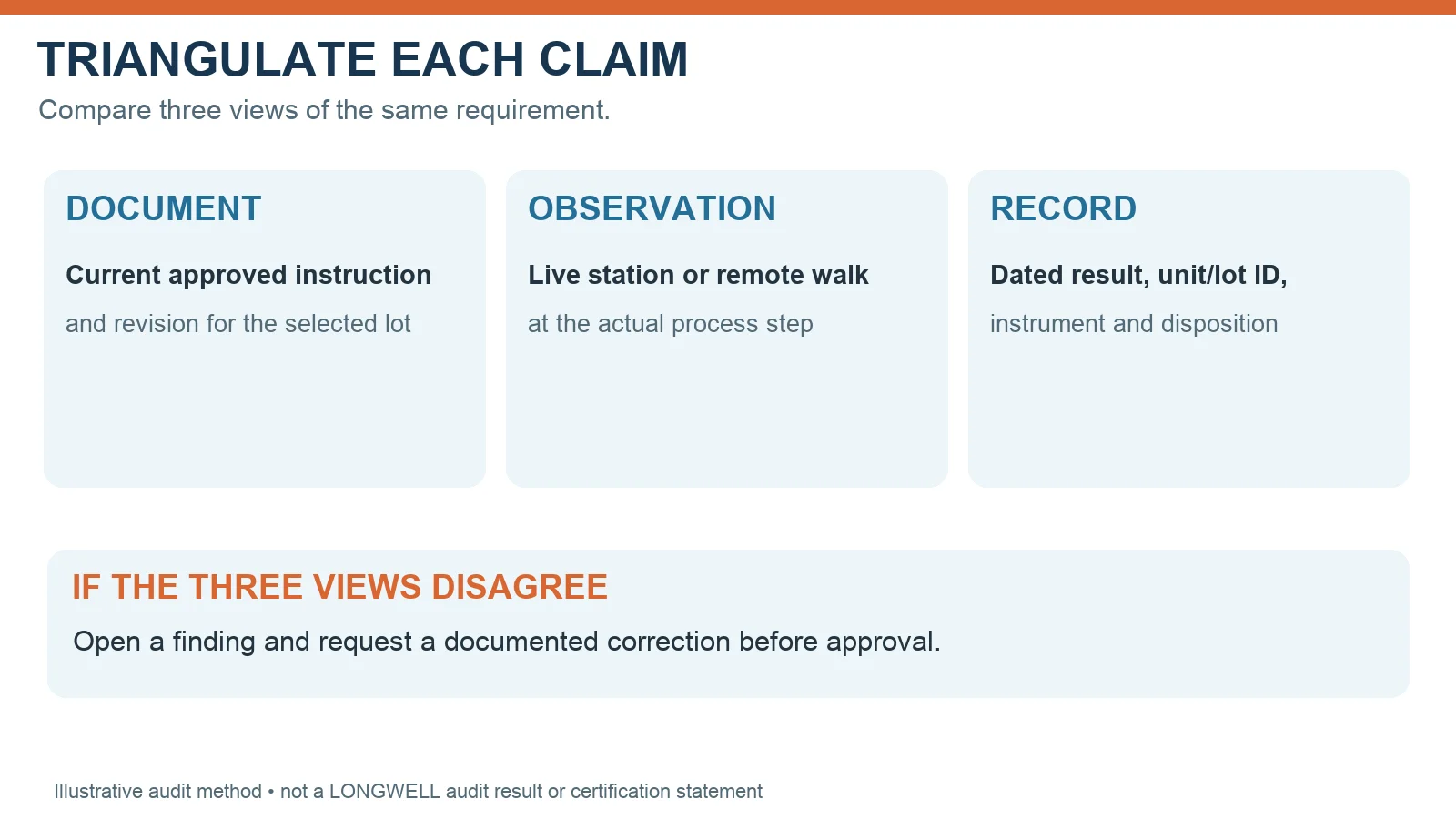
At each critical step, compare three views of the same requirement. The approved instruction says what should happen; the station or live remote walk shows what is happening; the dated record says what happened to the chosen lot. A work instruction without matching activity can be obsolete. A machine running during a tour shows capability to operate, not that the selected units passed the required check. A test sheet needs the method, setup, unit or lot identity, limits, measured result, instrument identity and final disposition to support an acceptance decision.
For fan production, select the steps that matter for the chosen construction: component receipt, wheel or rotor build, balance where applicable, motor and electrical checks, airflow or pressure testing where specified, rework, final inspection and packing. Do not impose one process list on every fan family. The company’s manufacturing overview helps frame questions, but it does not prove which operations or acceptance results apply to your exact order.
Use remote and on-site methods for different gaps
A remote audit works best when documents arrive before the call. Select the lot and questions in advance, then ask the camera operator to locate the actual station, label, work instruction and record during a live walk. Ask an operator or process owner to explain an exception or rework path, and compare that explanation with the documented rule. Record what the camera could not show because of connectivity, privacy, safety or access limits.
Go on site when the remaining risk depends on material segregation, process flow, storage conditions, gauge use, rework controls or the relationship between sites that a remote view cannot establish. Observe the selected step while production is actually taking place; a staged demonstration is useful for learning the mechanism but is weaker evidence of routine control. If travel is unavailable, leave those limitations visible in the approval record rather than treating a remote screen share as an equivalent observation.
Judge test evidence by scope
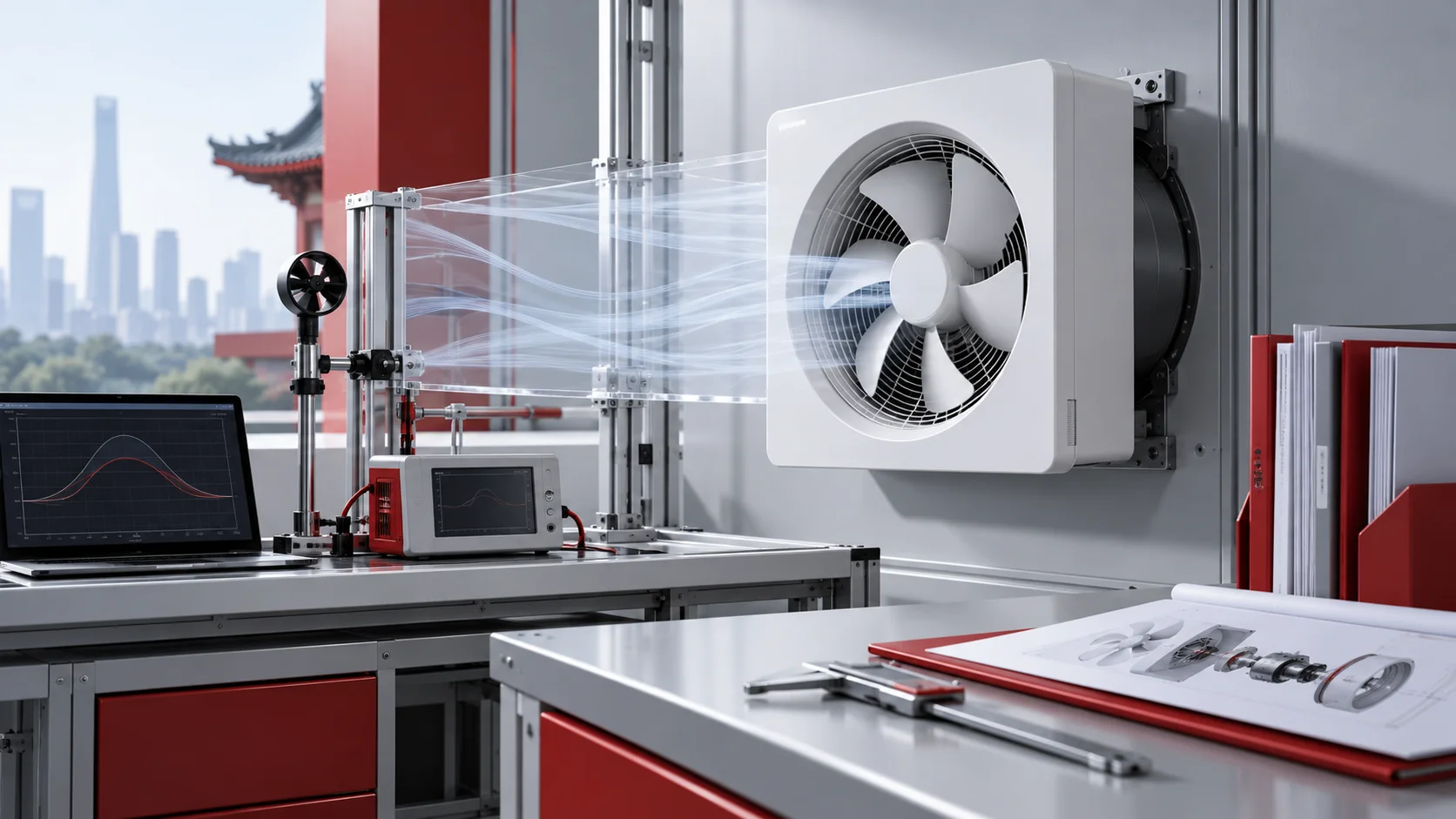
A test room or balance machine is a capability clue. For a purchasing decision, ask which model and revision were tested, under what conditions, by which method and instruments, against which limits, and whether the result belongs to a prototype, a sample or the production lot. Calibration information should match the instrument used and the date of the test. A curve for a related fan family, even if genuine, cannot be silently carried over to a new suffix, installation or operating point.
Where the supplier claims a compliance mark or a standard, inspect the actual issuer file and its scope. Where the application needs a duty point, request the exact curve or controlled report rather than treating a product photograph as performance evidence. LONGWELL’s company overview shows selected production and test contexts; those images identify facilities, not the result of your sampled lot or a blanket approval for every product.
Close findings with a decision you can defend
Write each finding with the requirement, sampled item, observation, missing or conflicting evidence, owner and due date. Distinguish a documentation gap from a failed acceptance check or an unverified outsourced step. Require a correction and a read-back of the affected record or process; a promise to update a procedure is not evidence that the next lot will follow it. If risk remains, state which orders or applications are held and what specific evidence would release them.
Keep the final decision conditional on the exact model, revision, site and market you audited. Record the evidence sampled and its limits, and identify the next trigger for review, such as a design change, new site, changed process or recurring discrepancy. A useful fan factory audit is repeatable: another buyer should be able to follow the same IDs, examine the same scope and understand why the supplier was approved, approved with conditions or held.