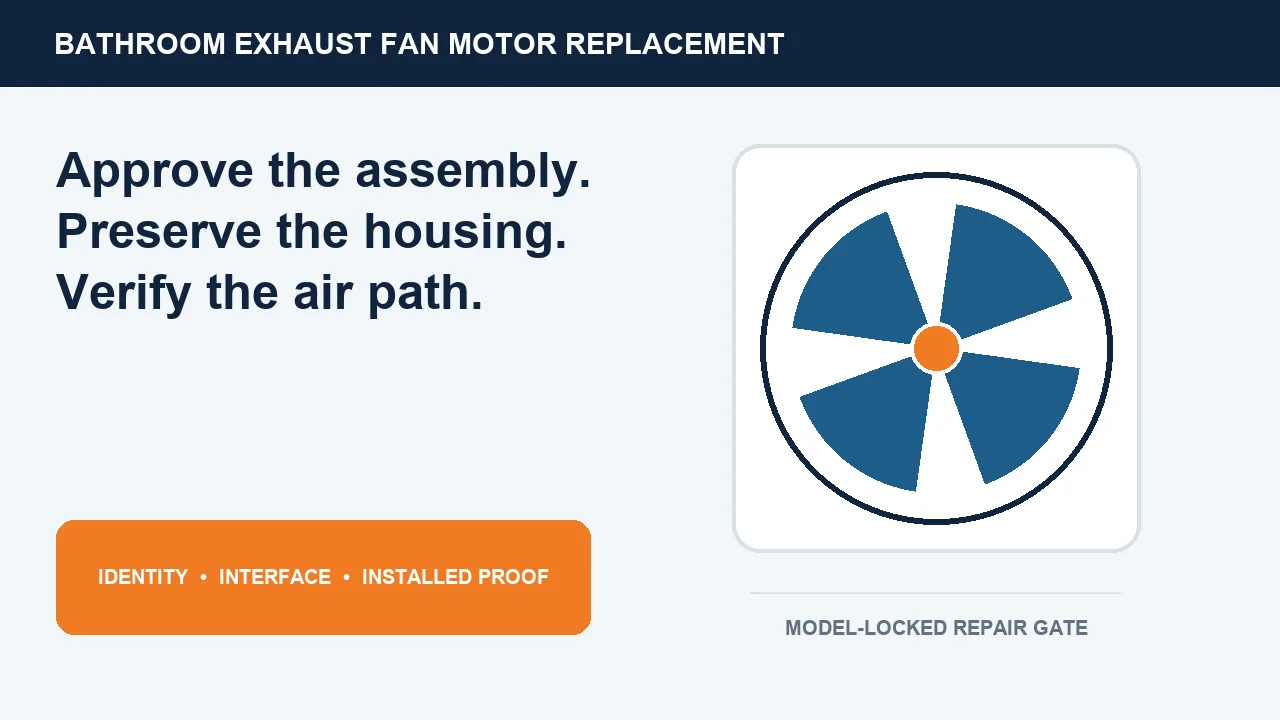
A bathroom exhaust fan motor replacement is a sound repair only when the exact housing has a documented, compatible motor assembly and the parts left in place are still serviceable. The safe decision is therefore not “Will a similar motor fit?” It is “Can the housing identity, replacement assembly, electrical interface and installed acceptance checks all be closed with current documents?”
Use a motor-only route when an authorized source identifies the replacement for the exact housing and the housing, receptacle, wheel interface, damper and duct can remain. Move to a whole-fan replacement when that identity cannot be proven, the retained parts are damaged, or the existing system cannot deliver the required ventilation. This guide is a decision and verification workflow, not a generic wiring procedure.
Confirm that a motor-assembly path actually exists
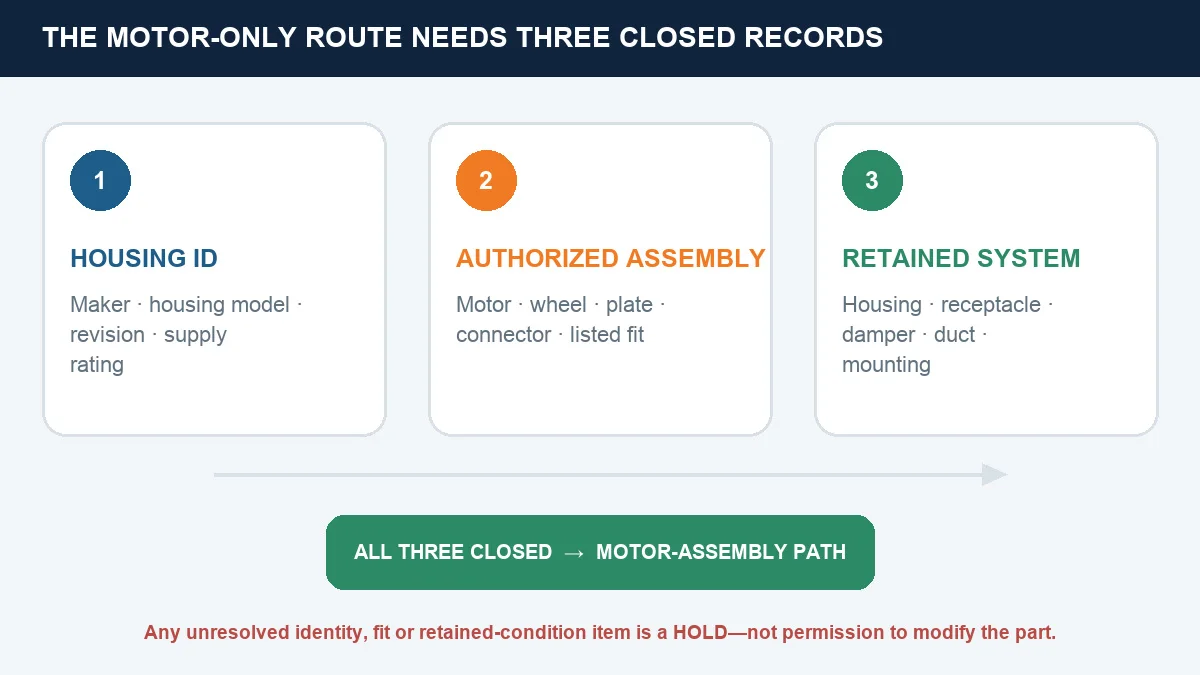
Start with the fan housing, not the grille. Record the manufacturer, housing model, serial or revision where present, supply rating and every installed assembly number before requesting a part. A grille can be shared across several housings, while their motor plates, wheels, connectors and ratings differ.
The strongest replacement record names both sides of the pair: the installed housing or listed models and the authorized motor, wheel and plate assembly. A seller’s visual similarity, matching nominal airflow or a connector that appears to fit is not an approval. If the current manufacturer documentation or authorized parts system does not close the pair, stop the motor-only plan.
Separate replacement approval from fault diagnosis
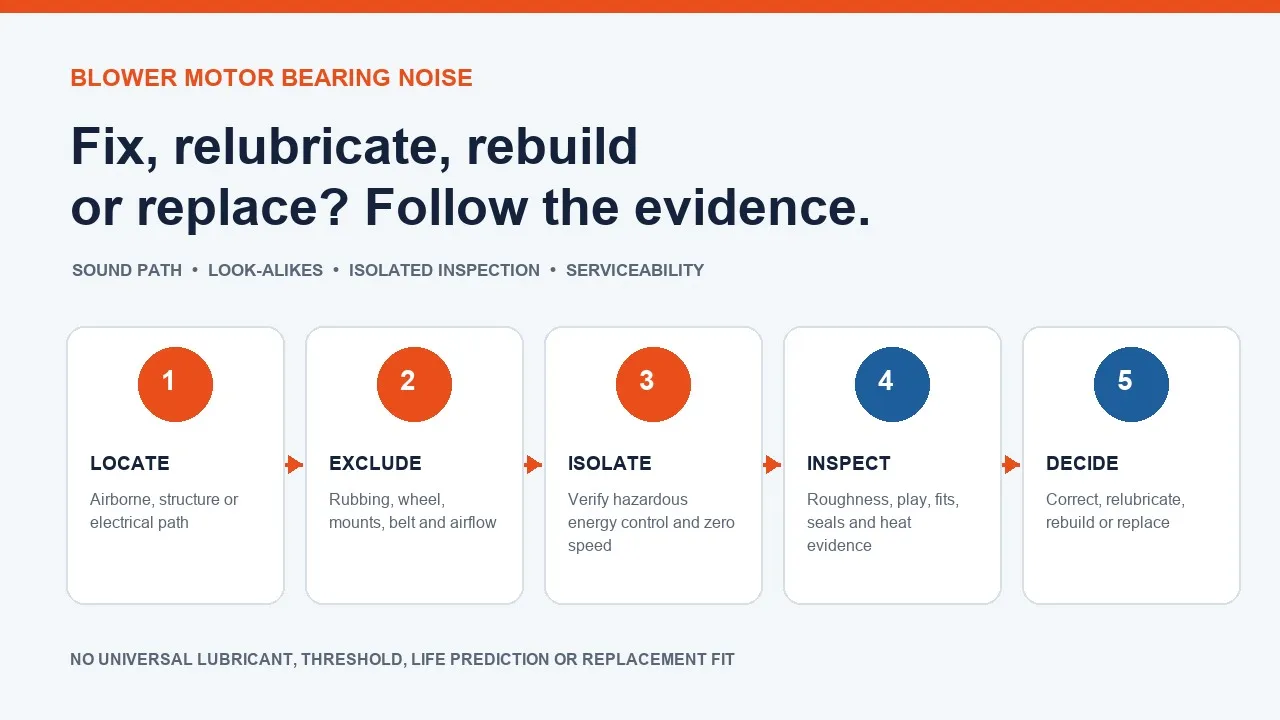
A grinding sound, weak airflow, hum or no-start complaint does not by itself condemn the motor. Before this workflow begins, the service finding should already separate foreign material, a rubbing or damaged wheel, loose mounting, a blocked damper or duct, the supply and control path, and the motor assembly. Topic045 starts after that boundary is established.
Keep the diagnostic evidence with the job: the reported symptom, observations, tests allowed by the equipment documentation, results and the reason the motor assembly is the failed boundary. This prevents a replacement from masking a duct restriction or transferring a damaged wheel into the new assembly.
Match the complete interface, not one nameplate value
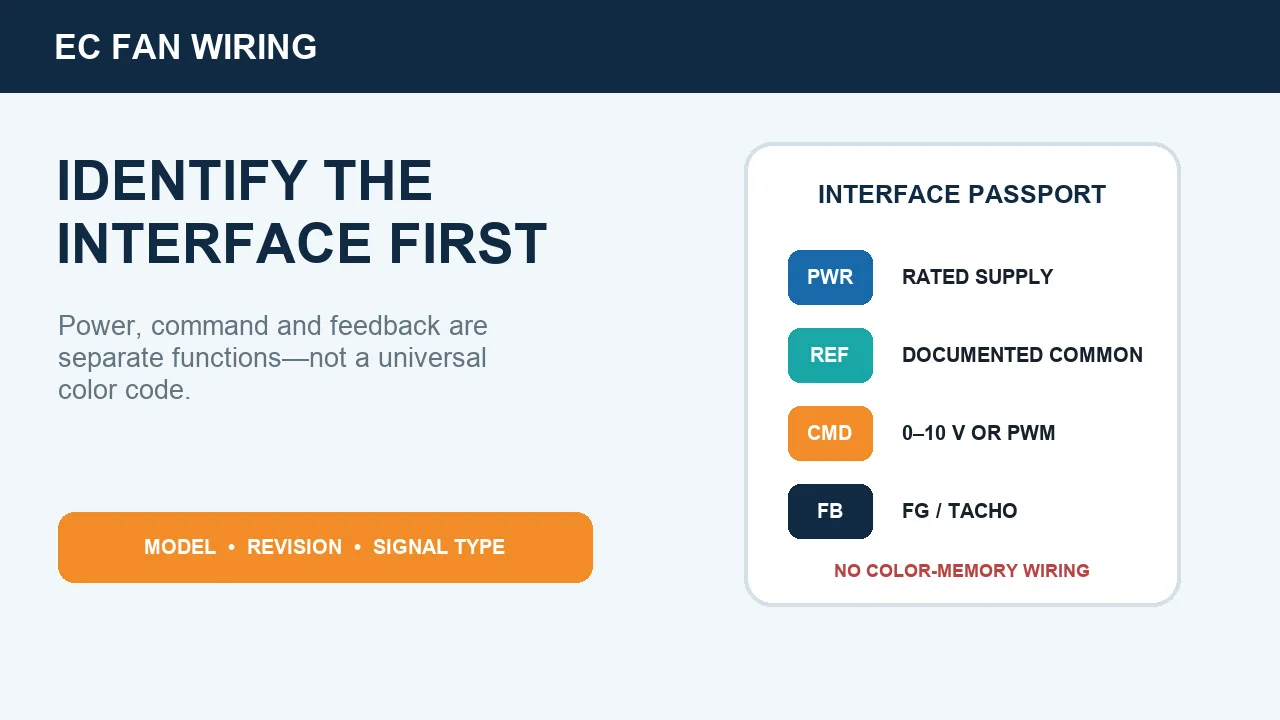
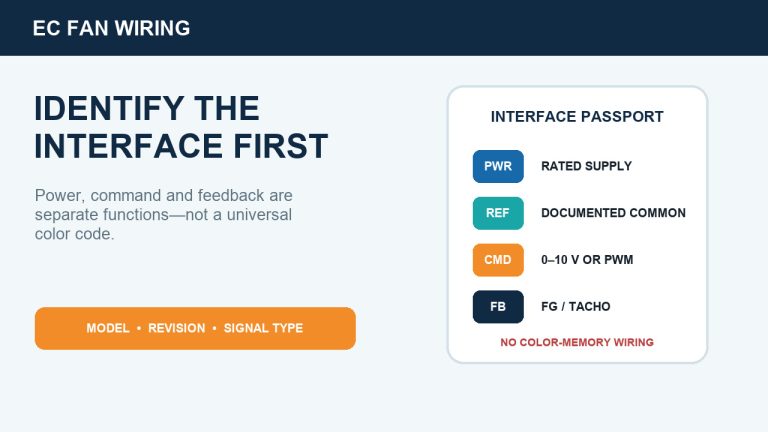
Build a comparison sheet for the authorized part. Include voltage and frequency, control or plug arrangement, motor plate outline and retention method, wheel type and position, shaft interface, rotation reference, cord routing and clearances. Treat any capacitor, sensor, light, heater or timer connection as unit-specific; never infer a wiring map from wire colour alone.
The Longwell motors and drive-system family can help explain available architectures after the interface is documented, but it cannot approve a replacement for an unknown bathroom fan. Likewise, the bathroom exhaust fan family is an application and housing-discovery route, not a cross-fit table.
Define exactly what will be replaced
Write the service boundary in plain language: bare motor; motor and wheel; motor, wheel and plate; or a manufacturer-supplied upgrade kit with its specified hardware. Also list every retained item. A current manufacturer kit can include more than one plate because housing dimensions and retention details control the correct choice.
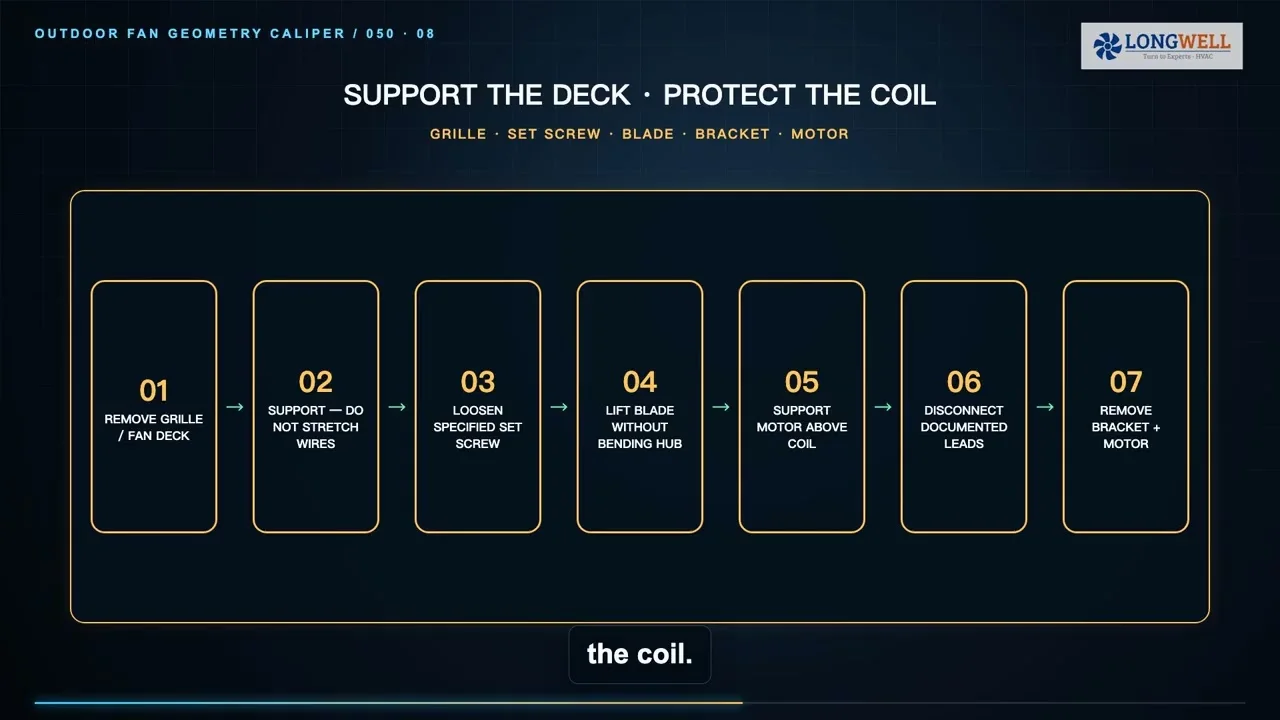
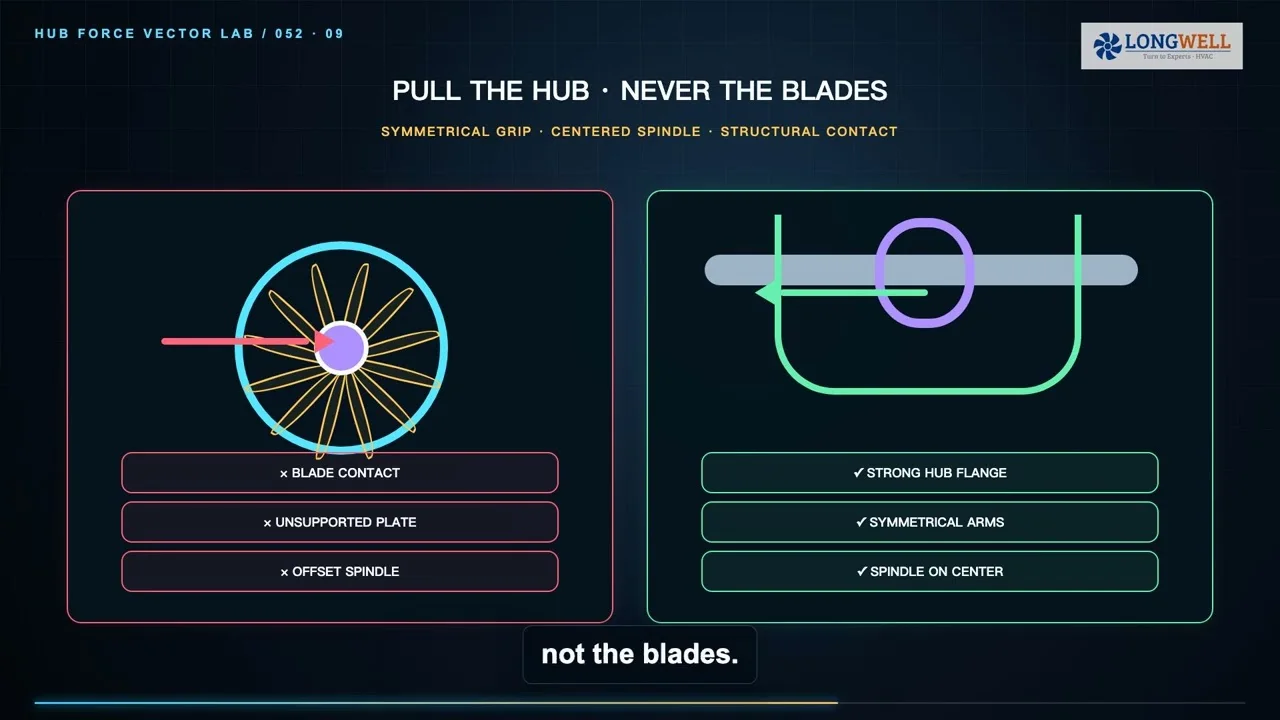
Do not silently reuse a wheel, fastener, isolator or plug when the authorized kit expects a matched item. Conversely, do not enlarge holes, trim a plate, bypass a connector or alter fixed wiring to make an unsupported part fit. Those changes turn a documented repair into an unverified redesign.
Control electrical and access hazards
Bathroom fans combine fixed electrical equipment, overhead access, sharp sheet metal, dust and rotating parts. Authorized personnel should follow the equipment instructions and the site’s energy-control procedure. The correct circuit must be isolated at its disconnecting means, protected against unexpected re-energization and verified de-energized with suitable test equipment before exposed electrical parts are approached.
A wall switch, timer or occupancy control is not an isolating device. Stop and use a qualified electrician when fixed wiring must be changed, the receptacle or insulation is damaged, voltage cannot be verified absent, stored-energy provisions are unclear, or local rules reserve the work for licensed personnel.
Inspect every component that will remain
With the approved service access open, inspect the retained housing, receptacle, mounting, grille springs, damper and duct connection against the manufacturer’s instructions. Corrosion holes, a loose housing, heat damage, a broken damper, damaged wiring or an unsafe receptacle are escalation conditions, not cleanup details.
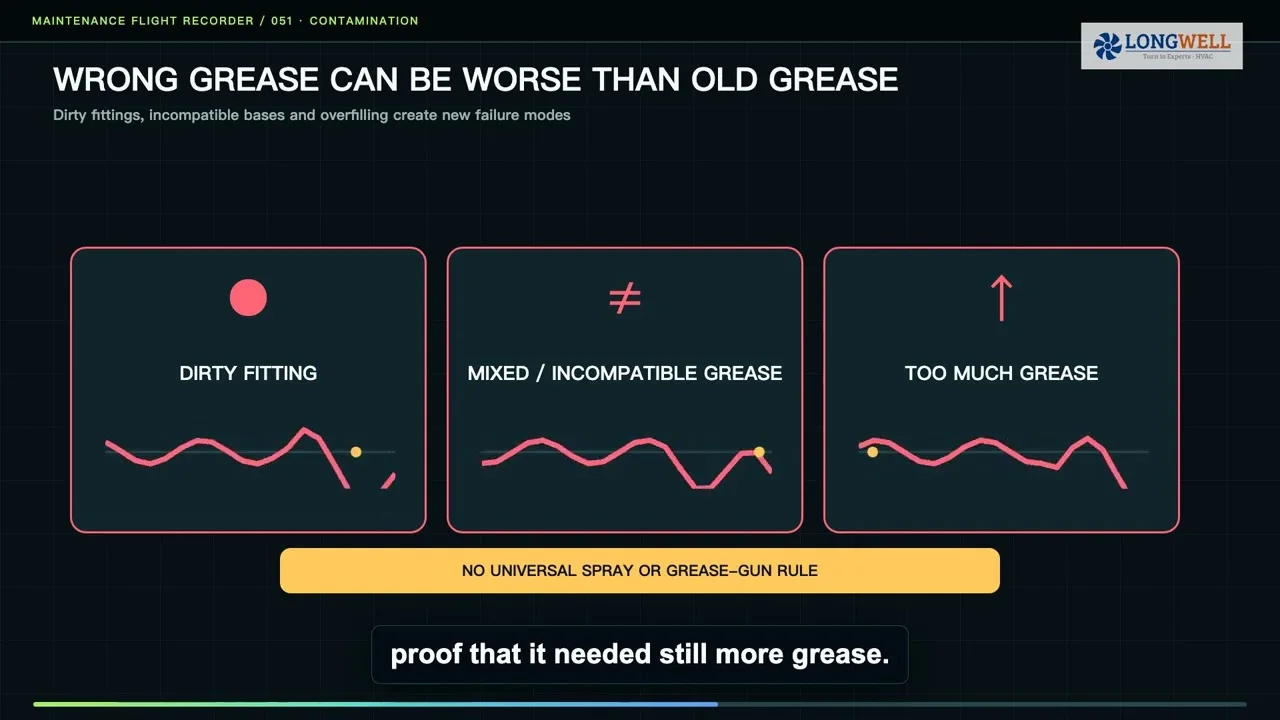
Remove loose dust using the method permitted by the equipment documentation and keep debris out of the wheel and motor. Confirm that the exterior discharge path remains intact and that the damper moves freely. If the housing or air path cannot be restored without work beyond the documented kit, use the whole-fan replacement safety guide as the next route rather than improvising a motor swap.
Commission the retained system, not just the new motor

Before closing the job, verify the documented plate retention, wheel position, cord routing, connector engagement, ground path where applicable and clearances. After guards and covers required for operation are restored, authorized personnel can re-energize in accordance with the controlled procedure and check start, rotation, rubbing, abnormal vibration, control response and shutdown.
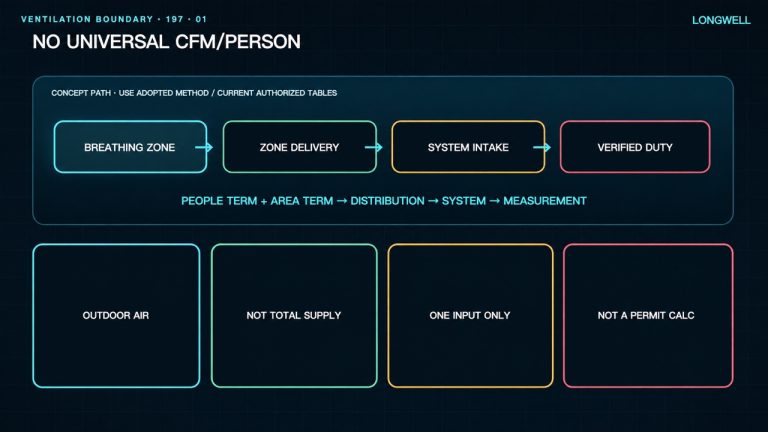
Acceptance must include the installed air path. Factory airflow does not prove delivered airflow because ductwork and the termination add resistance. Record the method, operating condition and result specified by the project or equipment documentation, plus exterior discharge and damper operation. Do not invent a universal airflow, current or sound limit for an unidentified fan.
Close the repair with an auditable record
Keep photographs or transcriptions of the housing and old assembly labels, the authorized replacement reference, the removed and installed part numbers, the retained-component inspection, deviations, electrical verification by the responsible person, and commissioning results. Record the manual revision and any warranty conditions as well.
This packet makes the decision reversible and reviewable. It shows why a motor-only repair was permitted, which interfaces were preserved and whether the complete bathroom ventilation system—not merely a spinning wheel—passed its required checks.
Choose the right exhaust fan
Longwell manufactures 241 exhaust fans in-house. Send airflow, static pressure and voltage — an engineer replies with a matching model, performance curve and price within one working day.