Forward-curved or backward-curved? Neither is the automatic winner. Start with the airflow and pressure the equipment must deliver, then compare complete fan assemblies at that duty point and across the expected operating range. Blade direction helps build a shortlist; the exact curve, absorbed power, sound data, dimensions, controls, and installation boundary decide the purchase.
This matters when one catalogue shows a scroll blower and another shows an open wheel. Those photographs do not share the same aerodynamic boundary. The method below turns the geometry question into an RFQ that suppliers can answer with comparable evidence.
Confirm what the photographs actually show
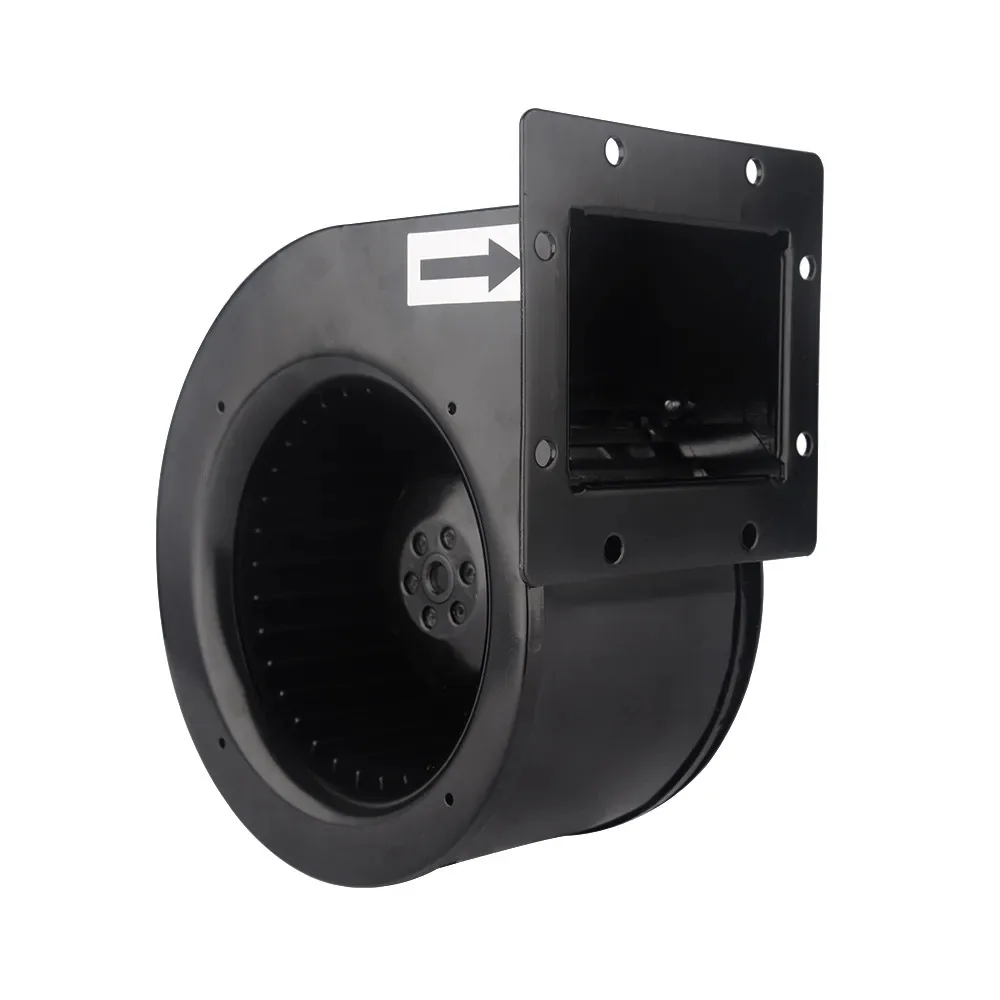
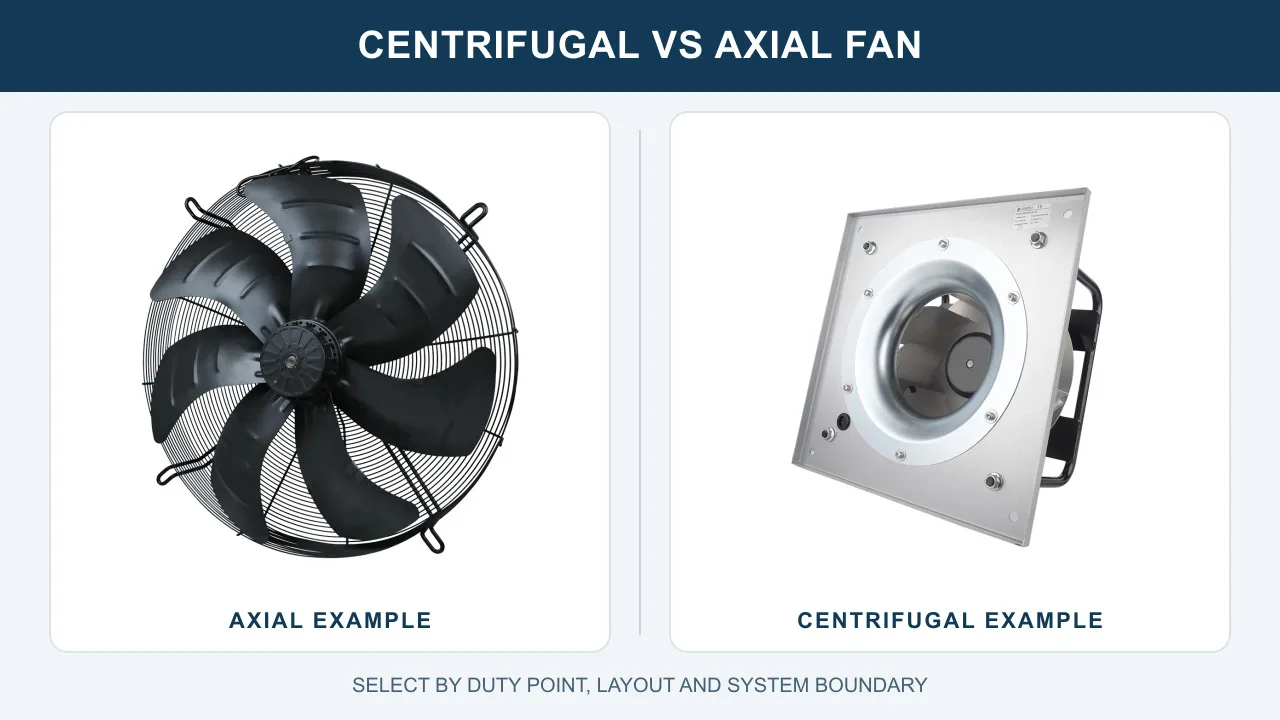
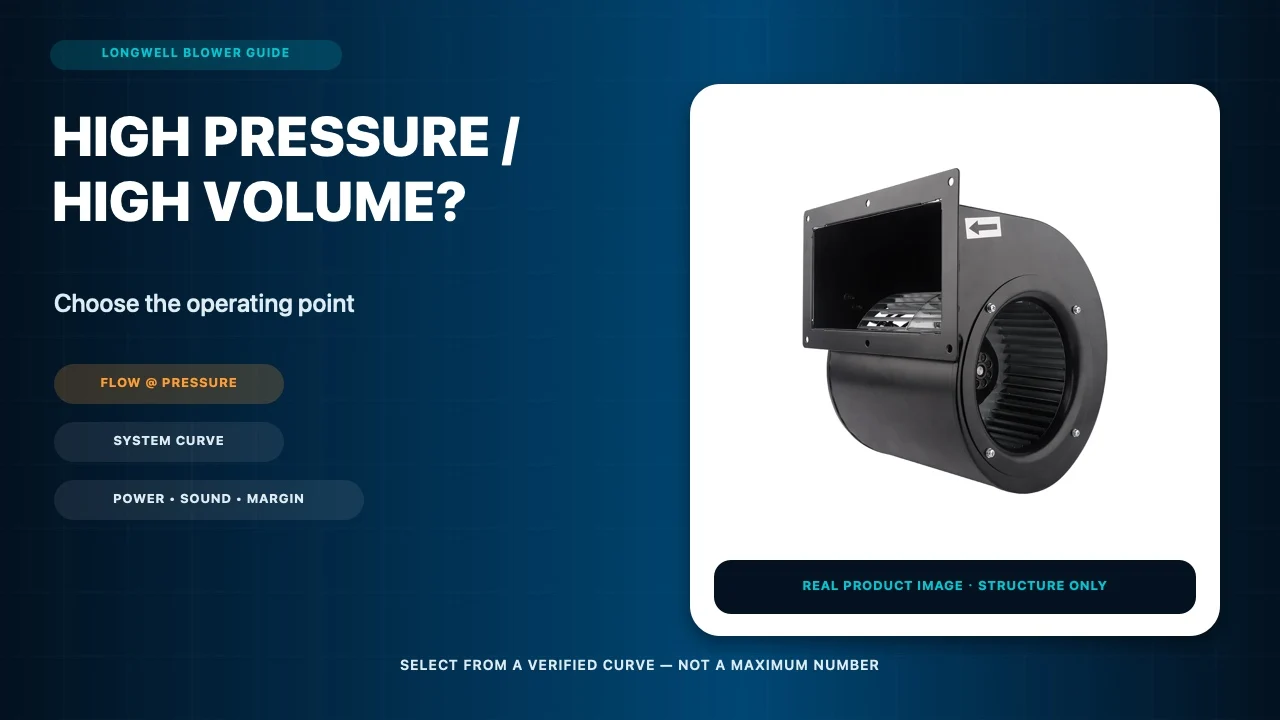
The forward-curved example is a LONGWELL LWFA2E160-092SS-04 housed blower. You can see the dense wheel, scroll, inlet, and rectangular outlet. Its blades bend in the general direction of rotation at the outlet. The photograph establishes visible construction and product identity only—not airflow, pressure, efficiency, sound, certification, or suitability for a particular machine.
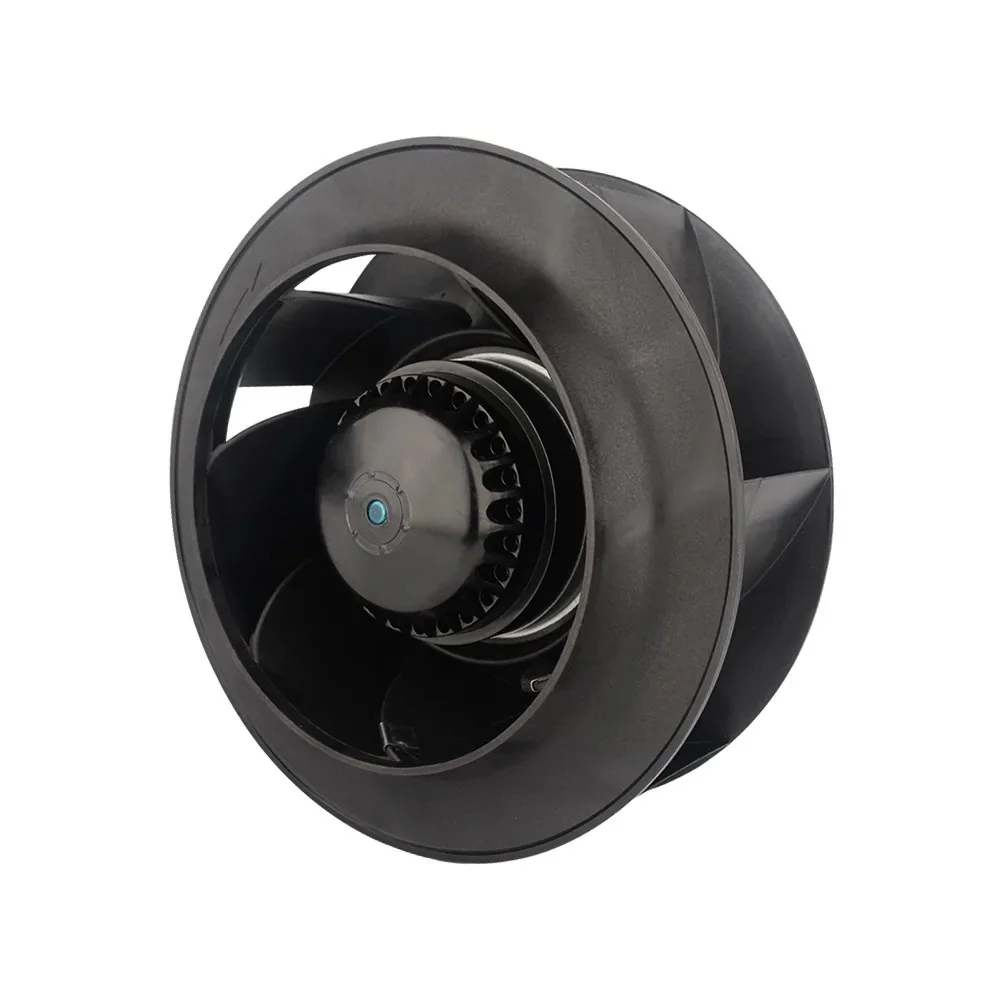
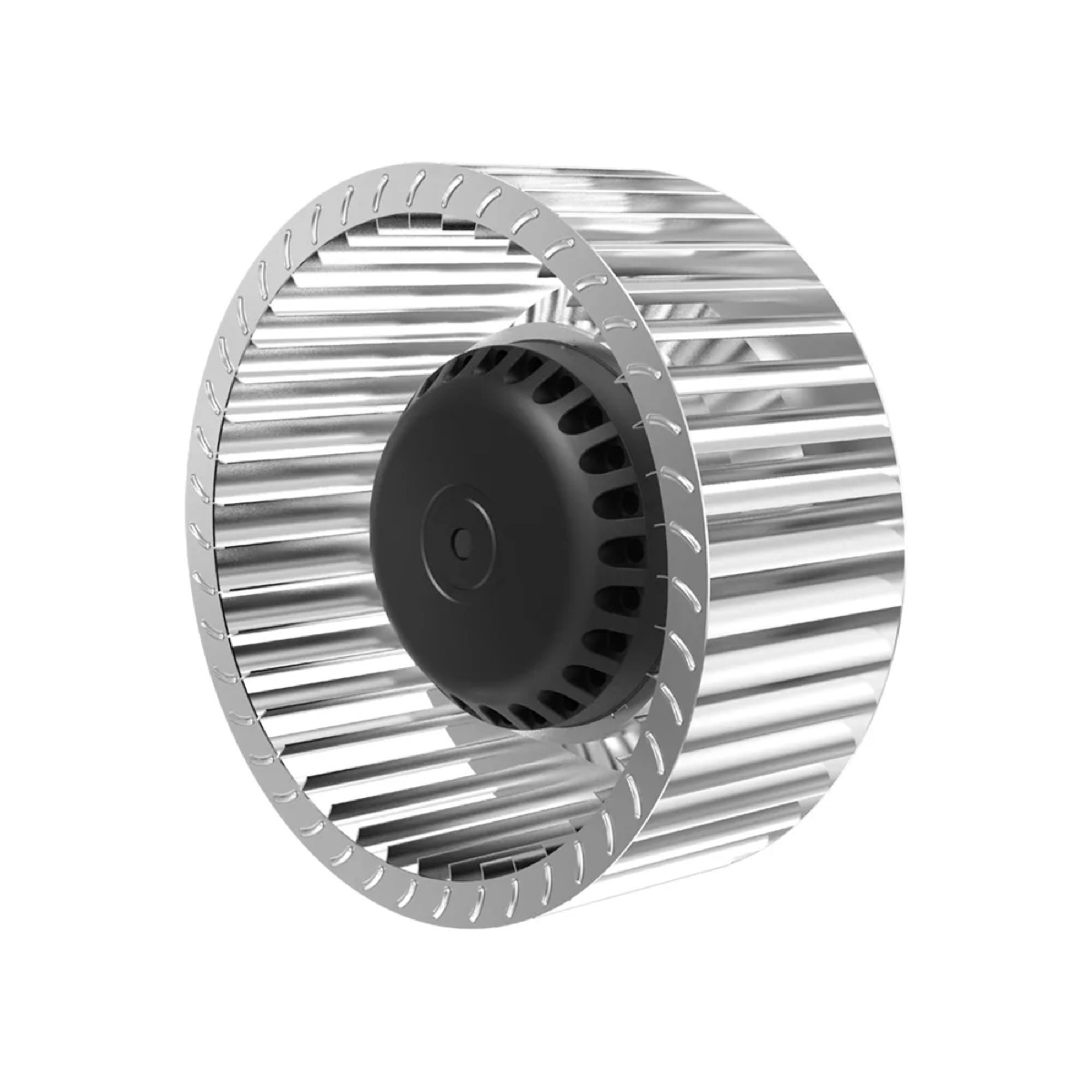
The backward-curved example is a LONGWELL LWBA2E190-072NS-01 open-wheel fan. Its outlet-side blades lean away from the direction of rotation, and it has an inlet ring rather than a scroll. It is a different model, diameter, motor, and boundary from the forward-curved example, so the two specification sheets must not be presented as a controlled test.
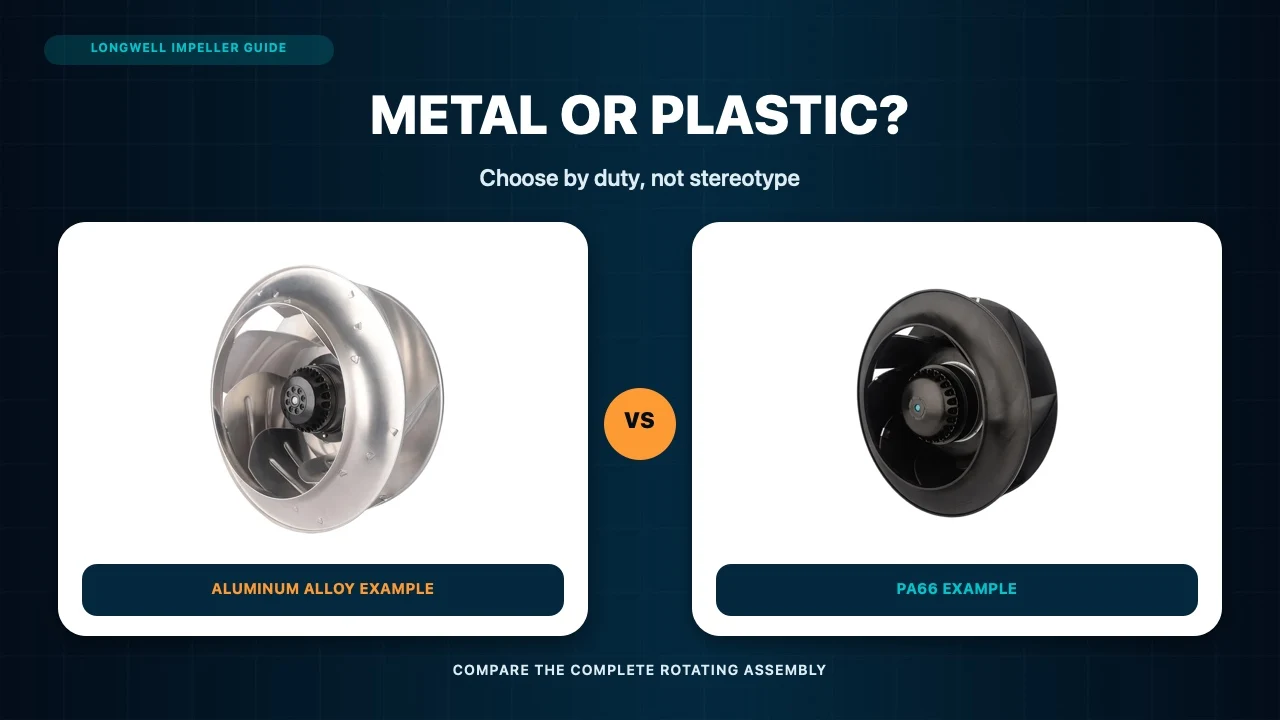
Confirm the viewing side and rotation arrow before naming a wheel. Then keep blade family separate from wheel width, inlet clearance, housing or plenum, speed, motor, and nearby obstructions. All of them affect the measured result.
Use blade direction to ask better questions
Forward-curved wheels are often supplied in compact housed blowers with a defined discharge. Backward-curved wheels are often used in open-wheel or plug-fan assemblies where the equipment plenum forms part of the flow path. These are useful starting patterns, not application guarantees.
The forward-curved centrifugal fan family and backward-curved centrifugal fan family pages help map available constructions. Before approving a model, request its full suffix, current drawing, fan curve, electrical limits, and test basis.
| Question | Useful early signal | Evidence still required |
|---|---|---|
| How will it fit? | Housed blower and open wheel use different equipment boundaries. | Envelope, inlet/outlet, plenum, mounting, clearances, and service access. |
| Where will it run? | Blade family influences curve shape. | Airflow, pressure, speed, power, and permitted region on the exact curve. |
| Will the motor stay within limits? | Power behavior changes with the operating point. | Motor or controller loading across every credible system state. |
Compare both candidates at one duty point
Write the target as airflow plus pressure, with units. State whether pressure is static or total and where it is measured. Add temperature, density, or altitude when it differs from the curve reference. For filters, coils, dampers, or branches, provide clean, normal, and expected final resistance rather than one ideal number.
Place each fan curve against the same system resistance curve. Their intersection is the expected operating point. Maximum airflow and maximum pressure usually sit at different ends of a curve; combining both maxima creates a point the fan may never deliver. The centrifugal fan-curve guide explains how to compare the duty without mixing endpoints.
At that point, compare airflow, pressure, speed, mains input, efficiency basis, and sound basis. Use the same inlet and outlet boundary. A scroll blower tested at its outlet and an open wheel tested in a plenum are not equivalent data sets just because their nominal diameters are close.
Check the full power curve, not one watt value
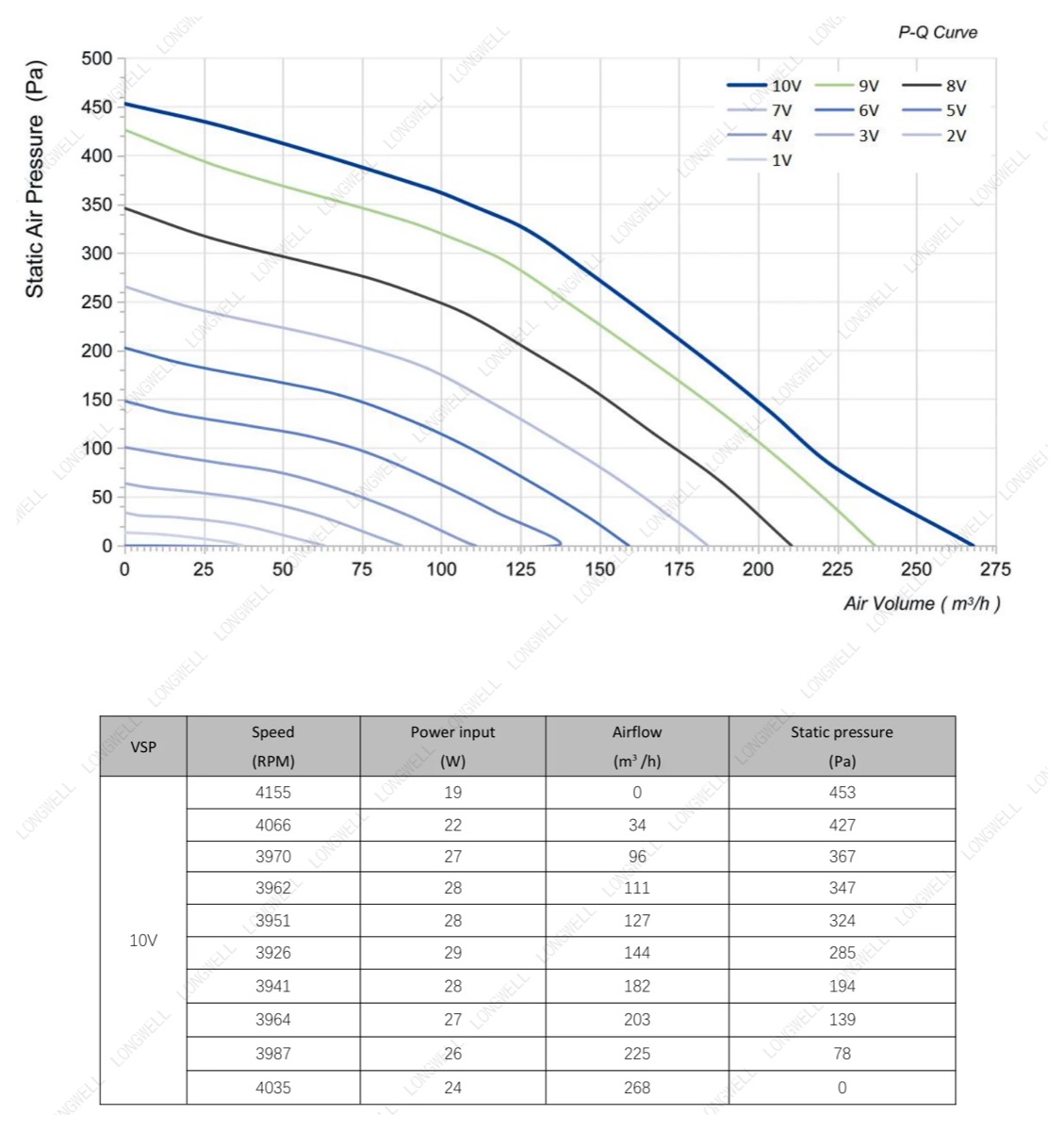
For many forward-curved selections, absorbed power rises as the operating point moves toward higher airflow. The low-resistance end of the system range therefore deserves a motor check. Opening a damper, removing a restriction, or changing a branch can move the point away from the design condition.
Backward-inclined and backward-curved families can have a different power shape, sometimes peaking before the far end of the curve. “Non-overloading” is meaningful only for a verified model curve and permitted range. It is not permission to undersize a motor. Mark clean-filter, final-filter, minimum-command, and maximum-command points on one curve, then check input power and current at each point.
Compare the complete machine
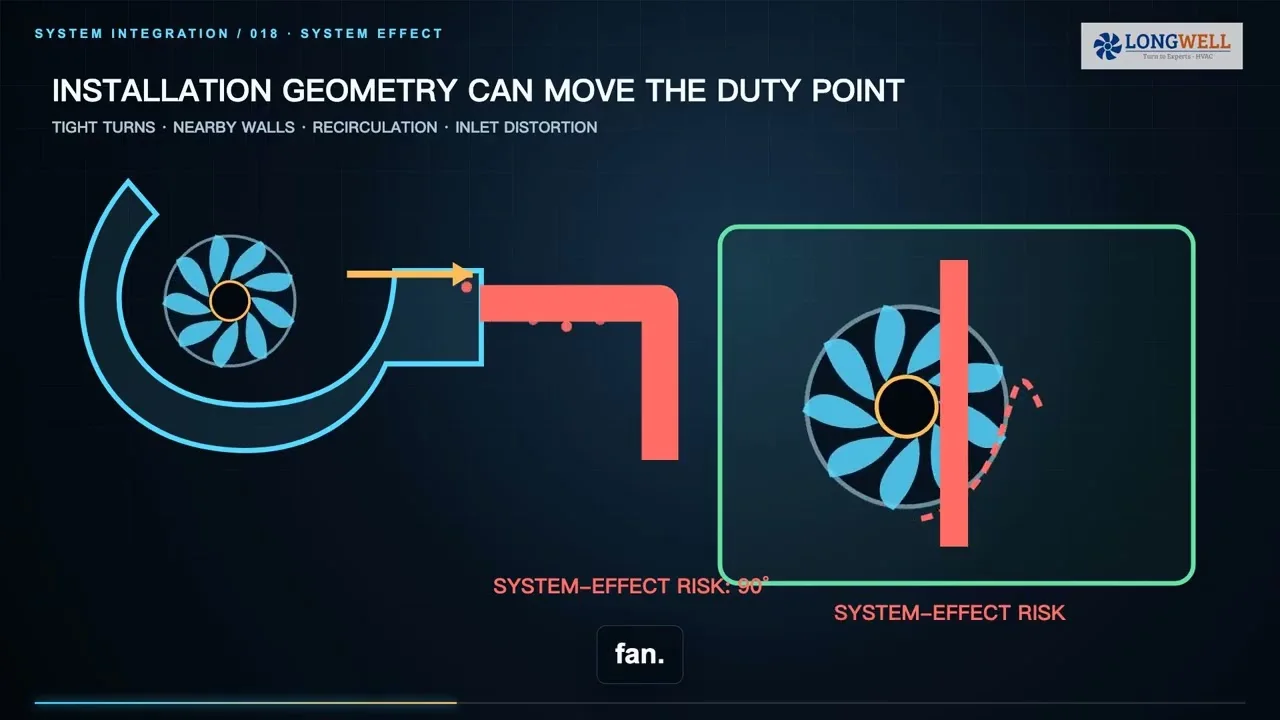
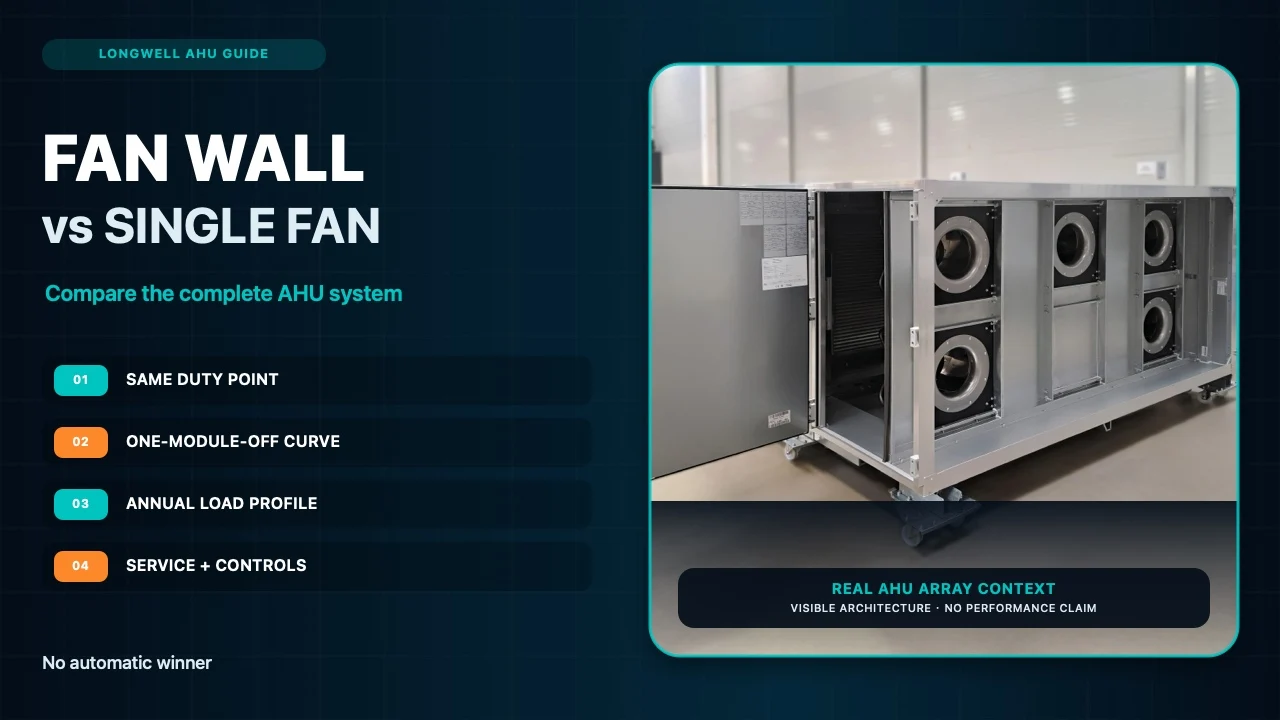
A fan operates inside equipment. Inlet swirl, a tight discharge transition, cabinet leakage, nearby panels, or a poor plenum can change airflow, power, and sound. Include the motor, drive or EC electronics, inlet ring, housing, supports, sensors, and controls in the comparison.
Check supply, command and feedback signals, speed range, alarms, startup behavior, protection, ambient limits, and service access. For sound-sensitive equipment, request the measurement method and spectrum at the relevant duty, then agree on an equipment-level acceptance test. Packaging may decide the shortlist, but it does not prove an efficiency or noise winner.
Use a short, repeatable selection route
- Define the range: minimum, normal, and maximum airflow-pressure points, including clean and final resistance.
- Define the boundary: inlet, outlet or plenum, envelope, orientation, obstructions, and service space.
- Shortlist assemblies: use geometry and packaging without declaring a generic winner.
- Normalize returns: require the same pressure definition, density, duty points, electrical boundary, and sound basis.
- Verify the envelope: review stability, input power, current, speed, controls, and limits before equipment testing.
Put these items in the RFQ
- Duty and air: minimum, normal, and maximum points; static or total pressure; temperature and density basis.
- System: filters, coils, ducts, dampers, branches, inlet restrictions, and operating schedule.
- Mechanical: envelope, inlet/outlet or plenum, rotation, mounting, clearances, and service access.
- Electrical and controls: supply, allowed power/current, command, feedback, speed limits, alarms, and protection.
- Supplier return: exact suffix and revision, controlled curve, drawing, test condition, power data, sound basis, operating limits, and tolerances.
- Acceptance: equipment-level test points, instruments and locations, pass/fail limits, and the final record.
Choose only after the complete assembly meets the required duty across the credible system range and fits the mechanical, electrical, control, sound, and service boundaries. If the returns are not comparable, keep both geometries on the shortlist and ask for better data.
Choose the right centrifugal fan
Longwell manufactures 1,127 centrifugal fans in-house. Send airflow, static pressure and voltage — an engineer replies with a matching model, performance curve and price within one working day.